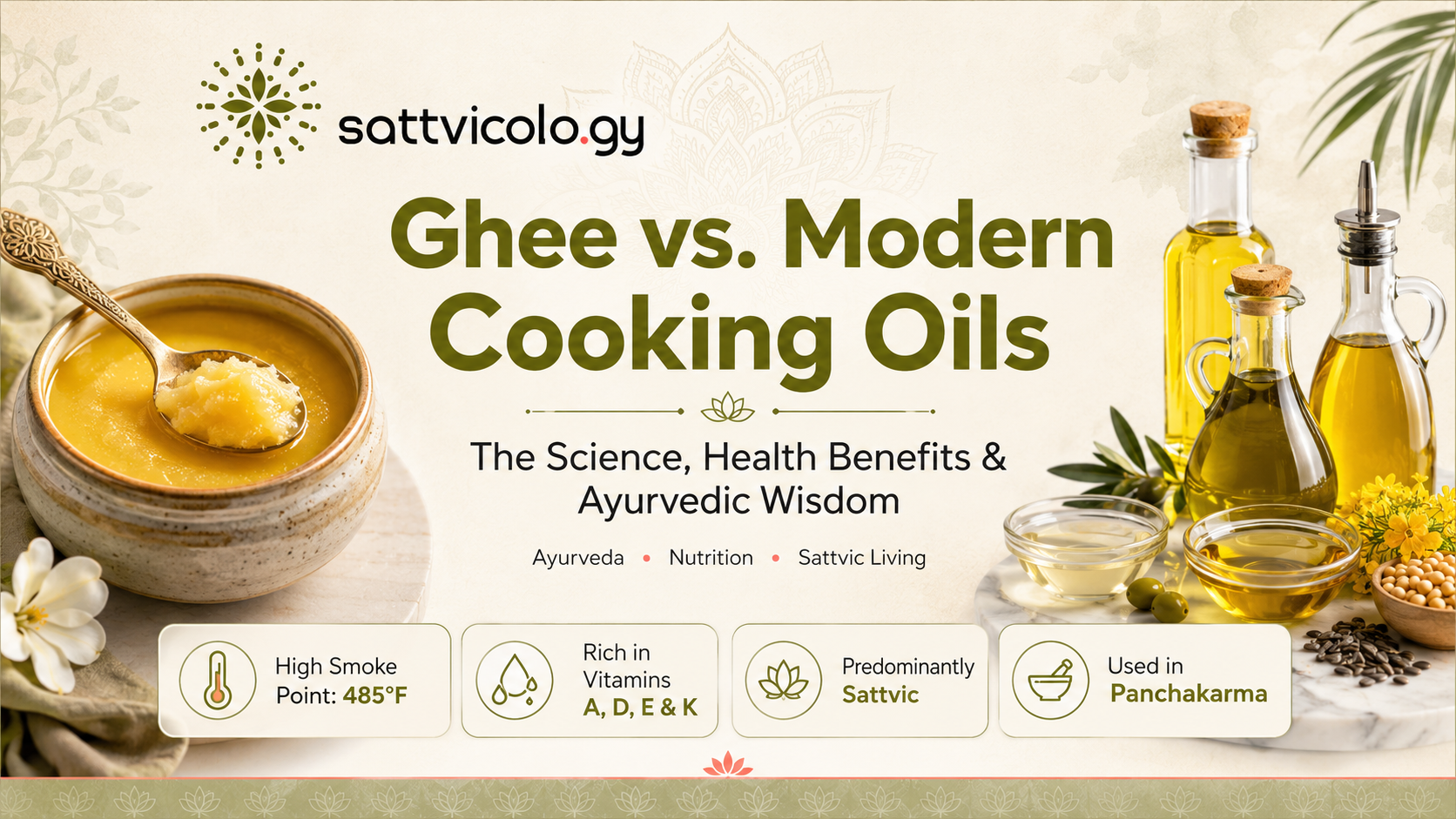
Ghee vs. Modern Cooking Oils: The Science, Health Benefits, and Ayurvedic Wisdom
Why Ayurvedic and Certified Yoga Practitioners Should Collaborate on Treatment Plans
"घृतं जीवस्य मातरं पयस्वतीं द्विपदां सं प्रतिक्षतम्।" (Brihadaranyaka Upanishad 6.4.1) ✨ Translation: "Ghee is the nourishing mother of life, sustaining and enriching all beings with its divine essence."
Ghee, a form of clarified butter, has been a staple in Indian cuisine and Ayurvedic medicine for centuries. Its rich, nutty flavor and high smoke point make it a versatile cooking fat. In recent years, ghee has gained popularity worldwide, leading to discussions about its health implications compared to other cooking oils. This article delves into the scientific benefits of ghee, its effects on cholesterol levels, its role in balancing the gunas (qualities) in Ayurveda, and its application in Panchakarma therapies.ActiveMoo
Nutritional Profile of Ghee
Ghee is predominantly composed of saturated fats, accounting for approximately 62% of its content. It also contains monounsaturated and polyunsaturated fats in smaller proportions. Notably, ghee is rich in fat-soluble vitamins A, D, E, and K, essential for various bodily functions. The absence of lactose and casein makes ghee suitable for individuals with dairy sensitivities. Snap Kitchen Blog+2Wikipedia+2cambridge.org+2milkio.co.nz+1Wikipedia+1
Ghee vs. Other Cooking Oils
When comparing ghee to other cooking oils, several factors come into play:
- Smoke Point: Ghee has a high smoke point of approximately 485°F (252°C), making it suitable for high-temperature cooking methods like frying and sautéing. In contrast, many vegetable oils have lower smoke points, which can lead to the production of harmful compounds when overheated. Real Simple
- Stability: The saturated fat content in ghee contributes to its stability under heat, reducing the risk of oxidation and the formation of free radicals. Unsaturated oils, such as sunflower or soybean oil, are more prone to oxidation, especially when used for frying. Snap Kitchen Blog
- Flavor and Culinary Uses: Ghee imparts a distinct, rich flavor to dishes, enhancing the overall taste. Its versatility allows it to be used in various culinary applications, from baking to drizzling over cooked foods. Real Simple
Impact on Cholesterol Levels
The relationship between ghee consumption and cholesterol levels has been the subject of various studies:
- Positive Effects: Some research indicates that ghee can increase high-density lipoprotein (HDL) cholesterol, known as “good” cholesterol, which aids in removing low-density lipoprotein (LDL) cholesterol from the bloodstream, potentially reducing heart disease risk. Uway Health
- Neutral Effects: A study involving healthy adults compared the effects of diets rich in ghee versus olive oil. The results showed that while ghee increased certain markers like apo B and non-HDL cholesterol, there was no significant effect on LDL cholesterol levels. cambridge.org
- Negative Effects: Conversely, some studies suggest that high consumption of ghee may elevate total cholesterol and triglyceride levels, particularly in individuals with a genetic predisposition to hyperlipidemia. PubMed
Given these mixed findings, moderation is key when incorporating ghee into the diet.
Ghee and the Gunas in Ayurveda
In Ayurvedic philosophy, all substances are categorized based on three gunas (qualities):
- Sattva (Purity): Associated with clarity, harmony, and balance.
- Rajas (Activity): Linked to action, energy, and movement.
- Tamas (Inertia): Connected to darkness, lethargy, and stagnation.
Ghee is considered to be predominantly sattvic, promoting mental clarity, digestion, and overall vitality. Its consumption is believed to nourish the body and mind, fostering a balanced state conducive to spiritual practices and well-being. banyanbotanicals.com
Role of Ghee in Panchakarma
Panchakarma is a cornerstone of Ayurvedic detoxification and rejuvenation therapies, comprising five primary procedures:banyanbotanicals.com
- Vamana (Therapeutic Emesis)
- Virechana (Purgation)
- Basti (Enema Therapy)
- Nasya (Nasal Administration)
- Raktamokshana (Bloodletting)
Ghee plays a vital role in Panchakarma, particularly in the preparatory phase known as Snehana (Oleation). During this phase, ghee is ingested to lubricate the body’s tissues, facilitating the mobilization of toxins towards the gastrointestinal tract for elimination. This internal oleation is believed to:
- Enhance Detoxification: Ghee’s lipophilic nature allows it to bind to fat-soluble toxins, aiding in their removal from the body. banyanbotanicals.com
- Improve Digestion: Ghee stimulates the digestive fire (Agni), promoting better digestion and metabolism.
- Nourish Tissues: It provides essential fatty acids and nutrients, rejuvenating bodily tissues and enhancing overall vitality.
Conclusion
Ghee offers a unique combination of culinary versatility and potential health benefits. Its high smoke point and stability make it suitable for various cooking methods, while its rich nutrient profile contributes to overall well-being. However, like all fats, ghee should be consumed in moderation, considering individual health profiles and dietary needs. In Ayurveda, ghee holds a revered position, not only as a dietary component but also as a therapeutic agent, underscoring its significance in promoting holistic health.health.com
By understanding the attributes of ghee in comparison to other oils, individuals can make informed choices that align with their health goals and culinary preferences.
Unlock the ancient wisdom of Ayurveda and strengthen your immune system with Sattvicolo.gy’s wellness subscriptions. Our personalized programs in yogic sciences, diet coaching, and holistic well-being empower you to align your body’s natural defenses with the rhythms of nature. Whether you’re looking to incorporate powerful Ayurvedic herbs, immune-boosting foods, or stress-reducing practices, our experts are here to guide you.
Begin your journey towards enhanced resilience, vitality, and well-being: sign up for Sattvicolo.gy’s wellness subscriptions today!
Disclaimer:
Sattvicolo.gy provides holistic treatments and dietary recommendations designed to complement, not replace, conventional medical care. The information on this site is for educational purposes only and has not been evaluated by the FDA. We recommend consulting with a physician before starting any new health regimen, especially if you have existing health conditions or are taking medications. All data is securely encrypted and stored on our HIPAA-compliant servers, ensuring your privacy and security. If you prefer not to have your consultations recorded, please inform your Patient Wellness Advocate or doctor before the session begins. Use of this site is at your own risk, and Sattvicolo.gy is not liable for any outcomes or damages resulting from the use of the information or products presented here.