Part 3: Integrating Ayurveda, Yoga, and Modern Medicine for Chronic Pain Management
A whole-person approach to pain care that combines evidence-informed medicine with supportive Ayurvedic and yogic practices.
What Does the Scientific Research Say?
Over the past two decades, researchers have increasingly studied the effects of yoga, meditation, nutrition, and other complementary therapies on chronic pain. While research quality varies depending on the condition and study design, a growing body of evidence suggests that these approaches may improve quality of life when used alongside—not instead of—conventional medical care.
Current evidence suggests that appropriately prescribed yoga may help some people living with:
- Chronic low back pain
- Osteoarthritis
- Neck pain
- Fibromyalgia
- Rheumatoid arthritis
- Chronic stress
- Anxiety associated with chronic illness
Studies have also shown that mindfulness practices, meditation, breathing exercises, and multidisciplinary lifestyle interventions may improve pain coping, physical function, sleep quality, mood, and overall wellbeing.
Importantly, these approaches should be viewed as supportive therapies rather than cures. Chronic pain is highly individual, and no single treatment works for everyone.
Where Ayurveda and Modern Medicine Complement One Another
Ayurveda and conventional medicine often ask different questions—but both aim to improve the patient’s wellbeing.
| Modern Medicine | Ayurveda |
|---|---|
| Diagnoses the underlying disease | Identifies patterns of imbalance |
| Uses imaging and laboratory testing | Evaluates Prakriti, Vikriti, Agni, Ama, Doshas, and lifestyle |
| Provides medications, procedures, rehabilitation, and surgery when appropriate | Provides nutrition, herbs, daily routines, seasonal living, yoga, and lifestyle practices |
| Focuses on evidence-based disease management | Focuses on restoring balance and supporting resilience |
| Essential for emergencies and progressive disease | Supports long-term wellness and self-care |
These approaches are often strongest when they work together, with open communication between patients and their healthcare team.
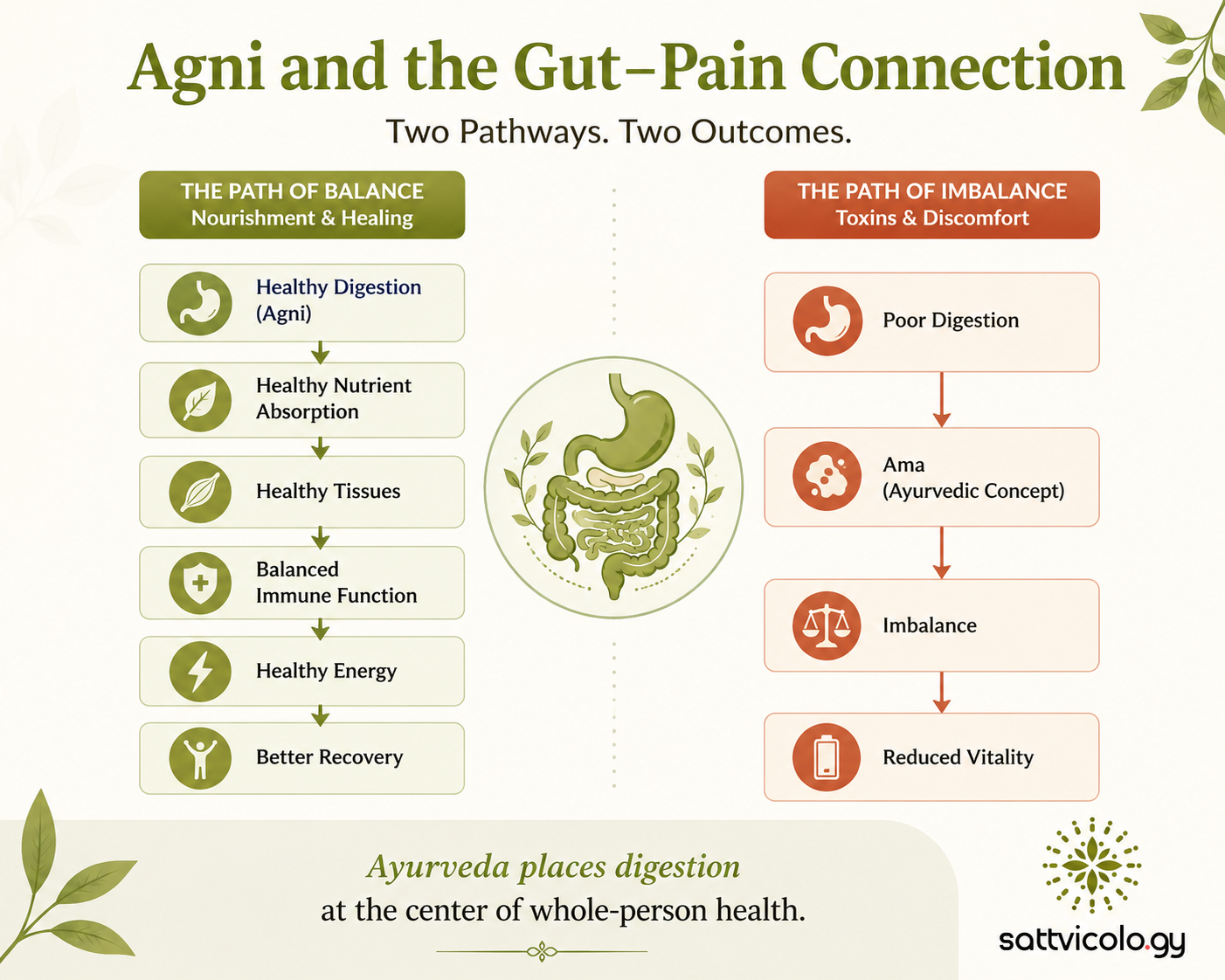
The Gut-Pain Connection
Modern research has highlighted the remarkable relationship between the digestive system, immune system, and nervous system.
Scientists continue to investigate how:
- The gut microbiome
- Diet quality
- Chronic inflammation
- Immune signaling
- Stress hormones
- Sleep quality
may influence pain perception.
Ayurveda has long emphasized that healthy digestion (Agni) is central to overall wellbeing.
Although Ayurveda and modern science describe these relationships differently, both recognize that digestive health can influence physical and emotional health.
Sleep: One of the Most Powerful Pain Therapies
Sleep is often overlooked in pain management.
Research consistently shows that insufficient sleep can:
- Increase pain sensitivity
- Reduce pain tolerance
- Slow tissue recovery
- Affect mood
- Increase fatigue
- Reduce concentration
Likewise, persistent pain often makes restful sleep difficult.
Ayurveda encourages evening routines that prepare both body and mind for restorative sleep.
Helpful evening habits include:
- Eating dinner earlier
- Avoiding heavy late-night meals
- Limiting stimulating media before bed
- Gentle stretching
- Warm herbal tea (if appropriate)
- Meditation
- Yoga Nidra
- Maintaining consistent sleep and wake times
Managing the Emotional Weight of Chronic Pain
Persistent pain affects more than joints, muscles, or nerves.
It often affects:
- Relationships
- Confidence
- Career
- Identity
- Independence
- Emotional resilience
Many people living with chronic pain experience periods of:
- Frustration
- Grief
- Anxiety
- Depression
- Isolation
- Fear of movement
These responses are understandable.
Yoga philosophy reminds us that while we may not always control our circumstances, we can gradually cultivate awareness, compassion, patience, and resilience.
Seeking support from family, counselors, psychologists, pain specialists, support groups, or spiritual communities can be an important part of comprehensive pain care.
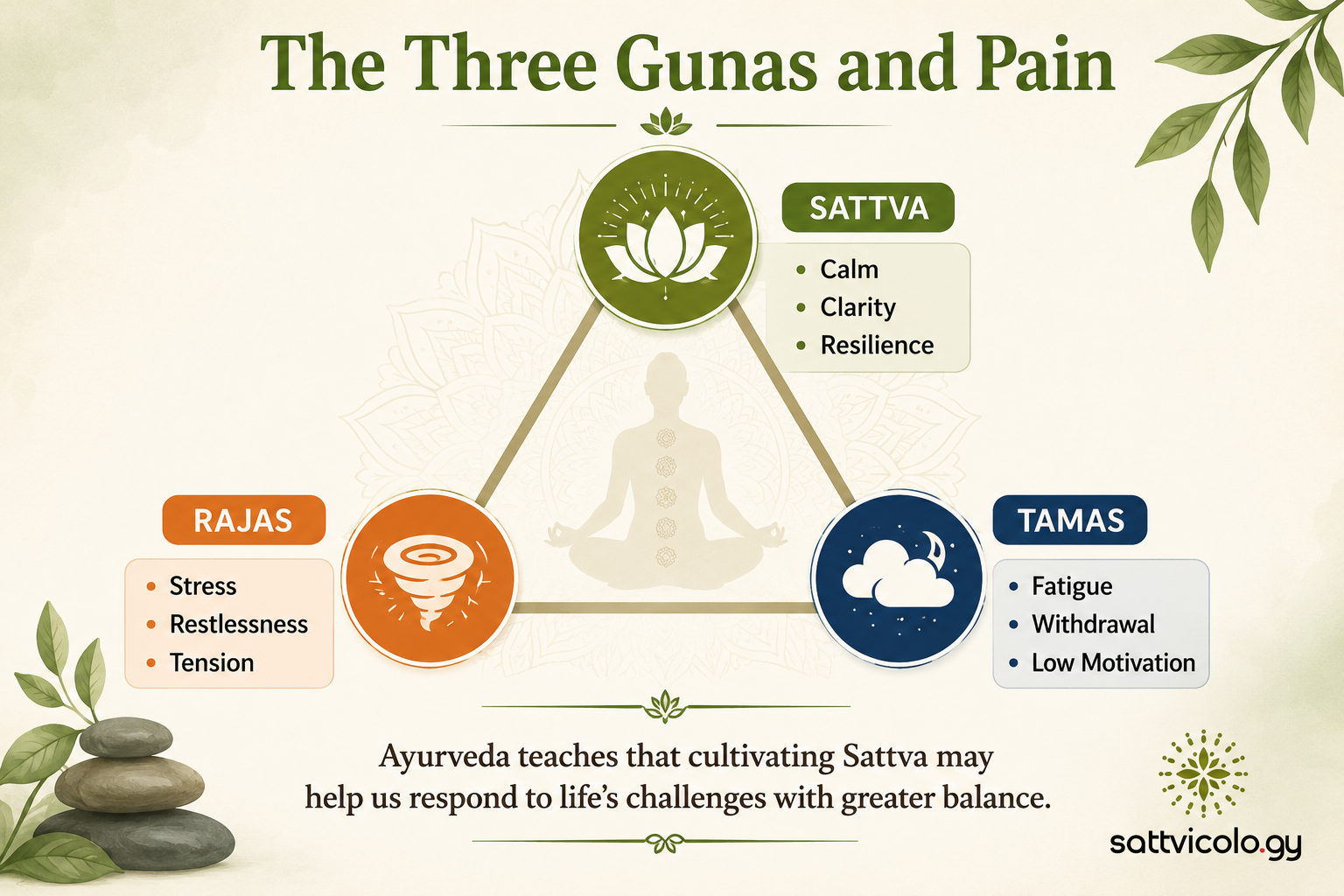
The Three Gunas and Chronic Pain
Ayurveda and Yoga describe three fundamental mental qualities known as the Gunas.
Understanding these tendencies may help explain why two people with similar medical conditions experience pain differently.
Sattva
Characteristics:
- Calm
- Clear thinking
- Hopeful
- Balanced
- Compassionate
- Peaceful
Practices that cultivate Sattva include:
- Meditation
- Prayer
- Yoga
- Fresh foods
- Time in nature
- Gratitude
- Meaningful relationships
Rajas
Characteristics:
- Restlessness
- Irritability
- Overthinking
- Impatience
- Constant activity
Excess Rajas may increase stress and muscle tension.
Tamas
Characteristics:
- Fatigue
- Withdrawal
- Hopelessness
- Low motivation
- Inactivity
Periods of Tamas are understandable during chronic illness but may become problematic when prolonged.
The goal is not to eliminate Rajas or Tamas entirely. Rather, Ayurveda encourages cultivating greater Sattva while gently restoring balance.
When Should You Seek Immediate Medical Attention?
Although many causes of chronic pain can be managed over time, certain symptoms require prompt medical evaluation.
Seek immediate medical care if you experience:
- Sudden severe weakness
- Loss of bowel or bladder control
- Fever with severe back pain
- Chest pain
- Difficulty breathing
- New confusion
- Sudden vision changes
- Significant unexplained weight loss
- Persistent night pain
- Severe trauma
- Signs of infection
- Progressive numbness
These symptoms should never be attributed to Ayurveda alone and require urgent medical assessment.
Frequently Asked Questions
Key Takeaways
Living with chronic pain is challenging, but healing is about far more than reducing discomfort.
Ayurveda encourages us to care for digestion, sleep, daily routines, emotional wellbeing, movement, and nourishment.
Yoga reminds us that every breath, every mindful movement, and every moment of self-compassion matters.
Modern medicine provides essential diagnostics and treatments.
Together, these approaches offer a more complete picture of whole-person care.
Healing may not always mean eliminating pain.
Sometimes healing means:
- Moving with greater confidence.
- Sleeping more peacefully.
- Feeling less anxious.
- Enjoying meaningful relationships.
- Reconnecting with purpose.
- Living more fully despite persistent symptoms.
Continue Your Journey Toward Balance
Understanding your physical constitution is only one part of Ayurveda. Understanding your mind is equally important.
Your unique balance of Sattva, Rajas, and Tamas influences how you respond to stress, illness, relationships, decision-making, and even chronic pain.
Take the Free Sattvicology Gunas Assessment
Discover your dominant Gunas and receive personalized recommendations for lifestyle, nutrition, yoga, meditation, daily routines, and mindfulness practices.
Medical Disclaimer
The information in this article is intended for educational purposes only and should not be considered medical advice, diagnosis, or treatment.
Ayurveda and yoga are complementary wellness practices that may support overall health and quality of life but should not replace evaluation or treatment by qualified healthcare professionals.
Individuals living with chronic pain, arthritis, autoimmune diseases, neurological disorders, cancer, diabetes, osteoporosis, recent surgery, pregnancy, or other medical conditions should consult their physician or appropriate healthcare provider before beginning new diets, herbal supplements, yoga programs, or lifestyle interventions.
Some Ayurvedic herbs and supplements may interact with prescription medications, including blood thinners, diabetes medications, immunosuppressants, and other therapies. Always discuss supplements with your healthcare team.
If you experience severe pain, sudden weakness, fever, loss of bowel or bladder control, chest pain, difficulty breathing, new neurological symptoms, or any medical emergency, seek immediate medical attention.