
Online Ayurvedic Consultation: Everything You Need to Know Before Your First Appointment
Learn what to expect from an online Ayurvedic consultation, how Ayurveda approaches chronic illness, what a qualified practitioner should ask, realistic timelines, safety considerations, and how to stay consistent with personalized care.
Your First Ayurvedic Consultation May Feel Very Different — That Is the Point
One of the most important questions I would ask before beginning Ayurveda is not: “What herb should I take?”
It is: “Am I prepared to participate in my own treatment?”
That difference captures much of what separates a thoughtful Ayurvedic consultation from the type of healthcare encounter many of us have become accustomed to.
In a conventional medical appointment, especially an acute-care visit, the sequence can be rapid: symptom → diagnosis → medication or procedure → follow-up.
That model is extraordinarily valuable when someone has pneumonia, a fracture, uncontrolled diabetes, cancer, a heart attack, an infection, severe inflammatory disease or another condition requiring diagnosis and targeted medical treatment.
Ayurveda generally begins somewhere else.
An Ayurvedic practitioner may want to know: What time do you wake up? When are you hungry? What happens after you eat? Are your bowel movements predictable? Do you sleep through the night? Do you wake between 2 and 4 a.m.? Are you usually cold or hot? Does your pain move? Does stress make your digestion worse? Do you feel better after eating or worse? What happened emotionally before your symptoms intensified? What does your tongue look like in the morning? When during the day do your symptoms become strongest? What medications and supplements are you taking? What did your life look like before you became ill?
To someone expecting a prescription in ten minutes, these questions may seem indirect. They are not. They reflect Ayurveda’s attempt to understand the pattern in which illness is occurring, not merely the name attached to the illness.
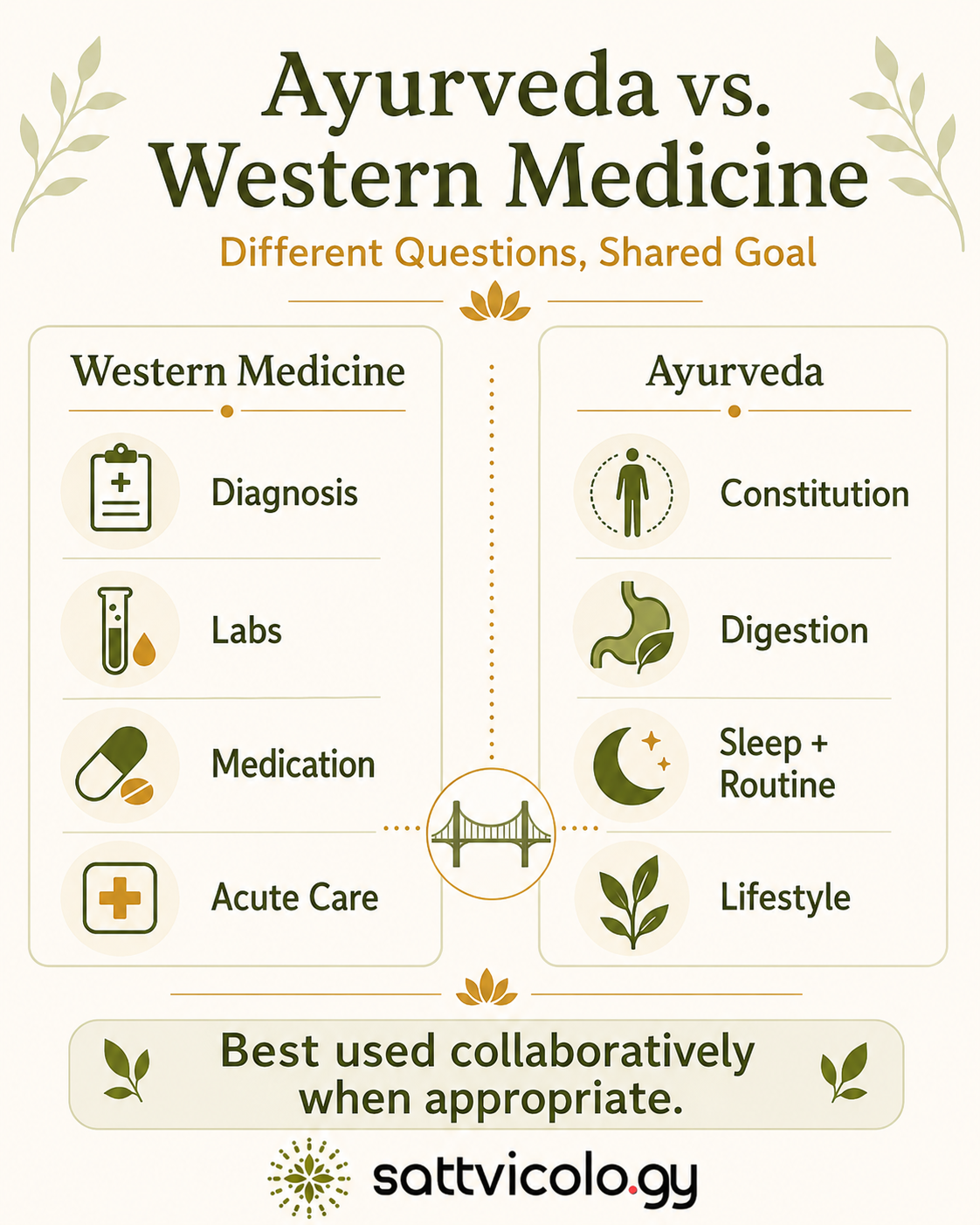
That does not make Ayurveda inherently superior to Western medicine. It makes the two systems fundamentally different in how they organize information.
The World Health Organization increasingly describes traditional, complementary and integrative medicine within a framework that emphasizes evidence, safety, quality, people-centered care and appropriate integration into health systems rather than replacement of effective conventional treatment.
And that is the mindset with which an online Ayurvedic consultation should begin.
What Is an Ayurvedic Consultation?
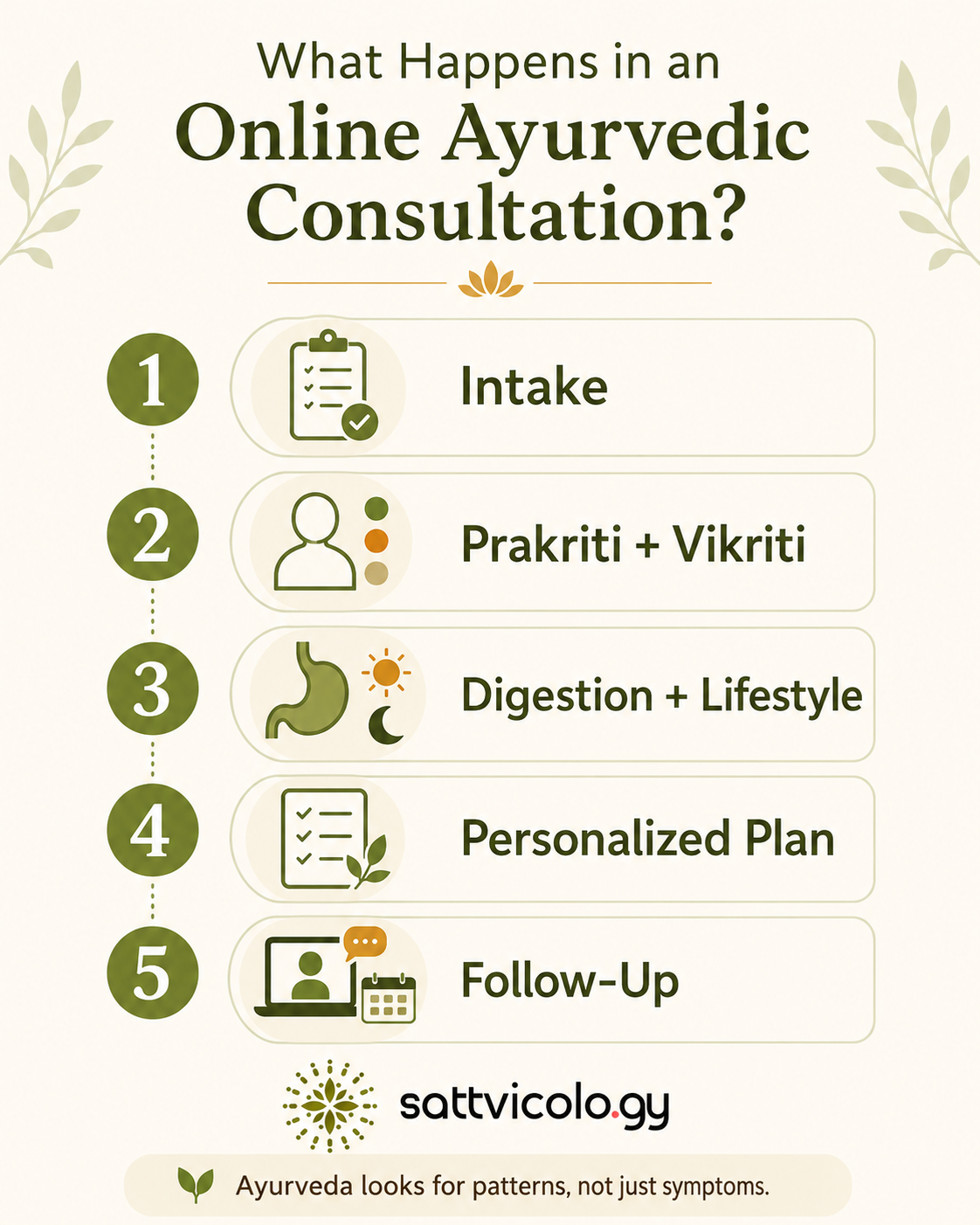
An Ayurvedic consultation is a structured health assessment in which a trained practitioner evaluates your symptoms, constitution, current patterns of imbalance, digestion, elimination, sleep, energy, mental state, diet, lifestyle, environment and medical history through the framework of Ayurveda.
The objective is not merely to determine whether someone is “Vata, Pitta or Kapha.” A proper consultation is much deeper.
Depending on training and jurisdiction, an Ayurvedic practitioner may evaluate concepts such as:
- Prakriti — your constitutional tendencies
- Vikriti — your present state of imbalance
- Agni — digestive and metabolic capacity
- Ama — the Ayurvedic concept of incompletely processed material or metabolic burden
- Dosha — patterns described through Vata, Pitta and Kapha
- Dhatu — functional tissue systems
- Mala — elimination and waste processes
- Srotas — channels or pathways of physiological activity
- Ojas — a classical concept related to vitality and resilience
- Bala — strength or capacity
- Dinacharya — daily routine
- Ritucharya — seasonal adaptation
These concepts belong to the Ayurvedic medical framework and should not be presented as direct equivalents of modern anatomical structures, laboratory biomarkers or biomedical diagnoses.
What Is an Online Ayurvedic Consultation?
An online Ayurvedic consultation delivers much of this evaluation through secure video, telephone or digital health technology rather than requiring the patient and practitioner to be in the same room.
For many aspects of Ayurvedic lifestyle care, that can work surprisingly well.
During video consultation, a practitioner can discuss symptoms, medical history, medications, digestion, bowel habits, sleep, food patterns, menstrual history where relevant, exercise, stress, daily schedule, emotional patterns, environmental exposures and treatment goals.
A practitioner may also visually assess general appearance and, when clinically appropriate, ask the patient to show the tongue or visible areas relevant to the discussion.
But telehealth has limits. A virtual practitioner cannot fully reproduce hands-on examination, traditional pulse assessment, abdominal examination or other physical assessments that may be performed in person.
A responsible provider should know when online consultation is sufficient and when an in-person medical examination is necessary.
Does Online Ayurveda Actually Work?
We now have early clinical evidence suggesting that personalized Ayurvedic lifestyle interventions can be delivered virtually.
A particularly relevant 2026 randomized pilot trial evaluated a 12-week virtually delivered personalized Ayurvedic lifestyle intervention in breast-cancer survivors who had completed conventional treatment and had no active disease.
The intervention was individualized according to each participant’s current Ayurvedic imbalance and included personalized lifestyle recommendations. The study found high feasibility and retention, with preliminary improvements observed in psychological quality of life, sleep, gastrointestinal symptoms and digestive balance. Because only 15 participants were randomized, the researchers correctly described the results as exploratory rather than definitive.
That research matters for a larger reason. It demonstrates that virtual Ayurveda does not have to mean: “Take this online dosha quiz and buy three supplements.”
Personalized, practitioner-led whole-system care can be delivered remotely and studied scientifically.
Ayurveda Is Not Simply “Natural Western Medicine”
This may be the most important concept for a new patient to understand.
Ayurveda is not conventional medicine with herbs substituted for pharmaceuticals.
If a person walks into an Ayurvedic consultation saying, “I have insomnia. What Ayurvedic pill replaces Ambien?” they may already be approaching Ayurveda through the wrong mental model.
The Ayurvedic practitioner may instead ask: Why are you not sleeping? Is the problem falling asleep or staying asleep? What time do you awaken? Are you mentally stimulated at night? Do you work on a computer until bedtime? Do you eat dinner at 9:30 p.m.? Are you constipated? Do you feel overheated at night? Is anxiety involved? Is pain waking you? Are medications contributing? When did the sleep disturbance begin?
In other words: Western medicine often asks, “What disease is producing this symptom?”
Ayurveda frequently adds another question: “What pattern of physiology, behavior, environment and constitution allowed this imbalance to develop or persist?”
Neither question invalidates the other. In chronic illness, asking both may be extremely useful.
Western Medicine vs. Ayurveda: A Better Way to Understand the Difference
Oversimplifying either system is a mistake.
Modern medicine is not only symptom suppression. It identifies causes every day: bacteria, malignancy, autoimmune processes, hormonal disorders, structural injuries, genetic mutations and metabolic disease.
Ayurveda, meanwhile, is not guaranteed to identify the biomedical “root cause” of every disease.
A more accurate distinction is one of clinical perspective.
Western biomedicine generally classifies illness using standardized diagnoses, anatomy, physiology, pathology, laboratory testing and evidence-based therapeutic interventions.
Ayurveda traditionally evaluates the individual expression of illness, including constitutional tendencies, digestion, strength, habits, environment and doshic patterning.
This individualized nature has even been incorporated into modern whole-system clinical research. For example, a randomized clinical trial of 151 people with knee osteoarthritis compared a multimodal Ayurvedic treatment program with conventional conservative treatment over 12 weeks. The Ayurvedic group had a significantly greater improvement in WOMAC osteoarthritis scores, along with improvements in several secondary outcomes. Importantly, this was a whole-treatment approach, not proof that one Ayurvedic herb cured osteoarthritis.
Similarly, an earlier randomized pilot study comparing individualized classical Ayurveda with methotrexate in rheumatoid arthritis demonstrated that rigorous randomized research of individualized Ayurvedic care is possible, although the trial was too small to establish broad equivalence between the treatment systems.
What Should Happen During a High-Quality Ayurvedic Consultation?
A thorough first consultation should feel less like a product recommendation and more like an investigation.
Your provider should want to understand you before recommending a protocol.
1. Your Main Concern
You should be able to clearly describe what is bothering you, when it started, what makes it better, what makes it worse, how symptoms have changed, what treatments you have already tried and what matters most to you.
“Fix everything” is understandable, particularly in chronic illness, but it is not a very actionable treatment objective.
A stronger goal might be: “I want to sleep through the night without waking three times.” Or: “I want my bowel movements to become predictable.” Or: “I want to reduce my pain enough to walk comfortably for 30 minutes.”
These outcomes can actually be tracked.
2. Your Complete Medical History
A competent Ayurvedic practitioner should know about your conventional diagnoses.
Bring or prepare diagnoses, surgeries, hospitalizations, allergies, current medications, over-the-counter medicines, supplements, recent laboratory results, imaging findings, current specialists, pregnancy status where relevant and previous adverse reactions.
This becomes especially important in chronic disease.
NCCIH specifically recommends that patients tell all healthcare providers about complementary approaches they use and cautions against using Ayurveda to postpone conventional medical care.
3. Your Digestion
Ayurveda places extraordinary emphasis on Agni, broadly referring to digestive and metabolic capacity.
Do not be surprised if considerable consultation time is spent discussing appetite, hunger timing, bloating, gas, reflux, heaviness after eating, cravings, food intolerances, bowel movements, stool consistency and meal timing.
From an Ayurvedic standpoint, simply prescribing increasingly complicated treatments without understanding digestion may miss a central part of the patient’s physiological pattern.
4. Your Sleep
Your practitioner may ask: What time do you sleep? How long does it take? Do you wake? At what time? Do you dream intensely? Do you wake refreshed? Do you snore? Do you use screens in bed? Do you eat immediately before sleeping?
Sleep is often treated not simply as a symptom but as part of the daily physiological rhythm that influences recovery.
5. Your Daily Routine
This can surprise patients. A practitioner may ask exactly what happens from the moment you wake until you go to sleep.
Why? Because Ayurveda considers repeated behavior medicinal—or disruptive.
Your daily routine may reveal irregular meal timing, inadequate rest, excessive stimulation, sedentary behavior, chronic sleep deprivation, overexercise, occupational stress, insufficient daylight, late-night eating and repeated behaviors that aggravate symptoms.
No herb can entirely compensate for a lifestyle that recreates the same imbalance every day.
6. Your Mental and Emotional State
Ayurveda traditionally does not completely separate mental and physical functioning.
A practitioner may therefore ask about anxiety, irritability, grief, fear, overwhelm, mental overactivity, motivation, emotional eating, exhaustion, relationships and work demands.
This does not mean every disease is psychological. It means chronic stress and behavior can meaningfully influence sleep, digestion, pain, adherence and quality of life—and those factors deserve attention.
Understanding Vata: Why the Impatient Mind Can Undermine Ayurvedic Treatment
Ayurveda describes Vata through qualities such as movement, variability, quickness, dryness, lightness and irregularity.
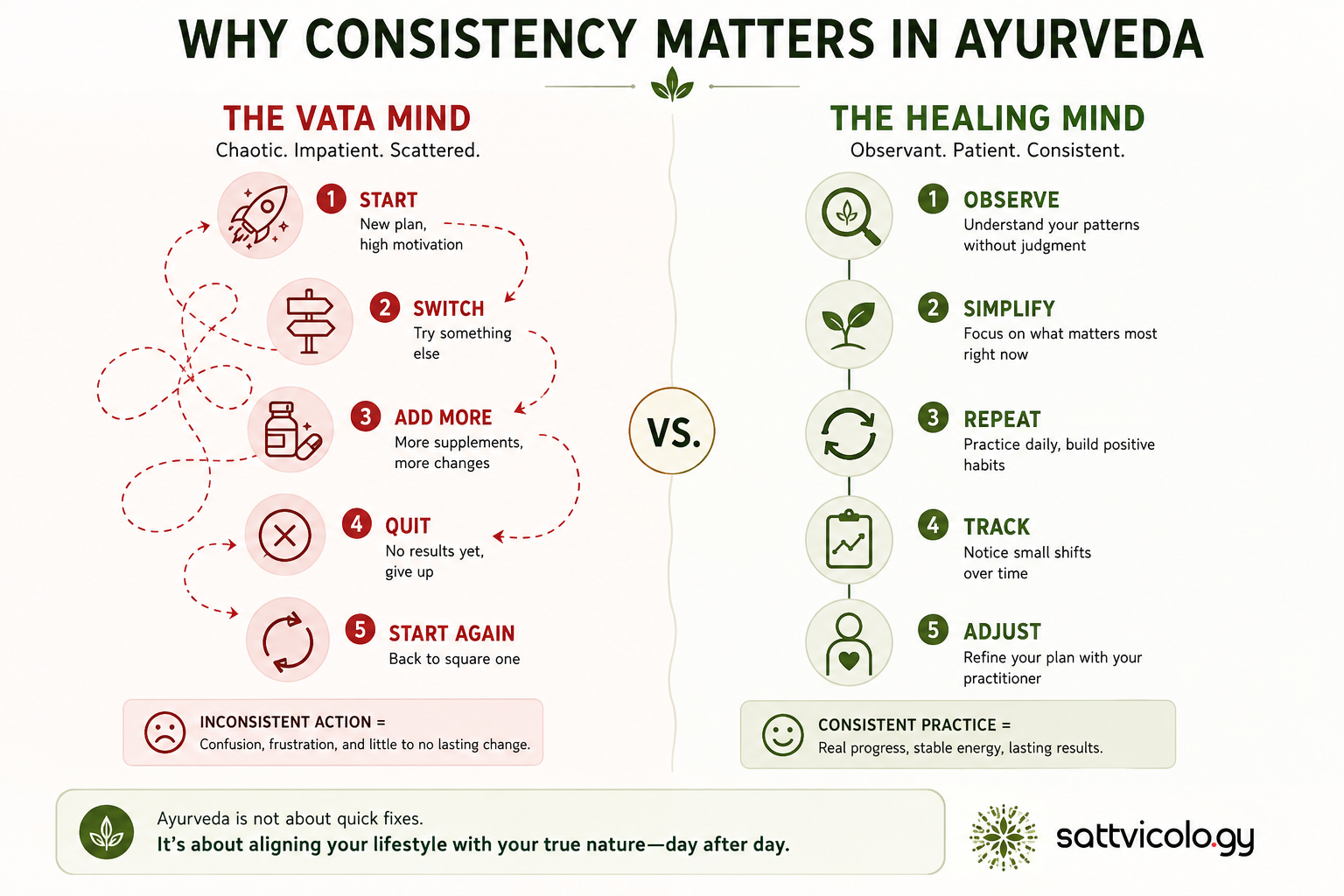
A Vata-dominant pattern of behavior can look like: “I started the program Monday. Why don’t I feel different by Thursday?”
Then: “I read another article.” Then: “I bought six different supplements.” Then: “I changed diets.” Then: “I stopped the first plan.” Then: “I found another practitioner.” Then: “I started fasting.” Then: “My symptoms became worse.” Then: “Ayurveda didn’t work.”
This constant changing makes it almost impossible to determine what is helping.
The Ayurvedic answer to excessive variability is often the opposite quality: regularity.
Same wake time. Predictable meals. Reasonably consistent bedtime. Simple daily practices. One plan long enough to evaluate it.
This may be one of the most powerful concepts a patient can understand before beginning treatment.
Ayurveda Requires a Different Relationship With Time
Much of modern life trains us for instantaneous response. Tap the screen. The car arrives. Click the button. The package arrives. Take the medication. The headache decreases.
Ayurveda often asks for a very different skill: observation over time.
Chronic illness did not necessarily appear overnight. Some patterns may have been forming for months or years.
The appropriate question is therefore not always: “Did Ayurveda work this week?”
A better question may be: “What has changed since baseline?”
Perhaps you fall asleep 20 minutes faster. Your afternoon bloating has decreased. You have bowel movements five days per week instead of two. You no longer need an afternoon nap. Your pain changed from 8/10 to 6/10. Your food cravings are less intense.
These incremental shifts matter.
Clinical Research Supports the Importance of Staying With Whole-System Interventions
Ayurvedic research frequently evaluates programs lasting weeks or months, not days.
The knee osteoarthritis trial involved 12 weeks of treatment.
The breast-cancer survivorship Ayurvedic lifestyle pilot lasted four months and incorporated eight individual practitioner visits involving nutrition, lifestyle, yoga and marma-based recommendations. Participants had high visit adherence, and those completing the program reported substantial improvements in several quality-of-life, sleep, fatigue, depressive-symptom and stress measures. Because it was a single-arm feasibility trial, these findings cannot establish causality, but they demonstrate something important about engagement: people were able to adhere to a structured individualized Ayurvedic program over time.
The newer 2026 virtual breast-cancer-survivorship pilot similarly demonstrated 93% retention over 12 weeks, suggesting that individualized Ayurvedic lifestyle support can remain practical even when delivered remotely.
Three Illustrative Patient Journeys
The following are composite examples, not testimonials from identifiable patients. They illustrate patterns consistent with the types of whole-system interventions investigated in Ayurvedic research.
Patient A: “I Came for Knee Pain”
A 59-year-old patient schedules a consultation expecting an herbal pain reliever.
The practitioner discovers irregular meals, constipation, poor sleep, sedentary work, morning stiffness, excess weight and very little daily movement.
The Ayurvedic plan might therefore address much more than the knee: meal regularity, digestion, sleep, gentle activity, local therapies and individualized dietary recommendations.
The patient initially asks: “But what does my breakfast have to do with my knee?”
Over time, however, they begin thinking in systems rather than isolated symptoms.
That philosophy resembles the multimodal approach evaluated in the randomized knee-osteoarthritis study, in which individualized Ayurveda outperformed conventional conservative care on the primary WOMAC outcome after 12 weeks.
Patient B: “I Thought I Needed More Supplements”
A chronically fatigued 48-year-old is already taking 14 supplements.
During consultation, it becomes clear that they skip breakfast, drink coffee throughout the day, eat their largest meal after 9 p.m., sleep five hours and have unpredictable bowel movements.
An experienced practitioner may actually simplify the treatment.
The first phase could involve fewer products and greater emphasis on regular meals, sleep, digestibility, gentle movement and observing symptoms.
This is an important lesson: A sophisticated Ayurvedic plan is not necessarily a complicated Ayurvedic plan.
Patient C: The Cancer Survivor Seeking Recovery
A breast-cancer survivor has completed active conventional treatment but continues experiencing poor sleep, gastrointestinal discomfort, fatigue and reduced quality of life.
Ayurveda should not tell her that chemotherapy was unnecessary or promise to prevent recurrence.
Instead, an integrative Ayurvedic approach might focus on survivorship: nutrition, sleep, daily routine, appropriate movement, stress regulation and individualized lifestyle support coordinated with oncology care.
This closely resembles the populations studied in Ayurvedic breast-cancer survivorship research, where whole-system Ayurvedic interventions were feasible and associated with promising changes in sleep, gastrointestinal symptoms and quality-of-life measures.
What Ayurveda Can Teach Chronic-Illness Patients About Successful Treatment
For chronic disease, the patient’s role changes. You are no longer simply “taking something.” You are learning to observe your own physiology.
That means developing several skills.
Become a Pattern Observer
Instead of saying, “My stomach is bad,” learn to report: “I become bloated approximately 45 minutes after dinner.”
Instead of, “I don’t sleep,” say: “I fall asleep easily but wake between 2:30 and 3:30 a.m. approximately five nights a week.”
Specificity gives your practitioner useful information.
Keep a Simple Health Journal
Track only information that influences decisions: sleep time, wake time, bowel movement, appetite, main symptoms, pain score, energy, menstrual symptoms if relevant, unusual food reactions and treatment adherence.
Do not create an enormous spreadsheet that itself becomes a source of anxiety. The objective is clarity, not obsession.
Change One Layer at a Time
One of the easiest ways to sabotage any integrative treatment is to change ten things simultaneously.
If you begin three herbs, a new diet, fasting, oil massage, breathwork, five supplements, intermittent fasting, a probiotic and a new exercise routine on the same Monday, neither you nor your practitioner will know what caused improvement—or deterioration.
A thoughtful provider may prioritize.
Understand the Difference Between a Treatment Goal and a Wellness Goal
“I want perfect health” is not measurable. “I want my fasting glucose to improve while my primary-care physician monitors my diabetes” is measurable. “I want less fatigue after cancer treatment” is measurable. “I want to have a bowel movement at least once daily without straining” is measurable.
Clear outcomes improve clinical conversations.
Ayurveda for Chronic Disease: What Does the Research Actually Say?
Evidence differs substantially by condition and intervention.
NCCIH currently characterizes the overall evidence base as limited: some studies suggest possible benefit for conditions including osteoarthritis and type 2 diabetes, but many Ayurvedic trials remain small or methodologically weak.
A 2022 systematic review examining Ayurvedic medicines for type 2 diabetes identified 199 randomized trials involving more than 21,000 participants and numerous botanical interventions. Several showed improvements in glycemic measures, but methodological reporting was frequently poor, limiting certainty.
A whole-system diabetes trial involving diet, exercise, meditation and an Ayurvedic supplement found no significant overall difference between groups at six months on the primary clinical measures, although exploratory analyses suggested potential benefit among participants beginning with higher HbA1c values.
This illustrates exactly why Ayurveda should not be marketed as magic. Some studies are encouraging. Some are inconclusive. Evidence quality varies. Responsible Ayurveda welcomes that distinction.
What Should You Expect From Your First Online Ayurvedic Consultation?
Before the Appointment
You may complete a detailed intake form covering medical history, current symptoms, medications, supplements, diet, digestion, bowel habits, sleep, activity, stress and treatment goals. Have recent laboratory results and relevant medical reports available.
During the Appointment
The practitioner should spend significant time listening. You may discuss your primary concern, chronology of symptoms, current medical treatment, digestive patterns, sleep, energy, appetite, elimination, daily routine, stress, food habits, environment, constitution and current imbalance. The provider should also identify situations requiring conventional evaluation or collaborative care.
After the Appointment
A good plan should be understandable. You should know: What am I doing? Why am I doing it? How often? For how long? What outcome are we watching? What adverse reactions should make me stop? When is follow-up? What should I continue from my conventional treatment?
If you leave with fifteen unexplained products and no strategy, ask more questions.
Questions Your Ayurvedic Practitioner Should Ask You
At minimum, expect meaningful questions about your primary complaint, onset and progression, medical diagnoses, medications, supplements, allergies, previous treatments, appetite, digestion, bowel movements, urination, sleep, energy, temperature tolerance, pain characteristics, diet, daily routine, work, exercise, stress, mental state and goals.
Women may also be asked about menstrual, pregnancy or menopausal history when clinically relevant.
12 Questions You Should Ask Your Ayurvedic Provider
- What are your credentials and training?
- What is your assessment of my Ayurvedic pattern?
- What are we trying to improve first?
- Why are you recommending this particular intervention?
- What evidence supports it?
- Could these herbs or supplements interact with my medications?
- How will we measure whether I am improving?
- How long should I follow this phase before reassessment?
- What symptoms would require conventional medical evaluation?
- Should my primary-care physician or specialist know about this treatment?
- What can I realistically expect Ayurveda to improve—and what can it not treat?
- What is the simplest version of this plan that I can follow consistently?
That final question is particularly powerful. The best treatment plan is useless if it cannot survive contact with your actual life.
How Do I Know Whether an Ayurvedic Provider Is Qualified?
This requires some care because credentials and legal scope vary by country and jurisdiction.
India regulates Ayurveda education and professional standards through organizations including the National Commission for Indian System of Medicine (NCISM), which oversees recognized Ayurveda medical education and professional standards.
In countries such as the United States, “Ayurvedic practitioner” or “Ayurvedic doctor” does not have the same standardized legal meaning across every state.
Before booking, ask: Where were you trained? How many years did you train? What credential did you earn? Are you licensed or registered anywhere? Do you carry professional liability coverage? What is your scope of practice where I live? Do you routinely coordinate with physicians? How do you handle medical emergencies or red flags? Do you prescribe herbs containing metals or minerals? Where are your products manufactured and tested?
A practitioner should welcome these questions.
Ayurvedic Products Are Not Automatically Safe Because They Are Natural
This deserves particular attention.
NCCIH notes that some Ayurvedic products have been found to contain lead, mercury or arsenic at potentially toxic concentrations, and serious heavy-metal exposure has been documented.
That does not mean every Ayurvedic preparation is unsafe. It means quality matters.
Ask your provider: Who manufactures this? Is it independently tested? Can I see testing for heavy metals? Why is this formulation necessary? Could it affect my liver or kidneys? Could it interact with anticoagulants, diabetes medication, blood-pressure medication, chemotherapy or immunosuppressive drugs?
For chronic illness, this is not optional due diligence.
The Most Important Rule: Do Not Stop Necessary Medication on Your Own
A responsible Ayurvedic practitioner should not casually tell you to discontinue insulin, antihypertensives, anticoagulants, antiseizure medication, thyroid medication, cancer therapy, immunosuppressive medication, psychiatric medication or other medically necessary treatment.
Changes to prescribed medication should be coordinated with the clinician responsible for that medication.
The goal of integrative medicine is integration, not ideological competition.
WHO’s current traditional-medicine strategy emphasizes evidence, safety, quality and appropriate integration into healthcare systems.
A Sample Q&A Between an Ayurvedic Practitioner and Patient
Patient: “How quickly should I expect this to work?”
Practitioner: “That depends on what we are treating. Some symptoms may change quickly, while chronic patterns can require weeks or months. We should decide beforehand what we are measuring.”
Patient: “Why aren’t you giving me more supplements?”
Practitioner: “Because your irregular meals, poor sleep and digestion may currently be higher priorities. More interventions are not automatically better.”
Patient: “Do I have to follow everything perfectly?”
Practitioner: “No. We want consistent behavior, not perfection. If ten recommendations overwhelm you, we should identify the two or three with the highest priority.”
Patient: “Can Ayurveda replace my medication?”
Practitioner: “Not automatically. We need to understand what your medication is treating and coordinate with the prescribing clinician. Ayurveda can often be used as complementary care.”
Patient: “How will I know whether I am getting better?”
Practitioner: “We will track your original symptoms and objective measures where appropriate rather than relying only on how you feel on one particular day.”
Patient: “What if I have a bad week?”
Practitioner: “One bad week is data. It is not necessarily treatment failure. We look for trends.”
That last sentence is particularly important for chronic illness.
How to Stay on Course Instead of Abandoning Ayurvedic Treatment
1. Choose Three Priorities
Not twenty. For example: Regular breakfast. Bed by 10:30 p.m. Take prescribed Ayurvedic formulation twice daily. Build from there.
2. Attach New Habits to Existing Habits
Instead of: “I will remember to do breathing exercises sometime.” Try: “After I brush my teeth in the morning, I will do five minutes of breathing.” Behavior becomes easier when it has an anchor.
3. Stop Expecting Daily Linear Improvement
Chronic illness rarely improves in a perfectly straight line. A useful treatment can coexist with a stressful week, travel, poor sleep, menstruation, infection, weather change, family crisis or dietary deviation. Look for trends over weeks.
4. Schedule Follow-Up Before You Lose Momentum
Do not wait until you have forgotten why the plan was created. Chronic-care programs work better when reassessment is built in. A follow-up allows the practitioner to ask: What improved? What did not? What was difficult? What caused side effects? What could you realistically maintain? What should change next?
5. Tell the Truth About Adherence
If you followed the diet twice in three weeks, say so. If you stopped the herbs after four days, say so. If you never started meditation, say so. Practitioners cannot intelligently modify treatment using inaccurate data. There is no benefit in being a “good patient.” Be an informative patient.
6. Do Not Chase Every Wellness Trend Simultaneously
One week Ayurveda. Next week carnivore diet. Next week water fasting. Then probiotics. Then biohacking. Then Chinese herbs. Then twelve supplements from a podcast. This is physiological noise. If the treatment is safe and reasonable, give it enough consistency to evaluate.
7. Keep Conventional Monitoring
If you have diabetes, hypertension, thyroid disease, autoimmune disease, cancer, kidney disease, cardiovascular disease or another significant chronic illness, continue appropriate medical monitoring. Ayurvedic subjective improvement should not replace necessary laboratory or clinical assessment.
What an Excellent Ayurvedic Treatment Plan Should Feel Like
It should feel personalized but understandable.
You should be able to explain your plan to someone else.
For example: “For the next four weeks, I am focusing on regular meals, earlier sleep, a specific digestive formulation and gentle daily movement. We are tracking bloating, bowel regularity, sleep and energy. Then I meet the practitioner again.”
That is very different from: “I have 17 Ayurvedic products and I don’t remember which one is for what.”
Complexity is not proof of sophistication.
What an Ayurvedic Consultation Should NOT Promise
Be cautious if you hear: “Guaranteed cure.” “You don’t need your oncologist.” “Stop all your medication.” “This one herb treats every disease.” “Your doctor doesn’t understand the root cause.” “All disease comes from toxins.” “If you get worse, that’s just detox.” “We don’t need your medical records.”
Those statements should make you more skeptical, not less.
NCCIH advises patients not to use Ayurvedic medicine to postpone conventional evaluation and stresses the importance of discussing complementary approaches with healthcare professionals.
Why Online Ayurvedic Care May Be Particularly Valuable for Chronic Illness
Chronic illness management depends heavily on what happens between appointments.
That makes virtual care particularly interesting.
Instead of flying across the country to see someone once, telehealth can potentially support regular follow-up, diet review, habit modification, symptom tracking, accountability, sleep coaching, adjustment of lifestyle recommendations and communication around adherence.
The recent virtual Ayurvedic breast-cancer-survivorship pilot demonstrated strong retention and feasibility for precisely this kind of personalized remote whole-system care.
Virtual care cannot replace every physical examination. But for ongoing lifestyle-oriented support, it may actually reduce one of the greatest barriers to chronic-care success: distance between the patient and the practitioner.
Reframing “Root Cause”
The phrase root cause is powerful—but frequently misused.
There may not be one root cause.
A person’s chronic illness may involve genetics, aging, immune dysregulation, medication effects, sleep, diet, stress, environment, physical inactivity, structural disease, infection, trauma and behavior simultaneously.
Ayurveda’s greatest contribution may therefore not be discovering one hidden cause.
It may be teaching us to ask: What are all the conditions currently maintaining this person’s imbalance?
That is a much more useful question.
The Sattvic Perspective: Ayurveda Works Best When the Patient Becomes a Participant
There is something profoundly different about medicine when the patient begins noticing patterns.
When you notice that eating at 10 p.m. changes your sleep… When you recognize that three nights of inadequate sleep change your digestion… When you see that your anxiety becomes worse after excessive stimulation… When you notice that walking after lunch changes how you feel at 4 p.m…. you have acquired something no supplement bottle can give you.
Self-observation.
This may be one of Ayurveda’s most enduring gifts.
The practitioner is not supposed to make you dependent upon the practitioner. The consultation should gradually teach you to understand the rhythms of your own body.
That does not mean diagnosing yourself. It means becoming more literate in your own physiology.
For the restless Vata-like mind that wants a new answer every three days, this discipline can be transformative:
Observe before changing.
Simplify before adding.
Repeat before judging.
Measure before abandoning.
And above all: Give the body enough consistency to respond.
Ayurveda is not necessarily slow. But chronic healing rarely responds well to impatience.
Clinical Evidence Snapshot
Knee osteoarthritis: A randomized controlled trial involving 151 participants found greater improvement in WOMAC scores after a 12-week multimodal Ayurvedic treatment program compared with conventional conservative care.
Rheumatoid arthritis: A small randomized double-blind pilot demonstrated the feasibility of scientifically studying individualized classical Ayurvedic treatment alongside methotrexate; larger studies remain necessary.
Type 2 diabetes: A systematic review identified 199 randomized trials involving more than 21,000 participants, with several Ayurvedic medicines showing favorable glycemic outcomes, but methodological limitations lowered confidence in much of the evidence.
Cancer survivorship: A four-month whole-system Ayurvedic nutrition and lifestyle pilot in breast-cancer survivors reported high adherence and promising improvements in several quality-of-life and symptom outcomes, although the uncontrolled design prevents firm efficacy conclusions.
Virtual Ayurveda: A 2026 randomized exploratory study demonstrated that a personalized 12-week virtual Ayurvedic intervention for breast-cancer survivors was feasible, acceptable and associated with promising trends in psychological well-being, gastrointestinal symptoms and sleep.
Overall evidence: NCCIH concludes that some Ayurvedic interventions show promise, but much of the current research remains limited by small trials and methodological weaknesses.
Frequently Asked Questions About Ayurvedic Consultations
An Ayurvedic consultation typically explores your current symptoms along with medical history, digestion, appetite, elimination, sleep, energy, diet, daily routine, stress, environmental factors and Ayurvedic constitutional patterns. The practitioner may assess Prakriti and Vikriti and develop individualized diet, lifestyle and therapeutic recommendations.
Yes. Much of the lifestyle, dietary and symptom assessment involved in Ayurveda can be performed by video consultation. A 2026 randomized pilot demonstrated that a personalized virtual Ayurvedic lifestyle intervention was feasible and well accepted among breast-cancer survivors. Some examinations still require an in-person visit.
The length varies by practitioner and complexity. Initial consultations are generally longer than follow-ups because the practitioner needs to understand medical history, symptoms and multiple lifestyle domains. Ask the clinic how much time is allocated before booking.
Ayurveda attempts to understand the overall pattern in which symptoms occur. Digestion, sleep, elimination, appetite, routine, stress and symptom timing may influence the practitioner’s Ayurvedic assessment rather than treating each complaint as completely independent.
Some Ayurvedic interventions have supportive clinical evidence, including studies involving osteoarthritis, diabetes and whole-system lifestyle programs. However, the evidence base is uneven, and many studies remain small or methodologically limited.
Ayurveda is frequently used as supportive or integrative care for chronic conditions, particularly around diet, lifestyle, sleep and symptom management. Whether a specific Ayurvedic intervention is effective depends on the disease and treatment. Serious chronic illnesses should continue to receive appropriate conventional diagnosis and monitoring.
Western medicine organizes disease primarily through biomedical diagnosis, anatomy, physiology, pathology and evidence-based therapeutic interventions. Ayurveda traditionally adds individualized assessment based on constitution, current imbalance, digestion, daily routine and other classical concepts. They are different medical frameworks and are often safest when used collaboratively rather than competitively.
Prakriti is the Ayurvedic concept describing a person’s constitutional tendencies. It is commonly interpreted through patterns involving Vata, Pitta and Kapha. It should not be considered equivalent to a modern genetic or laboratory diagnosis.
Vikriti refers to the person’s present pattern of Ayurvedic imbalance. Practitioners compare the current state with constitutional tendencies to guide individualized recommendations.
Agni is an Ayurvedic concept involving digestive and metabolic capacity. Ayurvedic consultation commonly spends considerable time assessing appetite, digestion and elimination because these are central to treatment planning.
There is no universal timeline. Some symptoms may change relatively quickly, while chronic conditions may require months of consistent intervention. Clinical trials of whole-system Ayurveda frequently evaluate outcomes over periods such as 12 weeks or four months rather than a few days.
Chronic symptoms are affected by many variables, including adherence, disease severity, sleep, diet, medications and lifestyle. Before abandoning a plan, review whether you followed it consistently, whether measurable outcomes have changed and whether your practitioner needs to modify the strategy.
Sometimes, but not automatically. Herbal medicines can potentially interact with prescription drugs. Tell both your Ayurvedic practitioner and conventional healthcare providers everything you take.
Safety varies by product and ingredient. Some Ayurvedic preparations have raised concerns about heavy metals. Use reputable manufacturers, ask about independent testing and involve your healthcare team when you have chronic disease or take medications.
No prescribed medication should be stopped solely because an Ayurvedic program has begun. Medication changes should be made with the clinician responsible for prescribing and monitoring that medication.
Have your medication and supplement list, current diagnoses, recent labs if relevant, surgical history, allergies, main symptoms and health goals available. A short record of sleep, digestion, bowel movements and symptom patterns can also make the appointment more productive.
Ask about credentials, assessment, treatment goals, evidence, safety, medication interactions, expected timeline, follow-up schedule and how improvement will be measured. You should understand why each major recommendation is being made.
Frequency depends on illness severity and treatment complexity. Chronic conditions usually benefit from planned reassessment rather than waiting indefinitely. Your practitioner should tell you when progress will be evaluated.
Start with a small number of high-priority practices, attach them to an existing routine, track a few measurable symptoms and schedule follow-up. Consistency generally provides more useful information than repeatedly switching treatments.
One of the biggest mistakes is expecting Ayurveda to function like an instant symptom-suppression system while simultaneously changing many treatments every few days. Whole-system Ayurvedic care often depends on consistency, observation and gradual adjustment.
For serious or chronic medical conditions, Ayurveda is generally better approached as complementary or integrative care rather than an automatic replacement for evidence-based diagnosis and treatment.
Prepare for Your Online Ayurvedic Consultation
A productive consultation starts with clear goals, an accurate medication and supplement list, recent relevant records, and a willingness to observe patterns over time. Choose a qualified practitioner who communicates clearly, respects conventional medical care, and gives you a plan you can realistically follow.
Medical Disclaimer
This article is educational and does not constitute medical diagnosis or treatment. Ayurveda should not be used to delay urgent or medically necessary care. People with cancer, diabetes, cardiovascular disease, kidney or liver disease, autoimmune illness, pregnancy, serious psychiatric conditions or other significant medical concerns should coordinate complementary Ayurvedic care with their licensed healthcare team. Ayurvedic herbs and formulations can produce adverse effects, interact with medications or vary in quality. Use professionally manufactured, appropriately tested products and disclose all supplements and complementary therapies to your healthcare providers.