Arjuna: 10 Potential Benefits of Ayurveda’s Legendary Heart Herb
Siddharth Bhairava,
BAMS, Certified Ayurvedic Provider.
Sattvicology Healthcare Team
Arjuna (Terminalia arjuna) is one of Ayurveda’s best-known cardiovascular herbs. Explore its traditional uses and what human clinical research says about Arjuna for angina, heart function, cholesterol, circulation, blood pressure and cardiovascular wellness.
What Is Arjuna?
Arjuna (Terminalia arjuna) is one of Ayurveda’s most respected botanicals for cardiovascular wellness. For centuries, the bark of the Arjuna tree has been traditionally used in Ayurvedic medicine in connection with heart strength, circulation, cardiovascular resilience, and overall vitality.
Botanical name: Terminalia arjuna
Common names: Arjuna, Arjun tree, Arjuna bark
Family: Combretaceae
The medicinal portion most commonly used in Ayurveda is the stem bark. Arjuna is a large deciduous tree native to the Indian subcontinent.
Modern researchers have become particularly interested in Arjuna because its bark contains naturally occurring phytochemicals including triterpenoids, flavonoids, tannins, glycosides, gallic acid, ellagic acid, arjunolic acid, arjunic acid, and arjunosides. These compounds have been investigated for antioxidant, vascular, inflammatory, lipid-related, and cardiac effects.
Quick answer: Arjuna is an Ayurvedic botanical traditionally associated with the heart and cardiovascular support. Human research has investigated it in stable angina, coronary artery disease, heart-failure symptoms, cardiac pumping function, left ventricular remodeling, cholesterol, endothelial function, blood pressure, exercise capacity and cardiovascular inflammation.
Important: Arjuna should not be considered a substitute for cardiology care, cholesterol medication, blood-pressure treatment, antiplatelet therapy, heart-failure medication, emergency treatment, or other evidence-based cardiovascular care.
Why Is Arjuna Called the Ayurvedic Heart Herb?
Arjuna has been associated with cardiovascular care in the Indian medical tradition for centuries. Modern research has focused on this historical use rather than treating Arjuna as a general-purpose wellness supplement.
Scientific reviews describe several bioactive compounds in the bark, including arjunolic acid, arjunic acid, arjungenin, arjunosides, flavonoids, tannins, oligomeric proanthocyanidins, gallic acid and ellagic acid.
A 2014 review of the available evidence concluded that experimental and clinical research had reported potentially relevant cardiovascular actions but also highlighted substantial research limitations, including inconsistent extract standardization, limited toxicology data, and insufficient information on interactions with medications.
Traditional Ayurvedic use does not automatically equal clinical proof. At the same time, the cardiovascular focus of Arjuna has generated enough human research to warrant continued scientific investigation.
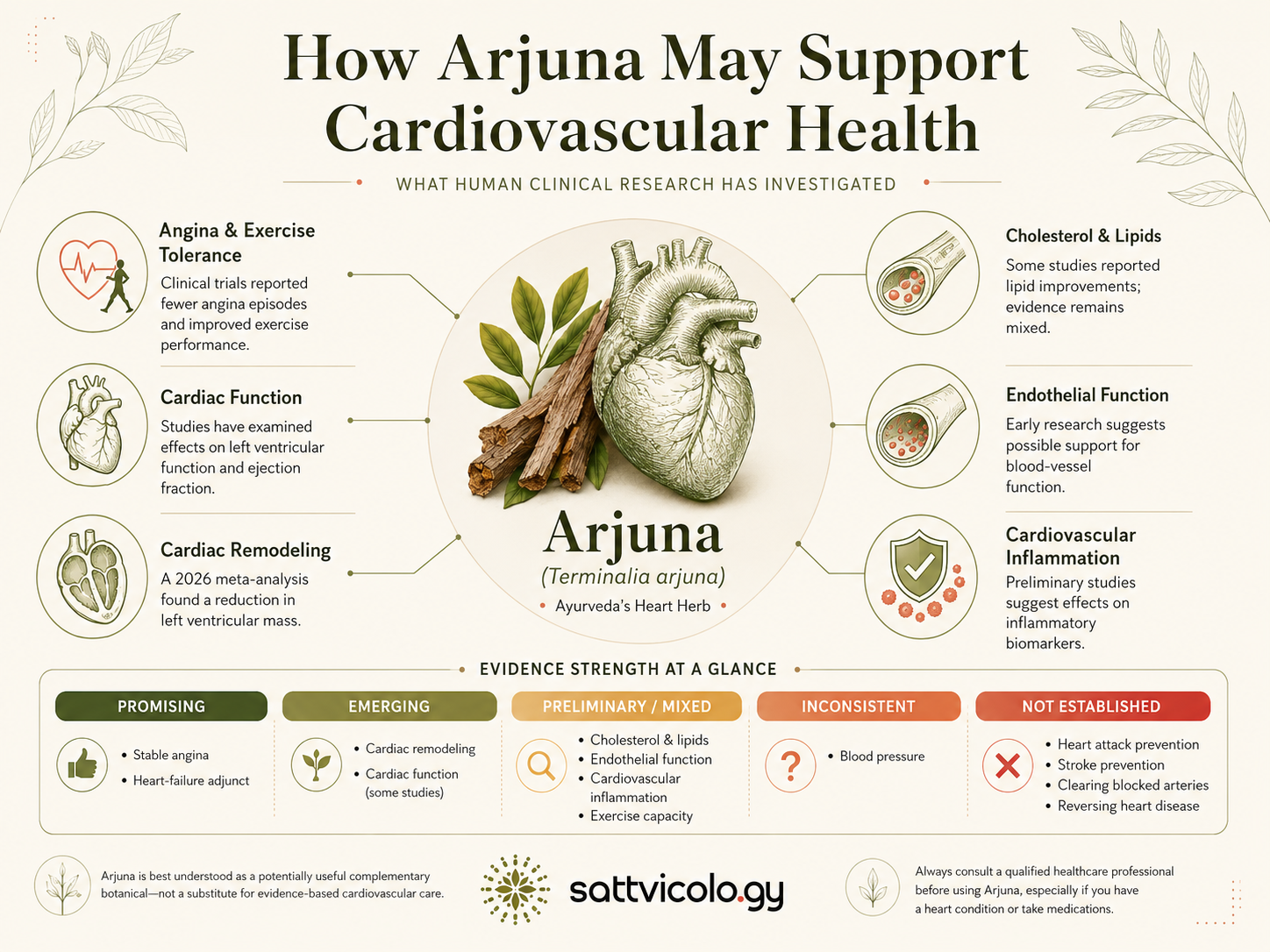
1. Arjuna Has Promising Evidence for Stable Angina
One of the most important human studies of Arjuna involved men with chronic stable angina. In a randomized, double-blind, placebo-controlled crossover study, 58 men received Terminalia arjuna bark extract, isosorbide mononitrate and placebo during separate treatment periods.
Arjuna supplementation was associated with improvements in exercise-related measurements and a reduction in angina frequency compared with placebo. Earlier small clinical research also reported fewer anginal episodes and improvements in treadmill performance after Arjuna therapy.
Evidence level: Promising but based largely on relatively small and older clinical trials.
Chest pain should never be self-treated with Arjuna. New, severe, persistent, worsening, or unexplained chest discomfort can indicate a medical emergency and requires immediate evaluation.
2. Arjuna Has Been Studied as an Adjunct in Heart Failure
Arjuna has also been investigated in people with heart failure. A 2026 systematic review and meta-analysis evaluated nine studies involving 537 adults with heart failure.
Researchers found that Arjuna was associated with a statistically significant reduction in left ventricular mass, suggesting a possible effect on cardiac remodeling. However, improvement in left ventricular ejection fraction was not statistically significant overall, and blood pressure, LDL cholesterol and triglycerides did not significantly improve. HDL cholesterol increased significantly in the pooled analysis.
Evidence level: Promising as adjunctive therapy, but not established as standard heart-failure treatment.
Arjuna should never replace guideline-directed heart-failure medication prescribed by a cardiologist.
3. Arjuna May Influence Cardiac Remodeling
When the heart is placed under chronic pressure or stress, structural changes can occur in the ventricular walls and chambers. These changes are often referred to as cardiac remodeling.
The 2026 meta-analysis found a significant reduction in left ventricular mass among participants receiving Arjuna in the included heart-failure studies. This is scientifically interesting because excessive left ventricular mass can accompany various cardiovascular disorders.
However, structural improvement in one measurement should not be interpreted to mean that Arjuna reverses heart disease.
Evidence level: Emerging.
4. Arjuna May Support Cardiac Pumping Function
Researchers have also investigated whether Arjuna influences left ventricular ejection fraction (LVEF), one measurement of how effectively the left ventricle pumps blood.
A 2022 randomized, double-blind, placebo-controlled study enrolled 72 healthy adults aged 30–70 and evaluated 400 mg/day of a standardized proprietary aqueous Terminalia arjuna bark extract for eight weeks. The Arjuna group showed an increase in measured LVEF compared with placebo, together with improvements in several secondary parameters. No intervention-related adverse events were reported during the trial.
However, this study involved healthy adults, not patients being treated for heart failure. When heart-failure trials were pooled in the 2026 meta-analysis, the overall LVEF improvement did not reach statistical significance.
Evidence level: Interesting but inconsistent.
5. Arjuna May Have Benefits for Cholesterol
Arjuna has also been studied for lipid metabolism. A randomized placebo-controlled trial involving 105 patients with coronary heart disease evaluated Arjuna tree-bark powder and reported favorable effects on certain cholesterol-related and oxidative-stress measurements.
Other clinical investigations have also examined Arjuna in connection with dyslipidemia. However, the 2026 heart-failure meta-analysis found a significant increase in HDL cholesterol but no statistically significant pooled change in LDL cholesterol or triglycerides.
Evidence level: Mixed but potentially promising.
Statements such as “Arjuna naturally replaces statins” are not supported by current evidence. People taking statins or other lipid-lowering medication should not discontinue treatment because they begin using an herbal product.
6. Arjuna May Support Endothelial Function
The endothelium is the thin cellular lining inside blood vessels. Healthy endothelial function is important for vascular tone, blood flow, nitric oxide signaling, blood-pressure regulation and cardiovascular health.
A small clinical study involving 18 healthy male smokers and 18 nonsmoking controls evaluated Arjuna in relation to endothelial dysfunction associated with chronic smoking. The investigators reported improvements in endothelial function after Arjuna supplementation among the smokers.
Evidence level: Preliminary.
The study was small and does not establish that Arjuna prevents cardiovascular disease caused by smoking. It should not be viewed as a way to protect the heart while continuing tobacco exposure.
7. Arjuna May Influence Cardiovascular Inflammation
Inflammation plays an important role in the biology of atherosclerosis and coronary artery disease. A randomized, double-blind clinical trial involving 116 patients with stable coronary artery disease examined Arjuna bark extract as an adjunct to conventional medications.
The researchers evaluated inflammatory and immune-related markers and reported modulation of several measures after short-term adjunctive Arjuna therapy.
Evidence level: Early clinical evidence.
This does not establish Arjuna as an anti-inflammatory treatment for coronary artery disease. It instead suggests a possible biological pathway deserving additional research.
8. Arjuna May Support Cardiovascular Exercise Capacity
Research has also investigated Arjuna in healthy people. One randomized study evaluated Ashwagandha and Arjuna in healthy young adults and examined physical performance and cardiorespiratory endurance.
The researchers reported that Arjuna supplementation was associated with improvements in measures related to cardiovascular endurance and systolic blood pressure. Another randomized controlled trial evaluated a standardized Arjuna extract in young exercising adults and reported favorable changes in certain cardiac-conditioning measurements.
Evidence level: Preliminary.
These findings do not mean Arjuna is a proven performance-enhancing supplement, but they provide another area of interest connecting the botanical with cardiovascular physiology.
9. Does Arjuna Lower Blood Pressure?
Possibly in certain settings—but the evidence is not strong enough to recommend Arjuna as a treatment for hypertension. Individual studies have reported reductions in systolic blood pressure, but the 2026 meta-analysis of heart-failure trials found no significant overall blood-pressure effect.
Evidence level: Inconsistent.
People with hypertension should not stop ACE inhibitors, ARBs, beta blockers, calcium-channel blockers, diuretics or other prescribed blood-pressure therapy because they start taking Arjuna.
10. Arjuna Contains Antioxidant Phytochemicals
Arjuna bark contains numerous plant compounds investigated for antioxidant activity, including flavonoids, tannins, proanthocyanidins and triterpenoids. Oxidative stress is one mechanism involved in cardiovascular injury, which helps explain the scientific interest in Arjuna.
However, much of the strongest evidence for Arjuna’s antioxidant mechanisms comes from laboratory and animal studies.
Evidence level: Strong biological plausibility; limited proof of clinical outcomes.
“Contains antioxidant compounds” is scientifically different from saying “Arjuna prevents heart attacks because it is an antioxidant.” The latter has not been established.
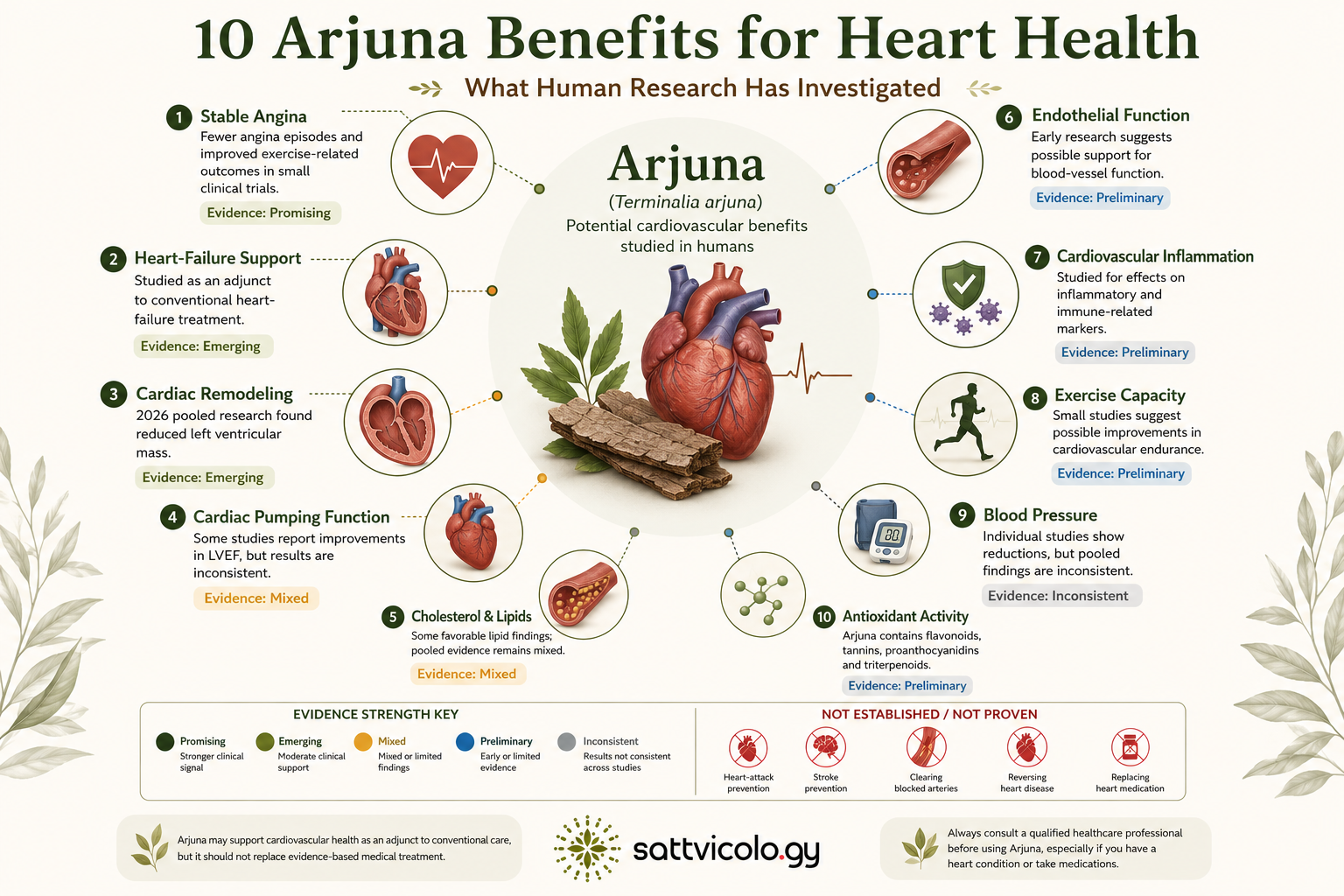
Arjuna Through an Ayurvedic Lens
Ayurveda views cardiovascular health within a much broader physiological and lifestyle framework. An Ayurvedic practitioner may consider:
- Prakriti — underlying constitution
- Vikriti — current imbalance
- Vata, Pitta and Kapha
- Agni — digestive function
- Ama
- Circulation
- Sleep
- Mental and emotional stress
- Diet
- Exercise
- Body weight
- Elimination
- Daily routine
- Age and strength
- Existing medical conditions
- Current medications
Arjuna may therefore be one component of a larger individualized plan rather than a universal “heart supplement.”
At Sattvicolo.gy, the more useful question is not simply “Is Arjuna good for the heart?” but “Is Arjuna appropriate for this particular person, considering their constitution, cardiovascular condition, digestion, medications, lifestyle, and current medical treatment?”
Arjuna and the Heart: Ayurveda Meets Modern Cardiology
Arjuna presents a particularly interesting example of traditional knowledge overlapping with modern research. Ayurveda has historically emphasized the herb in relation to cardiovascular wellness.
Modern researchers have independently investigated Arjuna in stable angina, coronary artery disease, heart failure, endothelial dysfunction, dyslipidemia and cardiac pumping capacity.
That convergence is noteworthy. It does not, however, mean that traditional Arjuna therapy and modern cardiology are interchangeable. The safest contemporary approach is often integrative rather than either/or.
Arjuna vs. Ashwagandha: What Is the Difference?
Both herbs are important in Ayurveda, but their traditional emphasis differs.
Arjuna is traditionally associated particularly with cardiovascular wellness, heart strength, circulation and cardiac resilience.
Ashwagandha is traditionally associated more broadly with stress resilience, strength, nourishment, restorative support, sleep and rasayana.
Modern research reflects some of these differences. Ashwagandha has more contemporary human research involving stress and sleep, while Arjuna’s clinical literature has focused much more heavily on cardiovascular outcomes. They should not automatically be substituted for one another.
Is Arjuna a Blood Thinner?
There is not adequate high-quality clinical evidence to classify Arjuna as a substitute for an anticoagulant or antiplatelet medicine.
People taking medications such as aspirin, clopidogrel, warfarin, apixaban, rivaroxaban or dabigatran should not add cardiovascular herbal products without discussing the decision with an appropriate healthcare professional.
The existing Arjuna literature has repeatedly identified the need for more rigorous information concerning herb–drug interactions.
Can Arjuna Remove Blocked Arteries?
There is no established clinical evidence that Arjuna opens blocked coronary arteries or reverses significant coronary obstruction. Arjuna has been studied in people with coronary artery disease, but this should not be confused with demonstrating physical removal of atherosclerotic plaque.
Atherosclerotic cardiovascular disease requires appropriate risk assessment and management that may include cholesterol treatment, blood-pressure control, diabetes management, smoking cessation, exercise, nutritional changes, antiplatelet therapy where indicated and coronary intervention when clinically necessary. Arjuna should not delay these treatments.
Can Arjuna Prevent a Heart Attack?
Current clinical evidence does not establish that Arjuna prevents myocardial infarction.
Existing trials have largely examined surrogate or intermediate outcomes such as angina frequency, exercise tolerance, lipids, ejection fraction, cardiac remodeling and inflammatory biomarkers. Those are not equivalent to demonstrating a reduction in heart attacks, cardiovascular deaths or strokes.
Evidence level: Not established for heart-attack prevention.
Is Arjuna Safe? Who Should Talk to a Healthcare Professional?
Available human studies generally report reasonable short-term tolerability. A pharmacovigilance-oriented clinical study followed 35 patients with chronic coronary artery disease receiving Arjuna bark extract together with conventional treatment, compared with 35 patients receiving conventional treatment alone. Follow-up ranged from nine months to more than four years. Researchers reported gastritis and constipation among adverse effects but no major laboratory abnormalities attributable to the intervention.
This study provides useful safety information but does not establish universal long-term safety. Other reviews continue to emphasize that standardized toxicity, dosing, formulation and drug-interaction data remain limited.
Professional guidance is especially important if you:
- Have diagnosed heart disease or heart failure
- Have angina or have had a heart attack
- Have an arrhythmia
- Have low blood pressure
- Take blood-pressure medication
- Take anticoagulant or antiplatelet medication
- Take cholesterol-lowering medication
- Take several cardiovascular medicines
- Have kidney or liver disease
- Are pregnant or breastfeeding
- Are preparing for surgery
- Experience unexplained chest pain
- Are treating a child
Because many people interested in Arjuna already have cardiovascular disease, self-prescribing is particularly inappropriate in this population.
How Much Arjuna Should You Take? When Is the Best Time?
There is no universal clinically established Arjuna dose appropriate for everyone. Clinical studies have used substantially different preparations.
For example, one stable-angina trial evaluated 500 mg of Arjuna extract three times daily. Another randomized study in healthy adults used 400 mg/day of a proprietary standardized aqueous extract. These differences highlight an important point: 500 mg of one Arjuna preparation may not be equivalent to 500 mg of another.
Products may differ in bark source, extraction method, concentration, standardization, arjunolic acid content, other phytochemicals and manufacturing quality. A clinical-trial dosage should therefore not automatically become an individual dosing recommendation.
Best time: There is no modern clinical evidence establishing one universally optimal time of day. Ayurvedic recommendations may vary according to constitution, digestive capacity, reason for use, other herbs, delivery medium, current medications and meal timing.
Daily use: Daily Arjuna has been used in clinical research, and one observational safety study followed patients for periods extending beyond four years. That does not establish lifelong safety for everyone, especially people already taking cardiovascular medication.
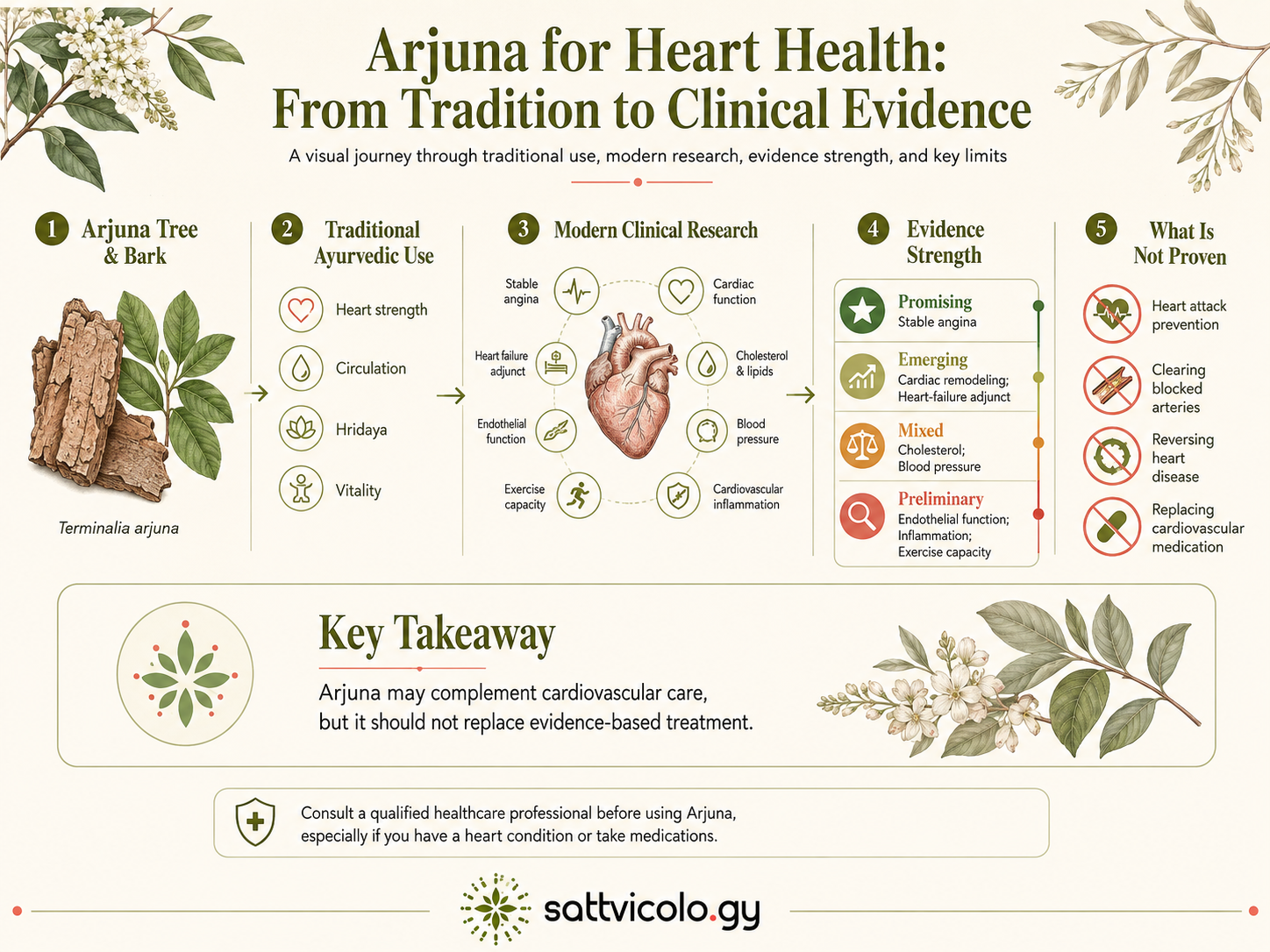
What Does Modern Science Actually Say About Arjuna?
The most scientifically responsible summary is:
Evidence is promising for:
- Stable angina — small randomized trials suggest potential reductions in angina frequency and improvements in exercise performance.
- Heart-failure adjunctive care — a 2026 meta-analysis suggests possible improvement in certain measures such as left ventricular mass and HDL, while other important measures were unchanged.
- Certain cardiac-function measures — several studies have reported favorable changes, although results are not consistent across populations.
Evidence is preliminary or mixed for:
- Cholesterol reduction
- Blood-pressure reduction
- Endothelial function
- Cardiovascular inflammation
- Exercise endurance
Evidence is insufficient for claiming that Arjuna:
- Prevents heart attacks
- Prevents strokes
- Removes arterial plaque
- Opens blocked coronary arteries
- Replaces statins
- Replaces blood-pressure medication
- Replaces beta blockers
- Replaces heart-failure medication
- Replaces anticoagulants
- Reverses coronary artery disease
- Cures hypertension
- Cures heart failure
Arjuna and conventional cardiovascular treatments should not be framed as simple competitors. Modern cardiology has therapies supported by large clinical programs demonstrating reductions in heart attacks, hospitalization, stroke, progression of heart failure and cardiovascular mortality. Comparable outcome-level evidence does not currently exist for Arjuna.
The Sattvicolo.gy Perspective
Few Ayurvedic herbs illustrate the connection between ancient traditional medicine and modern scientific investigation as clearly as Arjuna. For centuries, Ayurveda associated Arjuna with the heart.
Today, researchers are studying the same botanical in relation to cardiac function → circulation → angina → heart failure → endothelial health → lipids → cardiovascular inflammation.
But responsible Ayurveda does not ask people to choose between herbs and modern medicine. It asks how traditional knowledge can be applied safely, intelligently, and individually.
A person with cardiovascular disease may already be taking multiple medications and may also have diabetes, hypertension, high cholesterol, kidney disease, obesity, sleep problems, chronic stress, poor digestion, sedentary habits or dietary risk factors. Simply adding an herb does not address that entire picture.
At Sattvicolo.gy, individualized Ayurvedic care should consider the whole person—including their cardiovascular diagnosis, conventional treatment, constitution, digestion, nutrition, sleep, stress, lifestyle, and medications—before recommending Arjuna or another herbal formulation.
Research References
- Kumar A, Haque ZU, Rai A. Evaluation of the Therapeutic Potential and Safety of Terminalia arjuna in Heart Failure Management: A Systematic Review and Meta-analysis of Randomized Controlled Trials. Annals of African Medicine. 2026. The analysis included nine studies involving 537 heart-failure patients.
- Bharani A, Ganguli A, Mathur LK, Jamra Y, Raman PG. Efficacy of Terminalia arjuna in chronic stable angina: a double-blind, placebo-controlled, crossover study comparing Terminalia arjuna with isosorbide mononitrate. Indian Heart Journal.
- Gupta R, et al. Antioxidant and hypocholesterolaemic effects of Terminalia arjuna tree-bark powder: a randomised placebo-controlled trial. Journal of the Association of Physicians of India.
- Kapoor D, Vijayvergiya R, Dhawan V. Terminalia arjuna in coronary artery disease: ethnopharmacology, pre-clinical, clinical & safety evaluation. Journal of Ethnopharmacology. 2014.
- Srivastava S, Girandola RN, Abedon B. Effect of E-OJ-01 on Left Ventricular Ejection Fraction and Myocardial Oxygen Consumption: A Randomized, Double-Blind, Placebo-Controlled Study. Journal of Multidisciplinary Healthcare. 2022.
- Dwivedi S, Chopra D, Bhandari B. Role of Terminalia arjuna Wight and Arn. in the treatment of chronic coronary artery disease from pharmacovigilance point of view. AYU. 2019/2020.
- Maulik SK, Talwar KK. Therapeutic potential of Terminalia arjuna in cardiovascular disorders. American Journal of Cardiovascular Drugs. 2012.
- Clinical efficacy of water extract of stem bark of Terminalia arjuna in patients of chronic heart failure: a double-blind, randomized controlled trial.
- Short-Term Adjuvant Therapy with Terminalia arjuna Attenuates Ongoing Inflammation and Immune Imbalance in Patients with Stable Coronary Artery Disease.
- Bhujel M, et al. A comprehensive review of the medicinal properties of Terminalia arjuna and its major constituent arjunolic acid. RSC Advances. 2026.
Frequently Asked Questions About Arjuna
Arjuna is an Ayurvedic botanical derived primarily from the bark of the Terminalia arjuna tree. It has a long traditional association with cardiovascular wellness and has been studied in human clinical research involving angina, coronary artery disease, heart failure, lipid levels, endothelial function and cardiac performance.
Human research suggests potential benefits involving stable-angina symptoms, exercise tolerance, certain heart-failure measurements, cardiac function and selected cholesterol parameters. Evidence varies considerably depending on the outcome, and larger clinical trials remain necessary.
Arjuna is traditionally associated with cardiovascular care, and human clinical trials provide some support for this historical use. It should be used as complementary care rather than a replacement for evidence-based cardiovascular treatment.
A randomized double-blind crossover trial involving 58 men with chronic stable angina found improvements in angina and exercise-related outcomes compared with placebo. Chest pain requires appropriate medical diagnosis, and Arjuna should never be used to self-treat unexplained or acute chest pain.
A 2026 meta-analysis involving nine studies and 537 patients reported favorable effects on left ventricular mass and HDL cholesterol but did not find statistically significant overall improvements in ejection fraction, blood pressure, LDL or triglycerides. Arjuna remains an investigational adjunct, not a replacement for heart-failure therapy.
Some individual studies have reported improvements, including a randomized study of a standardized extract in healthy adults. However, the 2026 pooled analysis of heart-failure studies found that the overall improvement in LVEF did not reach statistical significance.
Some clinical studies have reported improvements in cholesterol measurements. However, pooled contemporary heart-failure evidence found increased HDL without significant changes in LDL or triglycerides. The overall evidence is mixed.
Some small studies have reported lower systolic blood pressure, but a 2026 meta-analysis found no significant overall effect on blood pressure in heart-failure patients. Arjuna should not replace prescribed antihypertensive treatment.
There is no reliable clinical evidence that Arjuna physically clears blocked coronary arteries. It has been studied in coronary artery disease, but that is not the same as proving regression of significant arterial plaque.
Clinical trials have not established that Arjuna prevents myocardial infarction or cardiovascular death.
Arjuna should not be considered an alternative to prescribed anticoagulant or antiplatelet therapy. Evidence regarding clinically important interactions remains insufficient, so professional guidance is recommended for people taking cardiovascular medications.
Arjuna has been studied as an adjunct to conventional cardiovascular medication in several trials. However, that does not mean every combination is safe. People taking heart medications should discuss Arjuna with an appropriately qualified healthcare professional.
Available studies suggest reasonable tolerability in selected populations, including an observational study following coronary artery disease patients for periods extending beyond four years. Long-term universal safety, standardized dosing and herb-drug interaction data remain insufficient.
The stem bark is the portion most commonly used in Ayurvedic practice and cardiovascular clinical research.
Explore Ayurveda With Individualized Guidance
Arjuna is traditionally selected according to the individual, not simply by symptom name. Understanding your constitution, cardiovascular diagnosis, digestion, medications, lifestyle and health goals can help you explore Ayurveda more thoughtfully.
Medical Disclaimer
The information provided on Sattvicolo.gy is for educational and informational purposes only and is not intended to diagnose, treat, cure, or prevent any disease. It should not replace professional medical advice, diagnosis, emergency evaluation, or treatment.
Do not use Arjuna to self-treat chest pain, shortness of breath, heart palpitations, fainting, suspected heart attack, heart failure, uncontrolled hypertension, or another cardiovascular problem.
Do not stop or alter blood-pressure medication, statins, antiplatelet medication, anticoagulants, beta blockers, nitrates, heart-failure medications, diabetes medications or other prescription treatments based on information on this page.
Clinical research has examined Arjuna together with conventional cardiovascular medications, but complete data concerning long-term safety, standardized preparations, dosing and drug interactions remain limited.
If you are pregnant, breastfeeding, preparing for surgery, taking prescription medications, or living with cardiovascular, kidney, liver or another chronic medical condition, consult an appropriately qualified healthcare professional before using Arjuna.
New, severe, persistent, or unexplained chest pain or pressure requires urgent medical evaluation.