Boswellia: 10 Potential Benefits of Ayurveda’s Powerful Resin for Joints & Inflammation
A.P. Shrilata,
BAMS, PGDND, YIC, Certified Ayurvedic Provider.
Sattvicology Healthcare Team
Boswellia (Boswellia serrata), traditionally known in Ayurveda as Shallaki or Salai Guggul, is best known today for its potential effects on joint pain, mobility, inflammation and osteoarthritis. Modern supplements generally use standardized extracts of the tree’s gum resin containing naturally occurring boswellic acids.
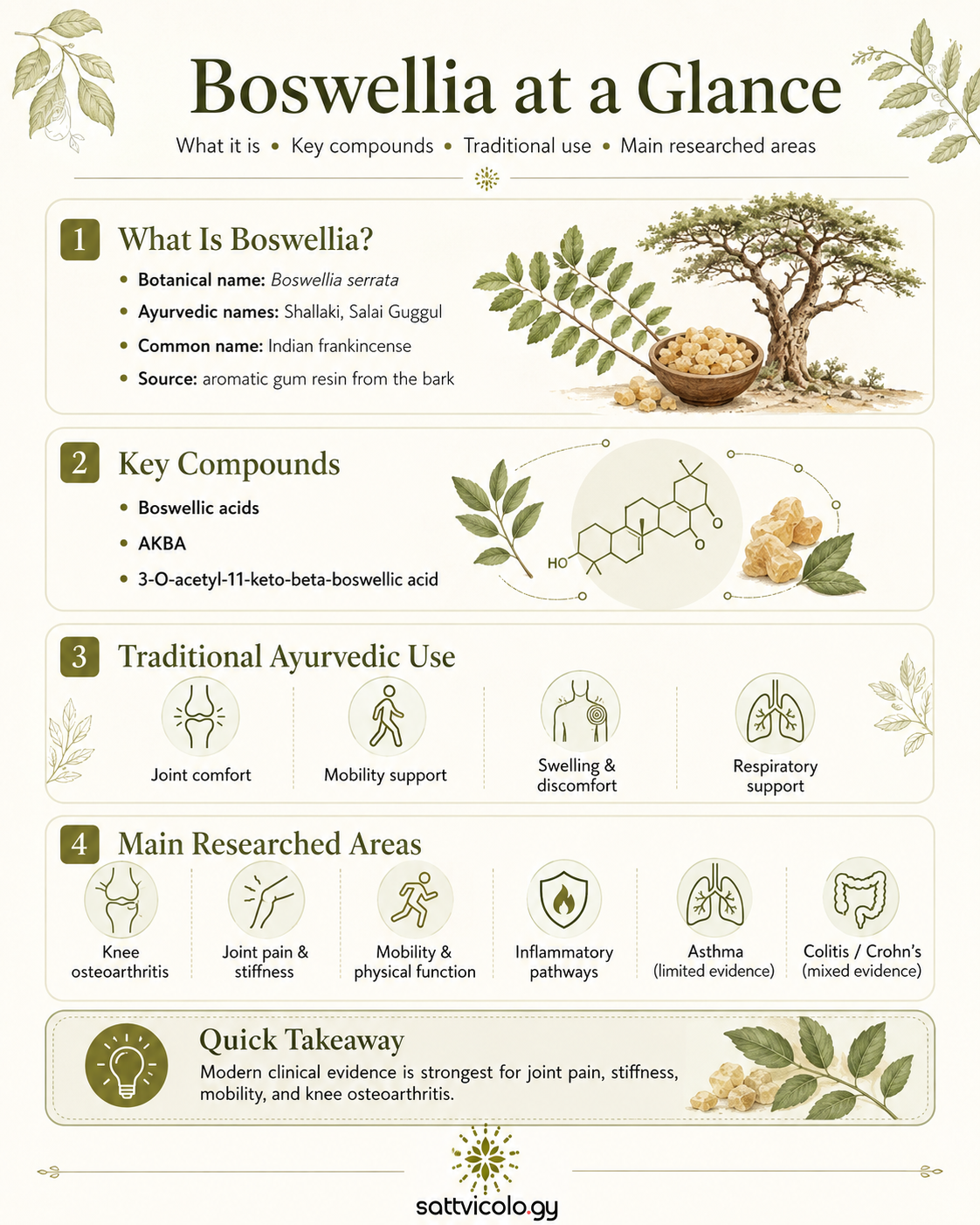
What Is Boswellia?
Botanical name: Boswellia serrata
Ayurvedic names: Shallaki, Salai, Salai Guggul
Common names: Boswellia, Indian frankincense
Family: Burseraceae
Boswellia is a branching tree whose bark produces an aromatic gum resin. Modern dietary supplements use extracts of this resin, often standardized for boswellic acids. One of the most studied is 3-O-acetyl-11-keto-beta-boswellic acid (AKBA).
For centuries, Boswellia has been used within Ayurveda for conditions involving discomfort, swelling, joints and respiratory health. Modern human studies have investigated knee osteoarthritis, joint pain and stiffness, mobility and physical function, inflammatory pathways, asthma and certain inflammatory bowel disorders.
Quick answer: Boswellia serrata is an Ayurvedic resin traditionally used for inflammation and musculoskeletal discomfort. Modern clinical research suggests standardized Boswellia extracts may reduce pain and improve function in some people with knee osteoarthritis. Evidence for asthma and gastrointestinal inflammatory disorders is considerably more limited and inconsistent.
Is Boswellia the Same as Frankincense?
Boswellia resin is a source of frankincense, but the terms should not always be treated as interchangeable. The genus Boswellia contains multiple species, and frankincense resins may come from different species.
For this article, the scientific entity remains Boswellia serrata because that is the species evaluated in much of the human clinical research discussed here.
Aromatherapy with frankincense essential oil is also very different from taking a standardized oral Boswellia serrata extract. Clinical results from oral Boswellia capsules should not automatically be applied to essential oils.
1. Boswellia May Reduce Knee Osteoarthritis Pain
Knee osteoarthritis is the most clinically researched use of Boswellia. A 2024 systematic review and meta-analysis evaluated randomized controlled trials of Boswellia resin extracts for knee osteoarthritis. The analysis included 13 studies and assessed outcomes including WOMAC and visual-analog pain scores.
When all studies were combined, significant heterogeneity made the overall results less clear. However, subgroup analyses comparing Boswellia specifically with placebo found a significant improvement in WOMAC osteoarthritis scores.
Evidence level: Promising to moderate. The overall evidence supports continued investigation, while additional high-quality trials are still needed.
2. Boswellia May Improve Joint Function and Mobility
Pain is not the only important outcome in osteoarthritis. A randomized placebo-controlled study published in 2025 evaluated a standardized Boswellia serrata gum-resin extract in 80 adults with mild-to-moderate knee osteoarthritis for 180 days.
Compared with placebo, participants receiving the Boswellia extract showed improvements in WOMAC scores, visual-analog pain scores, Lequesne Functional Index, six-minute walking performance and stair-climbing performance.
Evidence level: Promising. For many people with osteoarthritis, improved ability to walk, climb stairs, exercise and perform everyday activities may be as important as pain reduction itself.
3. Boswellia May Influence Cartilage-Related Measurements
The same 180-day randomized trial used MRI imaging to examine cartilage-related measurements. Investigators reported favorable differences compared with placebo in cartilage volume, cartilage thickness and joint-space width, along with several biomarkers associated with cartilage degradation and inflammation.
Evidence level: Emerging and particularly interesting. One trial showing favorable MRI changes does not establish that Boswellia rebuilds cartilage or reverses arthritis. Those stronger claims require independent replication and long-term disease-modification evidence.
4. Boswellia May Reduce Joint Stiffness
Stiffness is one of the classic symptoms of osteoarthritis. The 2024 systematic review included trials using the Western Ontario and McMaster Universities Osteoarthritis Index (WOMAC), which evaluates pain, stiffness and physical function.
Subgroup analyses indicated that Boswellia extracts may provide clinically relevant improvement compared with placebo in people with knee osteoarthritis.
Evidence level: Promising. Persistent joint symptoms should still be evaluated to determine their underlying cause.
5. Boswellia May Influence Inflammatory Pathways
Boswellia is frequently marketed as a “natural anti-inflammatory.” This has some biological rationale. Boswellic acids have been investigated in relation to inflammatory pathways, particularly pathways involving leukotriene metabolism.
Modern osteoarthritis trials have also reported changes in inflammatory biomarkers such as high-sensitivity C-reactive protein after standardized Boswellia supplementation.
Evidence level: Good mechanistic evidence with growing clinical support in osteoarthritis. Reducing an inflammatory biomarker is not equivalent to curing every inflammatory disease.
6. Boswellia Has Been Studied for Asthma
Boswellia has a traditional respiratory-health history, which led researchers to investigate it in bronchial asthma. A small double-blind placebo-controlled study evaluated Boswellia serrata gum resin in people with asthma over six weeks.
Participants taking Boswellia showed improvements in several respiratory measurements and symptoms compared with placebo.
Evidence level: Interesting but limited and based largely on older research. Boswellia should not replace inhaled corticosteroids, rescue inhalers, biologics or other prescribed asthma medication.
7. Boswellia Has Been Studied for Colitis
Boswellia’s relationship with inflammatory pathways has also led researchers to investigate inflammatory bowel conditions. A small clinical study of 30 people with chronic colitis compared Boswellia gum resin with sulfasalazine over six weeks.
The researchers reported improvements among many Boswellia-treated participants and observed remission in 14 of 20 participants receiving Boswellia compared with 4 of 10 receiving sulfasalazine.
Evidence level: Preliminary and based on a small older study. These results should not be interpreted to mean Boswellia is superior to contemporary inflammatory-bowel-disease treatment.
8. Boswellia Has Not Proven Effective for Maintaining Crohn’s Disease Remission
A larger multicenter randomized double-blind placebo-controlled trial investigated Boswellia extract for maintaining remission in Crohn’s disease. The study involved patients from 22 centers.
Boswellia did not perform significantly better than placebo for maintaining remission, time to relapse, Crohn’s Disease Activity Index, quality of life or laboratory inflammatory measurements.
Evidence level: Good evidence that the tested extract was not superior to placebo for maintaining Crohn’s remission. Boswellia should not be described as a proven Crohn’s disease treatment.
9. Evidence for Other Forms of Colitis Remains Uncertain
A Cochrane systematic review evaluated interventions for collagenous colitis, including Boswellia. The reviewers concluded that evidence regarding Boswellia’s benefits and harms in collagenous colitis was uncertain and that additional research was needed.
Evidence level: Insufficient. Persistent diarrhea, rectal bleeding, abdominal pain, unexplained weight loss or suspected inflammatory bowel disease should receive appropriate medical evaluation rather than self-treatment with supplements.
10. Boswellia May Support Mobility as Part of a Broader Joint-Health Strategy
Boswellia is often most useful to think about not as an “arthritis cure,” but as a potential component of broader musculoskeletal care.
- Strength training
- Weight management when appropriate
- Physical therapy
- Mobility exercises
- Appropriate footwear
- Pain-management strategies
- Medical evaluation
- Medications when indicated
- Joint replacement when disease becomes severe
Boswellia may complement some of these strategies rather than replace them. The 2024 meta-analysis and newer 2025 randomized clinical trial both support continued investigation of Boswellia for pain and physical function in knee osteoarthritis.
Boswellia Through an Ayurvedic Lens
Ayurveda does not traditionally approach joint discomfort by asking only: “Which anti-inflammatory supplement should I take?”
Instead, an Ayurvedic practitioner may consider:
- Prakriti
- Vikriti
- Vata
- Pitta
- Kapha
- Agni
- Ama
- Age and strength
- Body weight
- Digestion and elimination
- Activity level
- Location and quality of pain
- Stiffness and swelling
- Sleep
- Diet
- Current medications
From this perspective, Shallaki may be part of an individualized protocol rather than a universal recommendation. At Sattvicolo.gy, the better question is whether Boswellia is appropriate for the particular person’s type of joint problem, constitution, medications, digestive health and overall medical condition.
Boswellia vs. Guggul: What Is the Difference?
These are often confused because both are Ayurvedic resins, but they are not interchangeable.
Boswellia / Shallaki
Botanical: Boswellia serrata
Important constituents: Boswellic acids
Modern research focus: osteoarthritis, joint pain, mobility and inflammation.
Guggul
Botanical: Commiphora wightii
Important constituents: Guggulsterones
Modern research focus: lipid metabolism, cholesterol, metabolic health and traditional joint-related uses.
Both belong to the Burseraceae botanical family, but they are different genera, different resins and contain different major phytochemicals.
Boswellia vs. Turmeric: Which Is Better for Inflammation?
Both Boswellia and turmeric are widely studied botanicals, but their chemistry differs. Boswellia contains boswellic acids, while turmeric contains curcuminoids including curcumin.
Both have been studied for osteoarthritis and inflammatory pathways. However, clinical trials use different formulations, doses, extraction techniques and sometimes combination supplements.
A 2026 randomized trial evaluated a multi-ingredient product containing Boswellia, curcumin, pine bark, MSM and piperine for knee osteoarthritis. The combination was not superior to placebo for pain at 12 weeks. Because several ingredients were combined, the study cannot determine the independent effect of Boswellia alone.
A product containing multiple “anti-inflammatory” ingredients is not automatically more effective.
Does Boswellia Work Like an NSAID?
Boswellia is sometimes called a “natural NSAID,” but that description is too simplistic. NSAIDs such as ibuprofen and naproxen primarily work through cyclooxygenase-related pathways. Boswellic acids have been investigated through different biochemical mechanisms, including pathways associated with leukotriene signaling.
Boswellia should therefore not be considered a direct herbal equivalent of ibuprofen, naproxen, celecoxib or diclofenac. Effectiveness, dosing, onset, safety profile and evidence base differ substantially.
Can Boswellia Regrow Cartilage?
A recent randomized clinical trial found favorable MRI cartilage-related measurements after 180 days of a standardized Boswellia extract.
That finding is scientifically interesting, but the evidence is not yet strong enough to say Boswellia regrows cartilage.
A responsible statement is: Emerging clinical research suggests that certain standardized Boswellia extracts may influence cartilage-related structural measurements and biomarkers in knee osteoarthritis, but disease-modifying effects require confirmation in additional independent trials.
Can Boswellia Prevent Knee Replacement or Cure Arthritis?
There is no evidence establishing that Boswellia prevents the eventual need for joint-replacement surgery in severe osteoarthritis. Long-term studies showing reduced joint-replacement rates are lacking.
Boswellia does not cure arthritis. Arthritis includes conditions such as osteoarthritis, rheumatoid arthritis, psoriatic arthritis, gout and ankylosing spondylitis. Boswellia has its strongest human clinical evidence in knee osteoarthritis, and that evidence should not automatically be generalized to every type of arthritis.
Boswellia, Rheumatoid Arthritis and Cancer: Important Limits
Boswellia’s anti-inflammatory mechanisms make rheumatoid arthritis scientifically interesting, but robust clinical evidence is insufficient to recommend Boswellia as a disease-modifying therapy. It should never replace established treatments such as methotrexate, biologic therapies, JAK inhibitors or other disease-modifying antirheumatic drugs.
Boswellia compounds have also attracted laboratory interest in cancer biology. However, no complementary approach, including Boswellia, has been shown to cure cancer or cause cancer remission. Boswellia has been studied clinically in connection with brain edema associated with brain tumors, but reducing swelling does not mean treating or shrinking the tumor itself.
Is Boswellia Safe? Pregnancy, Breastfeeding and Medication Interactions
Current guidance describes Boswellia as likely safe when taken orally under studied conditions. Boswellia serrata extract has been used in clinical trials at doses up to approximately 1,000 mg daily for up to six months, and higher amounts have been studied for shorter periods.
Possible supplement-related effects may include gastrointestinal discomfort and other individual reactions. Long-term safety beyond studied durations is less certain.
Pregnancy and breastfeeding: Amounts commonly encountered in foods appear likely to be safe, but information regarding medicinal supplemental doses is limited. Concentrated extracts should not be casually self-prescribed during pregnancy or breastfeeding.
Medication interactions: As with other biologically active botanical extracts, interactions are possible. Particular caution is appropriate for people taking multiple medications or receiving treatment for arthritis, asthma, inflammatory bowel disease, cancer or cardiovascular disease.
How Much Boswellia Should You Take and What Should You Look For?
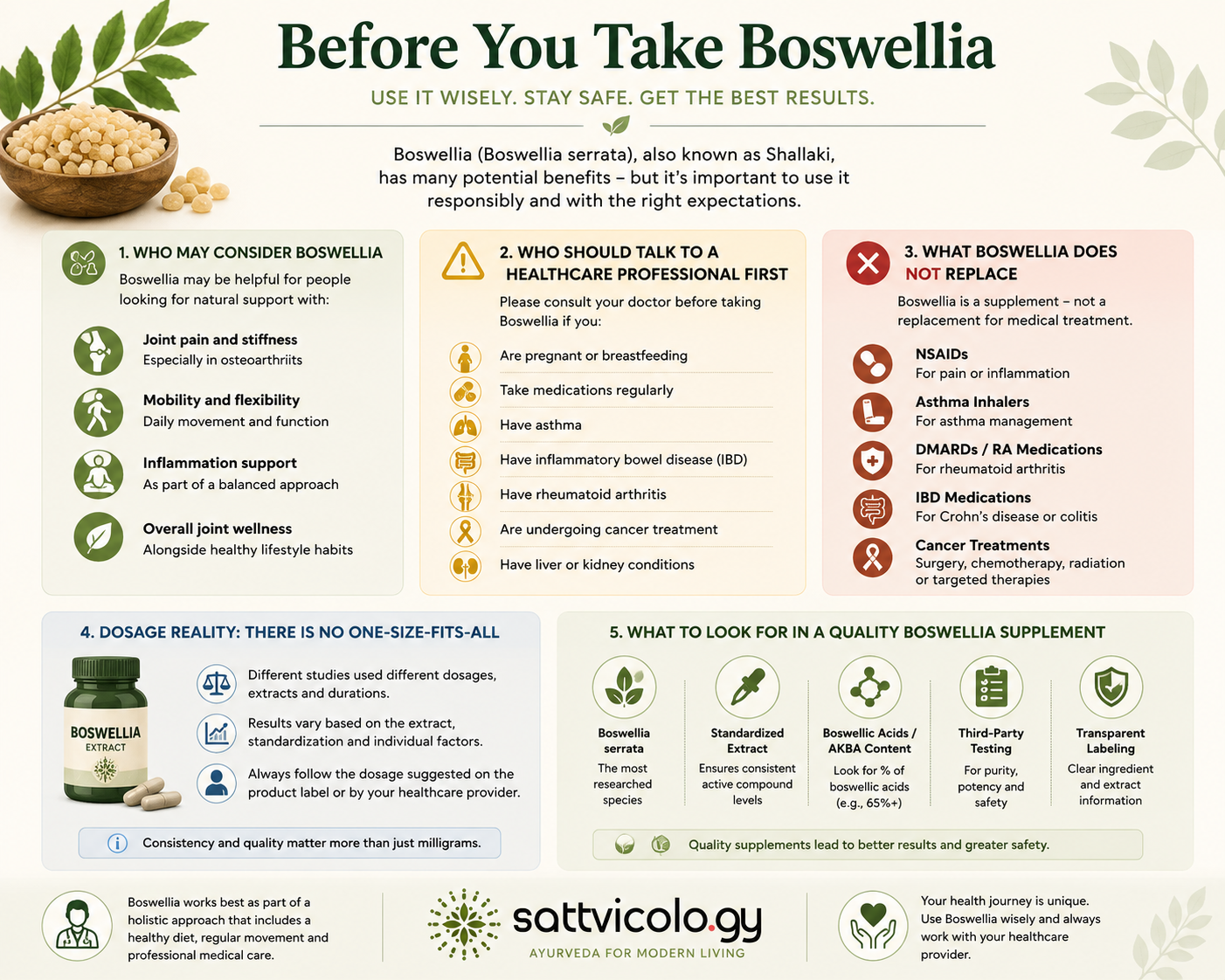
There is no single universal Boswellia dosage. Clinical studies use different extracts with different concentrations. For example, a recent osteoarthritis study used a specific standardized extract at 100 mg/day for 180 days; an older asthma study used 300 mg of Boswellia gum resin three times daily for six weeks; and a Crohn’s remission study tested 400 mg capsules, two capsules three times daily, of a particular extract.
These values are research protocols, not universal dosing recommendations. The potency of a concentrated extract standardized for boswellic acids or AKBA may differ greatly from ordinary gum-resin powder.
When choosing a product, look for clear identification of Boswellia serrata, gum-resin extract, standardization, boswellic-acid content, AKBA content when applicable, extraction method, batch number, independent contaminant testing and transparent manufacturer information. A very high milligram number does not automatically mean a better product.
What Does Modern Science Actually Say About Boswellia?
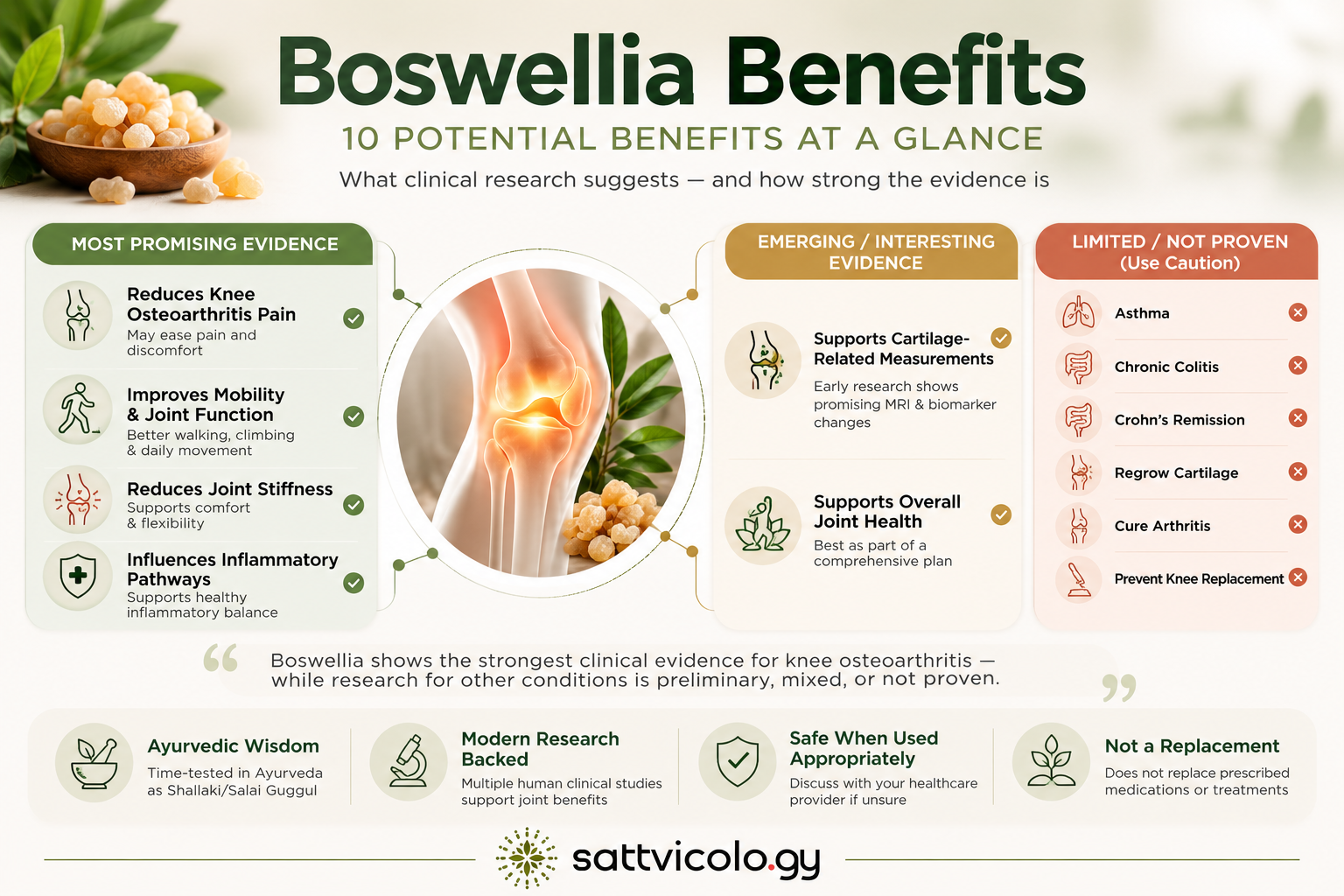
Evidence is most promising for:
- Knee osteoarthritis pain
- Joint function and mobility
- Joint stiffness
- Certain cartilage-related measurements, with replication still needed
Evidence is preliminary or inconsistent for:
- Asthma
- Chronic colitis
- Collagenous colitis
- Crohn’s disease, where a larger remission-maintenance trial did not demonstrate benefit
Evidence is insufficient for claiming Boswellia:
- Cures osteoarthritis
- Regrows cartilage
- Prevents knee replacement
- Cures rheumatoid arthritis
- Replaces NSAIDs or disease-modifying arthritis medication
- Cures asthma or replaces inhalers
- Cures Crohn’s disease or ulcerative colitis
- Treats cancer or shrinks tumors
- Reverses every inflammatory disease
Research References
- Dalmonte T, Andreani G, Rudelli C, Isani G. Efficacy of Extracts of Oleogum Resin of Boswellia in the Treatment of Knee Osteoarthritis: A Systematic Review and Meta-Analysis. Phytotherapy Research. 2024;38(12):5672-5689.
- Kumar B, et al. A Standardized Boswellia serrata Extract Improves Knee Joint Function and Cartilage Morphology in Human Volunteers with Mild to Moderate Osteoarthritis in a Randomized Placebo-Controlled Study. Journal of the American Nutrition Association. 2025;44(5):375-386.
- Gupta I, Gupta V, Parihar A, et al. Effects of Boswellia serrata gum resin in patients with bronchial asthma: results of a double-blind, placebo-controlled, 6-week clinical study. European Journal of Medical Research. 1998;3(11):511-514.
- Gupta I, Parihar A, Malhotra P, et al. Effects of gum resin of Boswellia serrata in patients with chronic colitis. Planta Medica. 2001;67(5):391-395.
- Holtmeier W, Zeuzem S, Preiss J, et al. Randomized, placebo-controlled, double-blind trial of Boswellia serrata in maintaining remission of Crohn’s disease: good safety profile but lack of efficacy. Inflammatory Bowel Diseases. 2011;17(2):573-582.
- Kafil TS, Nguyen TM, Patton PH, et al. Interventions for treating collagenous colitis. Cochrane systematic review.
- National Center for Complementary and Integrative Health. Boswellia: Usefulness and Safety.
- Yuan S, et al. Effect of an oral complementary medicine combination for symptomatic knee osteoarthritis: A double-blind, randomized, placebo-controlled trial. Osteoarthritis and Cartilage. 2026.
Frequently Asked Questions About Boswellia
Boswellia is an extract derived from the resin of Boswellia serrata, an Ayurvedic tree also known as Shallaki. Modern research focuses especially on boswellic acids and their potential effects on joint pain, osteoarthritis, mobility and inflammation.
The strongest human evidence supports potential improvements in knee-osteoarthritis pain, stiffness, physical function and mobility. Evidence for asthma and inflammatory bowel conditions is less established.
Boswellia has promising clinical evidence for knee osteoarthritis, but research does not establish it as a cure for all forms of arthritis.
Several randomized studies and a recent meta-analysis indicate that standardized Boswellia extracts may reduce pain in people with knee osteoarthritis.
Clinical osteoarthritis research suggests possible improvements in stiffness and functional WOMAC measurements.
One recent randomized study reported favorable changes in cartilage-related MRI measurements after 180 days, but this is not enough to conclude that Boswellia regenerates cartilage.
Boswellic acids have well-studied effects on inflammatory pathways, and human osteoarthritis trials also report changes in inflammatory biomarkers. This does not establish Boswellia as treatment for every inflammatory disorder.
Boswellia serrata resin is a source of frankincense, but the term frankincense can refer to resins from several Boswellia species. Oral standardized extracts are also different from frankincense essential oil.
No. Boswellia comes from Boswellia serrata and contains boswellic acids. Guggul generally comes from Commiphora wightii and contains guggulsterones.
An older double-blind study reported improvements in asthma symptoms and respiratory measurements, but current evidence is not sufficient to replace conventional asthma therapy.
A large randomized controlled trial did not show that Boswellia was better than placebo for maintaining Crohn’s disease remission.
Small older studies suggested possible benefit in certain forms of colitis, but systematic reviews describe the evidence as uncertain.
Specific Boswellia extracts have been used daily in clinical trials for up to six months with generally favorable safety findings. This does not prove that every product is safe for indefinite daily use.
No. Boswellia and NSAIDs have different mechanisms, evidence bases, dosages and safety profiles. Medication changes should be discussed with a healthcare professional.
No complementary approach, including Boswellia, has been proven to cure cancer or cause cancer remission.
Explore Ayurveda With Individualized Guidance
Boswellia may be one part of a broader Ayurvedic joint-health strategy. Individualized guidance can consider your constitution, symptoms, medical diagnosis, current medications, digestion, lifestyle and goals before recommending Shallaki or another herbal preparation.
Medical Disclaimer
The information provided on Sattvicolo.gy is for educational and informational purposes only. It is not intended to diagnose, treat, cure or prevent any disease and should not replace medical advice, diagnosis, physical examination or treatment from an appropriately qualified healthcare professional.
Do not discontinue or replace arthritis medications, NSAIDs, disease-modifying rheumatoid-arthritis drugs, asthma inhalers, corticosteroids, inflammatory-bowel-disease medications or cancer treatment based on information on this page. If you are pregnant, breastfeeding, preparing for surgery, taking multiple medications or living with a chronic condition, discuss Boswellia supplementation with an appropriate healthcare professional.