Moringa: 10 Potential Benefits of Ayurveda’s Nutrient-Rich “Miracle Tree”
A.P. Shrilata,
BAMS, PGDND, YIC, Certified Ayurvedic Provider.
Sattvicology Healthcare Team
Moringa (Moringa oleifera), known traditionally in Ayurveda as Shigru, is a nutrient-rich tree studied for blood sugar, blood pressure, antioxidant status and broader cardiometabolic health. Here is what traditional use and modern human research actually suggest.
What Is Moringa?
Botanical name: Moringa oleifera
Ayurvedic name: Shigru
Common names: Moringa, Drumstick Tree, Horseradish Tree, Ben Oil Tree, Miracle Tree
Family: Moringaceae
Moringa oleifera is a fast-growing tree cultivated throughout tropical and subtropical regions. Different parts of the tree may be consumed or used traditionally, including the leaves, immature seed pods, seeds and flowers.
Modern supplements most commonly contain Moringa leaf powder or Moringa leaf extract. Scientific reviews describe Moringa leaves as containing numerous nutritional and phytochemical components, including polyphenols and other biologically active plant compounds.
Quick Answer: What Is Moringa Good For?
Moringa (Moringa oleifera) is an edible Ayurvedic plant rich in nutrients and phytochemicals. Human clinical research suggests that Moringa leaf preparations may modestly influence blood glucose, HbA1c, insulin-related measurements, blood pressure, antioxidant status and certain cardiometabolic markers.
The evidence is promising but remains limited by differences in dose, preparation, population and study quality.
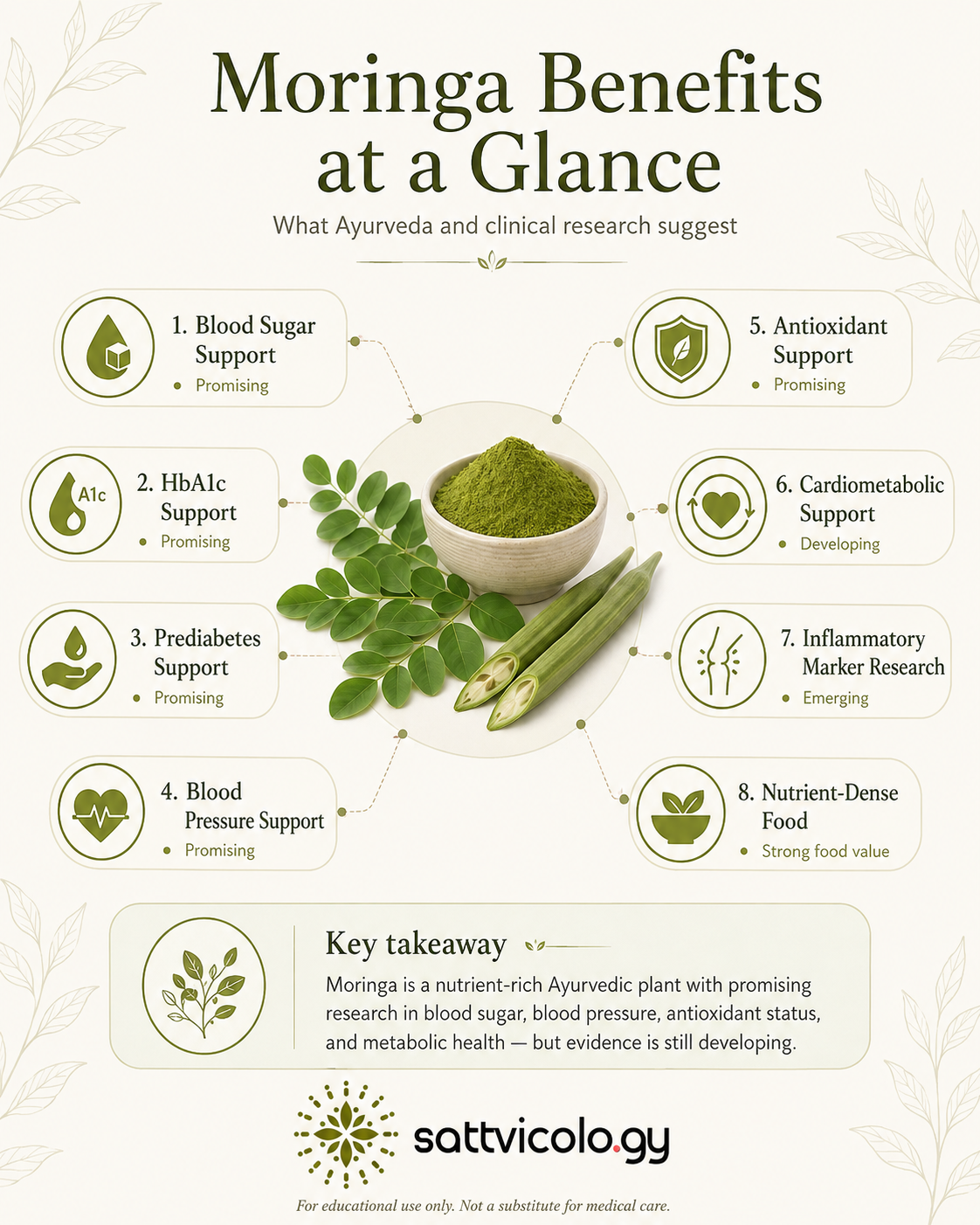
The strongest areas of current interest include:
- Blood-sugar support
- Prediabetes
- Metabolic health
- Blood pressure
- Antioxidant status
- Nutritional support
Evidence for weight loss, cancer treatment, thyroid treatment and many other online claims remains much weaker.
Moringa in Ayurveda
In Ayurveda, Moringa is traditionally known as Shigru. Ayurvedic use extends beyond the modern concept of a “superfood.”
Different portions and preparations of Moringa have traditionally been incorporated according to constitution, digestive capacity, Dosha, specific imbalance, formulation, season and the strength of the individual.
Modern nutrition asks: What nutrients and phytochemicals does Moringa contain, and what measurable physiological effects occur after supplementation?
Ayurveda traditionally asks: Is this particular substance appropriate for this particular person, their digestion, constitution and current imbalance?
At Sattvicolo.gy, both questions matter.
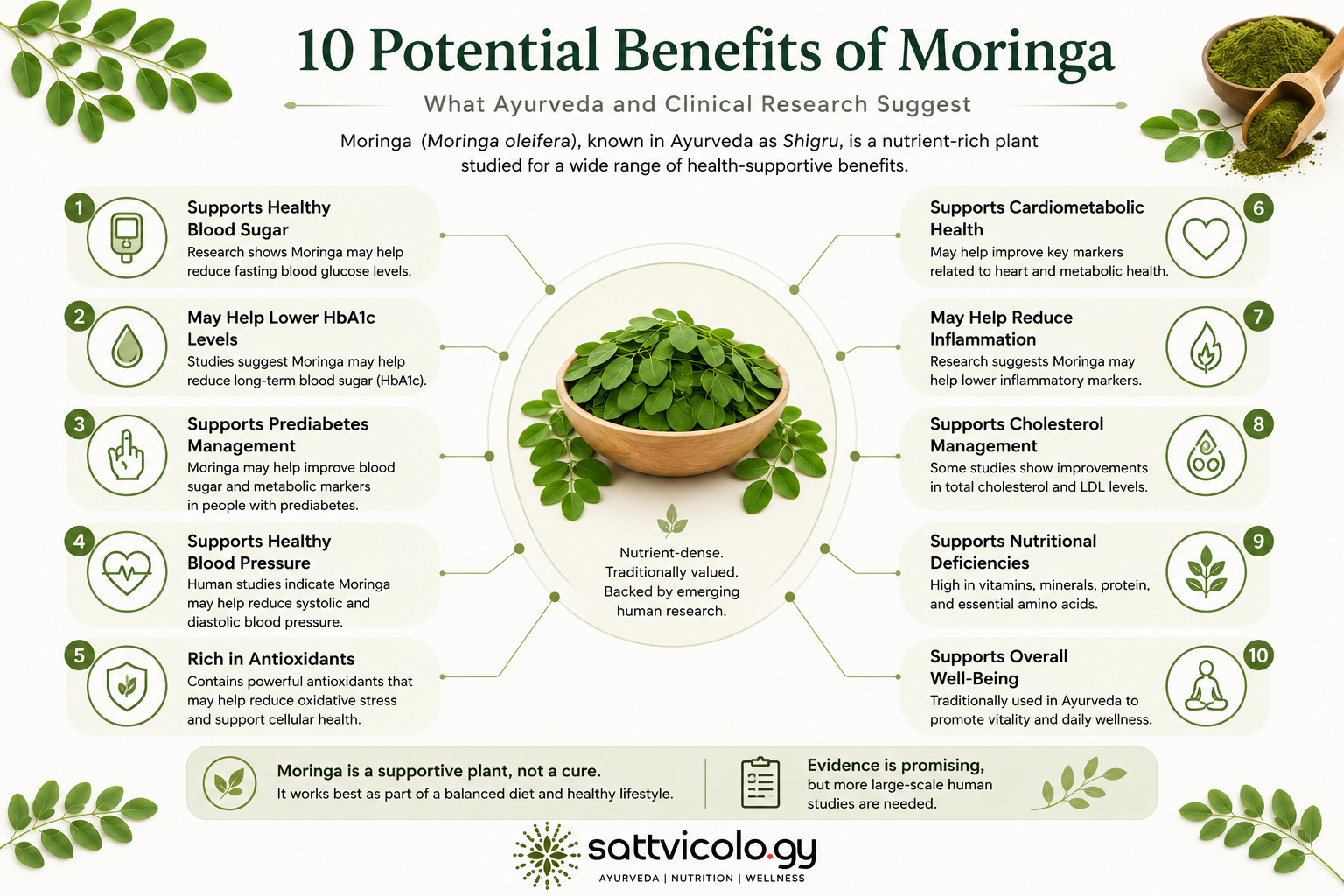
1. Moringa May Support Blood-Sugar Regulation
Blood glucose is one of the most extensively researched areas of Moringa supplementation.
A 2026 systematic review and exploratory meta-analysis examined 20 clinical studies involving people with metabolic disorders. Pooled results suggested an association between Moringa and lower fasting blood glucose and HbA1c.
The pooled HbA1c difference was approximately 0.62 percentage points, although researchers cautioned that substantial differences among studies and methodological limitations make the results preliminary.
Earlier reviews had been more cautious, reflecting how the evidence base has evolved as additional clinical studies became available.
Evidence level: Increasingly promising, but still not definitive.
2. Moringa May Help People With Prediabetes
Prediabetes is particularly important because lifestyle interventions at this stage can significantly influence long-term metabolic risk.
A randomized controlled trial evaluated Moringa leaf supplementation in people with prediabetes. Researchers reported favorable differences in the direction of change for fasting blood glucose and HbA1c compared with placebo.
A related randomized study also investigated inflammatory and cardiometabolic markers in people with prediabetes.
Evidence level: Promising.
Moringa has not been proven to prevent every case of type 2 diabetes. Prediabetes management still requires attention to nutrition, exercise, body composition, sleep, medications where appropriate and cardiovascular risk factors.
3. Moringa Has Been Studied in Type 2 Diabetes
Randomized clinical research has examined Moringa leaves in people with type 2 diabetes.
Trials have investigated the effects of Moringa leaves or leaf capsules on blood glucose, blood pressure and lipid profiles, including studies in therapy-naïve patients and in people with both type 2 diabetes and hypertension.
Together with newer pooled evidence, these studies suggest genuine clinical interest.
However, Moringa should not replace insulin, metformin, GLP-1 medications, SGLT2 inhibitors, sulfonylureas or other prescribed diabetes treatment.
Evidence level: Promising as complementary metabolic support.
4. Moringa May Influence Post-Meal Blood Sugar
Metabolic health involves more than fasting glucose. Researchers have also studied how Moringa affects blood glucose after eating.
One human study compared meals with and without 20 grams of Moringa leaf powder in healthy and diabetic participants and measured the post-meal glucose response.
Another preliminary controlled study found that Moringa leaf administration influenced insulin secretion in healthy people.
These studies support continued research into possible effects on postprandial glucose, insulin secretion and meal-related metabolic responses.
Evidence level: Preliminary.
5. Moringa May Support Healthy Blood Pressure
Blood pressure is another increasingly interesting area.
A 2026 meta-analysis reported pooled reductions of approximately 7.5 mmHg systolic blood pressure and 6.8 mmHg diastolic blood pressure among participants with metabolic disorders.
Researchers emphasized substantial heterogeneity among studies and described the overall conclusions as preliminary and hypothesis-generating.
Evidence level: Promising but not established as hypertension treatment.
Moringa should not replace prescribed ACE inhibitors, ARBs, calcium-channel blockers, beta blockers, diuretics or other antihypertensive medication.
6. Moringa and Cholesterol: What Does Research Show?
Moringa is frequently promoted as a natural cholesterol-lowering supplement. The evidence is less consistent than many advertisements imply.
Randomized trials have evaluated total cholesterol, LDL cholesterol, HDL cholesterol and triglycerides, and a 2025 meta-analysis synthesized randomized controlled trials examining cardiometabolic outcomes from Moringa supplementation.
Some clinical studies have reported favorable lipid changes, but results vary depending on the study population and formulation.
One randomized study found favorable lipid outcomes when Moringa was combined with garlic, but because two active botanicals were used, the effect cannot be attributed to Moringa alone.
Evidence level: Mixed to promising.
7. Moringa May Increase Antioxidant Capacity
Moringa contains a variety of polyphenols and other antioxidant-related phytochemicals.
A randomized crossover study in healthy volunteers examined Moringa leaf extract and found increased plasma antioxidant capacity and reduced plasma malondialdehyde, a marker associated with oxidative stress, without producing hypoglycemia in the fasting healthy volunteers studied.
Evidence level: Promising for antioxidant biomarkers.
This does not mean Moringa prevents aging, prevents cancer, eliminates toxins or prevents every chronic disease. Improvement in an antioxidant biomarker is not equivalent to proving a long-term clinical outcome.
8. Moringa May Influence Inflammatory Biomarkers
Oxidative stress and inflammation are closely connected to many metabolic disorders.
A randomized trial in people with prediabetes specifically evaluated inflammatory and cardiometabolic markers after Moringa supplementation. Scientific reviews also describe anti-inflammatory effects observed in preclinical research.
Evidence level: Emerging.
Claims that Moringa “eliminates inflammation” should therefore be avoided. Inflammation is part of normal immune physiology and also occurs in many unrelated diseases.
9. Moringa Is a Nutrient-Dense Food
One of Moringa’s greatest advantages may be much simpler than exotic supplement marketing suggests: it is food.
Moringa leaves are consumed as vegetables or leaf powder in many parts of the world. They contain combinations of protein, fiber, vitamins, minerals, carotenoids, polyphenols and other plant compounds.
The exact nutritional composition varies according to soil, geography, harvest, processing, drying, storage and preparation.
Evidence level: Strong as a nutrient-dense edible plant.
This may be more important than treating Moringa as a miracle supplement.
10. Moringa May Have Broader Cardiometabolic Potential
When researchers look at Moringa collectively, the areas of interest frequently overlap:
Blood glucose → insulin → blood pressure → lipids → oxidative stress → inflammation
This has led to growing scientific interest in Moringa as a potential cardiometabolic botanical or functional food.
A 2025 randomized-trial meta-analysis examined Moringa supplementation across cardiometabolic endpoints, while the larger 2026 clinical meta-analysis found favorable pooled signals for glucose and blood pressure but emphasized methodological limitations and the need for better trials.
Evidence level: Promising but developing.
Moringa Through an Ayurvedic Lens
Ayurveda does not traditionally reduce Moringa to one compound or one disease. A practitioner may consider:
- Prakriti and Vikriti
- Vata, Pitta and Kapha
- Agni and Ama
- Appetite and digestion
- Elimination
- Body composition
- Blood-sugar patterns
- Diet and activity
- Sleep and age
- Current medications
This is especially relevant because someone seeking Moringa for “metabolic health” may actually be dealing with prediabetes, type 2 diabetes, obesity, hypertension, dyslipidemia, poor sleep, sedentary lifestyle, hormonal conditions or medication effects.
At Sattvicolo.gy, the aim should be to understand the pattern rather than simply adding another powder to the person’s routine.
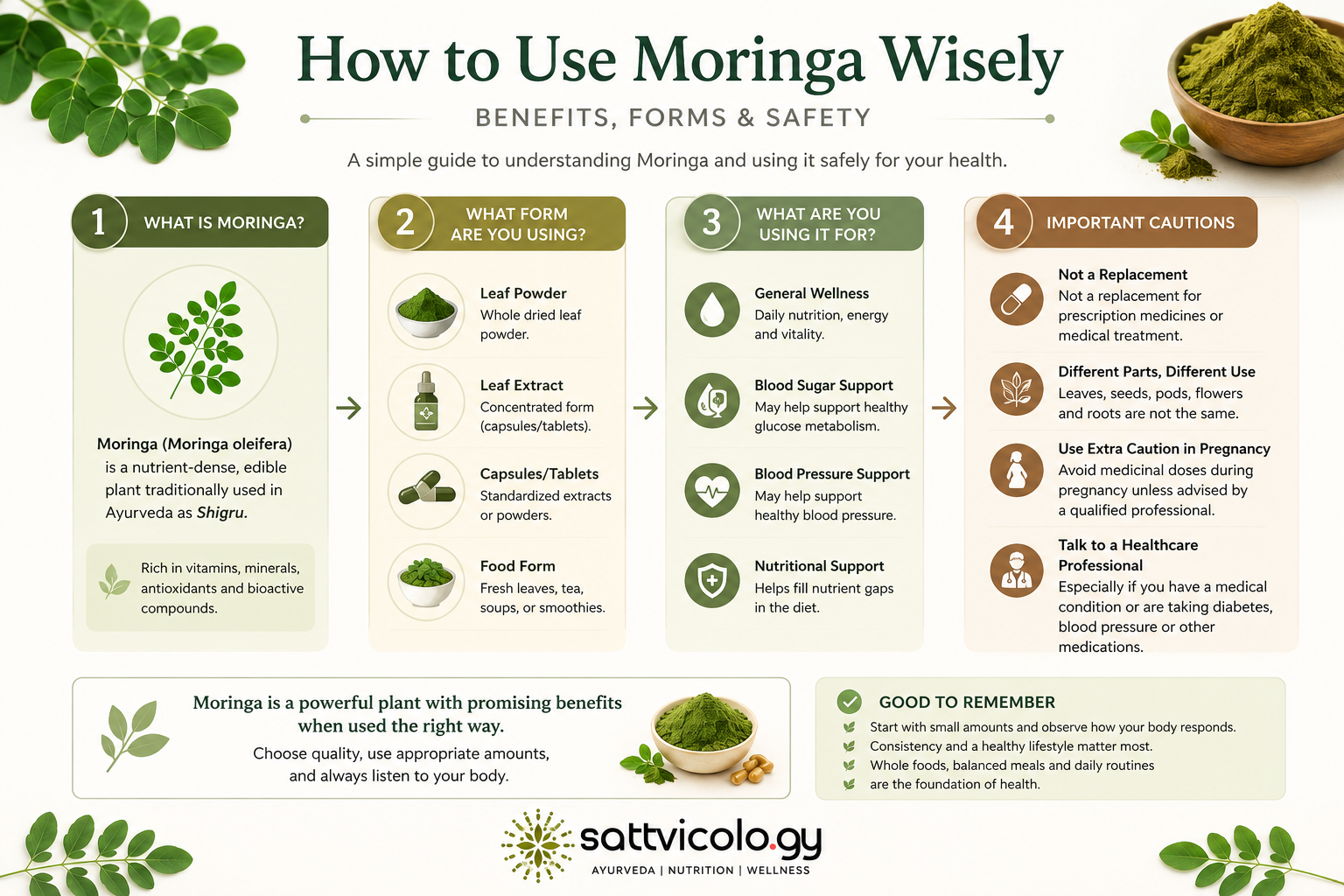
Moringa Leaves vs. Moringa Seeds
This distinction matters. Most human clinical evidence discussed on this page relates to Moringa leaves or leaf extracts.
Moringa seeds have a different composition.
Therefore, research involving Moringa leaf powder should not automatically be applied to Moringa seed oil, seed extract, bark, root or other plant parts.
The plant part should always be identified when discussing clinical evidence.
Moringa Powder vs. Moringa Extract
Moringa Leaf Powder
Usually consists of dried, ground leaves. It retains fiber, nutrients and plant compounds and is closer to a whole-food preparation.
Moringa Extract
An extract concentrates selected soluble components. Different extracts may use water, alcohol or other extraction processes.
500 mg of concentrated Moringa extract is not necessarily equivalent to 500 mg of Moringa leaf powder.
Clinical trial results apply most directly to the preparation actually studied.
Is Moringa a “Superfood”?
“Superfood” is a marketing term, not a medical diagnosis or scientifically regulated category.
It is reasonable to call Moringa nutrient-dense because the leaves contain a broad range of nutrients and phytochemicals.
But “superfood” should not imply that Moringa compensates for an otherwise unhealthy diet. No individual food does.
Does Moringa Help With Weight Loss?
Moringa is commonly marketed for weight loss, but the human evidence for Moringa alone is not strong enough to make that a primary claim.
Some weight-loss studies use multi-ingredient formulations. For example, a randomized trial of a formulation containing Moringa, turmeric and curry leaf reported reductions in body weight during a lifestyle program. Because multiple botanicals were combined, Moringa’s independent contribution cannot be established.
Evidence level: Insufficient for stand-alone weight-loss claims.
Do not describe Moringa as a “fat burner.”
Moringa, Diabetes and Metformin
Does Moringa Cure Diabetes?
No. The newest human evidence is promising enough to justify studying Moringa as a complementary metabolic intervention, but improving fasting glucose, HbA1c, insulin or postprandial glucose is not equivalent to curing diabetes.
Can Moringa Replace Metformin?
No. Current clinical research does not demonstrate that Moringa is therapeutically equivalent to metformin. Metformin has a much larger clinical evidence base.
Can Moringa Cause Low Blood Sugar?
Because Moringa may influence blood glucose, people using concentrated Moringa products together with glucose-lowering medications should monitor carefully. The possibility of additive glucose-lowering effects is one reason supplement use should be disclosed to the treating clinician.
Does Moringa Lower Blood Pressure?
The newest pooled clinical evidence suggests Moringa may have a modest blood-pressure effect in people with metabolic disorders.
However, Moringa should not be used to self-treat significant hypertension.
People already using antihypertensive medications should consider the possibility of additive effects and discuss regular concentrated supplementation with a healthcare professional.
Does Moringa “Detox” the Body?
“Detox” is one of the most overused words in supplement marketing.
Moringa contains nutrients, polyphenols and compounds associated with antioxidant activity. But no high-quality human evidence establishes that Moringa removes undefined toxins, cleanses the liver, flushes heavy metals, detoxifies cells or replaces normal liver and kidney function.
A more scientifically accurate statement is: Moringa contains phytochemicals with antioxidant-related biological activity.
Is Moringa Good for the Liver?
Laboratory and animal research has investigated Moringa for liver-related effects.
However, robust human clinical evidence supporting Moringa as a treatment for liver disease remains insufficient.
Someone with fatty liver disease, hepatitis, elevated liver enzymes or cirrhosis should not substitute Moringa for appropriate diagnosis and treatment.
Does Moringa Treat Cancer?
No human clinical evidence establishes Moringa as a cancer treatment.
Many laboratory studies examine plant extracts against cancer-cell models. This is common in botanical research.
But killing cells in a laboratory dish does not prove that consuming Moringa treats cancer in humans.
People undergoing cancer treatment should discuss concentrated herbal supplements with their oncology team.
Is Moringa Good for Anemia?
Moringa leaves contain nutrients, including iron, which has led to interest in nutritional supplementation.
However, anemia has many causes, including iron deficiency, vitamin B12 deficiency, folate deficiency, chronic inflammation, kidney disease, blood loss and genetic disorders.
Moringa should not replace blood testing or medically appropriate iron therapy when deficiency is significant.
Is Moringa Safe?
Moringa leaves have a long history of culinary consumption. However, concentrated supplements should not automatically be treated as identical to normal food intake.
Different plant parts and preparations have different chemical and safety profiles. Dietary supplements may also have safety, interaction, contamination or labeling concerns and are not preapproved for effectiveness in the same manner as prescription drugs.
Product quality and the exact plant part therefore matter.
Moringa During Pregnancy
Moringa requires special caution during pregnancy because different plant parts are not equivalent.
Normal food use of leaves should not automatically be equated with medicinal doses of root, bark, concentrated extracts or seed extracts.
Traditional and experimental literature raises enough reproductive-safety questions around some non-leaf plant parts that concentrated medicinal Moringa should not be casually self-prescribed during pregnancy.
A pregnant person should discuss herbal supplements with an appropriate healthcare professional.
Who Should Talk to a Healthcare Professional Before Taking Moringa?
Professional guidance is particularly appropriate if you:
- Have diabetes
- Take glucose-lowering medication
- Have hypertension
- Take blood-pressure medication
- Have significant liver disease
- Have significant kidney disease
- Are pregnant or breastfeeding
- Are preparing for surgery
- Take multiple prescription medicines
- Are treating a child
- Have persistent unexplained symptoms
Herb-drug interactions are an important safety issue with dietary and herbal supplements.
How Much Moringa Should You Take?
There is no universally established therapeutic Moringa dosage.
Human studies have used substantially different leaf powders, capsules, extracts, doses and treatment durations.
For example, one postprandial study used a meal containing 20 grams of Moringa leaf powder. Other clinical studies have tested Moringa leaf capsules in gram quantities or standardized supplementation protocols.
These are study protocols, not universal dosage recommendations.
Can You Take Moringa Every Day?
Moringa leaves are consumed routinely as foods in many cultures. That does not mean concentrated extracts should automatically be taken indefinitely.
Clinical research generally evaluates supplementation over defined periods.
The appropriate duration depends on form, dose, reason for use, medications, metabolic status and individual tolerance.
What Should You Look for in a Moringa Supplement?
Look for a product that clearly identifies Moringa oleifera and states which part of the plant is used.
Preferably, the label should indicate:
- Moringa leaf
- Powder versus extract
- Serving size
- Batch number
- Manufacturing information
- Independent contaminant testing
Avoid vague products that simply say “Moringa complex.” Dietary-supplement labels do not always perfectly reflect what is actually present in the product.
What Does Modern Science Actually Say About Moringa?
Evidence is most promising for:
- Blood glucose: Recent pooled clinical evidence suggests modest improvement in fasting blood glucose.
- HbA1c: A 2026 meta-analysis reported a pooled reduction in HbA1c among people with metabolic disorders.
- Prediabetes: Randomized human research suggests potentially favorable changes in fasting glucose and HbA1c.
- Blood pressure: Recent pooled evidence suggests potential reductions in systolic and diastolic blood pressure.
- Antioxidant status: A randomized crossover study showed increased plasma antioxidant capacity and reduced malondialdehyde.
Evidence is emerging or mixed for:
- Cholesterol and triglycerides
- Insulin resistance
- Inflammatory biomarkers
- Cardiometabolic health generally
- Nutritional supplementation
Evidence Is Insufficient for Claiming Moringa:
- Cures diabetes
- Replaces insulin
- Replaces metformin
- Cures hypertension
- Replaces blood-pressure medications
- Causes major weight loss
- Burns abdominal fat
- Detoxifies the liver
- Removes heavy metals
- Cures thyroid disease
- Treats cancer
- Reverses aging
- Cures arthritis
- Prevents every chronic disease
Frequently Asked Questions About Moringa
Moringa (Moringa oleifera) is a nutrient-rich tree whose leaves and pods are widely consumed as foods. In Ayurveda it is traditionally known as Shigru.
Human clinical research suggests potential benefits involving fasting glucose, HbA1c, blood pressure, insulin-related metabolism and antioxidant status. Evidence varies by preparation and remains insufficient for treating chronic disease independently.
Moringa may modestly improve certain glucose measurements in some people with prediabetes or type 2 diabetes. It should not replace diabetes medications.
Recent pooled clinical evidence suggests a modest reduction in fasting glucose, although findings remain limited by study quality and heterogeneity.
A 2026 meta-analysis reported an average reduction of approximately 0.62 percentage points in pooled studies involving metabolic disorders, but researchers described the evidence as preliminary.
No. Current clinical evidence does not establish Moringa as an equivalent substitute for metformin or other diabetes medicines.
A recent clinical meta-analysis reported reductions in systolic and diastolic blood pressure, but evidence remains heterogeneous and Moringa should not replace hypertension medication.
Some studies report favorable changes, but the overall evidence remains mixed.
There is insufficient evidence to conclude that Moringa alone produces clinically meaningful weight loss. Some positive trials involve multi-herb formulations.
“Superfood” is a marketing term. Moringa leaves are more accurately described as a nutrient-dense edible plant containing a variety of nutrients and phytochemicals.
There is no clinical evidence that Moringa performs a nonspecific “detox.” Human research does show effects on certain antioxidant biomarkers.
Moringa contains compounds with anti-inflammatory activity in experimental research, and some human trials have evaluated inflammatory biomarkers. Clinical evidence for treating inflammatory diseases remains limited.
There is no adequate human clinical evidence demonstrating that Moringa prevents or treats cancer.
Moringa leaves are commonly eaten as food, but long-term concentrated supplementation should be individualized according to health status, medications, dose and preparation.
Culinary leaf use and medicinal concentrated preparations should not be treated as equivalent. Concentrated supplements should be discussed with an appropriate healthcare professional during pregnancy.
No. Leaf powder contains the whole dried leaf, whereas extracts concentrate selected compounds. Clinical study dosages cannot automatically be converted between the two.
Moringa is traditionally known as Shigru in Ayurveda.
The Sattvicolo.gy Perspective
Moringa represents an important Ayurvedic idea that modern wellness sometimes overlooks: Food itself can be powerful.
The wellness industry often takes a traditional food, turns it into a capsule, labels it a “superfood,” and then searches for one dramatic benefit. Ayurveda traditionally takes a broader view.
A person considering Moringa for blood sugar may also need to examine breakfast composition, meal timing, physical activity, sleep, body composition, stress, digestion, medications, alcohol intake and other metabolic risk factors.
A powder cannot replace that work.
At Sattvicolo.gy, Moringa can be understood as part of the larger relationship:
Food → Agni → Metabolism → Blood Sugar → Cardiovascular Health → Lifestyle → Individual Constitution
How can Moringa be used intelligently within an individualized Ayurvedic and evidence-informed approach to nutrition and metabolic wellness?
Research References
- Moringa oleifera on hyperglycemia and hypertension in metabolic diseases: Systematic review, exploratory meta-analysis and meta-regression. 2026. Twenty clinical studies were analyzed; pooled findings suggested improvements in fasting glucose, HbA1c and blood pressure while researchers emphasized heterogeneity and study limitations.
- Effects of Moringa oleifera Lam. Supplementation on Cardiometabolic Outcomes: A Meta-Analysis of Randomized Controlled Trials with GRADE Assessment. 2025.
- Moringa oleifera Leaf Supplementation as a Glycemic Control Strategy in Subjects with Prediabetes. Randomized controlled human trial.
- Effects of Moringa oleifera Lam. Supplementation on Inflammatory and Cardiometabolic Markers in Subjects with Prediabetes.
- Effects of Moringa oleifera leaves on the blood glucose, blood pressure, and lipid profile of type 2 diabetic subjects: A parallel group randomized clinical trial of efficacy.
- Effect of Moringa oleifera Leaf Capsules on Glycemic Control in Therapy-Naïve Type 2 Diabetes Patients: A Randomized Placebo Controlled Study.
- Moringa Oleifera leaf extract increases plasma antioxidant status associated with reduced plasma malondialdehyde concentration without hypoglycemia in fasting healthy volunteers.
- The effects of Moringa oleifera on blood glucose levels: A scoping review of the literature.
- Moringa oleifera: a systematic review of its botany, traditional uses, phytochemistry, pharmacology and toxicity.
- National Center for Complementary and Integrative Health. General guidance on safe use of dietary and herbal supplements and herb-drug interactions.
Medical Disclaimer
The information provided on Sattvicolo.gy is intended for educational and informational purposes only. It is not intended to diagnose, treat, cure or prevent disease and should not replace professional medical advice, diagnosis, laboratory testing or treatment.
Moringa is consumed as food in many cultures, but concentrated powders and extracts can have stronger physiological effects.
Because human clinical research suggests that Moringa may influence blood glucose and blood pressure, people taking medications for diabetes or hypertension should use concentrated Moringa supplements with appropriate professional guidance.
Do not discontinue or change insulin, metformin, GLP-1 medications, SGLT2 inhibitors, other diabetes medicines, blood-pressure medications, statins or other prescribed treatments based on information on this page.
Pregnant or breastfeeding individuals, people preparing for surgery, those taking multiple prescription medicines, and people with significant liver, kidney, cardiovascular, endocrine or metabolic conditions should discuss medicinal Moringa supplementation with an appropriately qualified healthcare professional.
Dietary supplements can also have medication-interaction, contamination or labeling concerns, so reputable sourcing matters.