
High Cortisol, Belly Fat & Burnout: 9 Ayurvedic Ways to Support Your Stress Response Naturally
What Americans Are Calling “Cortisol Belly”—and What Ayurveda Says About Stress, Sleep, Digestion and Abdominal Weight Gain
What Is “Cortisol Belly”?
Have you been eating reasonably well, trying to stay active, and still noticing that your waistline seems to be changing?
Maybe you are also waking up at 3 a.m., reaching for coffee before breakfast, feeling exhausted but unable to truly relax, craving something sweet in the afternoon, or carrying a persistent sense that your body is always “on.”
Social media has given this collection of experiences a memorable name: “Cortisol belly.”
The phrase may be trending, but cortisol itself is not a trend.
Cortisol is an essential hormone produced by the adrenal glands. It helps regulate the body’s response to stress, metabolism, blood pressure, inflammation, blood glucose, sleep-wake rhythms and many other physiological processes. Without cortisol, we could not function normally.
The problem is not that cortisol is “bad.”
The concern is what can happen when chronic psychological or physiological stress repeatedly activates the body’s stress-response systems and when sleep, eating patterns, activity, mental health and metabolic health begin interacting with one another.
And this is where Ayurveda offers an interesting complementary perspective.
Long before terms such as the HPA axis, chronic stress, sympathetic activation and circadian disruption existed, Ayurveda recognized that persistent mental stimulation, irregular routines, inadequate rest, disturbed digestion and emotional strain could gradually disturb the body’s equilibrium.
Rather than asking only: “How do we get rid of belly fat?”
Ayurveda encourages another question: “What has changed in the person and their daily life that may be contributing to this imbalance?”
That distinction matters.
Quick Answer: What Is Cortisol Belly?
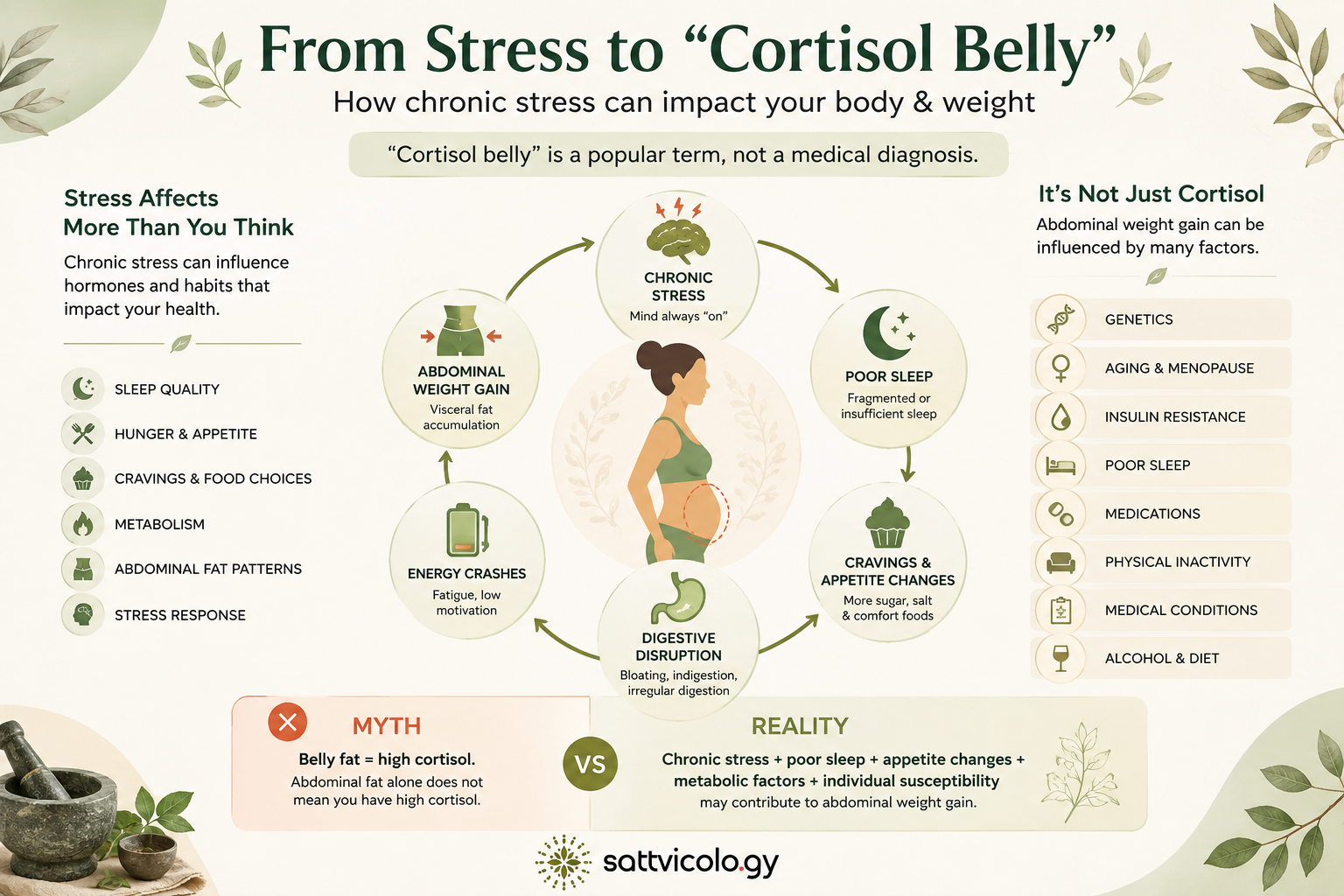
“Cortisol belly” is a popular wellness term used to describe abdominal weight gain that people associate with chronic stress and cortisol. It is not an official medical diagnosis.
Research does support a biological relationship between glucocorticoids such as cortisol, appetite regulation, metabolism and visceral adipose tissue. However, abdominal weight gain can result from many factors—including genetics, aging, menopause, insulin resistance, sleep deficiency, diet, alcohol intake, medications, physical inactivity and medical conditions.
Having abdominal fat does not automatically mean you have abnormally high cortisol.
What Exactly Is Cortisol?
Cortisol is a glucocorticoid hormone produced by the adrenal cortex, part of the adrenal glands located above the kidneys.
Its release is regulated through the Hypothalamic-Pituitary-Adrenal Axis, commonly called the HPA axis.
When your brain perceives a threat or demand, a signaling cascade eventually stimulates the adrenal glands to release cortisol.
Cortisol then helps the body make energy available.
That response is extremely useful when the stressor is temporary.
A deadline. A difficult conversation. A hard workout. A sudden emergency.
Your cortisol rises, your body responds, the situation passes, and your system eventually returns toward baseline.
The modern problem is that many stressors do not disappear.
Emails continue. Notifications continue. Financial pressure continues. Work follows us home. Sleep becomes shorter. Meals become irregular. The mind may still be processing tomorrow’s responsibilities while the body is trying to sleep tonight.
Acute stress is an event. Chronic stress can become an environment.
Can High Cortisol Really Cause Belly Fat?
There is biologic plausibility, but the answer is more complicated than many social-media videos suggest.
Cortisol influences glucose metabolism, appetite, fat metabolism and the body’s response to stress. Visceral adipose tissue—the fat surrounding abdominal organs—also has biologic characteristics that make glucocorticoid signaling relevant.
Research has found associations between greater long-term cortisol exposure or altered HPA-axis activity and abdominal obesity in some populations. Research also suggests that glucocorticoid activity can influence appetite and preference for energy-dense foods.
However, systematic reviews emphasize that the relationship between circulating cortisol and obesity is not simple or uniform.
So the evidence does not support this simplistic equation:
Belly fat = high cortisol.
A more scientifically defensible model is:
Chronic stress + altered stress physiology + inadequate sleep + appetite changes + metabolic factors + individual susceptibility may contribute to abdominal weight gain in some people.
That is a very different statement—and a more useful one.
Signs Your Stress Response May Need Attention
You cannot diagnose abnormal cortisol based on symptoms alone.
However, chronic stress frequently appears as a pattern involving several parts of life.
You may notice:
- Persistent feelings of stress or overwhelm
- Difficulty falling asleep
- Waking repeatedly during the night
- Feeling tired in the morning
- Afternoon energy crashes
- Increased appetite during stressful periods
- Strong cravings for sugary or highly processed foods
- Emotional eating
- Irritability
- Difficulty concentrating
- Digestive changes
- Reduced motivation to exercise
- Gradual abdominal weight gain
None of these symptoms specifically proves that cortisol is elevated.
But together they may signal that your stress, sleep, nutrition and daily rhythm deserve attention.
The Ayurveda Perspective: Stress Is More Than a Hormone
Ayurveda does not use the biomedical diagnosis “high cortisol.”
Instead, an Ayurvedic assessment considers the whole pattern of imbalance.
Two people may arrive with the same concern—abdominal weight gain—but receive very different recommendations.
An Ayurvedic practitioner may examine factors such as:
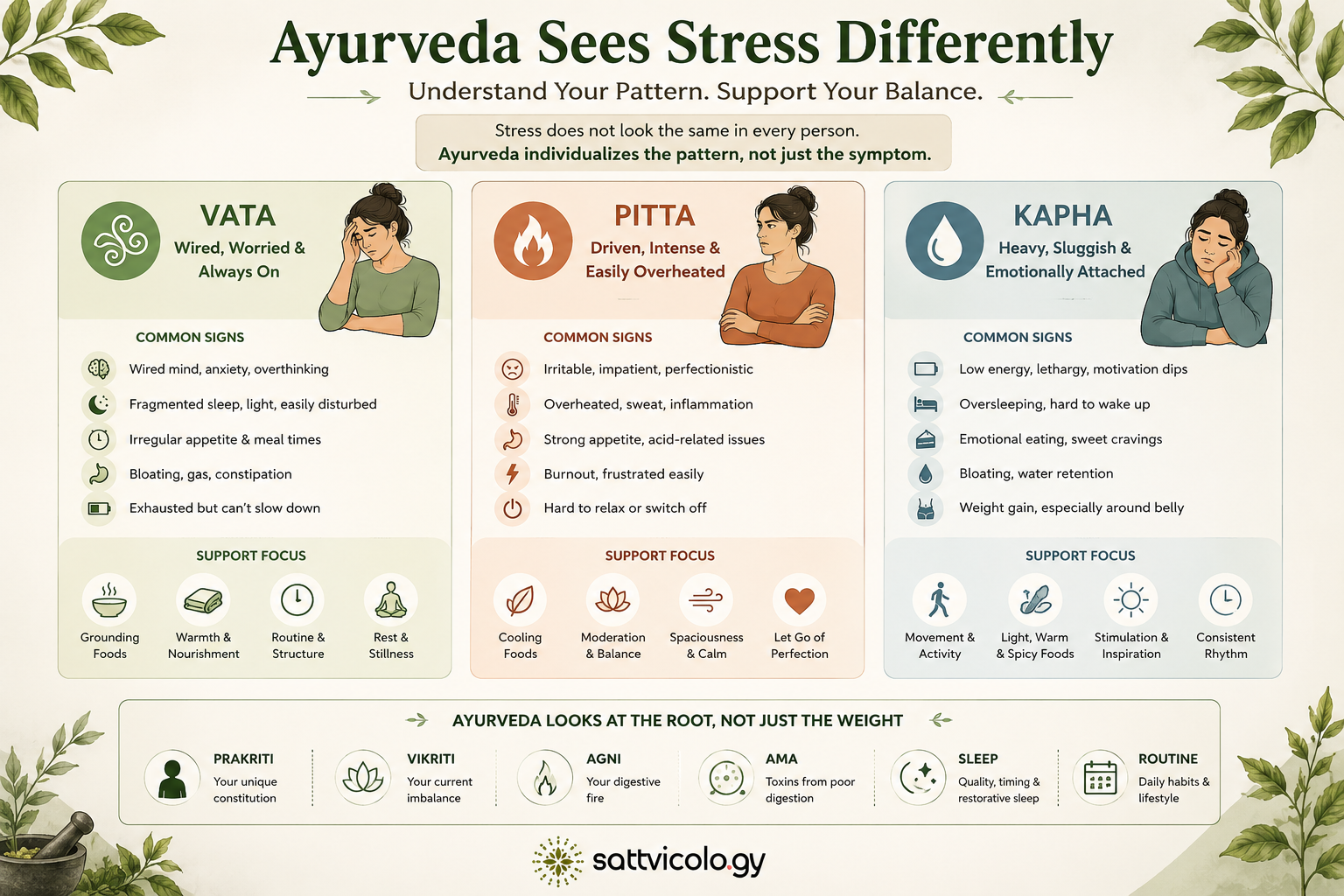
- Prakriti — your underlying constitution
- Vikriti — your current state of imbalance
- Agni — digestive and metabolic function
- Ama — an Ayurvedic concept associated with incomplete digestion and metabolic burden
- Vata, Pitta and Kapha
- Sleep patterns
- Hunger
- Bowel habits
- Energy
- Emotional stress
- Menstrual or menopausal changes
- Work routines
- Food timing
- Physical activity
- Daily habits
- Mental overstimulation
- Sattva, Rajas and Tamas—the traditional qualities of the mind
This personalized approach is particularly relevant to stress because stress does not look the same in every person.
Vata-Type Stress: Wired, Worried and Exhausted
When Vata becomes aggravated, a person may experience:
- Racing thoughts
- Anxiety
- Irregular meals
- Light or fragmented sleep
- Constipation
- Bloating
- Coldness
- Unpredictable appetite
- Exhaustion combined with difficulty slowing down
For this pattern, Ayurveda generally emphasizes regularity, warmth, nourishment and grounding.
Pitta-Type Stress: Driven, Irritable and Overheated
Pitta-related stress may appear as:
- Irritability
- Excessive competitiveness
- Impatience
- Perfectionism
- Feeling overheated
- Acid-related digestive complaints
- Difficulty mentally “switching off”
- Work-related burnout
The Ayurvedic strategy is typically not to push harder.
It is to cool, moderate and create space.
Kapha-Type Stress: Heavy, Stagnant and Unmotivated
Some people respond to prolonged stress by becoming less active rather than more restless.
A Kapha-dominant pattern may involve:
- Emotional eating
- Oversleeping
- Lethargy
- Heaviness
- Low motivation
- Resistance to change
- Progressive weight gain
Here Ayurveda may emphasize appropriate stimulation, movement, lighter food patterns and renewed routine.
Most people will not fit perfectly into one category. That is precisely why individualized Ayurvedic assessment matters.
1. Restore Dinacharya: Give Your Body Predictability
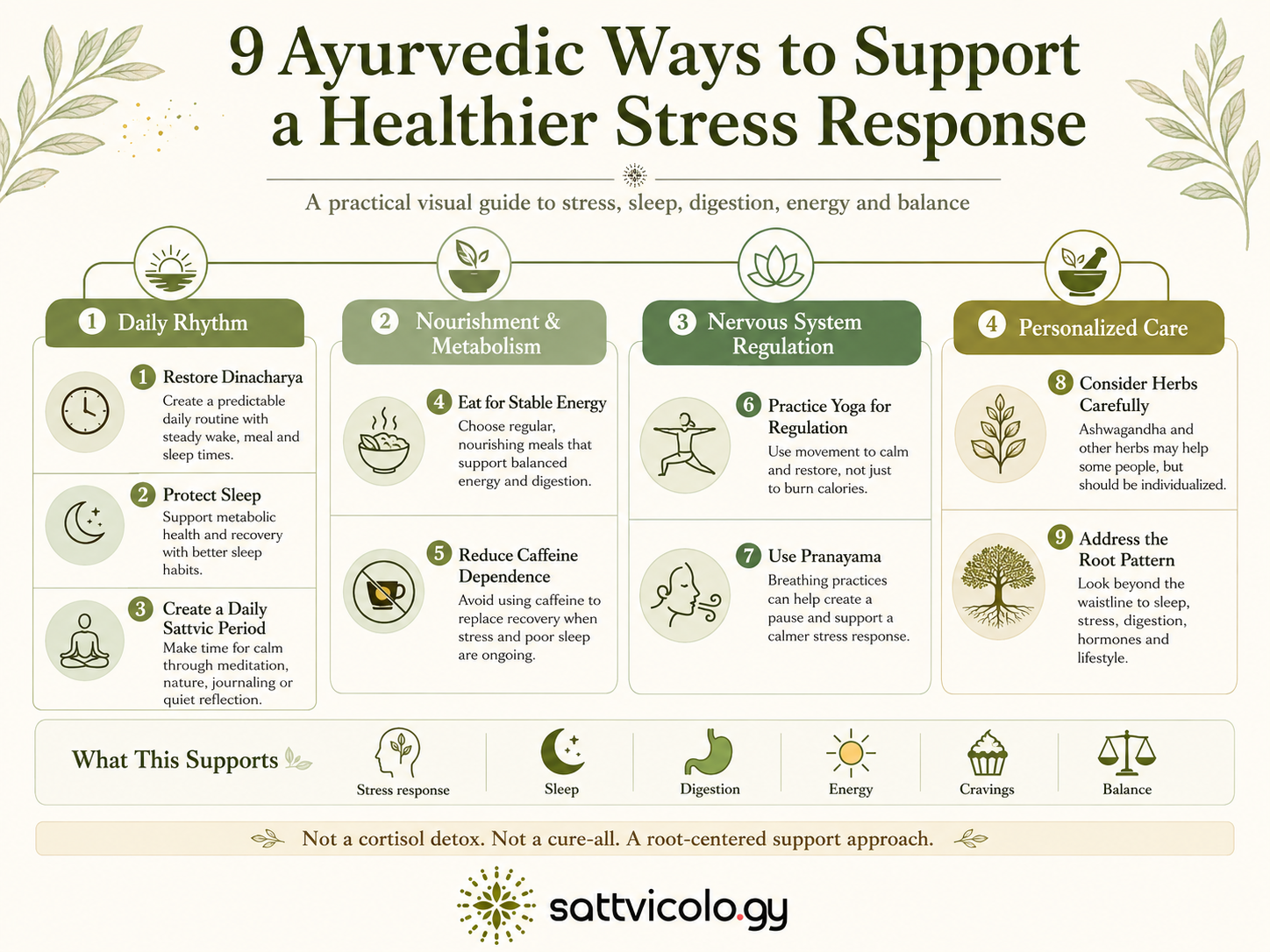
Dinacharya means daily routine.
The nervous system responds not only to what happens but also to how unpredictable life becomes.
Irregular sleeping, eating at dramatically different times every day, working late at night and repeatedly changing routines can create additional physiological demands.
Begin with anchors:
Wake → light exposure → nourishment → work → movement → evening slowing → sleep.
You do not need a perfect schedule. You need a recognizable rhythm.
From an Ayurvedic perspective, predictability is especially valuable when Vata is aggravated.
2. Protect Sleep as Metabolic Medicine
Sleep is not optional recovery time.
It is part of metabolic regulation.
Inadequate sleep is associated with obesity risk because sleep influences hunger signaling and eating behavior.
Ayurveda has long placed enormous importance on Nidra, or restorative sleep.
Try creating a digital sunset 30–60 minutes before bed.
Dim lights. Reduce stimulating content. Avoid turning bedtime into another productivity session.
Your goal is to give your brain repeated cues that the day’s demands have ended.
3. Stop Using Caffeine to Replace Recovery
A familiar American cycle looks like this:
Poor sleep → morning caffeine → skipped breakfast → afternoon crash → more caffeine → late work → poor sleep.
Ayurveda would view this as repeatedly borrowing energy rather than rebuilding it.
You do not necessarily need to eliminate coffee.
Instead, consider your relationship with it.
Ask: Am I enjoying caffeine—or using it to compensate for chronic exhaustion?
That question alone can reveal a great deal.
4. Eat in a Way That Supports Stable Energy
Extremely restrictive dieting during an already stressful period can sometimes become another source of strain.
Ayurvedic nutrition emphasizes food quality, digestibility, individual constitution and regularity.
A Sattvic approach may prioritize meals centered on foods such as:
- Cooked vegetables
- Lentils and dals
- Whole grains appropriate to the individual
- Fresh fruits
- Nuts and seeds
- Appropriate healthy fats
- Herbs and spices
- Adequate protein
- Minimally processed foods
The exact diet should be individualized, particularly for people with diabetes, kidney disease, gastrointestinal disorders, food allergies or other medical conditions.
The broader objective is simple: Nourish the body consistently rather than swinging between deprivation and stress-driven eating.
5. Practice Yoga for Regulation—not Punishment
When a person is already stressed and exhausted, the answer is not always another punishing workout.
Movement is important. But movement can also become restorative.
Research suggests yoga may help reduce perceived stress in stressed adults, although the quality of evidence varies and additional research is needed.
Earlier research has also suggested that yoga may influence physiological stress systems including the sympathetic nervous system and HPA axis.
For someone dealing with chronic stress, the question may therefore shift from:
“How many calories did this workout burn?”
to:
“How does my body feel after I finish?”
6. Use Pranayama to Create a Pause
Pranayama refers broadly to yogic breathing practices.
Breathing techniques are powerful partly because breathing occupies an unusual position in human physiology: it happens automatically, yet we can consciously change it.
Research evaluating yoga, meditation and breathing practices has reported reductions in physiological or psychological stress-reactivity outcomes in many studies, although study methods vary.
One of the simplest places to begin is simply making the exhalation comfortable and unhurried.
You do not need an elaborate ritual.
Sometimes the nervous system needs evidence that nothing is chasing you.
7. Create a Daily Sattvic Period
In yogic philosophy, the three Gunas describe qualities that influence consciousness:
Sattva: clarity, harmony and balance
Rajas: activity, agitation and stimulation
Tamas: inertia, dullness and heaviness
Modern American life can be intensely Rajasic.
Notifications. Breaking news. Deadlines. Traffic. Streaming. Multitasking. Social feeds.
The mind rarely encounters an empty space.
Create at least one intentionally Sattvic period every day.
It might include:
- Meditation
- Prayer
- Quiet tea
- Gentle yoga
- Walking outdoors
- Journaling
- Breathwork
- Sitting without a phone
- Time in nature
The point is not productivity.
The point is recovery from constant stimulation.
8. Consider Ayurvedic Herbs Carefully—not as DIY “Cortisol Blockers”
One of the biggest mistakes in the wellness industry is turning Ayurvedic herbs into isolated supplements marketed for a single biomarker.
Consider Ashwagandha (Withania somnifera).
It has a long history of Ayurvedic use and has attracted considerable scientific interest for stress.
Systematic reviews of clinical studies suggest short-term Ashwagandha supplementation may reduce cortisol and perceived stress in some stressed individuals. However, formulations and dosages vary, long-term effects remain insufficiently understood, and the certainty of evidence is not uniformly high.
Ashwagandha is promising. It is not a universal “cortisol cure.”
Herbs can interact with medications and may be inappropriate for certain individuals, including some people with thyroid conditions, pregnancy, autoimmune disorders or other medical circumstances.
Ayurveda traditionally individualizes herbs. That remains a wise principle today.
9. Address the Root Pattern—not Just the Waistline
Imagine two people with abdominal weight gain.
One sleeps five hours a night, drinks four coffees a day and works until midnight.
Another entered perimenopause, sleeps adequately but has developed insulin resistance and changes in body composition.
A third takes medication associated with weight gain. A fourth has untreated sleep apnea. A fifth has a highly sedentary lifestyle. A sixth has an endocrine condition.
They do not need the same intervention simply because their waist measurements look similar.
This is where the Ayurvedic principle of individualization has practical value.
The symptom may be visible at the waist. The contributing pattern may involve the entire life.
Is “Cortisol Detoxing” Real?
Be skeptical of products promising to “flush cortisol,” “detox your adrenal glands” or eliminate a “cortisol belly” in a few days.
Cortisol is not a toxin.
Your body needs it.
The objective should not be to eliminate cortisol but to support healthy physiology and address genuine causes of chronic stress, sleep disturbance, metabolic dysfunction or endocrine disease.
Likewise, the popular diagnosis “adrenal fatigue” should not be confused with medically recognized adrenal disorders.
Persistent symptoms deserve proper clinical evaluation rather than an internet diagnosis.
When Should You Ask a Doctor About High Cortisol?
True pathological cortisol excess can occur in Cushing’s syndrome, which is very different from everyday stress.
Clinical guidelines advise evaluation when patients have multiple progressive features suggestive of Cushing’s syndrome or certain unusual findings for their age. Proper testing may involve late-night salivary cortisol, urine free cortisol or dexamethasone suppression testing—not simply ordering a random cortisol test.
Talk with a physician or endocrinologist if unexplained central weight gain occurs alongside concerning features such as:
- Easy bruising
- Wide purple or reddish stretch marks
- Significant muscle weakness
- New or difficult-to-control high blood pressure
- Unusual osteoporosis
- Marked changes in blood glucose
- Progressive symptoms suggestive of hormone excess
- Long-term corticosteroid medication use
Do not discontinue prescribed corticosteroids without medical supervision.
The Western Medicine and Ayurvedic Perspectives Can Complement Each Other
This does not have to be an either-or conversation.
Modern medicine can ask:
Is there endocrine disease? Is insulin resistance present? Are medications contributing? Is the patient entering menopause? Is sleep apnea involved? Are glucose, blood pressure and lipids healthy? Does this person need diagnostic testing?
Ayurveda can additionally ask:
How does this person eat? How do they sleep? When did the imbalance begin? What changed in their life? How is their digestion? What is their daily rhythm? What foods are appropriate for their constitution? How does stress manifest in this particular person? What restorative practices are sustainable for them?
Together, these questions can create a more complete picture.
The Sattvicology Approach: Personalized, Root-Centered Wellness
At Sattvicolo.gy, Ayurveda is not approached as a generic list of herbs downloaded from the internet.
Sattvicology describes its model as a personalized, root-centered approach that considers physical, mental and emotional wellbeing before developing individualized recommendations.
Consultations involve certified Sattvicology healthcare professionals, while its membership approach includes access to Ayurvedic healthcare providers and expert guidance in yoga, pranayama and meditation.
Sattvicology also states that its platform is HIPAA-compliant, supporting confidential health-related interactions.
For someone concerned about stress, sleep, digestive changes or weight, this allows the conversation to move beyond:
“Which herb should I take?”
toward:
“What pattern is occurring in my body and my life—and what individualized changes may help support better balance?”
That is closer to the traditional spirit of Ayurveda.
A Simple Sattvic Stress-Support Routine
Rather than attempting twenty lifestyle changes tomorrow, begin with a few anchors.
Morning
Wake at a consistent time. Spend several minutes away from your phone. Get natural morning light when possible. Practice gentle movement or breathing. Eat according to your individual needs rather than automatically relying on caffeine.
Midday
Make lunch a substantial, nourishing meal when appropriate. Eat sitting down. Avoid working through every meal. Take a brief walk afterward if medically appropriate.
Evening
Reduce stimulation. Choose a lighter evening meal when appropriate. Create a consistent transition away from work. Use gentle yoga, meditation, breathing or another calming ritual. Reduce screens before sleep.
Most importantly
Do not turn wellness into another performance standard.
Consistency is more useful than perfection.
The Bigger Question Isn’t “How Do I Lose Cortisol Belly?”
It may be:
Why does my body feel as though it rarely gets permission to recover?
That question changes the conversation.
It moves us away from another crash diet. Another miracle supplement. Another social-media diagnosis. Another attempt to punish the body into submission.
And it moves us toward understanding the interconnected systems that influence weight, appetite, sleep, digestion, stress and wellbeing.
Ayurveda has been asking those interconnected questions for centuries.
Modern medicine is increasingly revealing the physiological mechanisms behind many of the relationships among stress, sleep, behavior and metabolism.
Neither perspective requires us to blame cortisol for everything.
Instead, both can remind us of something surprisingly simple:
A human body cannot live indefinitely as though every day is an emergency.
Frequently Asked Questions About Cortisol Belly and Ayurveda
“Cortisol belly” is a nonmedical term generally used to describe abdominal weight gain believed to be associated with chronic stress and cortisol. Cortisol can influence appetite and fat metabolism, but abdominal fat alone does not prove that cortisol levels are abnormally high.
There is no diagnostic test for “cortisol belly” because it is not a recognized medical diagnosis. If you have unexplained or progressive abdominal weight gain—especially alongside other unusual symptoms—talk with your healthcare provider about possible metabolic, hormonal, medication-related or lifestyle causes.
Chronic stress may contribute to weight gain in some people through several pathways, including appetite changes, food choices, sleep disruption, physical activity and stress-hormone signaling. The relationship varies considerably among individuals.
Ayurveda itself should not be described as a proven treatment for pathological cortisol excess. However, practices associated with Ayurvedic and yogic living—including yoga, meditation, breathing, sleep routines and stress-management strategies—may support stress regulation.
There is no single “best” herb for everyone. Ashwagandha has some of the strongest research interest, but formulations, doses and study quality vary, and it may interact with medications or be inappropriate for certain people.
Several human trials and systematic reviews suggest that Ashwagandha supplementation can reduce cortisol in some stressed adults. Evidence remains incomplete regarding ideal formulations, long-term use and which patients benefit most.
There is research supporting yoga as a stress-management intervention. Systematic reviews have reported improvements in perceived stress, although the quality of evidence for some outcomes is limited.
No single food “turns off” cortisol. A healthier strategy is a balanced dietary pattern that supports adequate nutrition, stable energy, metabolic health and sleep. Individual needs differ.
Poor sleep is associated with obesity risk and can affect hormones involved in hunger and fullness. Sleep deficiency can therefore be one component of a larger pattern contributing to weight gain.
No. Cushing’s syndrome is a genuine medical disorder involving excessive glucocorticoid exposure. “Cortisol belly” is a popular wellness phrase.
Not automatically. Abdominal weight gain alone does not establish cortisol excess. A clinician can determine whether testing is warranted based on symptoms, medications and examination.
Ayurveda considers the individual rather than the symptom alone. An assessment may look at constitution, current dosha imbalance, digestion, sleep, appetite, stress, daily routine, physical activity and emotional wellbeing before recommendations are made.
References & Further Reading
- National Heart, Lung, and Blood Institute (NIH). Overweight and Obesity: Causes and Risk Factors. The NHLBI identifies stress and inadequate sleep among factors that can affect appetite, metabolism and weight.
- van der Valk ES, et al. Stress and Obesity: Are There More Susceptible Individuals? Current Obesity Reports. The review examines glucocorticoid exposure, individual susceptibility, chronic stress and abdominal obesity.
- Incollingo Rodriguez AC, et al. Hypothalamic-pituitary-adrenal axis dysregulation and cortisol activity in obesity: A systematic review. The review highlights the complexity and inconsistencies in the cortisol-obesity relationship.
- Schleinzer A, et al. Effects of yoga on stress in stressed adults: a systematic review and meta-analysis. Frontiers in Psychiatry, 2024.
- Pascoe MC, et al. Yoga, mindfulness-based stress reduction and stress-related physiological measures: A meta-analysis.
- Della Porta M, et al. Effects of Withania somnifera on Cortisol Levels in Stressed Human Subjects: A Systematic Review. Nutrients, 2023.
- Endocrine Society. Diagnosis of Cushing’s Syndrome Clinical Practice Guideline. Provides guidance regarding which patients should be tested and appropriate diagnostic strategies.
- Sattvicolo.gy. How We Treat; Membership Packages; History & FAQs. These pages describe Sattvicology’s personalized Ayurvedic approach, certified healthcare professionals, yoga and pranayama support, and HIPAA-compliant platform.
Medical Disclaimer
This article is provided for educational and informational purposes only and is not intended to diagnose, treat, cure or prevent any disease. “Cortisol belly” is not a recognized medical diagnosis. Ayurvedic practices, herbs, yoga, nutrition and other holistic approaches discussed here are intended to complement—not replace—appropriate conventional medical care.
Do not use herbs or supplements to self-treat suspected cortisol, adrenal, thyroid, metabolic or other endocrine disorders. Herbs and supplements can cause adverse effects and interact with prescription medications. Pregnant or breastfeeding individuals and people with existing medical conditions should seek professional guidance before beginning herbal supplementation.
If you experience persistent or unexplained weight changes, significant muscle weakness, abnormal bruising, purple stretch marks, high blood pressure, abnormal blood glucose or other progressive symptoms, consult your physician or another qualified healthcare professional.
Sattvicolo.gy encourages coordinated, informed healthcare and recommends consulting an appropriately qualified medical professional before beginning any new health regimen.