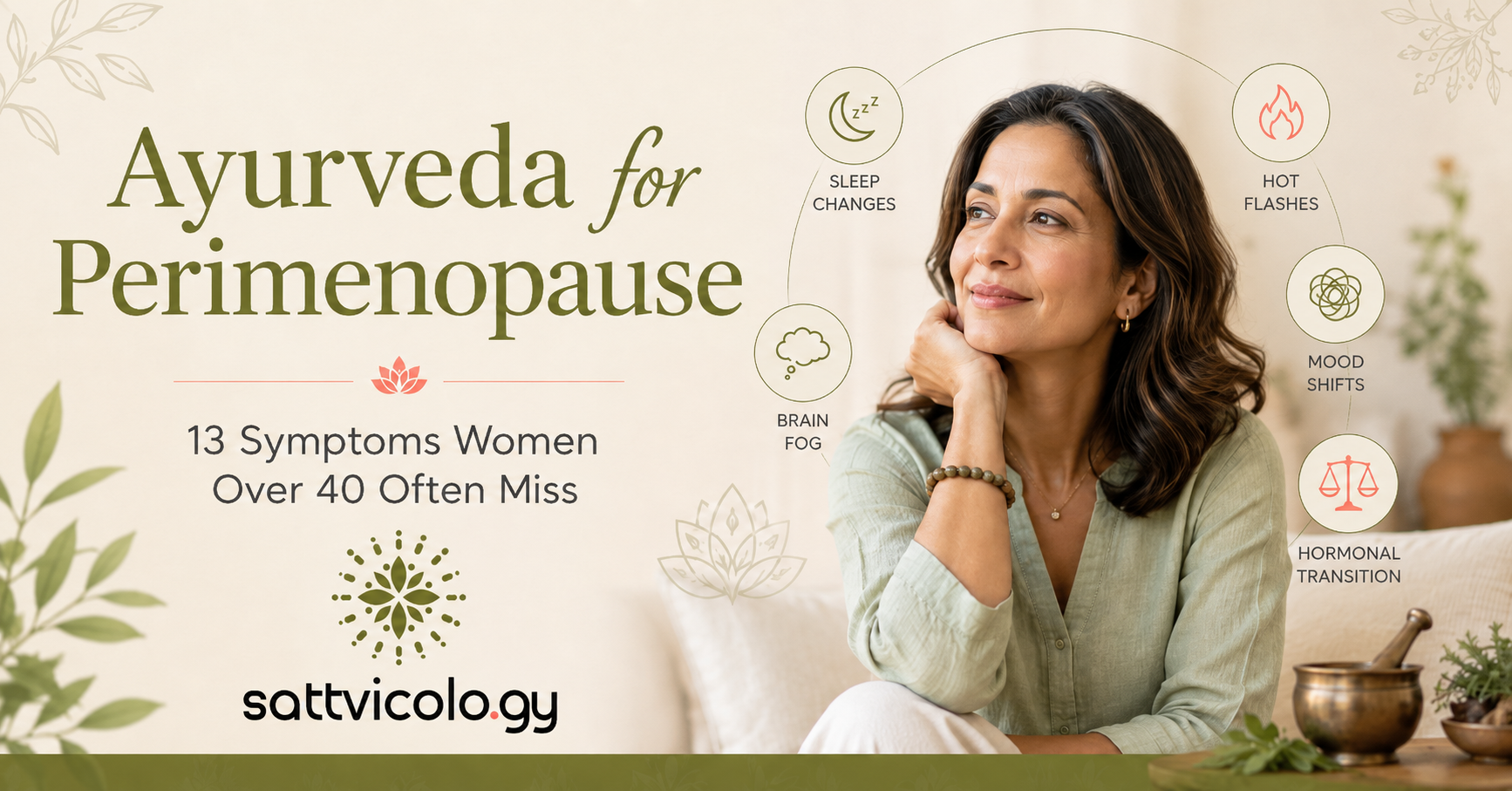
Is It Perimenopause? 13 Symptoms Women Over 40 Often Miss—and How Ayurveda Approaches Them
Weight gain. Brain fog. Anxiety. Poor sleep. Irregular periods. Hot flashes. Joint discomfort. If you are in your 40s and suddenly do not feel like yourself, perimenopause may be part of the explanation. This guide explains common symptoms, when medical evaluation matters, and how Ayurveda can complement evidence-based menopause care.
Quick Answer: What Is Perimenopause?
Perimenopause is the transitional period leading up to menopause, during which ovarian hormone production becomes increasingly variable and menstrual cycles begin to change.
The Menopause Society explains that declining and erratic ovarian hormone production can lead to changes in menstrual frequency and flow. As the transition progresses, women may begin skipping periods for increasingly long intervals.
Menopause, by comparison, is reached after 12 consecutive months without a menstrual period, assuming there is no other medical cause.
Perimenopause can last for several years. Although it is strongly associated with the 40s, the exact age and experience vary from woman to woman.
Why Perimenopause Can Feel So Confusing
One of the most frustrating things about perimenopause is its variability.
Estrogen does not simply decline in a smooth, straight line. Hormonal activity can fluctuate considerably during the transition.
That means one month may feel relatively normal. The next may involve poor sleep, irritability, breast tenderness, a heavier period, anxiety, hot flashes, bloating or brain fog. Then some symptoms may disappear temporarily.
This variability is one reason women sometimes hear: “Your hormone levels look normal.”
A single laboratory value may not always capture a fluctuating transition. Clinical history, age, menstrual-pattern changes and symptoms often matter considerably in evaluating perimenopause.
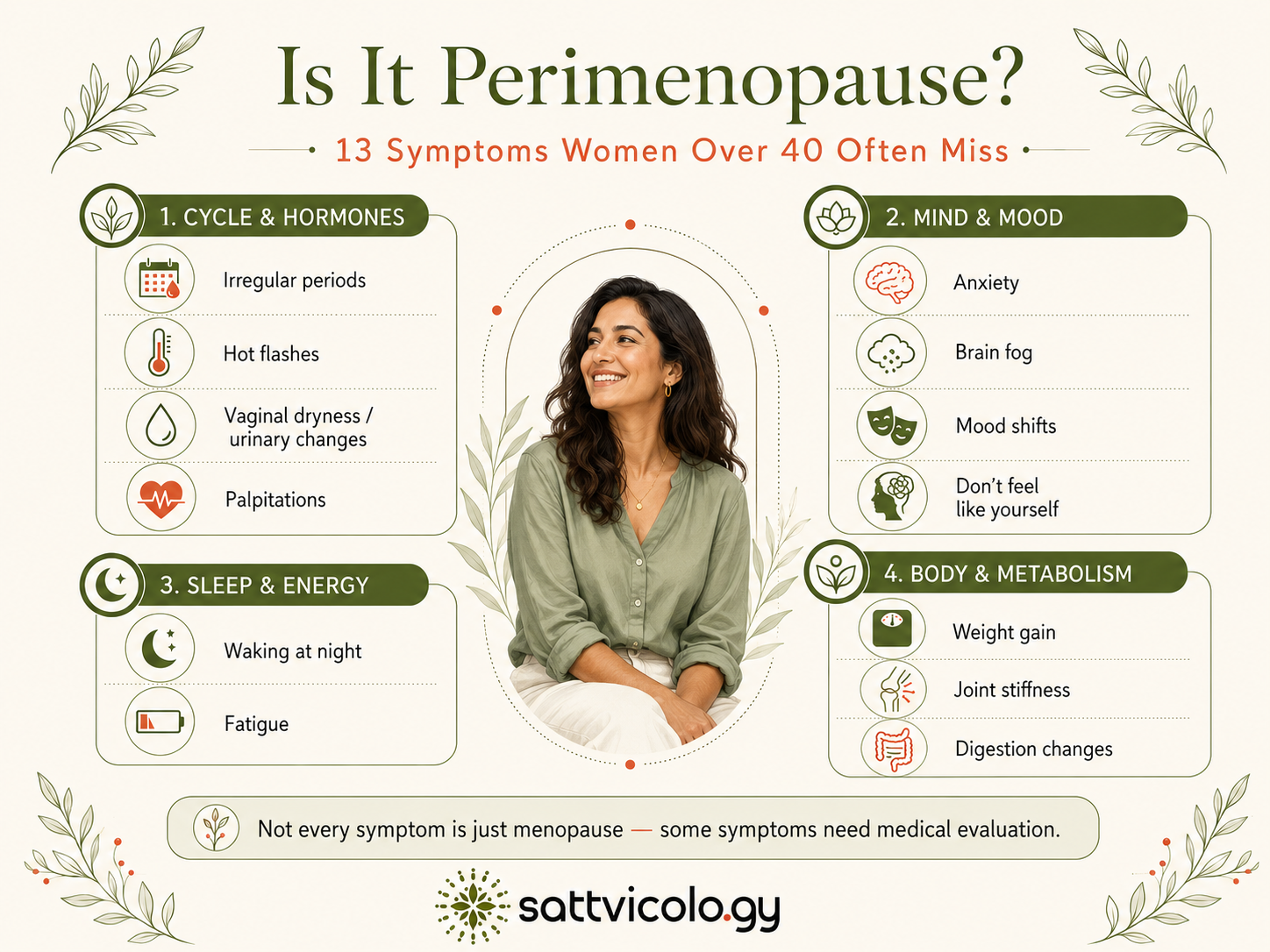
1. Your Period Suddenly Changes
One of the clearest signs of perimenopause is usually a change in menstrual pattern.
Your cycle may become shorter, longer, heavier, lighter, less predictable or occasionally skipped.
The Menopause Society notes that early in perimenopause, cycles may become slightly shorter. Later, cycle length can vary substantially, and women may eventually skip 60 days or more.
However, not every bleeding change should automatically be blamed on perimenopause. Unusually heavy bleeding, bleeding between periods or bleeding after sex deserves medical evaluation.
2. You Begin Waking in the Middle of the Night
Sleep disruption can emerge before women recognize they are approaching menopause.
- Fall asleep normally but wake repeatedly
- Wake around 2–4 a.m.
- Experience night sweats
- Feel unusually warm
- Have trouble falling back asleep
- Wake tired despite spending enough time in bed
Sometimes night sweats cause the awakening. Sometimes sleep changes occur independently.
Poor sleep can then amplify fatigue → cravings → irritability → reduced exercise → stress → cognitive complaints. One symptom begins affecting several systems.
3. You Feel Anxious for No Obvious Reason
A woman may describe it this way: “My life has not changed—but suddenly I feel like I cannot handle it.”
Perimenopause can coincide with changes in mood, irritability and anxiety. This does not mean every episode of anxiety in a woman over 40 is hormonal.
Hormonal transition, sleep disruption, life stress and previous mental-health vulnerability can interact.
Ayurveda would look particularly closely at Vata, because qualities traditionally associated with aggravated Vata include restlessness, mental overactivity, worry, irregularity, light sleep and feeling ungrounded.
The Ayurvedic response is therefore often not simply an herb. It begins with regularity, nourishment, sleep, calming routines and nervous-system support.
4. Your Brain Feels Foggy
You forget someone’s name, lose your train of thought, struggle to retrieve a word, walk into another room and forget why, or read the same sentence three times.
For women who have always been mentally sharp, this can be unsettling.
Importantly, perimenopausal brain fog is not imaginary. Research has found measurable differences in cognitive outcomes during perimenopause, while also emphasizing substantial variation among women.
Earlier research has linked cognitive complaints during perimenopause with factors including sleep problems, depressive symptoms and vasomotor symptoms.
Brain fog does not automatically mean dementia. But new, severe or progressive cognitive symptoms should still be medically evaluated.
5. Your Waistline Changes Even Though Your Lifestyle Has Not Changed Much
Midlife body-composition changes can be particularly frustrating.
A woman may say: “I weigh almost the same, but my body looks completely different.”
Changes in estrogen, aging, declining muscle mass, activity, sleep, insulin sensitivity and other factors can influence body composition during midlife. This can shift fat distribution toward the abdomen.
That does not mean every woman should respond by eating dramatically less. Aggressively restricting food while simultaneously losing muscle can work against long-term metabolic health.
A better midlife strategy may emphasize sufficient protein, resistance exercise, fiber-rich whole foods, appropriate total calories, sleep, stress management, metabolic screening and sustainable eating habits.
Ayurveda adds another question: Has Agni—your digestive and metabolic pattern—changed along with your stage of life?
6. Hot Flashes Appear Without Warning
Hot flashes—clinically called vasomotor symptoms—remain one of the best-known menopause symptoms.
The Menopause Society reports that up to 80% of women may experience hot flashes or night sweats at some point during the menopause transition.
- Sudden heat in the face, neck or chest
- Sweating
- Flushing
- Chills afterward
- Rapid heartbeat
- Anxiety
- Nighttime awakenings
In Ayurveda, sensations of heat naturally invite consideration of Pitta, but it would be an oversimplification to say: Hot flash = Pitta disorder.
Age, constitution, digestion, sleep, emotional state and other symptoms would also be assessed.
7. Your Mood Feels Less Predictable
You may become irritated by things you previously ignored, cry unexpectedly, feel emotionally overwhelmed, lose patience or experience a lower mood.
Mood changes during perimenopause deserve attention rather than dismissal.
They can be affected by hormonal fluctuations, poor sleep, vasomotor symptoms, work stress, caregiving responsibilities, relationship changes, previous anxiety or depression, physical symptoms and midlife life transitions.
Ayurveda would assess the pattern rather than label every emotional change as hormonal. Is the person restless and fearful? Irritable and overheated? Heavy and withdrawn? Those can represent very different patterns requiring different support.
8. Your Joints Suddenly Feel Stiffer
Joint and musculoskeletal complaints are frequently reported during the menopause transition.
Women sometimes interpret these changes solely as “getting older.” But midlife health deserves more thoughtful evaluation.
Joint discomfort can also have many other causes—including injury, arthritis, autoimmune disease and mechanical issues—so persistent or significant symptoms should not automatically be attributed to menopause.
From an Ayurvedic perspective, the increasing influence of Vata with age is associated traditionally with qualities such as dryness, stiffness, reduced lubrication and variable discomfort.
This is one reason Ayurvedic midlife care often emphasizes appropriate nourishment, movement, oil-based self-care practices and individualized diet.
9. You Feel Tired Even After Sleeping
Fatigue during perimenopause can become a feedback loop.
Poor sleep causes fatigue. Fatigue reduces activity. Lower activity can contribute to loss of muscle. Stress increases. Food choices may change. Concentration worsens.
And suddenly the woman concludes: “I must just be getting old.”
Do not assume that. Persistent fatigue can also be associated with iron deficiency, thyroid disease, sleep apnea, diabetes, depression, vitamin deficiencies, medication effects and other medical conditions.
A proper medical evaluation matters. Ayurveda should complement that evaluation—not replace it.
10. Your Digestion Changes
Some women report new or worsening bloating, constipation, irregular bowel habits, reflux, food sensitivities or appetite changes.
Not every digestive symptom is caused by perimenopause. But from an Ayurvedic perspective, digestive changes during a major life transition receive significant attention because Agni is considered central to health.
An Ayurvedic practitioner may evaluate appetite, meal timing, bowel movements, bloating, food tolerance, hydration, stress, sleep and daily routine.
Rather than automatically prescribing a “menopause supplement,” the question becomes: What changed in this woman’s digestive pattern—and why?
11. Your Heart Suddenly Feels Like It Is Racing
Some women report a sensation of palpitations during the menopause transition. A rapid heartbeat can also accompany hot flashes.
However: Do not assume palpitations are simply perimenopause.
Palpitations may also be caused by arrhythmias, thyroid disorders, anemia, caffeine, medications, anxiety or other cardiovascular conditions.
New, persistent or concerning palpitations deserve medical evaluation—especially if accompanied by chest pain, fainting, severe shortness of breath or dizziness.
A holistic approach should never become an excuse to overlook potentially significant symptoms.
12. Vaginal Dryness or Urinary Changes Begin
Hormonal changes can affect the tissues of the vagina and urinary tract.
Women may experience vaginal dryness, burning, discomfort during intercourse, urinary urgency or recurrent urinary symptoms.
These changes are often discussed under genitourinary syndrome of menopause (GSM).
They may be underreported because women are embarrassed or assume nothing can be done. Effective treatment options exist, including local hormonal options where appropriate, and treatment should be individualized.
13. You Simply “Do Not Feel Like Yourself”
This may be the symptom women find hardest to describe.
Nothing is catastrophically wrong. But everything feels slightly different—your energy, body, resilience, sleep, emotions, confidence and ability to tolerate stress.
This is one reason perimenopause deserves a whole-person conversation rather than simply being reduced to declining estrogen.
The Ayurvedic View of Perimenopause
Ayurveda describes life as occurring in broad phases influenced by the Doshas.
Although interpretations vary among traditional schools, aging is generally associated increasingly with Vata qualities.
Vata is traditionally characterized by movement, change, dryness, lightness, irregularity and mobility.
Perimenopause is, by definition, a period of change and irregularity. Periods become irregular. Sleep may become irregular. Temperature regulation changes. Mood fluctuates. Digestion changes. The body begins transitioning from one physiological stage to another.
This makes Vata particularly relevant. However, symptoms may also demonstrate substantial Pitta or Kapha involvement.
Three Common Ayurvedic Perimenopause Patterns
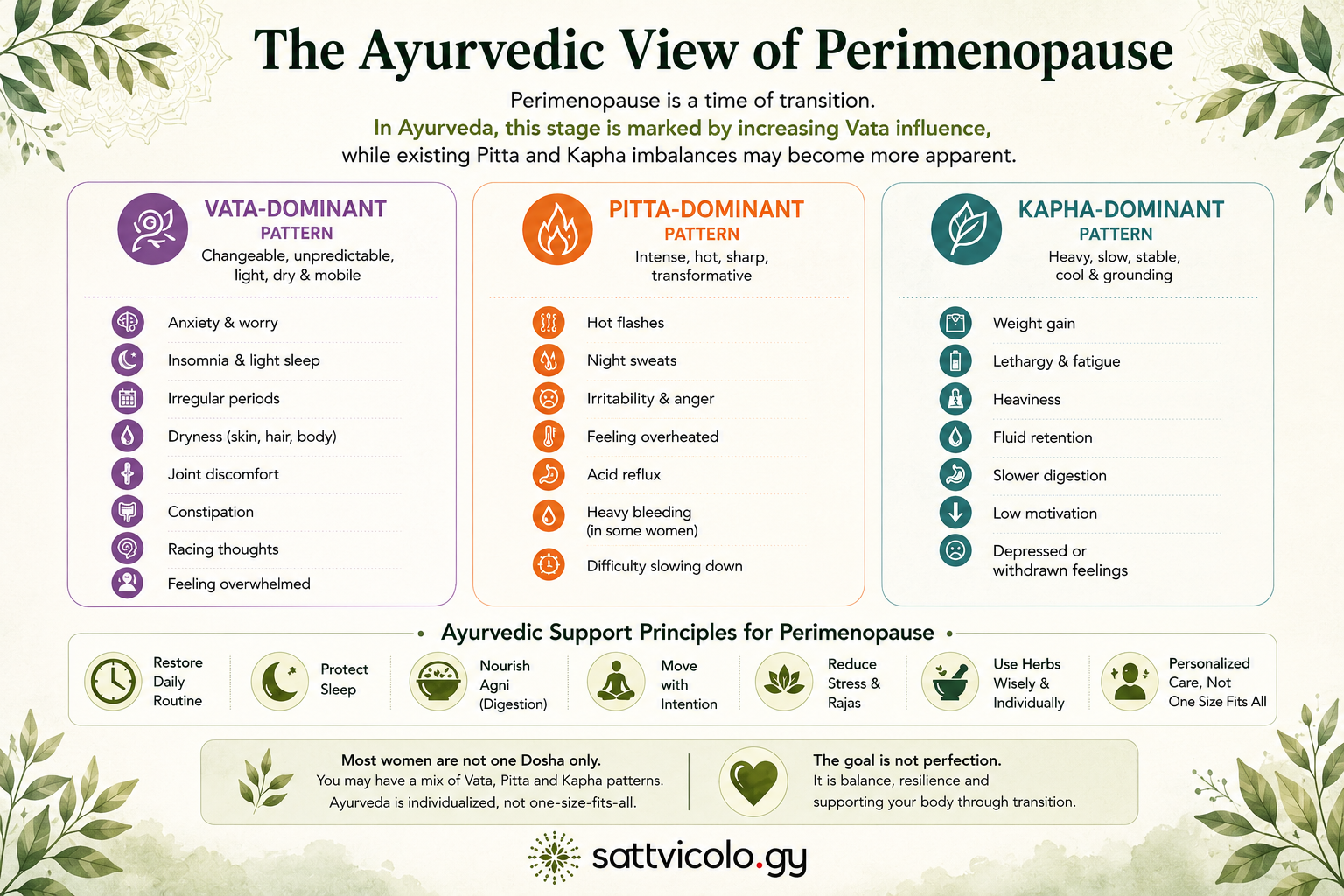
Vata-Dominant Perimenopause
Possible patterns may include anxiety, brain fog, insomnia, irregular periods, constipation, dryness, joint discomfort, fatigue, feeling overwhelmed and racing thoughts.
Ayurvedic support often emphasizes: Warmth + regularity + nourishment + grounding + restorative routines.
Pitta-Dominant Perimenopause
Possible patterns may include intense hot flashes, night sweats, irritability, anger, acid reflux, feeling overheated, heavy bleeding in some individuals and difficulty slowing down.
Ayurvedic support may emphasize: Cooling + moderation + reducing excessive stimulation + appropriate dietary adjustments.
Kapha-Dominant Perimenopause
Possible patterns may include weight gain, lethargy, heaviness, low motivation, fluid retention, slower digestion and depressed or withdrawn feelings.
Ayurvedic support may emphasize: Movement + stimulation + appropriate lighter foods + metabolic support + routine.
Most Women Are Not One Dosha
This is important.
A woman might simultaneously have: Vata insomnia + Pitta hot flashes + Kapha weight gain.
That is exactly why generic internet recommendations such as “Take this one herb for menopause” are inconsistent with individualized Ayurvedic practice.
Two women of the same age with the same diagnosis may need very different lifestyle strategies.
1. Restore a Predictable Daily Rhythm
Perimenopause already introduces biological unpredictability. Your lifestyle does not have to add more.
Ayurveda calls a balanced daily routine Dinacharya.
Try creating anchors: similar waking time, regular meals, consistent movement, planned wind-down and predictable bedtime.
For a Vata-dominant transition, regularity itself can become a form of support.
2. Protect Sleep Aggressively
Do not normalize years of broken sleep.
Sleep affects mood, appetite, cognitive performance, cardiovascular health, insulin sensitivity and physical recovery.
If night sweats are driving awakenings, treating the vasomotor symptoms may significantly improve sleep. If sleep problems persist independently, other causes—including sleep apnea—should be considered.
Ayurvedic evening practices may include reduced digital stimulation, gentle breathing, meditation, restorative yoga, consistent bedtime and a calmer evening environment. These practices can support relaxation, but persistent insomnia deserves proper clinical assessment.
3. Stop Treating Midlife Weight Gain With Punishment
Many women respond to changing body composition by eating dramatically less, exercising dramatically more, feeling guilty, and repeating.
A healthier strategy recognizes that midlife metabolic health increasingly depends on preserving muscle.
That means: protein + resistance exercise + movement + sleep + appropriate nutrition.
A Sattvic diet can be adapted to include adequate protein through foods such as lentils, mung dal, beans, tofu, tempeh, yogurt, paneer, nuts, seeds and other appropriate foods based on dietary preference.
“Sattvic” should never mean nutritionally inadequate.
4. Use Yoga for More Than Flexibility
Yoga can provide strength, balance, mobility, body awareness, stress regulation and mindful breathing.
However, there is an important evidence distinction. The Menopause Society’s evidence review did not recommend yoga specifically as a proven standalone treatment for vasomotor symptoms such as hot flashes because available evidence was insufficient.
That does not mean yoga has no value during perimenopause. It means we should make the correct claim.
Yoga can be part of a broader midlife wellness and stress-management strategy; it should not be marketed as a proven cure for hot flashes.
5. Nourish Agni Without Extreme Diets
Ayurveda places enormous emphasis on digestion.
During perimenopause, instead of chasing every trending diet, consider: How hungry are you? Do meals leave you energized or sluggish? Is constipation appearing? Are you bloated? Has reflux increased? Do you skip meals and then overeat? Are highly processed foods replacing nourishing meals?
A personalized Ayurvedic eating plan may emphasize whole foods, cooked vegetables, legumes, appropriate grains, adequate protein, healthy fats, herbs and spices suited to the individual and regular meal timing.
The objective is not “detox.” It is sustainable nourishment during transition.
6. Reduce Rajasic Overload
Perimenopause is occurring in a uniquely overstimulating era.
Many women are simultaneously managing careers, children, aging parents, financial pressure, relationships, notifications, email, social media and chronic information exposure.
Ayurveda and yogic philosophy describe Rajas as activity, agitation and stimulation. Modern life provides Rajas almost continuously.
Creating more Sattva can mean deliberately introducing quiet, nature, meditation, prayer, music, mindful meals, breathwork, technology-free periods and nonproductive rest.
Not every minute of life must be optimized. Sometimes restoration requires doing less.
7. Be Careful With “Menopause Herbs”
The menopause supplement market is enormous. That does not mean every product is evidence-based.
Evidence reviews do not support supplements and herbal remedies as established treatments for vasomotor symptoms, because the quality and consistency of available evidence are limited.
Ayurveda is not: “Buy seven herbs from Amazon and hope they balance your hormones.”
Traditional Ayurvedic herbal use is individualized. A woman’s medications, medical history, thyroid function, bleeding pattern, liver health, blood pressure, metabolic status and constitution all matter.
8. Strength Training Becomes Increasingly Important
Perimenopause should not only be a conversation about hot flashes. It should also be a conversation about the coming decades.
Maintaining muscle and bone becomes increasingly important as women age.
A comprehensive midlife movement program may include resistance training, weight-bearing activity, walking, mobility, balance work and yoga.
Yoga can complement strength training. But gentle stretching alone may not provide the progressive muscular stimulus needed to preserve strength and lean tissue.
9. Treat the Woman, Not the Menopause Checklist
A 44-year-old woman with heavy periods + irritability + reflux + hot flashes should not automatically receive the same Ayurvedic recommendations as a 51-year-old woman with constipation + insomnia + anxiety + joint stiffness.
The diagnostic label may be similar. The person is not.
This is one of Ayurveda’s strongest conceptual contributions to integrative wellness: Individualization.
What About Ashwagandha During Perimenopause?
Ashwagandha is one of the most popular Ayurvedic herbs in the United States. It has clinical research examining stress and other outcomes.
But it should not automatically be described as a “menopause hormone balancer.”
Ashwagandha may be inappropriate for certain individuals and can interact with medications or affect thyroid and other physiological functions.
The safest principle is: Do not choose an herb solely because an influencer calls it a menopause herb. Use professional guidance.
Western Medicine vs. Ayurveda for Perimenopause
Western Medicine Asks:
- Are these symptoms caused by the menopause transition?
- Does abnormal bleeding require investigation?
- Could thyroid disease or anemia be involved?
- Are cardiovascular risk factors present?
- Is osteoporosis risk increasing?
- Would hormone therapy be appropriate?
- Would a nonhormonal prescription treatment help?
- Does vaginal estrogen or another local treatment make sense?
- Is mental-health treatment required?
Ayurveda Asks:
- What is the woman’s constitution?
- What is her current imbalance?
- Which Doshas are most involved?
- How is Agni?
- How is she sleeping?
- How does stress manifest?
- How regular is her daily routine?
- What foods are actually digestible for her?
- How much stimulation surrounds her?
- How are movement and rest balanced?
- What changed before the symptoms became worse?
These questions can complement one another.
What Does Conventional Medicine Offer for Perimenopause?
Menopausal Hormone Therapy
Hormone therapy remains the most effective treatment for bothersome vasomotor symptoms, including hot flashes and night sweats.
For many symptomatic women younger than 60 or within approximately 10 years of menopause onset who have no contraindications, the benefit-risk profile can be favorable. Treatment should still be individualized according to factors such as formulation, route, dose, medical history and personal risk.
Hormone therapy is not appropriate for everyone. That determination belongs between a woman and a qualified healthcare professional.
Nonhormonal Treatments
Evidence-based nonhormonal approaches also exist, including certain SSRIs/SNRIs, gabapentin, fezolinetant, oxybutynin, cognitive behavioral therapy and clinical hypnosis. The strength of evidence varies by intervention.
This matters because women who cannot or do not wish to use hormone therapy still have legitimate medical options.
Why Ayurveda Should Complement—Not Compete With—Good Menopause Medicine
If a woman has severe vasomotor symptoms affecting her ability to function and sleep, she deserves to know that effective conventional therapies exist.
If she has unexplained heavy bleeding, Ayurveda should not delay evaluation.
If she has a thyroid disorder, anemia or cardiovascular condition, it needs appropriate medical care.
At the same time, medication alone may not answer every question about nutrition, daily routine, stress, movement, digestion, sleep habits, body awareness, emotional wellbeing and sustainable self-care.
This is the space in which thoughtful Ayurvedic care may add value.
The Sattvicology Approach to Women’s Midlife Health
At Sattvicolo.gy, the approach begins with individualized assessment rather than a prepackaged menopause protocol.
Sattvicology’s wellness process evaluates a person’s physical, mental and emotional wellbeing, lifestyle, habits, environment and Dosha patterns before recommendations are developed.
Its broader model incorporates Ayurveda, Yoga, Pranayama, Meditation, personalized dietary guidance and lifestyle modification.
Sattvicology operates through a HIPAA-compliant platform and states that health-related interactions and data are protected through measures including encryption and access controls.
For a woman navigating perimenopause, that means the conversation can move beyond: “Which menopause supplement should I buy?” toward: “What is changing in my body, what requires medical evaluation, and what individualized practices may help me move through this transition with greater balance?”
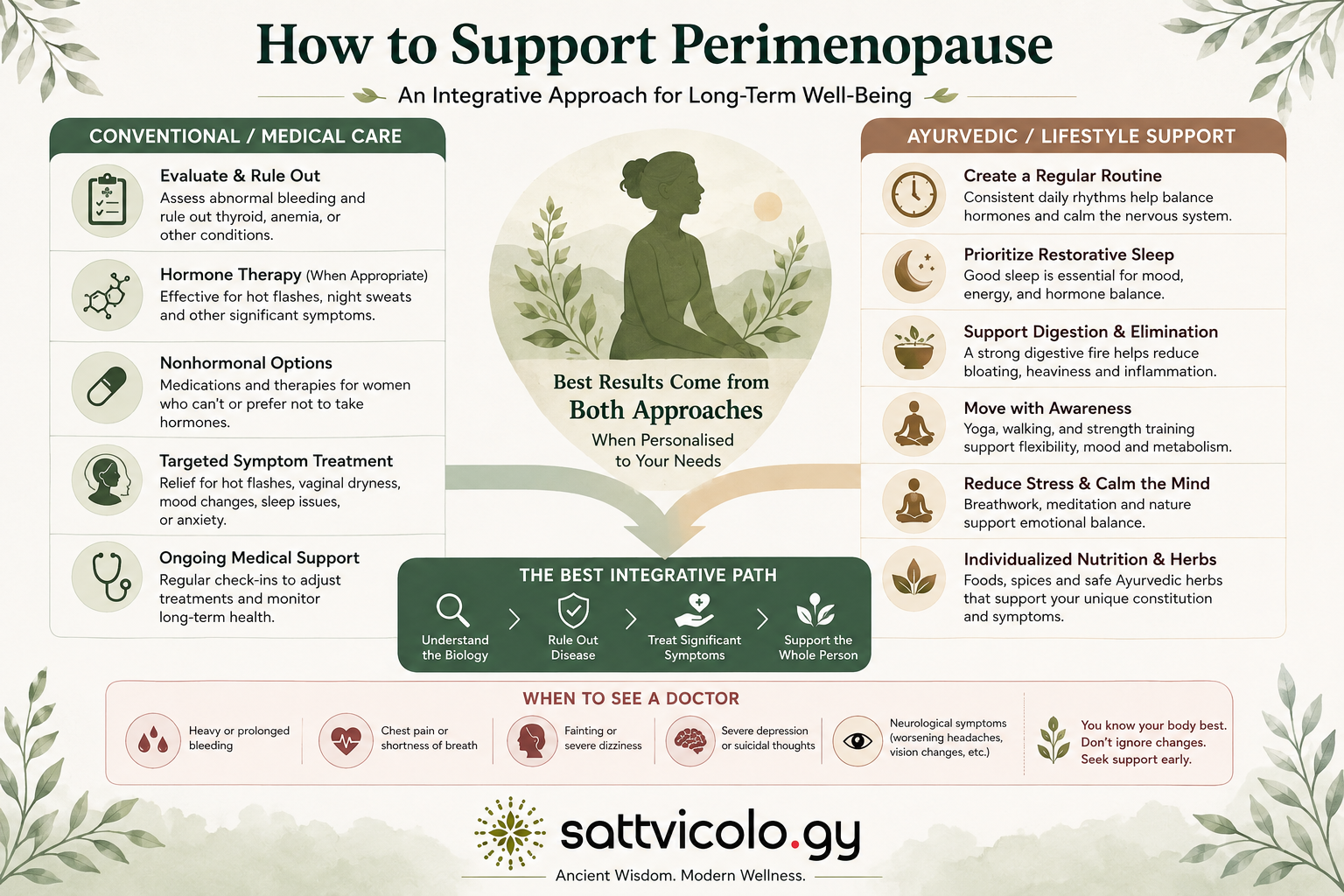
When Should You See a Doctor?
Perimenopause is normal. That does not mean every symptom occurring during your 40s is normal.
Seek appropriate medical evaluation for symptoms such as:
- Very heavy bleeding
- Bleeding between periods
- Bleeding after sex
- Bleeding after menopause
- Severe pelvic pain
- New breast changes
- Significant unexplained weight loss
- Persistent heart palpitations
- Chest pain
- Fainting
- Severe depression
- New or progressive neurological symptoms
- Significant memory impairment
- Persistent fatigue
- Symptoms that interfere substantially with daily life
If something feels markedly different, investigate it. Do not let the word “perimenopause” become a blanket explanation for every symptom.
The Perimenopause Conversation Women Deserve
For generations, many women entered midlife knowing very little about what might happen. Their mothers rarely discussed it. Doctors sometimes minimized it. Workplaces ignored it.
Symptoms were often fragmented into unrelated complaints: insomnia, anxiety, weight gain, brain fog, irregular periods, hot flashes and fatigue.
Today, that is changing. Women are searching, comparing treatments and asking harder questions.
But increased attention also creates increased marketing. That means women need something more valuable than another bottle promising to “balance hormones naturally.”
They need context. They need evidence. They need personalized care. And they need permission to recognize that this transition affects far more than menstruation.
Perimenopause Is a Transition—not a Decline
Ayurveda offers a particularly meaningful way to think about midlife.
The body is changing. But change does not automatically mean deterioration.
The transition can become an invitation to reassess:
- How am I eating?
- How am I sleeping?
- How strong is my body?
- How much stress have I normalized?
- How much of my day is stimulation?
- What do I need now that I did not need at 25?
- Which symptoms need medical treatment?
- Which habits no longer serve me?
The body you have at 45 does not need to behave exactly like the body you had at 25. It needs something more useful: to be understood as it is today.
That is where personalized medicine and personalized Ayurveda can meet.
Frequently Asked Questions About Perimenopause and Ayurveda
Changes in menstrual timing are among the most characteristic early signs. Periods may become shorter, longer, heavier, lighter or less predictable. Other early symptoms can include sleep disruption, hot flashes, mood changes and changes in sexual or vaginal health.
Perimenopause commonly begins during the 40s, although timing varies. Some women notice changes earlier and others later.
Yes. A woman in her early 40s can be in perimenopause. Menstrual-pattern changes combined with symptoms and clinical history can help a healthcare professional determine whether the menopause transition is likely.
Mood and anxiety symptoms can occur during the menopause transition. Hormonal fluctuations, sleep disruption, vasomotor symptoms, stress and an individual’s mental-health history may all contribute.
Yes. Problems with concentration, word retrieval and memory are frequently reported. Research has found measurable cognitive differences in perimenopausal women, although experiences vary significantly across individuals.
Midlife changes in hormones, aging, activity, sleep, muscle mass, diet, insulin sensitivity and other metabolic factors can influence body composition and fat distribution.
Ayurveda may offer complementary support through individualized diet, daily routines, yoga, stress-management practices, sleep support and traditional approaches tailored to a person’s constitution and symptoms. It should not replace necessary medical evaluation or evidence-based treatment.
Ayurvedic traditions commonly associate aging increasingly with Vata, making Vata especially relevant during the menopause transition. However, Pitta and Kapha patterns may also be prominent.
Possible Vata-dominant patterns may include irregular periods, anxiety, insomnia, constipation, dryness, joint stiffness, mental restlessness and variable symptoms. These are traditional Ayurvedic patterns, not biomedical diagnoses.
Ayurveda may interpret intense heat, sweating and irritability through a Pitta framework, but hot flashes should not simply be equated with a Pitta disorder. Vasomotor symptoms have recognized physiological mechanisms associated with the menopause transition.
There is no universal Ayurvedic menopause diet. Food recommendations depend on constitution, current imbalance, digestive capacity, symptoms, health conditions and nutritional requirements.
There is no single herb appropriate for every woman. Evidence varies, and supplements may interact with medications or be unsuitable for particular medical conditions. Professional guidance is recommended.
Ashwagandha has research relating primarily to areas such as stress, but it should not be considered a proven universal treatment for perimenopause. It may be inappropriate for certain individuals.
Yoga can support movement, flexibility, balance, body awareness and stress management. Current evidence does not establish yoga as a proven standalone treatment specifically for vasomotor symptoms.
Hormone therapy remains the most effective treatment for bothersome hot flashes in appropriate candidates. Evidence-based nonhormonal prescription options also exist. Treatment choice should be individualized with a qualified healthcare professional.
The benefits and risks vary by age, health history, formulation, dose, route and timing. For many women younger than 60 or within 10 years of menopause onset who have no contraindications, the benefit-risk ratio can be favorable for treating bothersome vasomotor symptoms and helping prevent bone loss.
No. Ayurveda should not be presented as a replacement for medically appropriate hormone therapy. Some women may choose integrative lifestyle support alongside hormone therapy or other medical treatments.
Because symptoms such as fatigue, weight change, anxiety, irregular bleeding, palpitations and brain fog can have many causes, a healthcare professional may need to evaluate other possibilities such as thyroid disorders, anemia, sleep disorders, medication effects, metabolic conditions or other gynecologic concerns.
Perimenopause ends when menopause is reached—defined clinically as 12 consecutive months without a menstrual period when another cause is not responsible.
Key Clinical & Authoritative References
Farina FR, Griffith JW, Faubion SS, et al. Online Menopause Information-Seeking Search Patterns and Commercial Content Over 2 Decades. JAMA Network Open. 2026.
The Menopause Society. Perimenopause and Menopause Symptoms patient guidance.
Bangle A, Williams D, Walters J, Nguyen L. Cognitive Functioning in Perimenopause: An Updated Systematic Review and Meta-analysis. Psychology and Aging. 2026.
Metcalf CA, et al. Cognitive Problems in Perimenopause: A Review of Recent Evidence. 2023.
The North American Menopause Society. 2023 Nonhormone Therapy Position Statement.
The North American Menopause Society. 2022 Hormone Therapy Position Statement.
Sattvicolo.gy. How We Treat, FAQs, Membership and Privacy Information.
Medical Disclaimer
This article is provided for educational and informational purposes only and is not intended to diagnose, treat, cure or prevent any disease.
Perimenopause is a natural reproductive transition, but symptoms commonly associated with it can also be caused by thyroid disorders, anemia, metabolic disorders, gynecological conditions, cardiovascular disease, mental-health conditions, medication effects and other medical problems.
Ayurvedic care, nutritional strategies, herbs, yoga, meditation and other complementary approaches should not replace appropriate medical evaluation or evidence-based treatment.
Do not discontinue, begin or alter hormone therapy or any prescription medication based on information in this article.
Ayurvedic herbs and dietary supplements can cause adverse effects and interact with medications. Women who are pregnant, breastfeeding, using prescription medications or living with chronic medical conditions should discuss supplements with qualified healthcare professionals.
Seek prompt medical attention for concerning symptoms including severe bleeding, chest pain, fainting, significant shortness of breath, severe pelvic pain, progressive neurological symptoms or other urgent health changes.
Sattvicolo.gy supports an integrative approach in which individualized Ayurvedic wellness guidance complements—not replaces—appropriate conventional medical care.