Ayurvedic Superfoods: The Best Foods for Your Dosha, Guna, Season and Time of Day
Ayurveda does not define a universal list of “superfoods.” Instead, it asks a more personal question:
Is this food right for this person, in this season, in this quantity, at this time, and in their present state of balance?
A food may be deeply nourishing for one person yet aggravating for another. Cooling amla may help calm excess Pitta, for example, while large amounts of dry barley may further disturb someone experiencing Vata-related dryness or depletion.
Ayurvedic nutrition therefore considers:
- Prakriti: Your underlying mind-body constitution
- Vikriti: Your present doshic imbalance
- Agni: Your digestive and metabolic capacity
- Gunas: Sattva, Rajas and Tamas—the qualities influencing the mind
- Ritu: The season and climate
- Kala: Time of day, age and life stage
- Desha: Your environment and geographic location
- Satmya: Foods to which your body is accustomed
This personalized approach is why the most powerful Ayurvedic food is not necessarily the rarest herb or most expensive supplement. It is the food you can properly digest, assimilate and use to restore balance.
What Makes a Food “Super” According to Ayurveda?
Modern nutrition often calls a food “super” because it contains high concentrations of vitamins, minerals, fiber, antioxidants or beneficial plant compounds.
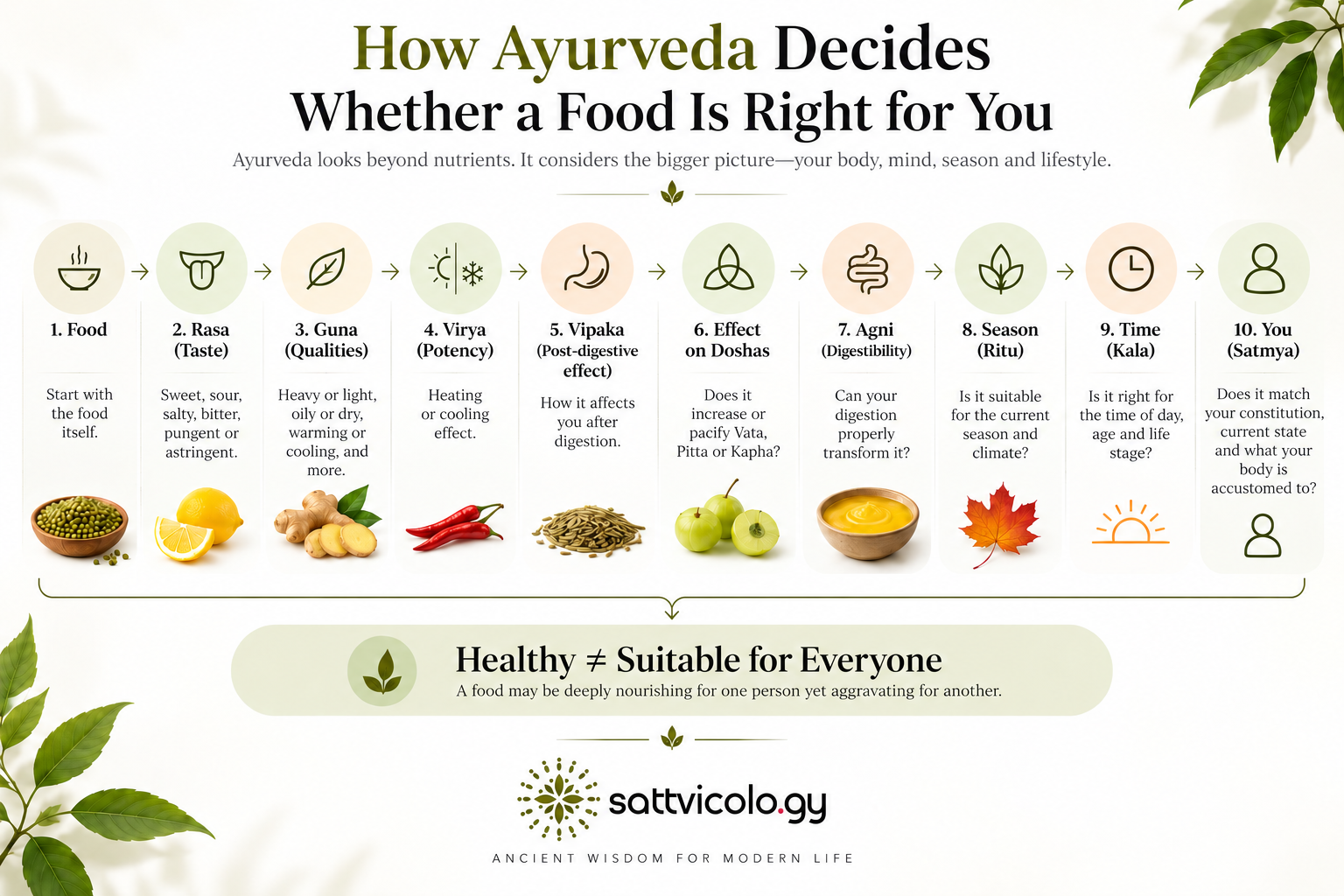
Ayurveda takes a broader view. A valuable food is evaluated by its:
- Rasa: Taste
- Guna: Physical qualities, such as heavy, light, dry, oily, warming or cooling
- Virya: Heating or cooling potency
- Vipaka: Post-digestive effect
- Prabhava: A distinctive effect not fully explained by its other qualities
- Effect on doshas: Whether it increases or pacifies Vata, Pitta and Kapha
- Effect on the mind: Whether it promotes Sattva, Rajas or Tamas
- Digestibility: Whether the person’s agni can transform it properly
This means “healthy” and “suitable” are not always the same thing. Ayurvedic dietetics emphasizes the interaction among the food, the eater, preparation, quantity, season and digestive capacity—not the ingredient alone. A scholarly overview appears in Unique Features of Ayurveda Dietetics.
Understanding Doshas and Gunas
The three doshas
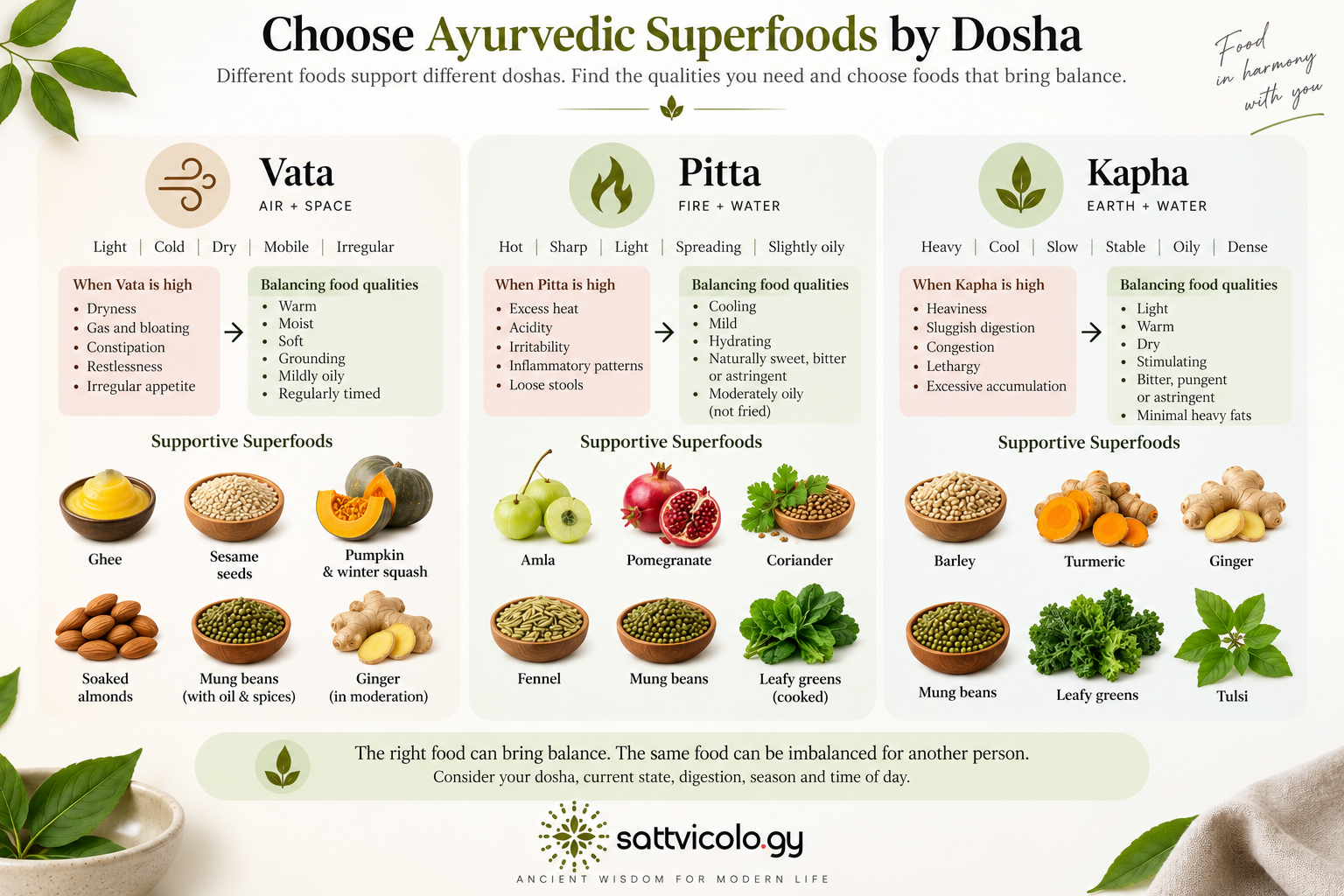
Vata is associated with air and space. Its qualities include light, cold, dry, mobile, subtle and irregular. Vata is generally balanced by warm, moist, soft, grounding, mildly oily and regularly timed foods.
Pitta is associated principally with fire and a smaller proportion of water. Its qualities include hot, sharp, light, spreading and slightly oily. Pitta is generally balanced by cooling, mild, hydrating foods and naturally sweet, bitter or astringent tastes.
Kapha is associated with earth and water. Its qualities include heavy, cool, slow, stable, oily and dense. Kapha is generally balanced by light, warm, dry, stimulating foods with bitter, pungent or astringent tastes.
The three mental gunas
Sattva represents clarity, harmony, steadiness and awareness. Rajas represents movement, stimulation, ambition and agitation. Tamas represents inertia, dullness and heaviness.
These categories are not rigid moral labels. Preparation, freshness, quantity and the eater’s condition can change a food’s effect.
15 Ayurvedic Superfoods and How to Eat Them
| Ayurvedic food | Why Ayurveda values it | Generally best for | Use cautiously with | Best season | Best time | Predominant guna effect |
|---|---|---|---|---|---|---|
| Amla | Traditionally regarded as a rejuvenative fruit; cooling and rich in multiple tastes | Pitta; often adaptable for all doshas in suitable form | Very cold digestion, diarrhea or marked Vata sensitivity | Late summer and early fall; usable year-round when prescribed | Morning or with lunch | Predominantly Sattvic |
| Mung beans | Light, nourishing and easier to digest than many legumes when soaked and cooked well | Pitta and Kapha; Vata with oil and warming spices | Gas, bloating or very weak digestion | Spring and summer; year-round in kitchari | Lunch; light early dinner | Sattvic |
| Ghee | Traditionally valued as nourishing, unctuous and supportive of Vata-Pitta balance | Vata and Pitta | Kapha excess, lipid disorders or difficulty digesting fats | Fall and winter; modestly year-round | Breakfast or lunch | Sattvic when fresh and appropriately used |
| Turmeric | Warming, bitter and pungent; traditionally used to support digestion and metabolic balance | Kapha and Vata in modest amounts | High Pitta, reflux, gallbladder problems or certain medications | Cool, damp seasons | With lunch or dinner | Sattvic in culinary amounts; stimulating in excess |
| Fresh ginger | Kindles digestion and helps counter cold, heavy qualities | Vata and Kapha | High Pitta, active reflux or heat sensitivity | Fall, winter and spring | Before or with meals | Sattvic to mildly Rajasic depending on quantity |
| Coriander | Aromatic yet relatively cooling; traditionally used to support digestion without excessive heat | Pitta; also useful for Vata and Kapha | Few concerns in normal culinary amounts | Spring and summer | With lunch or dinner | Sattvic |
| Cumin | Supports flavor and digestion; particularly useful in cooked legumes and vegetables | Vata and Kapha; modestly Pitta | Excess heat or dryness | Fall, winter and spring | Lunch and early dinner | Sattvic to mildly Rajasic |
| Fennel | Sweet, aromatic and comparatively cooling | Vata and Pitta | Use moderately with sluggish Kapha digestion | Spring and summer | After meals or as a daytime infusion | Sattvic |
| Pomegranate | Traditionally valued for its astringent-sweet-sour profile and cooling quality | Pitta and Kapha; sweet varieties may suit Vata | Excess astringency, dryness or constipation | Late summer and fall | Midmorning or with lunch | Sattvic |
| Soaked almonds | Nourishing and grounding; soaking and peeling may improve Ayurvedic suitability | Vata and Pitta | Kapha excess, nut allergy or poor fat digestion | Fall and winter | Morning | Sattvic |
| Sesame seeds | Warming, oily and mineral-rich; traditionally grounding | Vata | High Pitta and Kapha excess | Fall and winter | Morning or lunch | Sattvic in moderation |
| Leafy greens | Bitter and light; useful for reducing excessive heaviness | Pitta and Kapha, depending on the green | Vata when raw, dry or eaten in excess | Spring and early summer | Lunch | Sattvic when fresh and cooked appropriately |
| Pumpkin and winter squash | Sweet, soft, grounding and generally easy to incorporate into warm meals | Vata and Pitta | Kapha in large, heavily sweetened portions | Fall and winter | Lunch or early dinner | Sattvic |
| Barley | Light, dry and traditionally used when reducing heaviness is desirable | Kapha and some Pitta patterns | Dry, depleted or constipated Vata | Late winter and spring | Lunch | Sattvic; may be overly drying |
| Tulsi | Aromatic and warming; traditionally used to promote clarity and respiratory comfort | Kapha and Vata | High Pitta, pregnancy or medication interactions require guidance | Fall, winter and spring | Morning or early afternoon infusion | Sattvic but stimulating |
1. Amla
Amla, or Indian gooseberry (Phyllanthus emblica/Emblica officinalis), is one of Ayurveda’s best-known rejuvenative foods. Traditionally, it is described as containing five of the six tastes, with sourness most apparent, while having a cooling potency.
It is especially associated with Pitta balance, although Ayurvedic formulations may use it across constitutional types.
Modern studies have investigated amla for possible effects on lipids, glucose regulation, oxidative stress and inflammatory markers. A systematic review and meta-analysis of randomized trials reported promising cardiometabolic findings, but this does not mean amla can replace prescribed treatment.
How to use it: Fresh amla, unsweetened amla preparation or practitioner-selected forms may be used. Avoid assuming that concentrated powders and extracts have the same effect or dose as the whole fruit.
2. Mung Beans
Split yellow mung dal is central to many Ayurvedic meals because it combines nourishment with relative lightness. Soaking, rinsing and cooking it until soft can make it more suitable for sensitive digestion.
Mung beans provide plant protein, fiber and several bioactive compounds. See the scientific review on mung bean nutrients and bioactive compounds.
Best preparation by dosha:
- Vata: Cook until very soft with cumin, ginger and a little ghee or suitable oil.
- Pitta: Use coriander, fennel and cilantro; limit chilies.
- Kapha: Prepare lightly with ginger, turmeric and minimal oil.
3. Ghee
Ghee is considered nourishing and unctuous in Ayurveda. It may be particularly balancing for dryness and excessive heat when the individual digests fat well.
However, “Ayurvedic” does not mean unlimited. Ghee is a concentrated source of fat and calories. The amount should be individualized for people with cardiometabolic disease, gallbladder disease, altered lipid levels or difficulty digesting fats.
4. Turmeric
Turmeric (Curcuma longa) is valued for its bitter, pungent and warming qualities. Culinary turmeric may support Kapha balance and complement meals containing legumes and vegetables.
Curcumin research is extensive, but extracts used in trials are not equivalent to ordinary food amounts. A large systematic review of randomized controlled trials found potential benefits across several outcomes while also identifying substantial variation among formulations and studies.
Turmeric supplements can interact with medications and may not be appropriate for everyone.
5. Ginger
Fresh ginger is commonly used to support agni, especially when appetite feels sluggish or the body feels cold and heavy.
Fresh ginger is generally less drying than powdered ginger. Vata and Kapha often tolerate it well, while people with strong Pitta symptoms may require smaller amounts or cooling digestive spices instead.
6–8. Coriander, Cumin and Fennel
This traditional spice combination can make nutritious foods easier to digest without relying on extreme heat.
- Coriander is comparatively cooling.
- Cumin is warming and aromatic.
- Fennel is gently sweet and cooling.
The proportions should change with the person. A Pitta-predominant blend may emphasize coriander and fennel, while a colder Kapha pattern may need more cumin and ginger.
9. Pomegranate
Pomegranate is traditionally used when a cooling, refreshing and astringent food is appropriate. Sweet varieties tend to be more suitable for Vata than highly sour or astringent varieties.
Fruit is generally best eaten fresh and in modest portions. Ayurveda commonly discourages repeatedly combining fruit with heavy meals when that combination produces fermentation, gas or discomfort.
10. Soaked Almonds
Soaked and peeled almonds are traditionally considered more digestible and Sattvic than large portions of dry roasted nuts.
They may be useful for Vata-type dryness or individuals needing more nourishment. They are not automatically appropriate for Kapha accumulation, nut allergies or poor fat digestion.
11. Sesame Seeds
Sesame is warming, grounding and oily, making it particularly useful during cold, dry weather. It may help counter Vata’s light and dry qualities.
Pitta-dominant individuals may prefer smaller amounts, especially during hot weather. Kapha types should avoid turning sesame into a heavy, sugary snack.
12. Leafy Green Vegetables
Leafy greens provide bitter and astringent tastes that are often underrepresented in highly processed diets. They can be especially useful during spring, when Ayurvedic seasonal guidance emphasizes lighter foods.
For Vata, greens are usually better cooked than raw. Adding moisture and a modest amount of oil can offset their dry, rough qualities.
13. Pumpkin and Winter Squash
Cooked winter squash is soft, sweet and grounding. It can be especially comforting during autumn and winter, when Vata qualities tend to become more prominent.
Kapha types may use smaller portions and prepare squash with warming spices rather than sweeteners or heavy creams.
14. Barley
Barley is traditionally considered light and drying. These qualities can be useful for Kapha but aggravating for dry or undernourished Vata.
It is often better suited to late winter and spring than to a cold, dry autumn. People with celiac disease or gluten-related disorders should not consume barley.
15. Tulsi
Tulsi, or holy basil, is traditionally used as an aromatic infusion that supports clarity and counters cold, heavy qualities.
It should not be treated as an unlimited everyday remedy. Pregnancy, surgery, blood-sugar medication, anticoagulants and other clinical considerations warrant professional guidance.
The Best Season for Ayurvedic Superfoods
Ayurveda’s seasonal regimen is called ritucharya. Its purpose is to adjust food and lifestyle as environmental qualities change. Seasonal guidance is discussed in classical Ayurveda and contemporary literature, including this review of the Ayurvedic seasonal regimen.
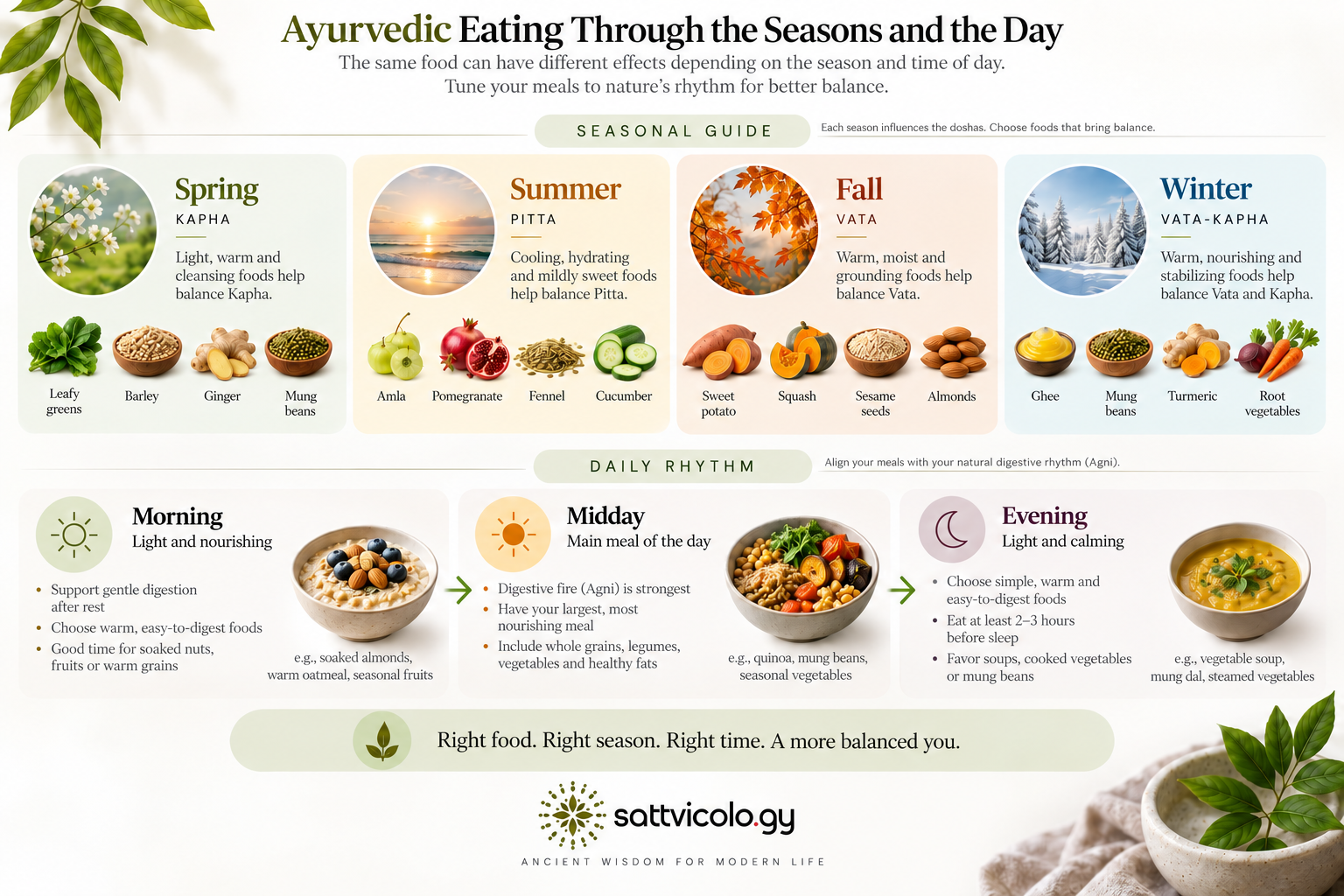
Spring: Kapha season
Favor barley, mung beans, cooked leafy greens, turmeric, ginger, pomegranate and light vegetable soups. Reduce foods that are excessively heavy, oily, cold or sweet if congestion and sluggishness are present.
Summer: Pitta season
Favor amla, pomegranate, coriander, fennel, mung beans, bitter greens and sweet ripe seasonal fruit in suitable portions. Limit excessive chilies, sour foods, alcohol, deep-fried meals and very hot beverages when heat symptoms are present.
Fall: Vata season
Favor winter squash, soaked almonds, sesame, warm mung dal, moderate ghee where appropriate, root vegetables and soft freshly cooked grains.
Winter: Vata-Kapha season
Favor warm freshly cooked meals such as spiced mung soups, squash, sesame, ginger, turmeric, cooked whole grains and stewed seasonal fruit.
Climate matters more than the month. Winter in Minnesota is not physiologically equivalent to winter in Southern California.
What Is the Best Time of Day to Eat?
Ayurveda generally recommends making lunch the most substantial meal because digestive capacity is traditionally considered strongest around midday.
Morning
Choose a warm, moderate breakfast if hungry. Vata and Pitta may need more nourishment, while Kapha may do better with a lighter breakfast. Suitable choices may include stewed fruit, soaked almonds, warm grains or gently spiced vegetables.
Midday
Lunch is usually the best time for the largest and most complex meal, including legumes, grains, substantial vegetables and richer foods. A 2026 systematic review and meta-analysis found short-term improvements in post-meal glucose with earlier meal timing, while emphasizing that longer and better-controlled trials are still needed.
Evening
Dinner should generally be lighter than lunch and eaten early enough to digest before sleep. A randomized crossover study found that earlier dinner improved 24-hour glucose patterns, though one study should not be interpreted as a universal prescription.
Between meals
Frequent grazing may interfere with hunger awareness for some people. However, children, pregnant individuals, athletes and people with certain medical conditions may require a different schedule.
Why Check Both Your Doshas and Gunas?
Doshas and gunas answer different questions.
- Doshas help describe physiological and functional patterns.
- Gunas help describe the qualities dominating the mind and behavior.
Someone may have a Pitta constitution but presently experience elevated Vata because of travel, poor sleep or stress. The same person may also experience increased Rajas, seen as mental overactivity, urgency or irritability.
A useful assessment therefore distinguishes your relatively stable prakriti, your changing vikriti, your current mental pattern, digestion, elimination, sleep and energy, and seasonal and lifestyle influences.
Why guna awareness matters
Guna awareness can help you notice whether your routine is promoting clarity or mental fog, calm energy or overstimulation, restorative rest or inertia, intentional eating or emotional reactivity, and freshness or dependence on stale processed convenience foods.
How Often Should You Check Your Doshas and Gunas?
There is no universally established clinical rule requiring a fixed number of assessments each year.
For most adults, a practical schedule is:
- A comprehensive practitioner assessment one to four times per year
- A brief self-check at the beginning of each major seasonal transition
- A monthly reflection on digestion, elimination, sleep, energy and mental state
- An additional reassessment after a major illness, medication change, pregnancy, relocation, prolonged travel or significant life stress
Your prakriti should not be repeatedly reclassified. What often changes is your vikriti—the imbalance present today.
Why Work With a Certified Ayurvedic Practitioner?
Online quizzes can raise awareness, but they cannot perform a complete Ayurvedic assessment.
A trained practitioner considers constitution versus current imbalance, digestive strength and appetite, bowel patterns and elimination, sleep and energy, tongue and pulse findings where used, age and life stage, climate and season, medical diagnoses, medications and supplements, allergies and food intolerances, laboratory findings supplied by the patient, cultural diet and food accessibility, and possible herb-drug or supplement-drug interactions.
In the United States, Ayurvedic education and practice are not regulated uniformly. The National Center for Complementary and Integrative Health advises people with health conditions to speak with conventional healthcare providers before using Ayurvedic products and to tell all providers about complementary approaches they use. NCCIH also warns that some Ayurvedic preparations have contained potentially toxic levels of lead, mercury or arsenic. See NCCIH’s Ayurvedic Medicine: In Depth.
A properly trained practitioner can help determine when food guidance is sufficient, screen contraindications, individualize recommendations, adjust for season and digestive capacity, recommend safer quality-tested products where appropriate, monitor results and coordinate care.
How to Build an Ayurvedic Superfood Plate
For many people, a balanced starting point is:
- One-half freshly cooked seasonal vegetables
- One-quarter appropriately prepared legumes or another suitable protein
- One-quarter grain or starchy vegetable, adjusted for metabolic needs
- A modest amount of suitable fat
- Digestive spices chosen for the individual
- Fresh herbs for flavor and variety
Then personalize it:
- Vata: Make it warmer, softer and more moist.
- Pitta: Make it milder, cooler in potency and less acidic.
- Kapha: Make it lighter, warmer and more stimulating.
- High Rajas: Reduce excessive chilies, caffeine and rushed eating.
- High Tamas: Increase freshness, variety and gentle daily movement.
- Low agni: Simplify the meal and reduce quantity rather than adding more “superfoods.”
The Ayurvedic Principle That Matters Most
The best Ayurvedic food is not simply the ingredient with the longest list of benefits.
It is the food that matches your present needs, is properly prepared, is eaten in an appropriate quantity, fits the climate and season, supports rather than overwhelms agni, and leaves you clear, nourished and comfortable after digestion.
A superfood that cannot be digested may contribute to discomfort rather than health. Personalized guidance transforms a list of nutritious ingredients into an intelligent, seasonal and sustainable way of eating.
The Ayurvedic Principle That Matters Most
The best Ayurvedic food is not simply the ingredient with the longest list of benefits.
It is the food that matches your present needs, is properly prepared, is eaten in an appropriate quantity, fits the climate and season, supports rather than overwhelms agni, and leaves you clear, nourished and comfortable after digestion.
A superfood that cannot be digested may contribute to discomfort rather than health. Personalized guidance transforms a list of nutritious ingredients into an intelligent, seasonal and sustainable way of eating.
Ready to Understand Your Dosha and Guna?
Discover how your constitution, present imbalance, digestion, season and mental qualities may be influencing your food choices.
Take the free Guna Self-Assessment, then schedule an online Ayurvedic consultation for individualized guidance from a certified Ayurvedic practitioner.
Frequently Asked Questions
Medical Disclaimer
This article is for educational purposes and does not provide medical diagnosis or treatment. Ayurvedic concepts should be used as complementary wellness guidance. Consult qualified healthcare professionals before changing treatment, using concentrated herbs or supplements, or following a specialized diet—especially if you are pregnant, nursing, preparing for surgery, taking medication or managing a medical condition.