Amla: 10 Potential Benefits of Ayurveda’s Legendary Rasayana Fruit
A.P. Shrilata,
BAMS, PGDND, YIC, Certified Ayurvedic Provider.
Sattvicology Healthcare Team
Amla (Phyllanthus emblica), also called Amalaki or Indian gooseberry, is one of Ayurveda’s classic Rasayana fruits. Explore what human clinical research says about Amla for cholesterol, blood sugar, blood pressure, inflammation, vascular function, oxidative stress, digestion and cardiometabolic health.
What Is Amla?
Amla, also known as Amalaki or Indian gooseberry, is the fruit of Phyllanthus emblica. The scientific synonym Emblica officinalis is also widely used in research.
It is a small greenish-yellow fruit native to South and Southeast Asia and is valued in Ayurveda as both a food and medicinal botanical.
Amla is one of the three fruits that make up Triphala, together with Haritaki and Bibhitaki.
Modern research has become interested in Amla because it contains polyphenols, hydrolyzable tannins, gallic acid, ellagic acid, emblicanins, flavonoids, organic acids, vitamin C and related antioxidant compounds.
Quick Answer: What Is Amla Good For?
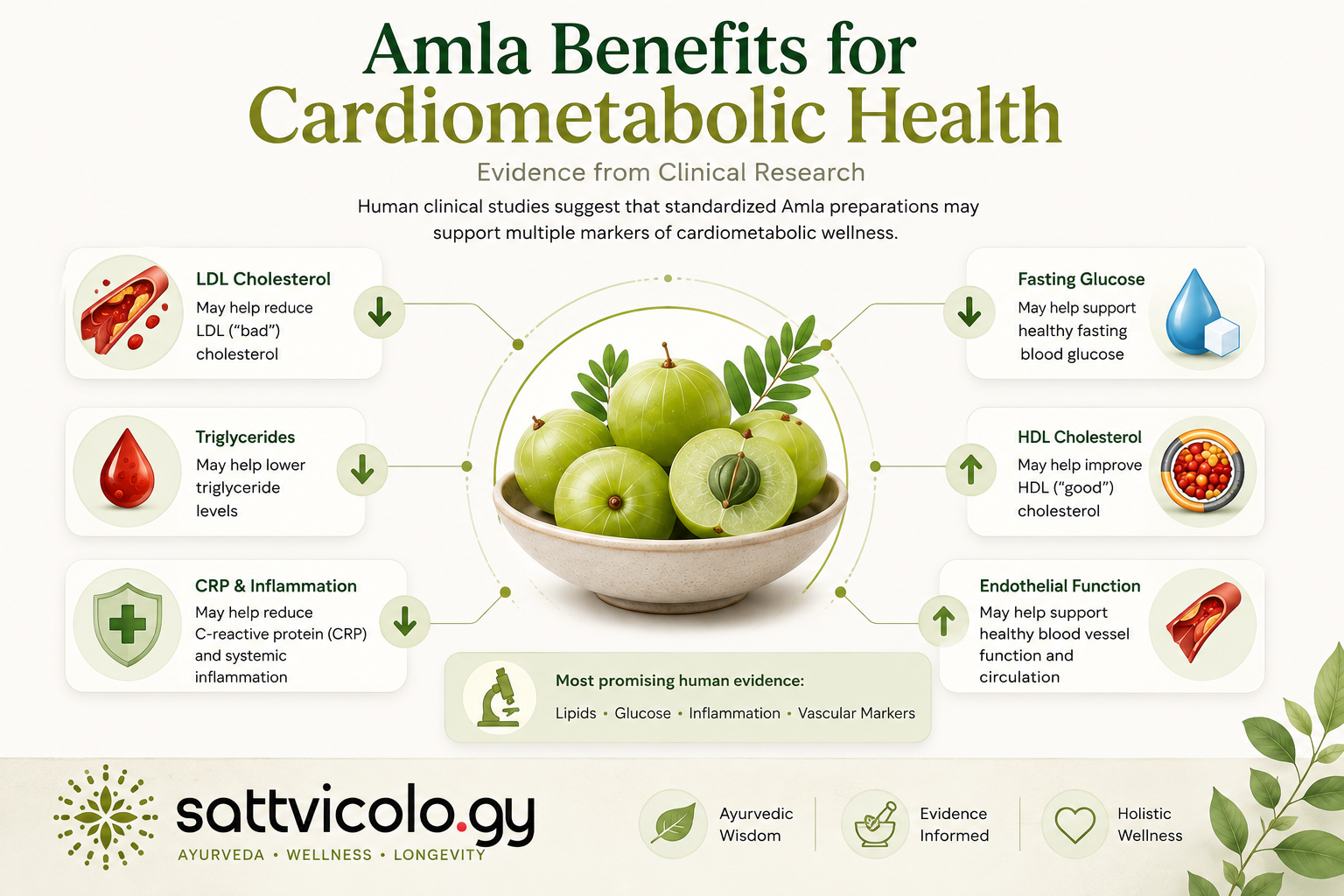
Amla is an Ayurvedic Rasayana fruit studied particularly for cholesterol, triglycerides, blood glucose, inflammation, oxidative stress, vascular function and cardiovascular health.
Human clinical trials and meta-analyses suggest standardized Amla preparations may improve several cardiometabolic biomarkers, although larger and longer independent studies are still needed.
The strongest current human evidence involves:
- LDL cholesterol
- Total cholesterol
- Triglycerides
- HDL cholesterol
- Fasting blood glucose
- Certain cardiovascular risk markers
Promising research also exists for blood pressure, endothelial function, oxidative stress, CRP and selected digestive symptoms.
Amla has promising human evidence for several cardiometabolic biomarkers, but it should not be presented as a cure for diabetes, cardiovascular disease, high cholesterol, hypertension or aging.
Why Is Amla So Important in Ayurveda?
Amla occupies an unusually prominent place in Ayurvedic tradition.
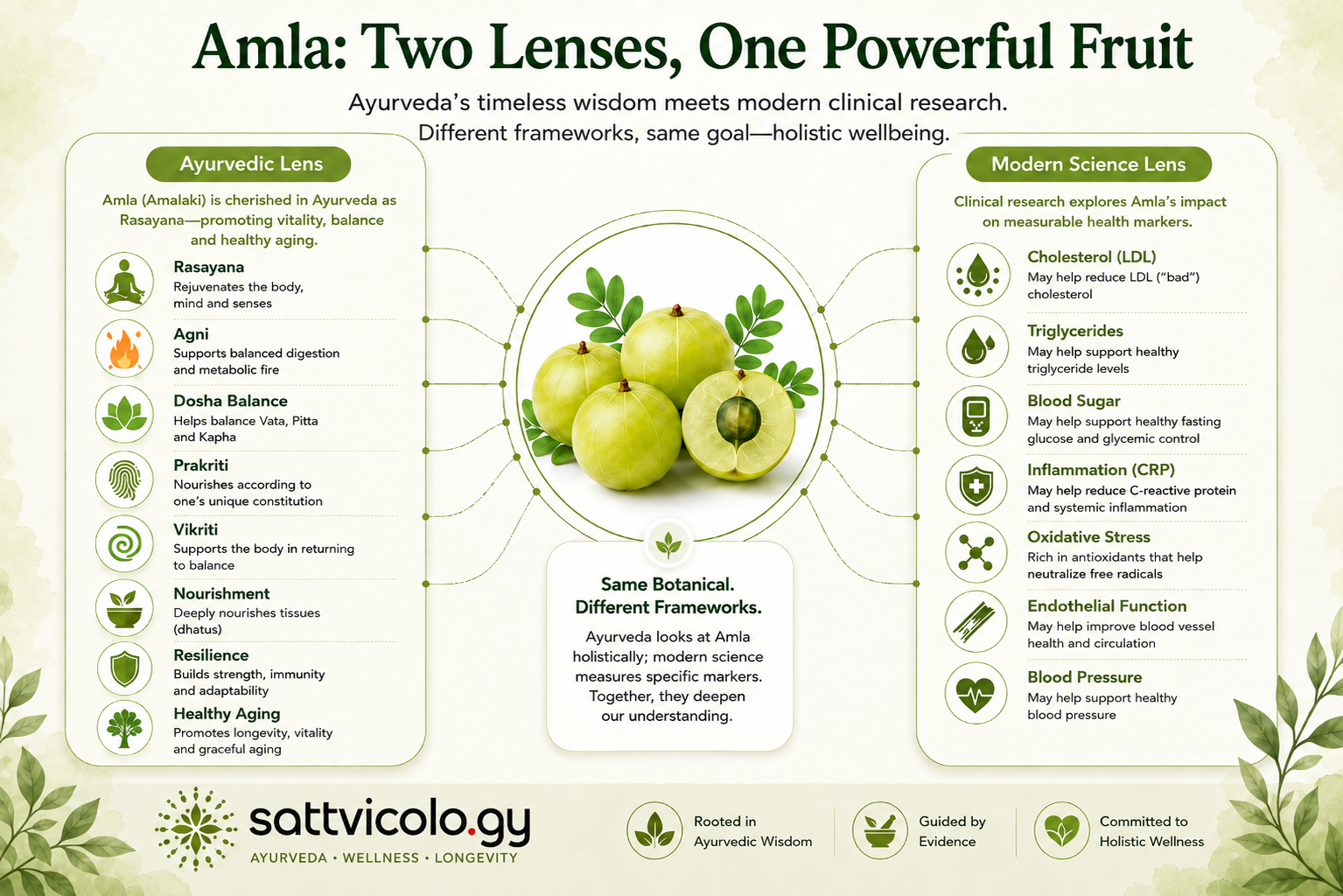
It is traditionally regarded as a Rasayana, a category broadly associated with rejuvenative care, resilience, nourishment, vitality and healthy aging.
It is also an ingredient in several well-known Ayurvedic preparations, including:
- Triphala
- Chyawanprash
- Amalaki Rasayana
- Various digestive and rejuvenative formulations
Traditional Ayurvedic assessment considers the whole person, including digestion, constitution, age, strength, diet, lifestyle, season and current imbalance.
What Is Rasayana?
Rasayana is an important Ayurvedic concept sometimes oversimplified as “anti-aging.”
It more broadly relates to traditional approaches associated with rejuvenation, resilience, nourishment, vitality, healthy aging and sustaining physiological function.
Amla is one of Ayurveda’s classic Rasayana fruits.
Modern science investigates measurable outcomes such as lipids, glucose, CRP, oxidative stress and endothelial function. These biomarkers should not be treated as direct translations of Rasayana, but they provide useful ways to examine aspects of Amla’s traditional reputation.
Amla and Triphala: What Is the Difference?
Amla is one ingredient in Triphala.
Amla / Amalaki
Botanical: Phyllanthus emblica. A single fruit.
Triphala
A traditional three-fruit formulation containing Amalaki + Haritaki + Bibhitaki.
Therefore, Amla ≠ Triphala. Clinical research on Triphala cannot automatically be applied to Amla alone, and research on isolated Amla cannot automatically be applied to Triphala.
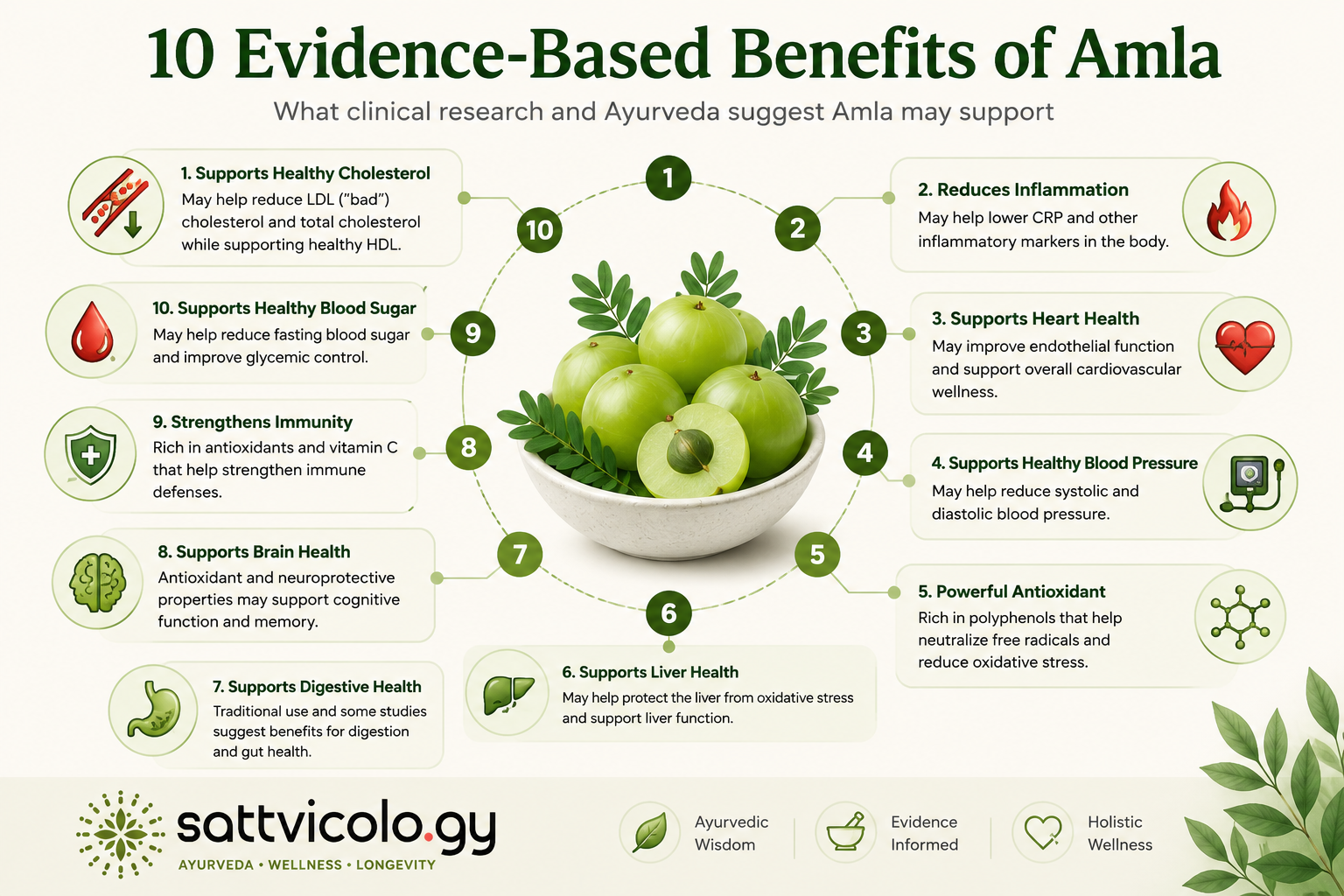
1. Amla May Help Lower LDL Cholesterol
One of the strongest contemporary research areas for Amla is lipid metabolism.
A 2023 systematic review and meta-analysis of randomized controlled trials reported a significant pooled reduction in LDL cholesterol following Amla supplementation.
A randomized, double-blind, multicenter trial involving 98 people with dyslipidemia evaluated 500 mg of Amla extract twice daily for 12 weeks and reported significant reductions in total cholesterol, LDL cholesterol, triglycerides and VLDL cholesterol compared with placebo.
Evidence level: Promising to moderate.
Amla should not automatically replace a statin or other medically indicated lipid-lowering therapy.
2. Amla May Lower Triglycerides
Triglycerides are another cardiovascular marker for which Amla has relatively consistent human evidence.
Meta-analyses of randomized trials have reported significant triglyceride reductions following Amla supplementation.
The 98-person dyslipidemia trial also showed a significant triglyceride reduction after 12 weeks of standardized Amla extract compared with placebo.
Evidence level: Promising.
High triglycerides can also be influenced by diabetes, alcohol intake, diet, obesity, genetics, thyroid disease and medications, so persistent elevations should be medically evaluated.
3. Amla May Improve HDL Cholesterol
HDL cholesterol is commonly called “good cholesterol,” although cardiovascular risk is more complex than simply increasing HDL.
A 2023 meta-analysis reported a statistically significant pooled increase in HDL cholesterol following Amla supplementation.
A randomized crossover study in healthy adults also reported an improvement in HDL together with lower LDL after Amla supplementation.
Evidence level: Promising.
Raising HDL by itself does not prove that a treatment prevents heart attacks, stroke or cardiovascular death.
4. Amla May Support Blood-Sugar Regulation
Amla has also received considerable attention for glucose metabolism.
A 2023 meta-analysis found a significant pooled reduction in fasting blood glucose among adults receiving Amla.
Earlier human research in healthy people and patients with type 2 diabetes also reported glucose- and lipid-related changes after supplementation.
Evidence level: Promising.
Amla should not replace insulin, metformin, GLP-1 medications, SGLT2 inhibitors or other prescribed diabetes medications.
5. Amla May Influence HbA1c
HbA1c reflects average blood-glucose exposure over approximately two to three months.
Individual clinical studies have investigated Amla in people with metabolic disease, and emerging evidence suggests possible improvements in longer-term glucose regulation.
However, the literature is more robust for fasting glucose than for a firmly established HbA1c treatment effect across large populations.
Evidence level: Emerging.
Claims such as “Amla reverses diabetes” exceed the available clinical evidence.
6. Amla May Support Healthy Blood Pressure
Blood-pressure research is another interesting area.
Randomized, double-blind, placebo-controlled research has evaluated Phyllanthus emblica extract as an add-on treatment in people with essential hypertension.
Studies have examined blood pressure alongside lipid measurements, oxidative and antioxidant markers, inflammation, glucose and endothelial function.
Evidence level: Promising but not established as a stand-alone hypertension treatment.
People with hypertension should not discontinue prescribed antihypertensive medication because they begin taking Amla.
7. Amla May Support Endothelial Function
The endothelium is the cellular lining of blood vessels. Healthy endothelial function helps regulate blood-vessel dilation, circulation, vascular tone and cardiovascular signaling.
A randomized, double-blind, placebo-controlled study in people with metabolic syndrome reported significant improvement in a vascular reflection-index measurement of endothelial function after standardized Amla extract.
Other randomized studies have evaluated Amla in people with type 2 diabetes and in healthy adults using vascular-function measurements.
Evidence level: Promising.
This does not establish that Amla prevents heart attacks or reverses atherosclerosis.
8. Amla May Reduce Oxidative-Stress Biomarkers
Amla contains polyphenols and hydrolyzable tannins that have generated substantial interest in antioxidant biology.
A randomized crossover trial in healthy adults reported reductions in selected biomarkers associated with oxidative stress following Amla supplementation.
Clinical research in people with type 2 diabetes has also examined oxidative-stress markers alongside vascular outcomes.
Evidence level: Promising for selected biomarkers.
“Amla has antioxidant effects” does not mean “Amla stops aging,” nor does it prove prevention of cancer, dementia, heart attacks or every chronic disease.
9. Amla May Reduce Certain Inflammatory Markers
Inflammation is another frequently discussed Amla benefit.
A 2023 meta-analysis found a significant reduction in C-reactive protein (CRP) following Amla supplementation. A separate cardiovascular meta-analysis also reported a pooled reduction in high-sensitivity CRP.
Evidence level: Promising for inflammatory biomarkers.
This should not be translated into the claim that Amla treats all inflammatory diseases. A biomarker effect does not establish disease-specific treatment.
10. Amla May Support Certain Digestive Symptoms
Amla is traditionally associated with digestion, but modern human gastrointestinal research is considerably smaller than the metabolic literature.
One double-blind randomized placebo-controlled clinical trial investigated Amla in people with non-erosive reflux disease and reported improvements in the frequency and severity of selected reflux-related symptoms.
Evidence level: Preliminary but clinically interesting.
This does not establish Amla as a substitute for evaluation or treatment of GERD, esophagitis, Barrett’s esophagus, peptic ulcer disease or persistent abdominal pain.
Amla Through an Ayurvedic Lens
Amla is far more than an antioxidant supplement within Ayurveda.
An Ayurvedic practitioner may consider:
- Prakriti
- Vikriti
- Vata
- Pitta
- Kapha
- Agni
- Ama
- Appetite
- Digestion
- Elimination
- Strength
- Age
- Season
- Diet
- Sleep
- Stress
- Current medications
- Present disease state
This is why two people with elevated cholesterol may not necessarily receive identical Ayurvedic recommendations.
Does Amla fit this person’s constitution, digestion, cardiometabolic profile, medications, diet and overall treatment plan?
Amla Powder vs. Fresh Amla vs. Standardized Extract
Fresh Amla
Provides the whole fruit matrix, including water, fiber, natural phytochemicals, organic acids and micronutrients.
Amla Powder
Contains dried fruit and therefore has a different concentration by weight. Processing and storage may alter certain compounds.
Standardized Amla Extract
Research extracts may be standardized for compounds such as hydrolyzable tannins, emblicanins, β-glucogallin or polyphenol content.
Clinical trial results apply most directly to the specific formulation studied.
Is Amla Juice Better Than Amla Powder?
There is no high-quality evidence establishing one universally superior form.
Fresh fruit, juice, powder and extracts differ substantially. Juice may have less fiber and commercial preparations may contain added sugar. A standardized extract may contain a higher concentration of selected plant compounds.
The best choice therefore depends on the reason for use, individual tolerance and the specific product.
Does Amla Lower Cholesterol Naturally?
Clinical research suggests that standardized Amla preparations may improve several lipid measurements, including LDL, triglycerides and total cholesterol.
However, “natural” does not mean equivalent to prescription therapy.
People with established cardiovascular disease, familial hypercholesterolemia, previous heart attack, previous stroke or very high LDL should not replace proven lipid-lowering therapy with Amla without medical supervision.
Can Amla Replace Statins?
No.
Clinical Amla studies generally measure biomarkers over weeks or months. Statins have a much larger clinical evidence base demonstrating reductions in cardiovascular events among appropriately selected patients.
Amla has not demonstrated equivalent reductions in heart attacks, strokes or cardiovascular deaths.
Amla is better discussed as a potential complementary cardiometabolic botanical, not a direct statin substitute.
Can Amla Reverse Diabetes?
No high-quality evidence establishes that Amla reverses type 2 diabetes.
Clinical research suggests possible improvements in fasting glucose and other metabolic markers, but improving a biomarker is different from eliminating the underlying metabolic disease.
Diabetes management may require nutrition, exercise, weight management, glucose monitoring, medication, kidney screening, retinal screening, blood-pressure control and cholesterol management.
Can Amla Cause Low Blood Sugar?
Because Amla may lower blood glucose in some individuals, concentrated extracts could theoretically add to the effects of glucose-lowering medication.
This deserves particular consideration for people using insulin, sulfonylureas, meglitinides or multiple diabetes medications.
People using Amla specifically for glucose management should monitor their glucose rather than assuming an herbal product cannot affect medication requirements.
Amla and Blood-Thinning Medications
Amla has been investigated in relation to platelet function, vascular physiology, aspirin and clopidogrel.
Because cardiovascular patients may already be taking antiplatelet or anticoagulant medications, concentrated Amla supplementation deserves professional review rather than casual combination.
A published human pharmacodynamic study specifically investigated Phyllanthus emblica extract together with clopidogrel and aspirin in people with type 2 diabetes.
This does not mean Amla is itself a substitute for aspirin or clopidogrel.
Does Amla Help Hair Growth?
Amla has an extensive traditional reputation in Ayurvedic hair care and is commonly used in hair oils, scalp preparations, herbal shampoos and traditional formulations.
However, robust randomized clinical evidence demonstrating that oral or topical Amla alone regrows hair in human pattern hair loss is limited.
Significant hair loss may require evaluation for iron deficiency, thyroid disease, hormonal factors, autoimmune alopecia, medication effects, nutritional deficiencies or androgenetic alopecia.
Is Amla Good for Skin?
Amla’s polyphenols and antioxidant properties have generated significant experimental interest in skin health and aging.
However, the strongest human evidence currently centers on cardiometabolic biomarkers rather than clinical dermatology outcomes.
Claims that Amla removes wrinkles, reverses skin aging, cures pigmentation or permanently increases collagen require stronger human evidence.
Does Amla Prevent Cancer?
No.
Amla compounds have been investigated extensively in laboratory cancer models, but activity against cancer cells in laboratory experiments is not evidence that consuming Amla cures or prevents human cancer.
Amla should not substitute for cancer screening, surgery, chemotherapy, radiation, immunotherapy or targeted therapy.
People undergoing cancer treatment should disclose concentrated herbal supplements to their oncology team.
Is Amla Safe?
Clinical studies of standardized Amla preparations have generally reported reasonable short-term tolerability.
Randomized human studies have evaluated safety alongside vascular, metabolic and lipid outcomes without identifying major safety signals in the studied populations.
However, safety data on one standardized extract do not prove that every Amla product is identical or safe for indefinite use.
Who Should Talk to a Healthcare Professional Before Taking Concentrated Amla?
Professional guidance is particularly appropriate if you:
- Have diabetes
- Take insulin or glucose-lowering medication
- Take aspirin or clopidogrel
- Take anticoagulants
- Take blood-pressure medications
- Have significant cardiovascular disease
- Have liver or kidney disease
- Are preparing for surgery
- Are pregnant or breastfeeding
- Take several prescription medicines
- Are treating a child
Culinary Amla use and concentrated medicinal extracts should not automatically be treated as equivalent.
How Much Amla Should You Take?
There is no universal clinically established Amla dose.
Research protocols have varied. For example, one dyslipidemia trial used 500 mg standardized Amla extract twice daily for 12 weeks. A healthy-adult crossover trial used 500 mg/day of a specific Amla preparation. Metabolic-syndrome research has tested 250 mg or 500 mg twice daily of a standardized aqueous extract.
These numbers are research protocols—not individualized dosage recommendations.
Amla powder, fruit, juice and extracts can have very different concentrations.
When Is the Best Time to Take Amla?
There is no universally established clinical best time.
Ayurvedic recommendations may depend on constitution, Agni, intended use, formulation, meal timing, accompanying herbs, medications and digestive tolerance.
Modern clinical trials also use different administration schedules.
Therefore, “take Amla at exactly this time for everyone” is not evidence-based.
Can You Take Amla Every Day?
Amla is consumed regularly as a food and has a long traditional history. Concentrated extracts have also been administered daily in human clinical trials.
However, controlled trials usually last weeks or months, not decades.
Daily long-term use should therefore take into account product form, dose, medications, blood glucose, cardiovascular treatment and individual tolerance.
What Does Modern Science Actually Say About Amla?
Evidence is most promising for:
- LDL cholesterol — meta-analyses and randomized trials report reductions.
- Total cholesterol — randomized-trial evidence supports a potential lowering effect.
- Triglycerides — several trials and pooled analyses report improvement.
- HDL cholesterol — pooled analysis suggests a modest increase.
- Fasting blood glucose — randomized evidence shows a potential glucose-lowering effect.
Promising or emerging evidence:
- Endothelial function
- Blood pressure
- Systemic inflammation
- Oxidative stress
- Non-erosive reflux symptoms
Evidence Is Insufficient for Claiming Amla:
- Cures diabetes
- Reverses diabetes
- Replaces metformin
- Replaces insulin
- Replaces statins
- Prevents heart attacks
- Prevents strokes
- Cleans blocked arteries
- Cures hypertension
- Permanently lowers blood pressure
- Regrows hair
- Reverses gray hair
- Reverses skin aging
- Cures liver disease
- Treats cancer
- Prevents dementia
- “Detoxifies” the entire body
- Stops aging
Frequently Asked Questions About Amla
Amla, also called Amalaki or Indian gooseberry, is the fruit of Phyllanthus emblica, also known scientifically as Emblica officinalis. It is an important Ayurvedic Rasayana and one of the three fruits in Triphala.
Human clinical evidence suggests potential benefits involving LDL cholesterol, triglycerides, total cholesterol, HDL cholesterol, fasting glucose, inflammatory biomarkers, oxidative stress and vascular function.
Several randomized clinical trials and meta-analyses report reductions in LDL and total cholesterol after standardized Amla supplementation. Amla has not been shown to replace statins or provide equivalent cardiovascular-outcome protection.
Meta-analyses of randomized trials report significant triglyceride reductions following Amla supplementation.
Pooled randomized evidence suggests a modest increase in HDL cholesterol.
Amla may modestly improve fasting glucose and other metabolic measurements, but it is not an established substitute for diabetes treatment.
Some clinical research suggests a possible benefit, but the evidence is less established than for fasting glucose. Larger long-term trials are needed.
No. Amla has not been established as an equivalent substitute for metformin.
No. Amla has promising lipid research, but statins have a much larger evidence base demonstrating reductions in cardiovascular events in appropriate patients.
Randomized clinical studies suggest possible blood-pressure benefits when Amla is used alongside standard care, but it should not replace prescribed antihypertensive medication.
Amla has promising research involving lipids, endothelial function, inflammation, oxidative stress and blood pressure. These findings do not prove that it prevents heart attacks or strokes.
Meta-analyses report reductions in CRP or hsCRP after Amla supplementation, but this does not establish Amla as a treatment for every inflammatory disease.
Amla is traditionally used for digestive wellness. A randomized trial also reported improvement in some symptoms of non-erosive reflux disease.
No. Amla is one of three fruits used to make Triphala. Triphala contains Amla, Haritaki and Bibhitaki.
Yes. Amalaki is the traditional Ayurvedic name commonly used for Amla.
Yes. Indian gooseberry is a common English name for Phyllanthus emblica.
Amla has a strong traditional role in Ayurvedic hair care, but high-quality human evidence proving that Amla alone regrows hair is limited.
Amla is regularly consumed as food, and standardized extracts have been used daily in clinical trials. Long-term concentrated supplementation should still be individualized, especially when medications are involved.
The Sattvicolo.gy Perspective
Amla illustrates something fundamental about Ayurveda: some of its most powerful traditional substances are also foods.
Modern clinical research connects Amla with LDL, triglycerides, glucose, inflammation, oxidative stress, endothelial function and cardiovascular health.
Ayurveda connects Amalaki with Agni, Dosha, Rasayana, nourishment, resilience and longevity. The frameworks are not identical.
How can Amla be used intelligently as part of an individualized Ayurvedic approach that also considers diet, digestion, lifestyle, metabolic health, medications and conventional medical care?
Research References
- The impact of Emblica officinalis (Amla) on lipid profile, glucose, and C-reactive protein: A systematic review and meta-analysis of randomized controlled trials.
- Clinical effects of Emblica officinalis fruit consumption on cardiovascular disease risk factors: a systematic review and meta-analysis.
- Upadya H, et al. A randomized, double blind, placebo controlled, multicenter clinical trial to assess the efficacy and safety of Emblica officinalis extract in patients with dyslipidemia.
- Evaluation of the effects of a standardized aqueous extract of Phyllanthus emblica fruits on endothelial dysfunction, oxidative stress, systemic inflammation and lipid profile in subjects with metabolic syndrome.
- Effects of Phyllanthus emblica extract on endothelial dysfunction and biomarkers of oxidative stress in patients with type 2 diabetes mellitus.
- Kapoor MP, et al. Clinical evaluation of Emblica officinalis (Amla) in healthy human subjects: health benefits and safety results from a randomized, double-blind, crossover placebo-controlled study.
- Antihypertensive and pleiotropic effects of Phyllanthus emblica extract as an add-on therapy in patients with essential hypertension.
- A randomized, triple-blind, placebo-controlled, add-on clinical trial to evaluate the efficacy of Emblica officinalis in uncontrolled hypertension.
- Effect of Amla fruit on blood glucose and lipid profile of normal subjects and type 2 diabetic patients.
- Efficacy and safety of Amla (Phyllanthus emblica L.) in non-erosive reflux disease: a double-blind, randomized, placebo-controlled clinical trial.
Medical Disclaimer
The information provided on Sattvicolo.gy is intended for educational and informational purposes only. It is not intended to diagnose, treat, cure or prevent any disease and should not replace professional medical advice, diagnosis, laboratory testing or treatment.
Human clinical research suggests that concentrated Amla preparations may influence blood glucose, cholesterol, triglycerides, blood pressure, vascular function and inflammatory biomarkers.
For that reason, concentrated Amla supplements deserve particular caution in people using insulin, diabetes medications, blood-pressure medications, statins or other lipid-lowering therapy, aspirin, clopidogrel or anticoagulants.
Do not discontinue or alter prescribed medication because you begin using Amla.
If you are pregnant, breastfeeding, preparing for surgery, taking multiple prescription medicines, or living with diabetes, cardiovascular disease, kidney disease, liver disease or another chronic medical condition, discuss concentrated Amla supplementation with an appropriately qualified healthcare professional.