Part 2: Ayurveda, Yoga, Nutrition, and Daily Living with Parkinson's Disease
Supportive daily practices for movement, nourishment, calm, safety, and whole-person wellbeing while living with Parkinson’s disease.
Important Medical Reminder
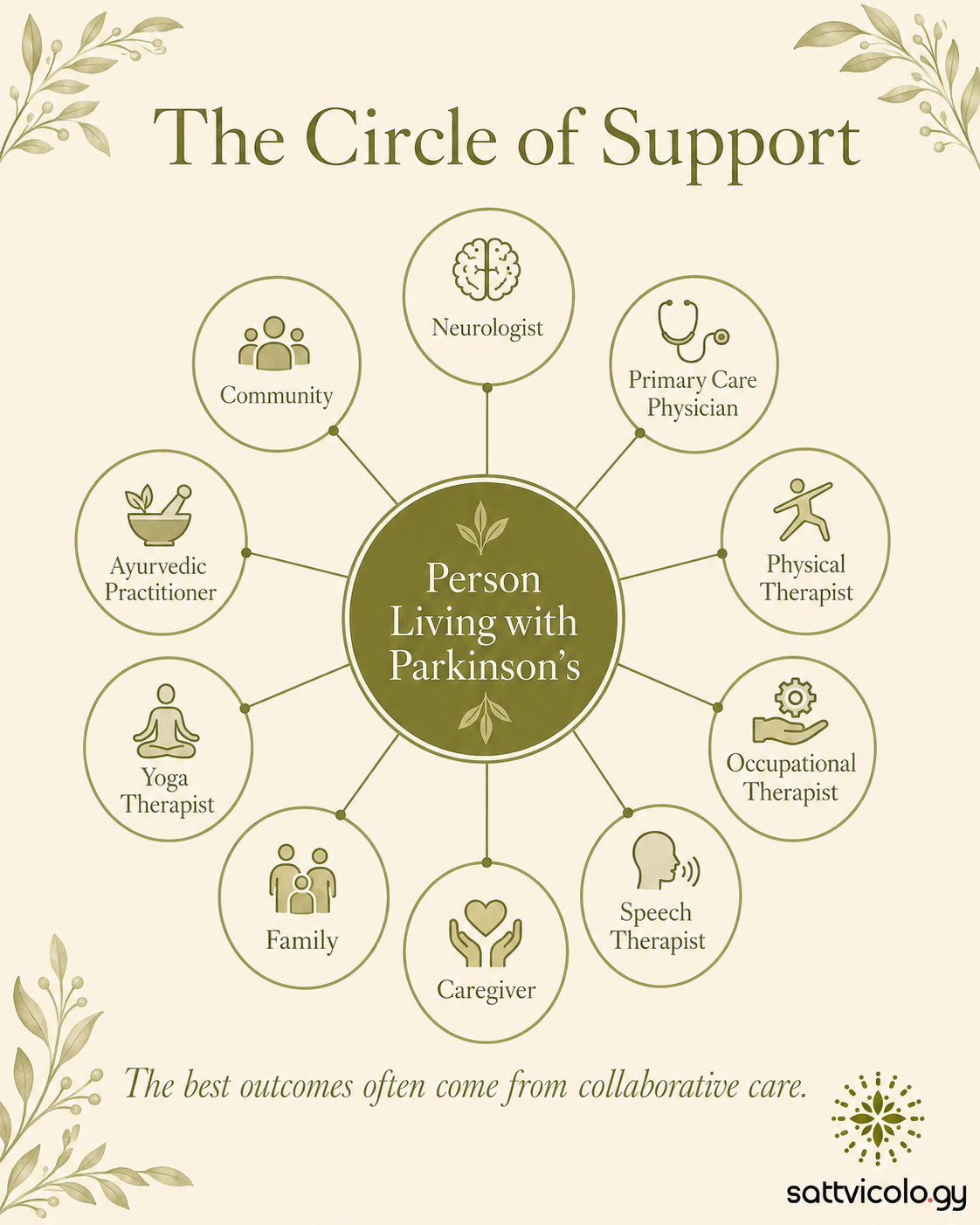
The practices described below are intended to complement—not replace—care from your neurologist, primary care physician, physical therapist, occupational therapist, speech-language pathologist, or other healthcare professionals.
Always discuss changes to your exercise program, herbal supplements, or diet with your healthcare team, particularly if you take levodopa or other Parkinson’s medications.
Living Well Is About More Than Managing Symptoms
While medications remain the cornerstone of Parkinson’s disease treatment, many people discover that their daily habits influence how they feel throughout the day.
Sleep, movement, digestion, nutrition, stress, hydration, and emotional wellbeing all play important roles in maintaining function and independence.
Ayurveda refers to this as Swasthavritta—the science of preserving health through balanced daily living.
Rather than searching for one miracle therapy, Ayurveda encourages building a lifestyle that consistently supports the body’s natural resilience.
Dinacharya: Creating Stability Through Daily Routine
Parkinson’s disease often introduces unpredictability.
Symptoms may fluctuate throughout the day depending on medication timing, sleep quality, stress, meals, and physical activity.
Ayurveda teaches that consistency calms Vata, the dosha most closely associated with movement and the nervous system.
A structured daily routine may also reduce decision fatigue and make it easier to maintain healthy habits.
Sample Daily Routine
Early Morning
- Wake at approximately the same time every day.
- Drink a glass of warm water.
- Spend a few minutes practicing gratitude or quiet reflection.
- Perform gentle stretching before getting out of bed if recommended by your healthcare team.
Morning Movement
- Gentle yoga
- Walking
- Balance exercises
- Breathing practice
Morning movement may help reduce stiffness that many people experience after waking.
Breakfast
Choose a warm, nourishing breakfast such as:
- Steel-cut oats
- Warm quinoa porridge
- Stewed apples with cinnamon
- Mung dal soup
- Herbal tea
Avoid skipping meals, particularly if medications require food.
Midday
Eat your largest meal when digestion is strongest.
Include:
- Cooked vegetables
- Whole grains
- Healthy fats
- Plant proteins
- Plenty of hydration
Evening
Create a calming evening routine.
Consider:
- Gentle stretching
- Reading
- Meditation
- Yoga Nidra
- Limiting screen exposure
- Sleeping at a consistent time
Yoga for Parkinson's Disease
Research increasingly supports exercise as one of the most beneficial lifestyle interventions for people living with Parkinson’s disease.
Yoga offers unique advantages because it combines:
- Movement
- Balance training
- Flexibility
- Strength
- Breathing
- Mindfulness
- Relaxation
Importantly, yoga should always be adapted to the individual’s abilities.
The goal is confidence, not perfection.
Benefits of Yoga
Studies suggest appropriately modified yoga programs may help improve:
- Balance
- Flexibility
- Walking confidence
- Posture
- Strength
- Quality of life
- Anxiety
- Sleep
- Fear of falling
Yoga also encourages body awareness, helping individuals recognize tension before it becomes excessive.
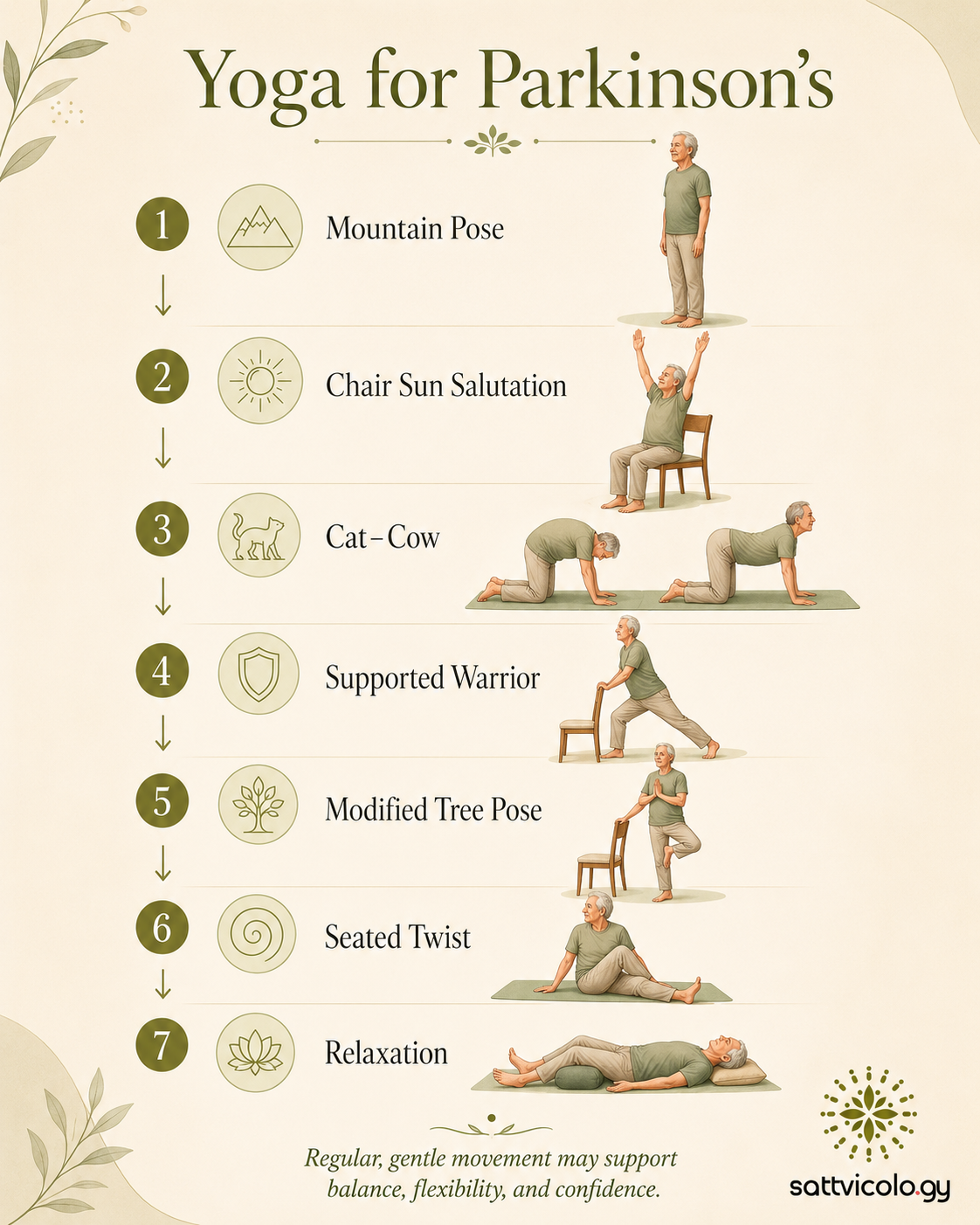
Gentle Yoga Sequence
Practice only under the guidance of your healthcare team or a qualified yoga therapist.
1. Mountain Pose (Tadasana)
Benefits:
- Improves posture
- Enhances body awareness
- Builds balance
Hold for 5–10 breaths.
2. Chair-Assisted Half Sun Salutation
Using a sturdy chair:
- Reach upward
- Fold gently
- Lengthen the spine
- Return slowly
Supports mobility without excessive strain.
3. Cat–Cow
Benefits:
- Improves spinal flexibility
- Reduces stiffness
- Encourages coordinated breathing
Repeat 8–10 times.
4. Supported Warrior I
Hold a chair if needed.
Benefits:
- Improves hip mobility
- Encourages confidence while standing
- Builds lower-body strength
5. Seated Twist
Use gentle spinal mobility while seated. Avoid forcing rotation.
6. Tree Pose (Modified)
Hold a chair or countertop.
Benefits:
- Improves balance
- Builds confidence
- Strengthens stabilizing muscles
7. Legs on a Chair
Use this instead of Legs Up the Wall if balance is a concern. It encourages relaxation.
8. Savasana
Practice guided relaxation for 10 minutes.
Chair Yoga: Movement for Every Ability
Not everyone with Parkinson’s feels safe standing for extended periods.
Chair yoga provides an excellent alternative.
Exercises may include:
- Shoulder rolls
- Neck mobility
- Wrist circles
- Ankle circles
- Seated marching
- Gentle seated side bends
- Seated breathing exercises
Chair yoga makes movement accessible even during periods of increased stiffness or fatigue.
Balance and Fall Prevention
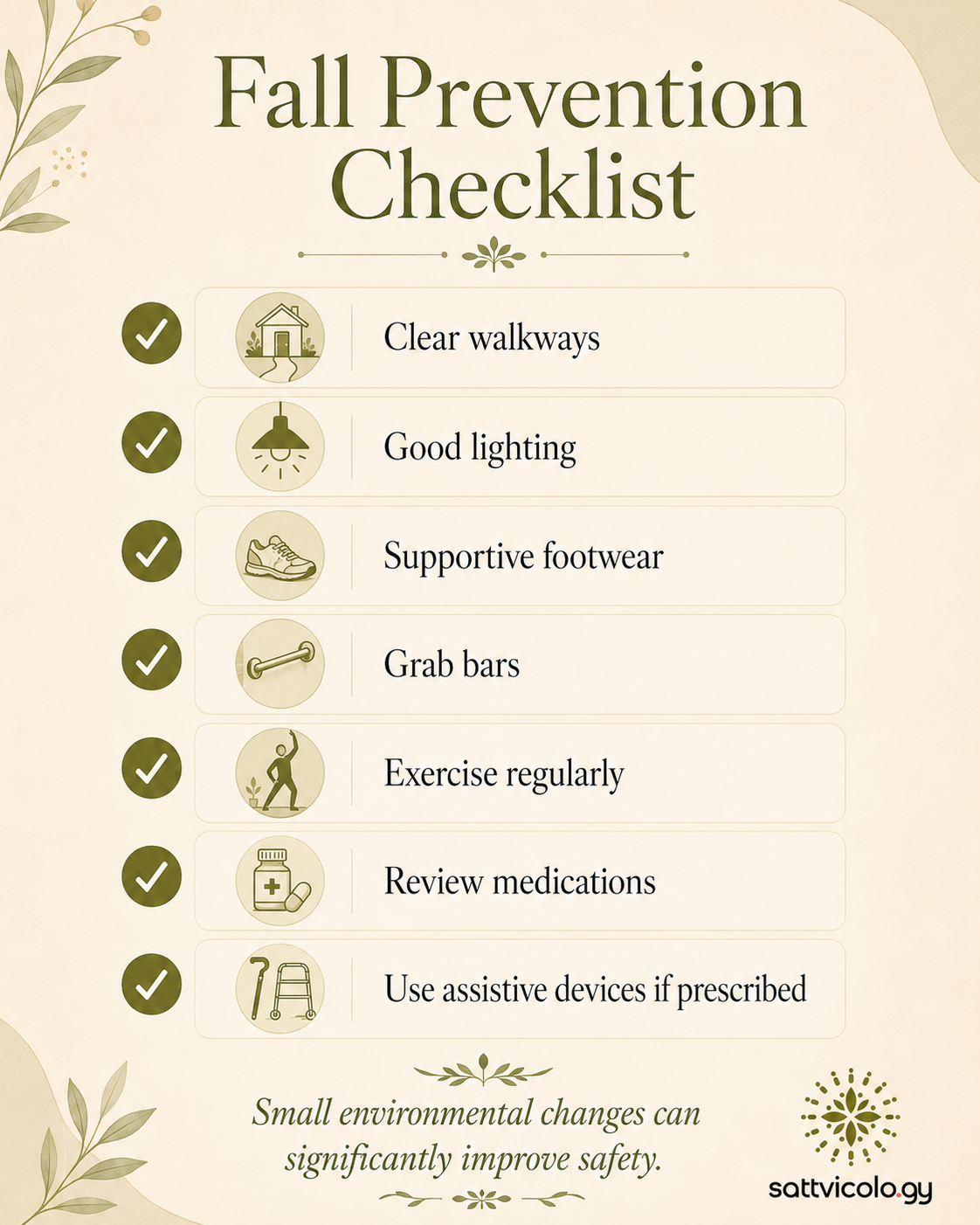
Falls are a significant concern for many people living with Parkinson’s disease.
Exercise programs should prioritize:
- Weight shifting
- Core stability
- Single-leg support with assistance
- Turning safely
- Step training
- Walking practice
- Functional strength
Always perform balance exercises in a safe environment.
Pranayama: Supporting Calm Breathing
Breathing often becomes shallower during stress.
Parkinson’s disease may also influence posture, which can affect breathing mechanics.
Gentle pranayama may help encourage slower, more efficient breathing.
Diaphragmatic Breathing
Practice:
- Place one hand on the chest.
- Place one hand on the abdomen.
- Inhale gently through the nose.
- Expand the abdomen.
- Exhale slowly.
Practice for 5–10 minutes.
Nadi Shodhana
Alternate nostril breathing may help:
- Promote relaxation
- Improve focus
- Reduce stress
Perform slowly without breath retention.
Bhramari (Humming Bee Breath)
Benefits:
- Encourages relaxation
- Provides gentle vibration
- May improve awareness of breath
Many people find humming calming and enjoyable.
Avoid forceful breathing practices unless specifically recommended by a qualified yoga therapist.
Meditation and Mindfulness
Living with Parkinson’s requires resilience.
Meditation cannot stop disease progression. However, it may help individuals respond to challenges with greater calm and acceptance.
Even five minutes of mindful breathing can become a valuable daily practice.
Loving-Kindness Meditation
Repeat silently:
May I be healthy.
May I be peaceful.
May I be strong.
May I live with courage.
Many caregivers also benefit from this practice.
Yoga Nidra
Fatigue and sleep disruption are common.
Yoga Nidra provides guided deep relaxation that may support:
- Better sleep quality
- Reduced stress
- Emotional wellbeing
Practice while lying comfortably or seated in a recliner if lying flat is uncomfortable.
Sattvic Nutrition for Parkinson's Disease
Although no diet cures Parkinson’s disease, nutrition plays an important role in maintaining:
- Energy
- Muscle health
- Digestive health
- Bone health
- Hydration
- Immune function
Ayurveda encourages foods that support digestion while nourishing body tissues.
Foods That May Support Overall Wellness
Examples include:
- Mung dal
- Quinoa
- Oats
- Sweet potatoes
- Carrots
- Pumpkin
- Cooked leafy greens
- Berries
- Walnuts
- Almonds
- Sesame seeds
- Olive oil
- Organic ghee, if appropriate
- Fresh herbs
- Ginger
- Turmeric
- Cumin
- Coriander
Warm, freshly prepared meals are generally emphasized over highly processed foods.
Constipation and Digestive Health
Constipation affects many people living with Parkinson’s disease.
Helpful strategies may include:
- Adequate hydration
- Fiber-rich foods
- Regular movement
- Consistent meal timing
- Discussing medications with your physician
- Following individualized medical advice
Ayurveda also emphasizes maintaining healthy digestion through warm meals, mindful eating, and appropriate spices.
Timing Meals Around Parkinson's Medications
Some Parkinson’s medications—particularly levodopa—may be affected by large amounts of dietary protein.
Never change your medication schedule on your own.
If you have concerns about food and medication timing:
- Discuss them with your neurologist.
- Consult a registered dietitian familiar with Parkinson’s disease.
- Follow individualized medical recommendations.
This is an important example of how Ayurveda should complement, not replace, conventional care.
Ayurvedic Herbs
Several herbs are traditionally used in Ayurvedic practice to support vitality and overall wellbeing.
Ashwagandha (Withania somnifera)
Traditionally used to support stress resilience and restful sleep.
Brahmi (Bacopa monnieri)
Traditionally associated with cognitive support and mental clarity.
Guduchi (Tinospora cordifolia)
Used traditionally to support overall vitality.
Turmeric (Curcuma longa)
Traditionally used to support healthy inflammatory responses.
Triphala
Often used to support healthy digestion and elimination.
Safety Reminder: Herbs may interact with Parkinson’s medications, blood thinners, diabetes medications, blood pressure medications, sedatives, and other prescription drugs. Always consult your neurologist or healthcare professional before using herbal supplements.
Abhyanga (Ayurvedic Oil Massage)
Warm oil self-massage is traditionally recommended for calming Vata.
Potential benefits include:
- Relaxation
- Body awareness
- Skin nourishment
- Gentle muscle comfort
- Mindful self-care
People with balance problems should perform oil massage only in a safe environment to reduce fall risk.
Caregiver Wellness Matters Too
Parkinson’s affects entire families.
Caregivers often experience:
- Fatigue
- Emotional stress
- Sleep disruption
- Physical strain
Caring for yourself is not selfish. It is essential.
Helpful practices include:
- Accepting help
- Taking breaks
- Gentle exercise
- Meditation
- Support groups
- Counseling when needed
- Maintaining your own medical appointments
Healthy caregivers provide better care.
Progress, Not Perfection
Some days your body will feel stronger than others.
Some days movement will be easier.
Other days will require more patience.
Yoga teaches us to meet ourselves with compassion.
Ayurveda reminds us that healing is supported through consistent daily habits.
Neither asks for perfection.
Both encourage steady, mindful progress.
Continue Your Wellness Journey
Your physical health and mental outlook are deeply connected.
Understanding your balance of Sattva, Rajas, and Tamas may help you cultivate habits that support resilience, calmness, and mindful living alongside your Parkinson’s care plan.
Take the free Sattvicology Gunas Assessment to receive personalized Ayurvedic lifestyle insights and discover practices that may support your overall wellbeing.