
Always Exhausted? How Ayurveda and Yoga May Help Restore Energy, Reduce Stress, and Support Recovery from Chronic Fatigue
Feeling Exhausted Even After Sleeping?
Have you ever woken up after a full night’s sleep only to feel as though you never rested?
Perhaps simple daily tasks now feel overwhelming.
Your concentration isn’t what it used to be.
Exercise leaves you drained instead of energized.
You find yourself canceling plans, struggling through workdays, or wondering why your body simply refuses to cooperate.
You’re not alone.
Fatigue is one of the most common reasons people seek medical care, yet it is also one of the most misunderstood symptoms.
Unlike ordinary tiredness after a busy day, chronic fatigue may persist for weeks, months, or even years. It can affect physical strength, emotional resilience, relationships, work performance, and overall quality of life.
Modern medicine recognizes that fatigue can arise from many different medical, psychological, neurological, hormonal, and lifestyle factors.
Ayurveda offers another perspective.
“Why am I so tired?”
Ayurveda also asks:
- How well are you digesting your food?
- Are your tissues being properly nourished?
- Is your nervous system overworked?
- Are you sleeping deeply?
- Is your daily routine supporting recovery?
- Has your vitality become depleted?
- What is your emotional state?
- Which Doshas have become imbalanced?
These questions encourage us to view fatigue not as a single symptom but as a signal that the body may be asking for restoration.
Throughout this article, we’ll explore how Ayurveda and Yoga may support energy, resilience, and overall wellbeing alongside appropriate medical care.
An Important Medical Note Before We Begin
Persistent fatigue should never be ignored.
Feeling exhausted may be the first sign of an underlying medical condition that requires evaluation.
Fatigue may result from:
- Iron deficiency
- Vitamin B12 deficiency
- Thyroid disorders
- Diabetes
- Sleep apnea
- Heart disease
- Lung disease
- Depression
- Anxiety disorders
- Chronic infections
- Autoimmune diseases
- Cancer
- Medication side effects
- Pregnancy
- Nutritional deficiencies
- Myalgic Encephalomyelitis/Chronic Fatigue Syndrome (ME/CFS)
This article does not replace medical evaluation.
Instead, it explores lifestyle practices that may complement evidence-based medical care after serious causes have been appropriately assessed.
What Is Chronic Fatigue?
Everyone feels tired occasionally.
A demanding week at work, caring for young children, traveling, or recovering from illness can temporarily reduce energy.
Ordinary fatigue usually improves with:
- Rest
- Sleep
- Nutrition
- Hydration
- Time
Chronic fatigue is different.
It often persists despite adequate rest and significantly interferes with everyday life.
People commonly describe it as:
- Feeling “drained”
- Heavy limbs
- Mental fog
- Difficulty concentrating
- Poor motivation
- Reduced endurance
- Feeling unrefreshed after sleep
The experience varies considerably from person to person.
Chronic Fatigue vs. Chronic Fatigue Syndrome (ME/CFS)
It is important to distinguish between fatigue as a symptom and Myalgic Encephalomyelitis/Chronic Fatigue Syndrome (ME/CFS), which is a complex medical condition with specific diagnostic criteria.
ME/CFS may include:
- Profound fatigue lasting more than six months
- Post-exertional malaise (worsening after physical or mental activity)
- Unrefreshing sleep
- Cognitive difficulties
- Orthostatic intolerance
Anyone who suspects ME/CFS should be evaluated by a qualified healthcare professional.
The recommendations in this article are intended to support general wellbeing and are not a treatment protocol for ME/CFS.
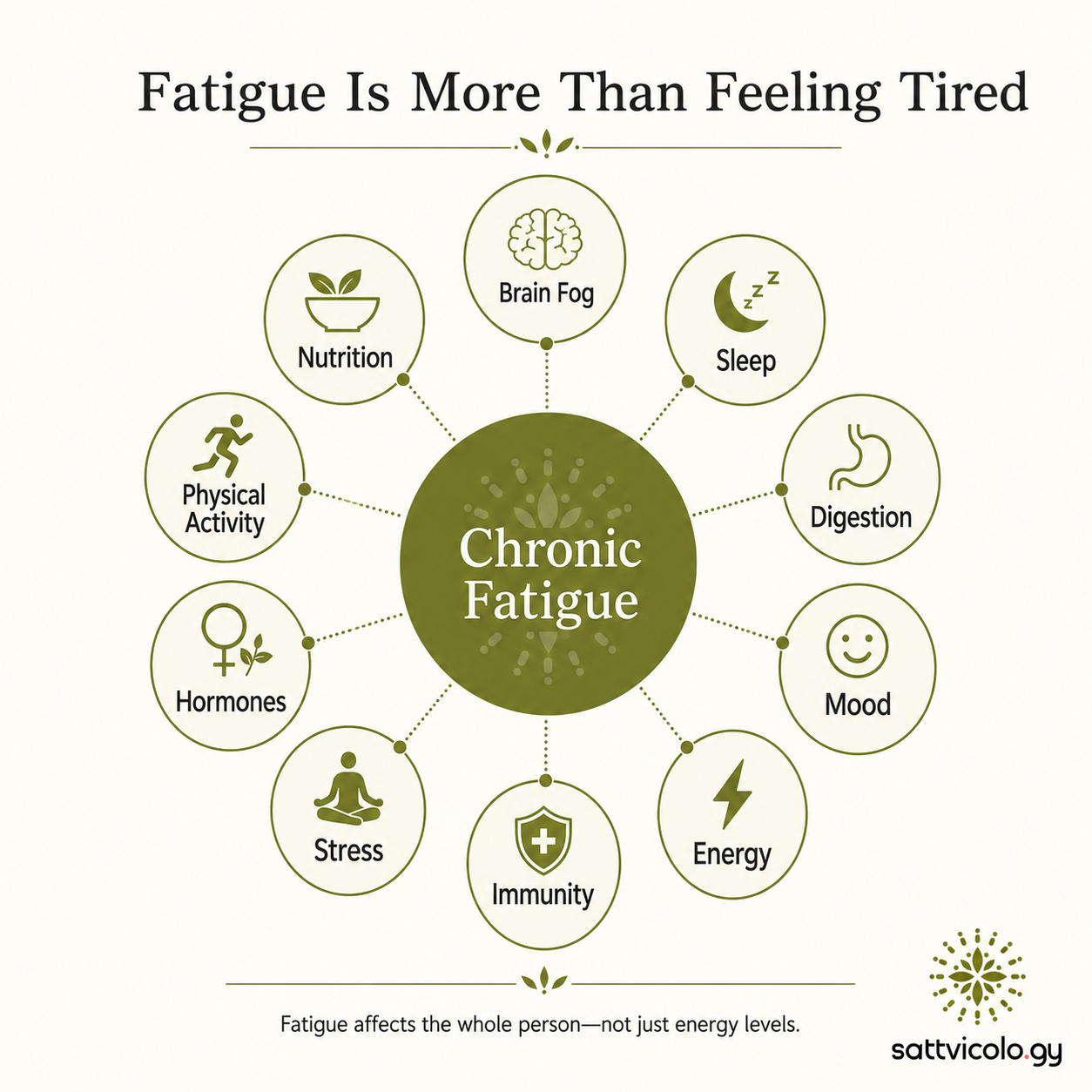
What Causes Chronic Fatigue?
Fatigue rarely has a single cause.
Modern medicine increasingly views persistent fatigue as the result of interactions among multiple body systems.
Sleep
Poor-quality sleep often contributes to daytime exhaustion even when total sleep time appears adequate.
Stress
Chronic psychological stress activates the body’s stress response, increasing physical and emotional exhaustion over time.
Nutrition
Insufficient calories, nutrient deficiencies, dehydration, or highly processed diets may contribute to low energy.
Hormonal Balance
Thyroid disorders, diabetes, adrenal disorders, and hormonal changes can all influence energy production.
Chronic Illness
Conditions such as autoimmune diseases, heart disease, kidney disease, liver disease, chronic infections, and neurological disorders commonly cause fatigue.
Physical Inactivity
Ironically, avoiding movement because of fatigue may reduce strength and endurance, making fatigue worse over time.
Mental Health
Depression, anxiety, chronic stress, and burnout frequently contribute to persistent exhaustion.
Ayurveda’s View of Fatigue
Ayurveda asks a broader question than simply, “Why are you tired?”
It asks, “Why has your vitality become depleted?”
Rather than focusing on fatigue itself, Ayurveda explores:
- Agni
- Ama
- Ojas
- Doshas
- Digestion
- Sleep
- Mental balance
- Daily routines
- Seasonal influences
- Nutrition
- Emotional wellbeing
This whole-person perspective seeks to understand how different systems influence one another.
Agni: The Foundation of Energy
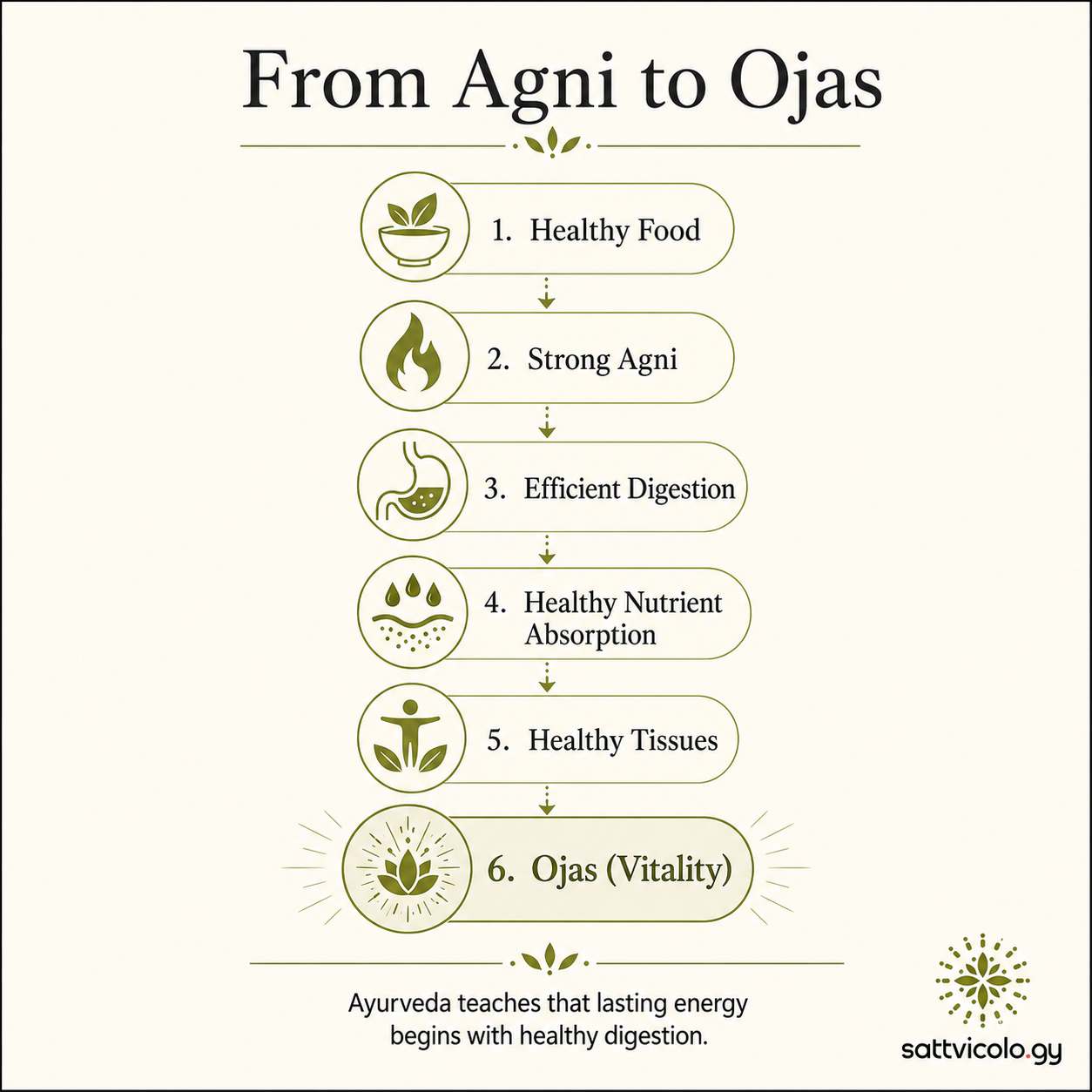
One of Ayurveda’s most important teachings is that healthy energy begins with healthy digestion.
Agni—the digestive fire—is responsible not only for digesting food but also for transforming nourishment into usable energy.
Strong Agni supports:
- Healthy digestion
- Nutrient absorption
- Tissue nourishment
- Balanced immunity
- Steady energy
- Healthy elimination
When Agni becomes weakened or irregular, Ayurveda teaches that nourishment cannot fully reach the tissues.
As a result, vitality may gradually decline.
Ancient Wisdom
The Charaka Samhita repeatedly emphasizes the importance of Agni, teaching that balanced digestion is one of the foundations of health.
“When Agni is balanced, health flourishes. When Agni is disturbed, disease may arise.”
Although modern medicine uses different terminology, contemporary research increasingly recognizes that digestion, nutrient absorption, metabolism, and gut health all influence overall wellbeing.
Ama: When Digestion Becomes Inefficient
Ayurveda introduces another important concept called Ama.
Ama is often translated simply as “toxins,” but this translation does not fully capture its meaning.
Ama refers to substances that have not been properly processed because digestion or metabolism has become inefficient.
Classical Ayurvedic texts describe Ama as:
- Heavy
- Sticky
- Sluggish
- Obstructive
When Ama accumulates, Ayurveda teaches that it may interfere with healthy bodily function.
Although Ama is not recognized as a medical diagnosis in conventional medicine, the concept encourages attention to digestive health, food quality, and healthy elimination.
Ojas: The Essence of Vitality
If Agni represents transformation, Ojas represents the result of healthy nourishment.
Ojas is traditionally described as the refined essence of all bodily tissues.
It is associated with:
- Vitality
- Resilience
- Immunity
- Emotional stability
- Mental clarity
- Endurance
When Ojas is abundant, Ayurveda describes a person as energetic, optimistic, calm, and resilient.
When Ojas becomes depleted, symptoms may include:
- Persistent fatigue
- Low motivation
- Frequent illness
- Poor recovery
- Emotional exhaustion
- Difficulty concentrating
Although Ojas has no direct equivalent in modern medicine, it reflects the Ayurvedic understanding that health depends upon consistently nourishing body, mind, and spirit.
Which Doshas Influence Fatigue?
Fatigue may involve any of the three Doshas depending on the underlying pattern.
Vata Fatigue
Common characteristics:
- Burnout
- Anxiety
- Poor sleep
- Irregular appetite
- Mental exhaustion
- Feeling overwhelmed
Pitta Fatigue
Often develops after prolonged stress.
Characteristics include:
- Irritability
- Perfectionism
- Overwork
- Heat intolerance
- Frustration
- Emotional burnout
Kapha Fatigue
May present as:
- Heavy body
- Excess sleep
- Low motivation
- Sluggish digestion
- Weight gain
- Feeling “stuck”
Understanding these patterns helps Ayurvedic practitioners individualize recommendations rather than applying a one-size-fits-all approach.
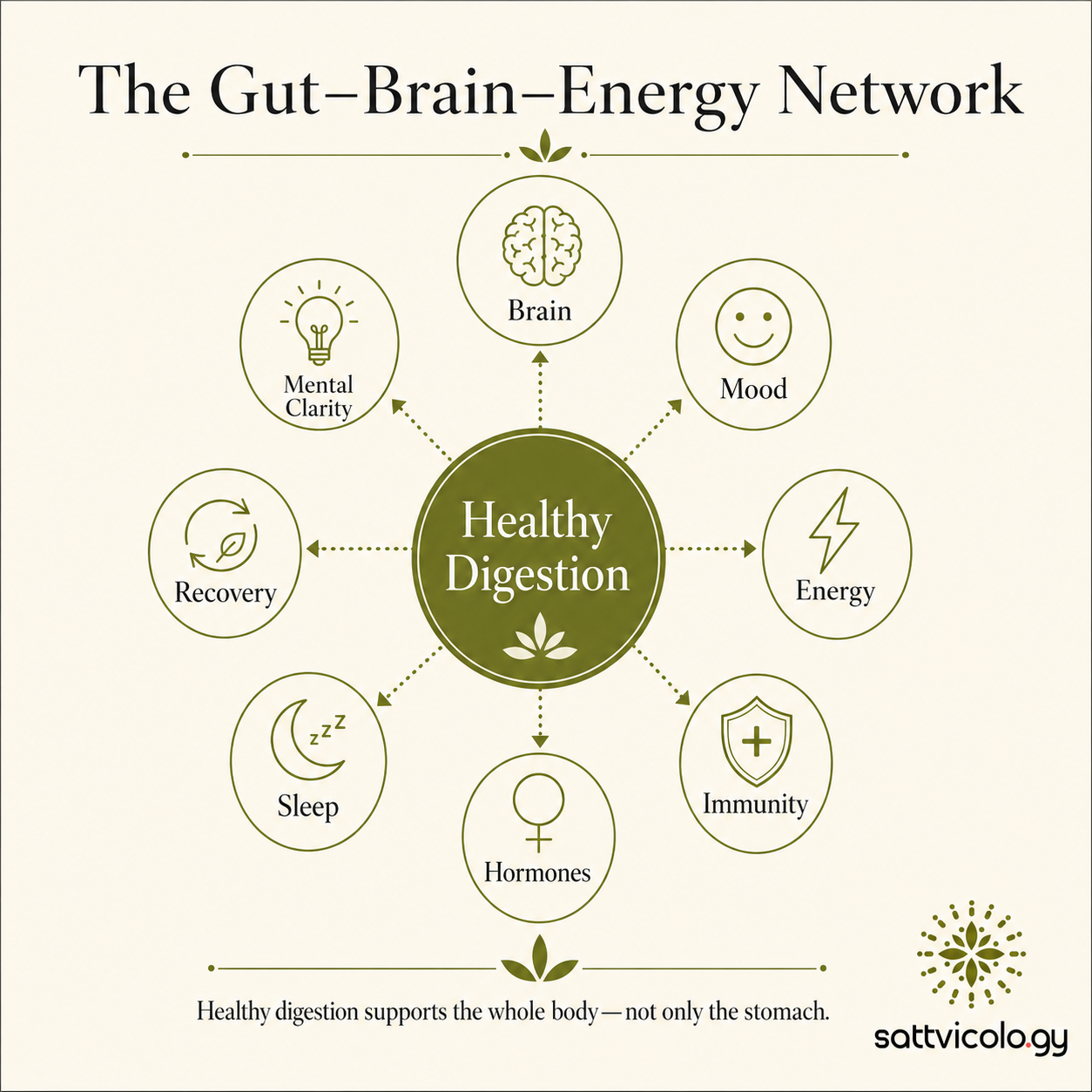
The Gut–Brain–Energy Connection
Modern science increasingly recognizes communication between the digestive system and the brain through what is often called the gut-brain axis.
Researchers continue studying how:
- Gut bacteria
- Immune signaling
- Nutrition
- Inflammation
- Hormones
- Stress
may influence fatigue, mood, and cognitive function.
Ayurveda has emphasized the central role of digestion for thousands of years.
Although the two systems describe these relationships differently, both acknowledge that digestive health influences overall vitality.
The Mind-Body Connection
Energy is influenced by more than food.
Thoughts, emotions, relationships, work stress, and unresolved emotional burdens can all affect how energized—or exhausted—we feel.
Ayurveda recognizes the importance of the three Gunas:
Periods of chronic stress often increase Rajas.
Long-standing exhaustion may eventually contribute to Tamas.
The goal is not to eliminate either quality, but to gradually cultivate more Sattva through nourishing food, meditation, yoga, meaningful relationships, time in nature, and mindful living.
Continue Your Wellness Journey
Take the Free Sattvicology Gunas Assessment
Receive personalized Ayurvedic insights and practical lifestyle recommendations that can support your journey toward greater balance and sustainable energy.
Medical Disclaimer
The information in this article is intended for educational purposes only and should not be considered medical advice, diagnosis, or treatment.
Ayurveda and yoga are complementary wellness practices that may support overall health and quality of life but should not replace evaluation or treatment by qualified healthcare professionals.
Persistent or worsening fatigue, post-exertional symptom flares, shortness of breath, chest pain, fainting, severe weakness, new neurological symptoms, unexplained weight loss, fever, or other concerning symptoms require prompt medical evaluation.
Consult your healthcare professional before beginning new diets, herbal supplements, exercise programs, yoga practices, or lifestyle interventions, especially if you are pregnant, recovering from illness or surgery, or living with a chronic medical condition.