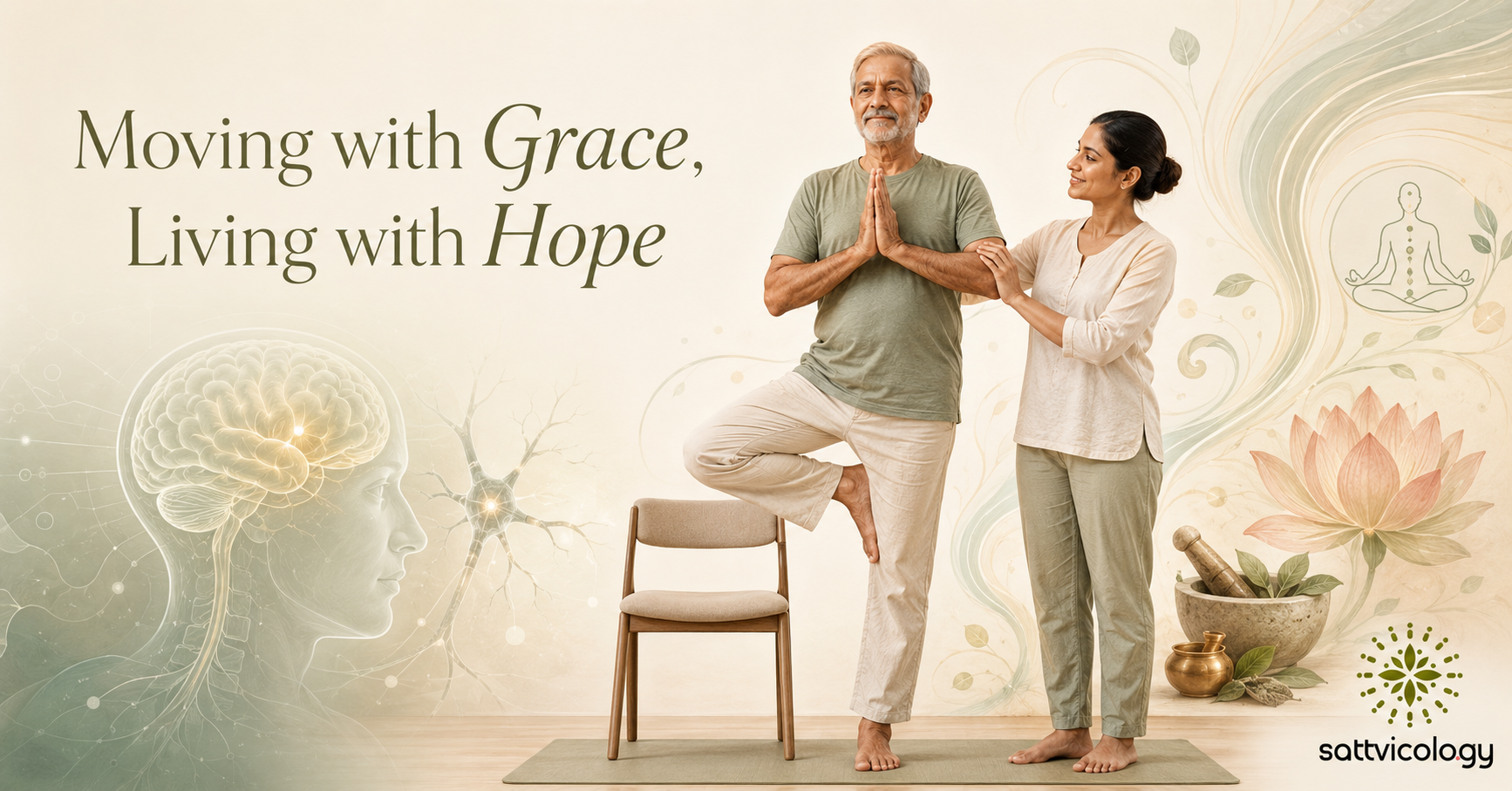
Living Well with Parkinson’s Disease
How Ayurveda and Yoga May Support Movement, Balance, Mood, and Quality of Life
Explore how Ayurveda and yoga may complement neurologist-directed care by supporting flexibility, mobility, emotional wellbeing, sleep, digestion, stress management, and overall resilience.
Living Well with Parkinson's Disease: Finding Strength Through Integrative Care
Receiving a diagnosis of Parkinson’s disease can feel overwhelming.
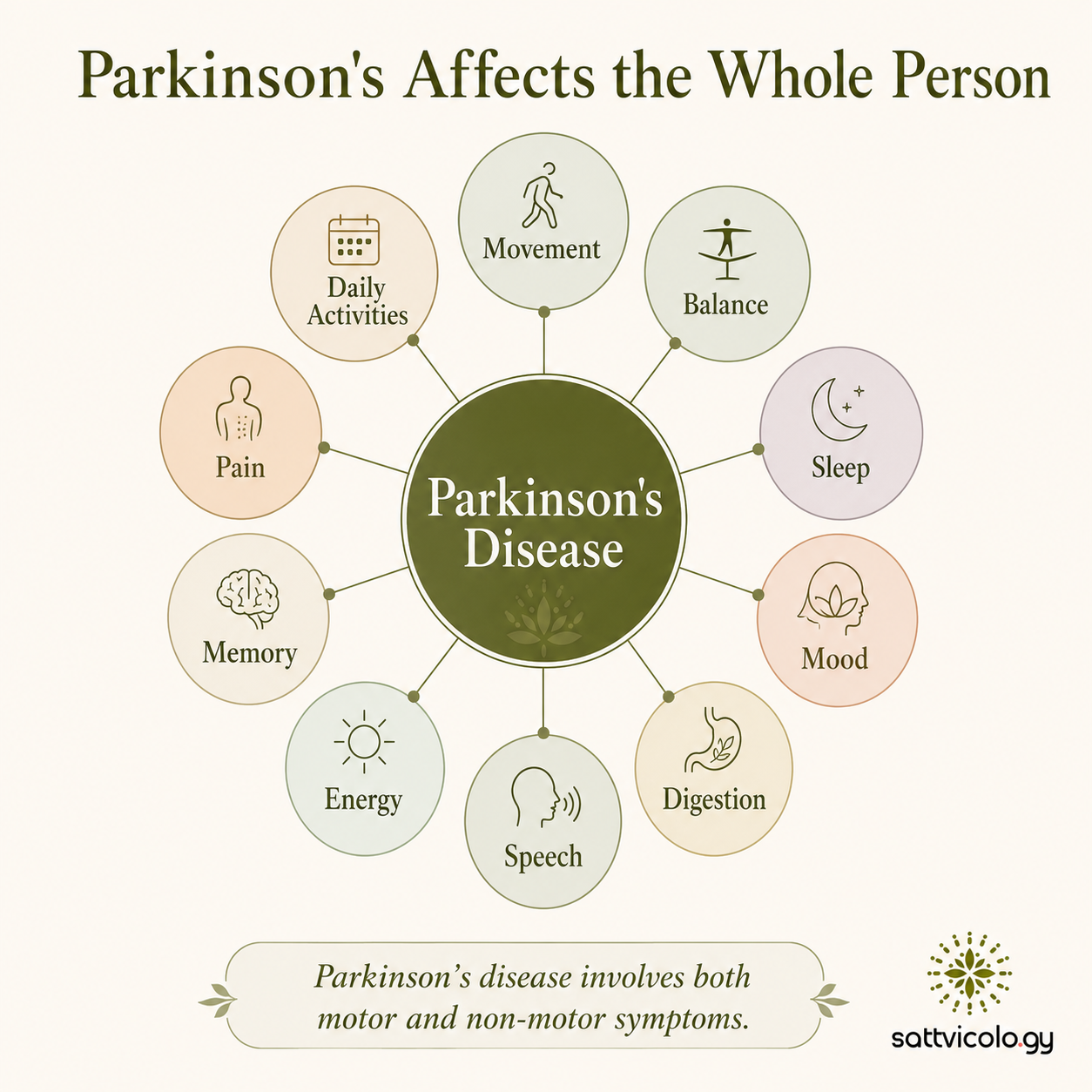
Many people immediately think about tremors, stiffness, or changes in movement. Yet Parkinson’s affects much more than muscles. It may influence balance, speech, handwriting, sleep, digestion, mood, energy, memory, and daily independence.
Modern medicine has made tremendous advances in helping people with Parkinson’s live longer and more active lives. Neurologists, movement disorder specialists, physical therapists, occupational therapists, speech-language pathologists, and other healthcare professionals play essential roles in managing this complex neurological condition.
At the same time, many individuals and their families ask an important question:
“What else can I do to support my health and quality of life?”
This is where Ayurveda and Yoga may offer meaningful complementary support.
These ancient disciplines do not cure Parkinson’s disease, nor should they replace medications, rehabilitation, or neurologist-directed care. Instead, they may help support flexibility, mobility, emotional wellbeing, sleep, digestion, stress management, and overall resilience.
This article explores how Ayurvedic principles and yoga practices may complement modern Parkinson’s care while respecting the best available scientific evidence.
A Message of Hope
Parkinson’s disease changes life—but it does not define life.
Across the world, millions of people continue to travel, exercise, volunteer, work, create art, spend time with grandchildren, practice yoga, meditate, and enjoy meaningful relationships after diagnosis.
Living well with Parkinson’s often involves building a team that includes medical professionals, caregivers, family members, therapists, and supportive lifestyle practices.
Ayurveda reminds us that health is not merely the absence of disease.
Health is the ability to live with balance, purpose, adaptability, and inner peace.
Understanding Parkinson's Disease
Parkinson’s disease is a progressive neurological disorder that primarily affects movement.
It develops when specialized nerve cells in an area of the brain called the substantia nigra gradually become damaged or lost. These neurons normally produce dopamine, a neurotransmitter that helps coordinate smooth, purposeful movement.
As dopamine levels decline, communication between different parts of the brain becomes less efficient, leading to characteristic movement symptoms.
Although movement changes are often the most recognizable features of Parkinson’s disease, many people also experience non-motor symptoms that significantly affect quality of life.
Common Motor Symptoms
- Tremor at rest
- Muscle stiffness (rigidity)
- Slowness of movement (bradykinesia)
- Balance difficulties
- Changes in posture
- Smaller handwriting (micrographia)
- Reduced facial expression
- Softer voice
- Shuffling gait
- Difficulty turning while walking
Every individual experiences Parkinson’s differently. Some people develop tremor early, while others experience stiffness or balance problems first.
Common Non-Motor Symptoms
- Constipation
- Sleep disturbances
- Anxiety
- Depression
- Fatigue
- Reduced sense of smell
- Cognitive changes
- Urinary symptoms
- Pain
- Low blood pressure when standing
- Digestive changes
These symptoms often have a profound impact on daily life and deserve the same attention as movement difficulties.
Parkinson's Affects the Whole Person
What Causes Parkinson's Disease?
Researchers continue to study why Parkinson’s develops.
Current evidence suggests that multiple factors may contribute, including:
- Aging
- Genetics
- Environmental influences
- Cellular stress
- Protein misfolding, including alpha-synuclein
- Mitochondrial dysfunction
- Neuroinflammation
For most people, Parkinson’s is thought to result from a combination of genetic susceptibility and environmental influences rather than a single identifiable cause.
Scientists continue to investigate these complex interactions.
How Modern Medicine Treats Parkinson's Disease
Although there is currently no cure for Parkinson’s disease, many effective treatments help improve symptoms and quality of life.
Treatment plans are highly individualized and may include:
Medications
Levodopa, carbidopa, dopamine agonists, MAO-B inhibitors, COMT inhibitors, and other medications recommended by a neurologist.
Physical Therapy
Supports walking, balance, strength, flexibility, fall prevention, and mobility confidence.
Occupational Therapy
Helps people maintain independence in dressing, cooking, writing, personal care, and other daily activities.
Speech Therapy
Supports voice strength, swallowing, communication, and safer mealtime function.
Exercise
May include walking, strength training, cycling, Tai Chi, yoga, dance, and balance exercises.
Advanced Therapies
For selected individuals, a movement disorder specialist may recommend deep brain stimulation or medication infusion therapies.
How Ayurveda Views Parkinsonian Symptoms
It is important to understand that Parkinson’s disease is a modern neurological diagnosis.
Classical Ayurvedic texts do not describe Parkinson’s disease exactly as modern medicine defines it today.
However, Ayurveda contains descriptions of neurological conditions characterized by tremors, impaired movement, stiffness, weakness, and disturbances of Vata Dosha.
One condition often discussed in Ayurvedic literature is Kampavata, a term that refers to tremors (“Kampa”) associated with aggravated Vata.
Some contemporary Ayurvedic practitioners draw comparisons between Kampavata and Parkinsonian symptoms. However, these concepts are not identical, and Parkinson’s disease should not be considered simply another name for Kampavata.
Instead, Ayurvedic practitioners evaluate each individual based on:
- Prakriti (constitution)
- Vikriti (current imbalance)
- Agni
- Ama
- Ojas
- Dhatus
- Lifestyle
- Sleep
- Digestion
- Mental wellbeing
- Functional abilities
Treatment recommendations are therefore highly individualized.
Vata and the Nervous System
Among the three Doshas, Vata is most closely associated with movement, communication, nerve impulses, coordination, flexibility, breathing, circulation, and creativity.
Healthy Vata supports graceful movement and adaptability.
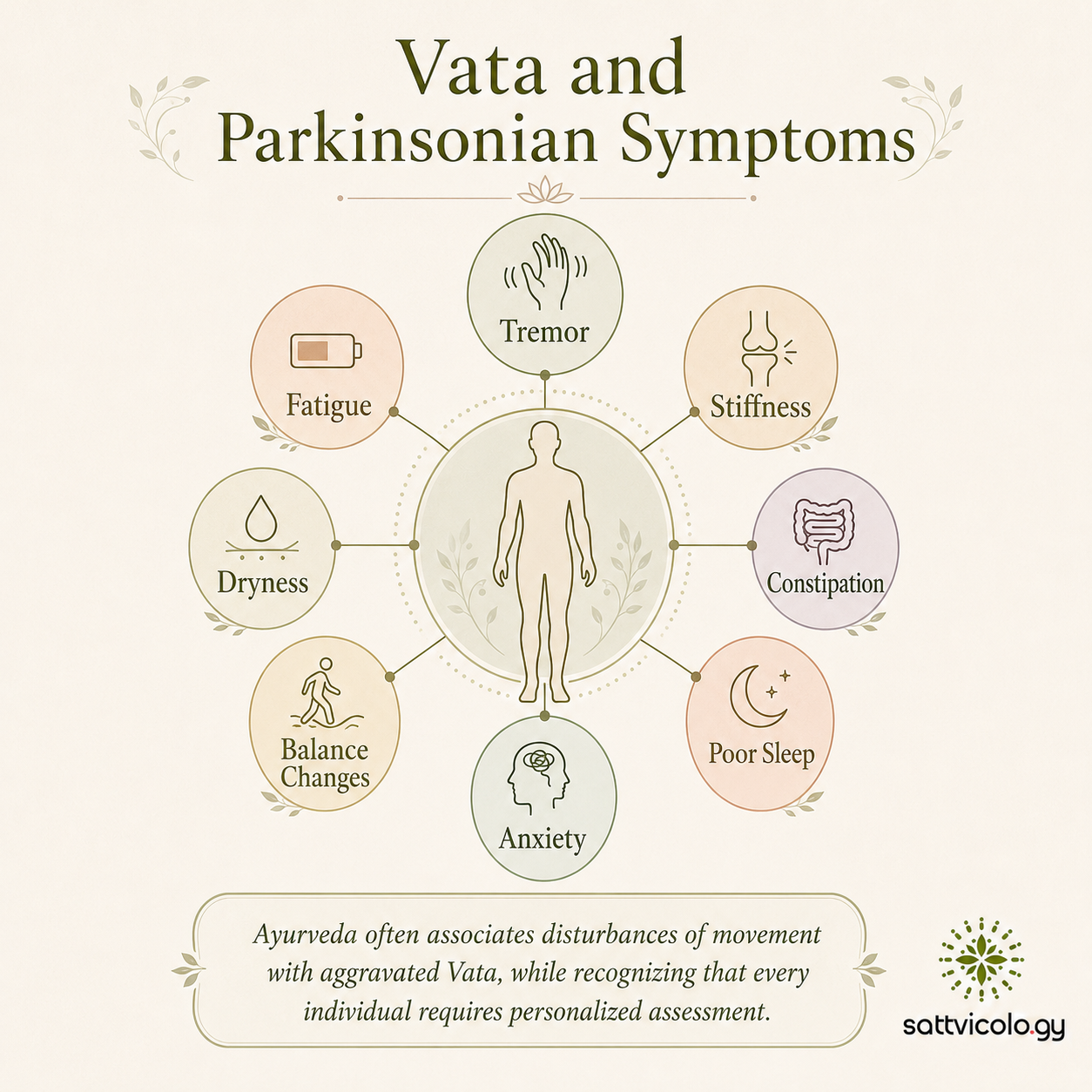
When Vata becomes aggravated, classical Ayurvedic texts describe symptoms that may include:
- Tremors
- Dryness
- Stiffness
- Muscle tightness
- Poor sleep
- Anxiety
- Constipation
- Restlessness
- Reduced stability
Some of these features overlap with symptoms experienced by people living with Parkinson’s disease.
This does not mean Parkinson’s is caused solely by Vata imbalance. Rather, Ayurveda considers Vata one important factor among many that influence health.
Vata and Parkinsonian Symptoms
Agni, Ojas, and Long-Term Vitality
Ayurveda teaches that healthy aging depends upon maintaining strong Agni (digestive fire), healthy tissue nourishment, balanced Doshas, and robust Ojas.
Ojas is often described as the body’s reserve of vitality, resilience, immunity, and inner strength.
Although Ojas has no direct equivalent in modern medicine, it reflects an important Ayurvedic principle:
Long-term health depends on consistently nourishing both body and mind.
For individuals living with Parkinson’s disease, maintaining healthy nutrition, adequate hydration, restorative sleep, emotional wellbeing, and appropriate physical activity becomes increasingly important.
Why Digestion Matters
Constipation is one of the most common non-motor symptoms of Parkinson’s disease.
From a modern perspective, Parkinson’s may affect the nerves that regulate gastrointestinal function.
Ayurveda also places tremendous emphasis on digestion.
Healthy digestion supports nutrient absorption, elimination, energy, tissue nourishment, and overall balance.
This shared recognition makes digestive health an important focus for integrative Parkinson’s care.
The Mind-Body Connection
Parkinson’s disease affects emotional health as well as physical function.
Living with a progressive neurological condition often brings understandable feelings of uncertainty, frustration, anxiety, grief, stress, and social isolation.
Ayurveda and Yoga emphasize caring for the mind alongside the body.
Practices that cultivate calmness, resilience, meaningful connection, and emotional balance become valuable components of whole-person care.
Ancient Wisdom Meets Modern Neuroscience
The Charaka Samhita teaches that lasting health depends upon balanced digestion, healthy tissues, appropriate daily routines, and harmony between body, mind, and environment.
Modern neuroscience likewise recognizes that movement, sleep, nutrition, stress management, emotional wellbeing, and social engagement all influence quality of life in Parkinson’s disease.
Although these systems use different language and scientific frameworks, both emphasize caring for the whole person rather than focusing on one symptom alone.
Looking Ahead
In Part 2, we’ll explore practical ways Ayurveda and Yoga may support people living with Parkinson’s disease, including:
- Gentle yoga designed for Parkinson's
- Chair yoga
- Balance and mobility practices
- Pranayama for calm breathing
- Meditation and mindfulness
- Dinacharya (daily routines)
- Sattvic nutrition
- Ayurvedic herbs and medication safety
- Caregiver wellbeing
- Additional infographic concepts
Continue Your Wellness Journey
Your physical health and mental outlook are deeply connected.
Understanding your balance of Sattva, Rajas, and Tamas may help you cultivate habits that support resilience, calmness, and mindful living alongside your Parkinson’s care plan.
Take the free Sattvicology Gunas Assessment to receive personalized Ayurvedic lifestyle insights and discover practices that may support your overall wellbeing.
Medical Disclaimer
This content is for educational purposes only and is not a substitute for diagnosis, treatment, medication management, rehabilitation, or personalized advice from a neurologist or other qualified healthcare professional. Do not stop or change Parkinson’s medications, supplements, exercise, or therapy without consulting the appropriate clinician. Seek prompt medical care for new or worsening symptoms, falls, swallowing difficulty, hallucinations, severe mood changes, or other urgent concerns.