
Why Gut Health Is Critical for Physical, Psychological, Physiological, and Spiritual Well-Being According to Ayurveda
An Ayurvedic and modern microbiome perspective on digestion, Agni, Ama, the gut-brain axis, Nadi Pariksha, herbs, food, daily rhythm, and whole-person healing.
Introduction: The Gut Is Not Just Where Food Is Digested—It Is Where Life Is Transformed
In Ayurveda, gut health is not treated as a small digestive concern. It is the foundation of vitality, clarity, immunity, emotional balance, and spiritual awareness. Long before the modern world began discussing the gut microbiome, gut-brain axis, inflammation, and metabolic health, Ayurveda placed Agni, the digestive and metabolic fire, at the center of human wellness.
According to Ayurveda, when digestion is strong, food becomes nourishment, tissues are built properly, the mind becomes clear, and the body naturally moves toward balance. When digestion is weak, irregular, excessive, or obstructed, food may not transform properly. This can lead to Ama, often described as undigested or toxic metabolic residue.
Modern science now echoes part of this ancient insight. Research on the gut microbiome shows that the gut is deeply involved in digestion, immune function, inflammation, metabolism, neurotransmitter signaling, and communication with the brain.
This is why Ayurveda asks a profound question: How well are you digesting life? Not just food, but emotions, experiences, relationships, stress, thoughts, and spiritual impressions.
What Is Gut Health According to Ayurveda?
In Ayurveda, gut health is understood through several interconnected concepts:
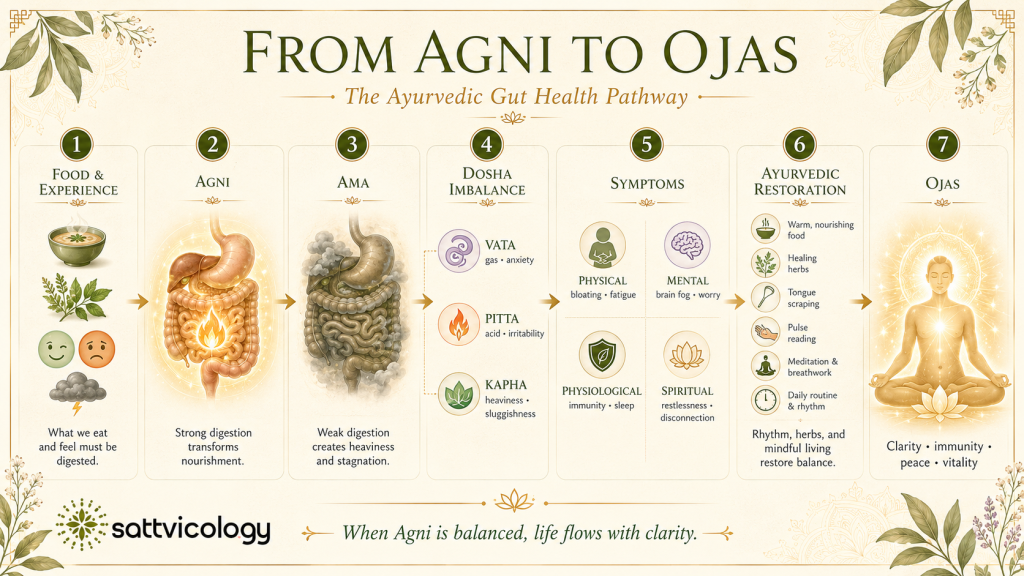
- Agni is the digestive and metabolic intelligence that transforms food into energy, tissues, immunity, and clarity.
- Ama is the residue of incomplete digestion. It may arise when Agni is weak, irregular, overloaded, or disturbed.
- Doshas—Vata, Pitta, and Kapha—shape digestive tendencies.
- Srotas are the channels of the body. When digestion is impaired, these channels may become blocked.
- Ojas is the subtle essence of immunity, vitality, stability, and spiritual strength.
In simple terms, Ayurveda views the gut as the root system of the human being. If the root is nourished, the branches, leaves, flowers, and fruit thrive.
The Modern Science: Why the Gut Affects the Whole Body
Modern gut microbiome research shows that the digestive tract contains a vast and complex community of microbes that influence many aspects of health. These microbes help break down food, produce important metabolites, interact with the immune system, influence inflammation, and communicate with the nervous system.
The gut-brain axis describes the two-way communication between the gut and the brain. This communication happens through the vagus nerve, immune signaling, hormones, microbial metabolites, and inflammatory pathways.
From an Ayurvedic perspective, this strongly resembles the relationship between Agni, Ama, Manas—the mind—and the doshas. When digestion is clear, the mind is steadier. When digestion is disturbed, the mind may become cloudy, restless, irritable, or dull.
Why Gut Health Matters for Physical Health
Physical symptoms are often the first signs of digestive imbalance. Ayurveda teaches that many diseases begin in the gut because improperly digested food and disturbed doshas can spread through the body.
| Ayurvedic Pattern | Real-World Symptoms | Possible Interpretation |
|---|---|---|
| Vata imbalance | Gas, bloating, constipation, dry stools, abdominal cramping, irregular hunger | Irregular digestion, dryness, nervous system stress |
| Pitta imbalance | Acidity, reflux, burning, loose stools, excessive hunger, irritability | Excess heat, inflammation, sharp digestion |
| Kapha imbalance | Heaviness, sluggish digestion, nausea, mucus, lethargy, weight gain tendency | Slow digestion, stagnation, excess heaviness |
| Ama accumulation | Coated tongue, fatigue, foul-smelling stools, body aches, brain fog | Incomplete digestion and metabolic residue |
Physical health depends on whether the body can properly digest, absorb, assimilate, and eliminate. Ayurveda would not only ask, “What are you eating?” It would also ask, “Can your Agni digest what you are eating?”
| Ayurvedic Pattern | Real-World Symptoms | Possible Interpretation |
|---|---|---|
| Vata imbalance | Gas, bloating, constipation, dry stools, abdominal cramping, irregular hunger | Irregular digestion, dryness, nervous system stress |
| Pitta imbalance | Acidity, reflux, burning, loose stools, excessive hunger, irritability | Excess heat, inflammation, sharp digestion |
| Kapha imbalance | Heaviness, sluggish digestion, nausea, mucus, lethargy, weight gain tendency | Slow digestion, stagnation, excess heaviness |
| Ama accumulation | Coated tongue, fatigue, foul-smelling stools, body aches, brain fog | Incomplete digestion and metabolic residue |
Why Gut Health Matters for Mental and Psychological Health
Ayurveda has always recognized a deep relationship between digestion and the mind. A disturbed gut can disturb the mind, and a disturbed mind can disturb the gut.
- Anxiety that worsens after meals or during bloating
- Brain fog after heavy, oily, processed, or incompatible foods
- Irritability with acidity, reflux, or loose stools
- Low mood with chronic constipation or sluggish digestion
- Restless sleep after late dinners
- Emotional sensitivity during digestive flare-ups
- Difficulty focusing when appetite and elimination are irregular
From an Ayurvedic lens, Vata imbalance in the gut can create restlessness, worry, insomnia, and scattered thinking. Pitta imbalance may create anger, impatience, criticism, and intensity. Kapha imbalance may create heaviness, attachment, sadness, and lethargy.
Why Gut Health Matters for Physiological Health
Physiological health refers to the body’s internal systems: metabolism, immunity, hormones, detoxification, sleep rhythm, energy production, and elimination. Gut health is central to all of these.
- Regular appetite
- Comfortable digestion
- Daily elimination
- Stable energy
- Clear skin
- Healthy sleep
- Balanced weight
- Better resilience to stress
- Stronger immunity
- Better nutrient assimilation
| System | Symptoms of Gut Imbalance |
|---|---|
| Immune system | Frequent colds, allergies, inflammation, slow recovery |
| Metabolism | Weight fluctuation, sugar cravings, heaviness after meals |
| Hormonal rhythm | PMS aggravation, irregular cravings, sleep disruption |
| Skin | Acne, rashes, dullness, itching, inflammatory flare-ups |
| Energy | Fatigue after meals, afternoon crashes, low stamina |
| Elimination | Constipation, diarrhea, incomplete evacuation, foul odor |
Why Gut Health Matters for Spiritual Health
Spiritual health in Ayurveda is not separate from the body. A calm stomach, clear mind, balanced breath, and steady nervous system support meditation, self-awareness, compassion, and inner discipline.
- Clearer meditation
- More emotional grounding
- Less reactivity
- Stronger intuition
- More discipline with food and routine
- A more sattvic, peaceful, and compassionate state
Ayurveda teaches that food affects consciousness. Fresh, light, nourishing, sattvic food supports clarity. Heavy, stale, excessively processed, overly spicy, or incompatible food may disturb the mind and cloud awareness.
Real-World Examples: How Gut Imbalance Shows Up in Daily Life
The High-Performing Professional With Anxiety and Bloating
A busy professional skips breakfast, drinks coffee on an empty stomach, eats lunch at the desk, and eats dinner late at night. Symptoms include bloating, constipation, racing thoughts, poor sleep, and anxiety.
Ayurvedic interpretation: Vata disturbance, irregular Agni, nervous system overload, possible Ama accumulation.
Supportive approach: Warm cooked meals, regular meal timing, ginger or cumin-coriander-fennel tea, early dinner, oil massage, breathwork, and reducing cold/raw foods.
The Fitness Enthusiast With Acid Reflux and Irritability
A person eats high-protein meals, hot sauce, coffee, and supplements, but experiences burning, reflux, loose stools, acne, and irritability.
Ayurvedic interpretation: Pitta aggravation, excessive heat, sharp digestion, inflammatory tendency.
Supportive approach: Cooling foods, reducing alcohol/spicy/fried foods, aloe vera under guidance, coriander, fennel, rose, amla, and mindful eating.
The Person With Sluggish Digestion and Low Motivation
A person feels heavy after meals, craves sweets, sleeps excessively, gains weight easily, and feels emotionally stuck.
Ayurvedic interpretation: Kapha imbalance, slow Agni, stagnation, possible Ama.
Supportive approach: Lighter warm meals, digestive spices, movement after meals, Triphala when appropriate, avoiding daytime naps, and reducing heavy dairy, fried foods, and excess sweets.
The Spiritual Seeker Who Cannot Meditate Comfortably
A person wants to meditate daily but feels bloated, restless, sleepy, or uncomfortable after meals. The mind becomes dull or agitated.
Ayurvedic interpretation: Disturbed Agni affecting Manas, Ama clouding clarity, and possible Vata or Kapha imbalance.
Supportive approach: Eat lighter dinners, avoid eating too close to meditation, follow a sattvic diet, sip warm water, and build a stable daily routine.
Important Ayurvedic Tests and Observations for Gut Health
Ayurveda uses a holistic assessment process. These observations do not replace medical diagnosis, but they can help identify patterns.
1. Nadi Pariksha: Pulse Reading
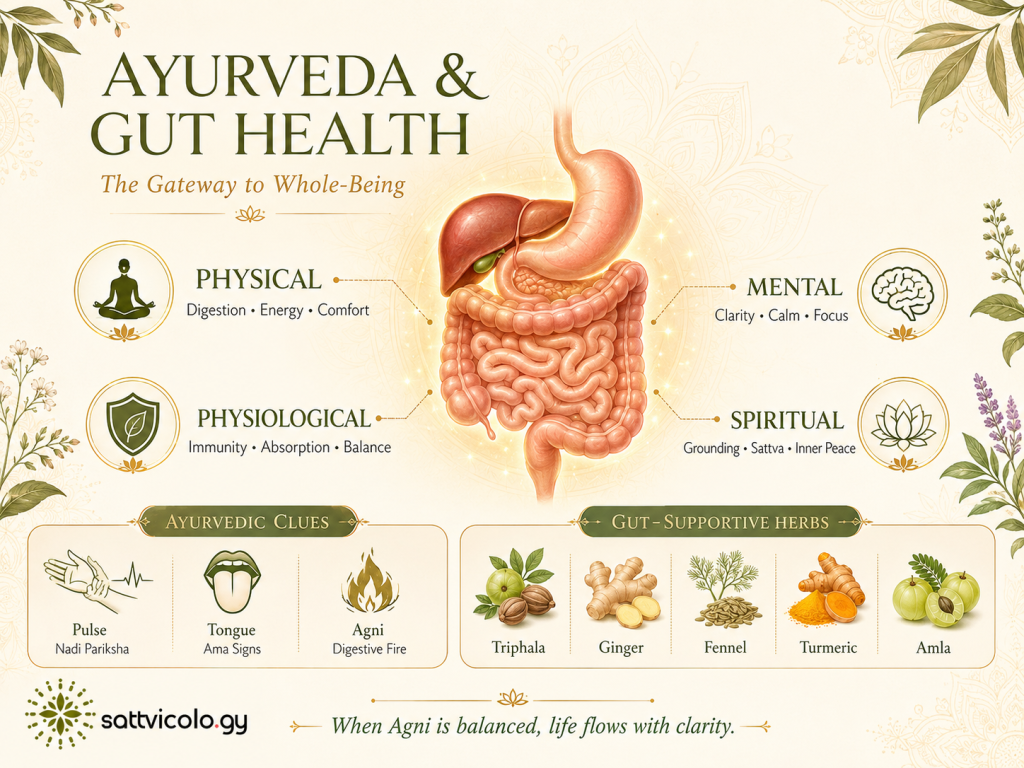
Nadi Pariksha, or Ayurvedic pulse reading, is a traditional diagnostic method used to assess the state of Vata, Pitta, Kapha, Agni, tissue strength, stress, and subtle imbalance.
The practitioner typically places three fingers on the radial pulse at the wrist. Each finger corresponds to doshic qualities: index finger for Vata, middle finger for Pitta, and ring finger for Kapha.
| Pulse Quality | Possible Ayurvedic Meaning |
|---|---|
| Irregular, thin, fast-moving | Vata disturbance, gas, dryness, irregular appetite |
| Sharp, bounding, warm | Pitta aggravation, acidity, inflammation, heat |
| Slow, heavy, deep | Kapha accumulation, sluggish metabolism, heaviness |
| Dull or obstructed quality | Possible Ama, low digestive clarity |
2. Jihva Pariksha: Tongue Examination
- Thick white coating: possible Ama or Kapha accumulation
- Yellow coating: possible Pitta heat
- Dry or cracked tongue: possible Vata dryness
- Teeth marks: possible weak digestion or fluid imbalance
- Red tip: possible heat or emotional stress
3. Mala Pariksha: Stool Examination
- Hard, dry stool: Vata
- Loose, burning stool: Pitta
- Sticky, heavy stool: Kapha or Ama
- Undigested food: weak Agni
- Foul smell: Ama or poor digestion
- Incomplete evacuation: Vata obstruction or sluggish bowel tone
4. Agni Assessment
Key questions include: Do you feel true hunger before meals? Do you feel heavy after eating? Do you experience gas, bloating, acidity, or nausea? Is your appetite irregular, excessive, or absent? Do you feel energized or tired after meals?
| Type of Agni | Pattern |
|---|---|
| Sama Agni | Balanced digestion, stable appetite, good energy |
| Vishama Agni | Irregular digestion, gas, bloating, constipation |
| Tikshna Agni | Excessive hunger, acidity, burning, loose stools |
| Manda Agni | Slow digestion, heaviness, lethargy, coating |
5. Aahara-Vihara Review: Food and Lifestyle Assessment
Ayurveda examines not just food but how, when, and why a person eats. Meal timing, emotional state during meals, food combinations, dinner timing, movement, and sleep all matter.
6. Modern Supportive Testing
- Comprehensive stool analysis
- Food sensitivity evaluation when clinically appropriate
- Celiac screening
- H. pylori testing
- Inflammatory markers
- Nutrient status testing such as B12, vitamin D, iron, and ferritin
- Thyroid testing
- Blood glucose and insulin markers
- Liver function testing
- Evaluation for IBS, IBD, reflux, or other digestive disorders
Ayurvedic Herbs That Support Gut Health
Herbs should be chosen according to constitution, symptoms, medications, pregnancy status, and medical history. Always consult a qualified practitioner before beginning herbal supplementation.
| Herb | Ayurvedic Role | Potential Gut Health Benefit |
|---|---|---|
| Triphala | Supports elimination and rejuvenation | May support bowel regularity, antioxidant activity, and gut balance |
| Ginger | Deepana and Pachana; kindles digestion | Supports appetite, nausea relief, motility, and digestive comfort |
| Turmeric | Supports inflammation balance and liver-gut health | Curcumin may interact with gut microbiota and support inflammatory balance |
| Amla | Cooling Rasayana, supports Pitta balance | Supports digestion, antioxidant status, and tissue nourishment |
| Fennel | Cooling digestive support | Helps gas, bloating, acidity, and post-meal comfort |
| Cumin | Digestive stimulant | Supports appetite, nutrient assimilation, and bloating relief |
| Coriander | Cooling and Pitta-pacifying | Supports urinary and digestive comfort, especially heat-related symptoms |
| Licorice | Demulcent and soothing | Traditionally supports mucosal comfort; caution with blood pressure |
| Ajwain | Strong digestive stimulant | Useful for gas and heaviness; may be too heating for high Pitta |
| Guduchi | Rasayana and immune-supportive | Traditionally supports metabolism, inflammation balance, and resilience |
Food Principles for Strong Gut Health in Ayurveda
- Eat warm, fresh, cooked foods
- Eat at regular times
- Make lunch the main meal
- Avoid overeating
- Avoid eating before the previous meal is digested
- Use digestive spices wisely
- Eat with calm attention
- Honor natural elimination
The Gut-Health Daily Routine: A Simple Ayurvedic Framework
- Wake up at a consistent time
- Scrape the tongue
- Sip warm water
- Eliminate naturally without rushing
- Eat a warm breakfast if hungry
- Make lunch the most nourishing meal
- Take a short walk after meals
- Sip warm herbal teas as appropriate
- Avoid constant snacking
- Eat a light early dinner
- Reduce screens and stimulation before sleep
- Practice breathwork, meditation, or prayer
- Sleep before the body becomes overtired
The goal is not perfection. The goal is rhythm. The gut loves rhythm because Agni loves rhythm.
Conclusion: Heal the Gut, Support the Whole Human Being
According to Ayurveda, gut health is the foundation of physical strength, mental clarity, emotional stability, physiological balance, and spiritual growth. When Agni is strong, the body transforms food into energy, immunity, vitality, and awareness. When Agni is weak or disturbed, Ama can accumulate, doshas can become imbalanced, and symptoms may appear across the body and mind.
Modern science increasingly confirms that the gut is central to immunity, metabolism, inflammation, mood, and brain communication. Ayurveda gives us a practical, personalized, time-tested framework for protecting this inner fire.
Gut health is not only about avoiding bloating or improving bowel movements. It is about becoming clearer, steadier, lighter, stronger, and more connected to life.
To care for the gut is to care for the entire human being.
FAQ: Ayurveda and Gut Health
Why is gut health so important in Ayurveda?
Gut health is important in Ayurveda because digestion determines how food becomes energy, tissues, immunity, and mental clarity. Strong Agni supports health, while weak digestion can create Ama and contribute to imbalance.
What is Agni in Ayurveda?
Agni means digestive and metabolic fire. It governs the transformation of food into nourishment and also supports tissue formation, immunity, mental clarity, and vitality.
What is Ama?
Ama is often described as undigested or toxic metabolic residue that forms when digestion is incomplete. It may appear as fatigue, coated tongue, heaviness, bloating, foul-smelling stool, brain fog, or body aches.
How does gut health affect mental health?
Ayurveda teaches that digestion and mind are deeply connected. Modern gut-brain axis research also shows that the gut communicates with the brain through nerves, hormones, immune pathways, and microbial metabolites.
What are common signs of poor gut health according to Ayurveda?
Common signs include gas, bloating, constipation, loose stools, acidity, nausea, coated tongue, bad breath, fatigue, heaviness, brain fog, irregular appetite, cravings, and incomplete elimination.
What is Nadi Pariksha?
Nadi Pariksha is Ayurvedic pulse reading. A trained practitioner reads pulse qualities to assess Vata, Pitta, Kapha, Agni, tissue strength, and subtle imbalances.
What herbs are good for gut health in Ayurveda?
Common Ayurvedic herbs and spices for gut health include Triphala, ginger, turmeric, fennel, cumin, coriander, amla, licorice, ajwain, and guduchi. The right herb depends on the person’s constitution and symptoms.
Is Triphala good for digestion?
Triphala is traditionally used to support elimination, bowel regularity, and rejuvenation. It may be helpful for some people, but it should be used carefully, especially during pregnancy, diarrhea, dehydration, or when taking medications.
Can Ayurveda help with bloating?
Ayurveda may help identify whether bloating is related to Vata imbalance, weak Agni, food combinations, stress, constipation, or irregular eating.
When should someone see a medical doctor for gut symptoms?
Seek medical care for severe pain, blood in stool, unexplained weight loss, persistent vomiting, chronic diarrhea, difficulty swallowing, anemia, fever, black stools, or symptoms that do not improve.