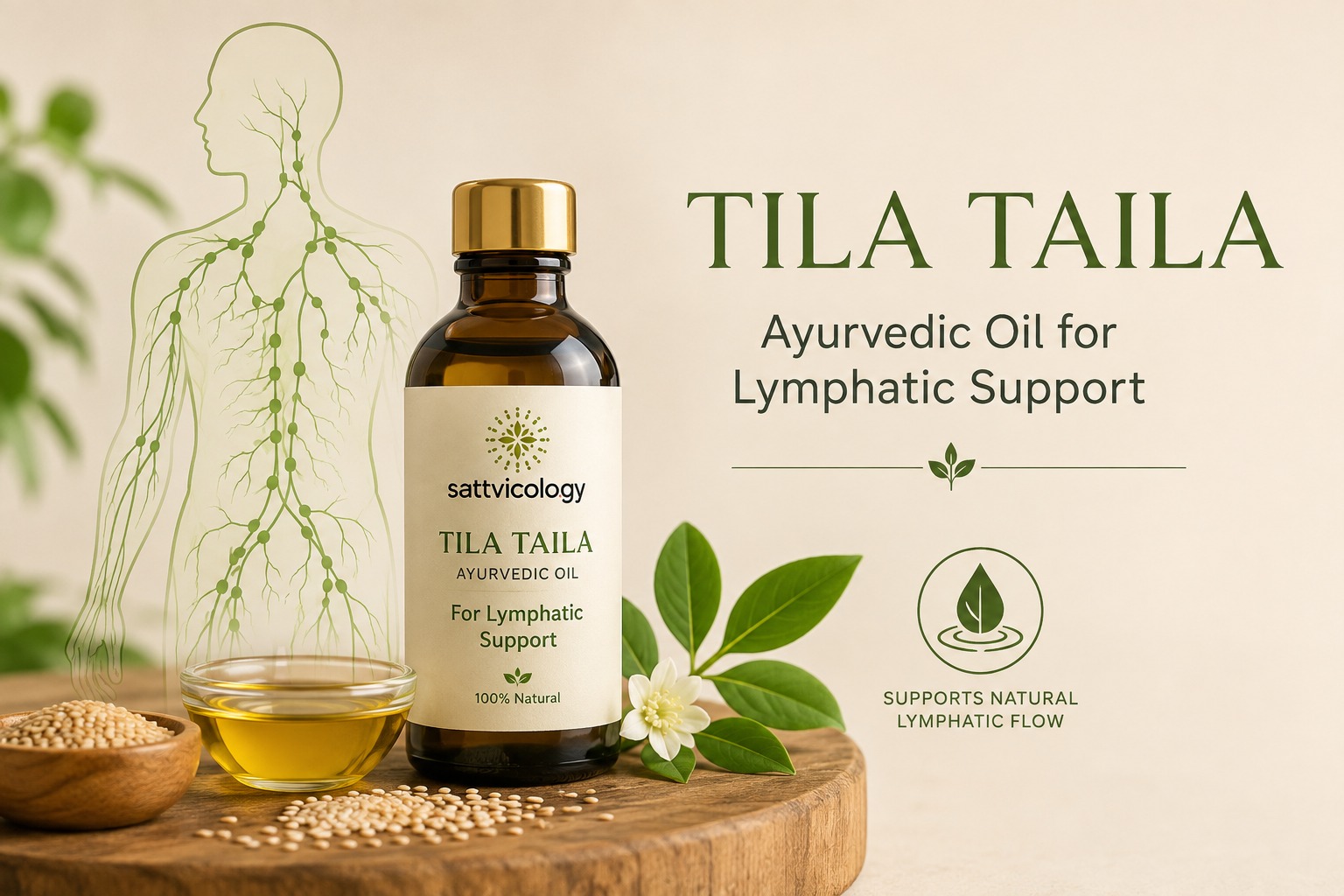
Ayurvedic Oil for Lymphatic Drainage: Tila Taila, Abhyanga & Evidence-Based Support After Cancer Treatment
Can Ayurvedic oils support lymphatic drainage? Explore Tila Taila, Abhyanga, manual lymphatic drainage, lymphedema after cancer treatment, clinical evidence, safety and practical FAQs.
The Ayurvedic Oil Question We Need to Answer Carefully
When the body feels swollen, heavy or congested, it is tempting to look for an oil that can “drain the lymph.”
Ayurveda has a long tradition of Abhyanga—therapeutic oil massage—and sesame oil, or Tila Taila, is one of its most important massage oils.
No Ayurvedic oil has been clinically proven to “drain” a damaged lymphatic system by itself. For cancer-related lymphedema, the strongest medical foundation is lymphatic rehabilitation—especially appropriately prescribed compression, exercise, skin care and, in selected patients, manual lymphatic drainage (MLD) as part of complete decongestive therapy (CDT).
Where Ayurveda may fit is more nuanced. Tila Taila-assisted gentle Abhyanga may function as a supportive massage and skin-care practice in appropriately screened people, but the massage technique—not a medicinal “lymph-draining” action of the oil—is what may help mobilize superficial tissue fluid.
Anyone with cancer-related lymphedema should have the technique designed or cleared by the oncology team or a Certified Lymphedema Therapist (CLT).
What Is the Lymphatic System?
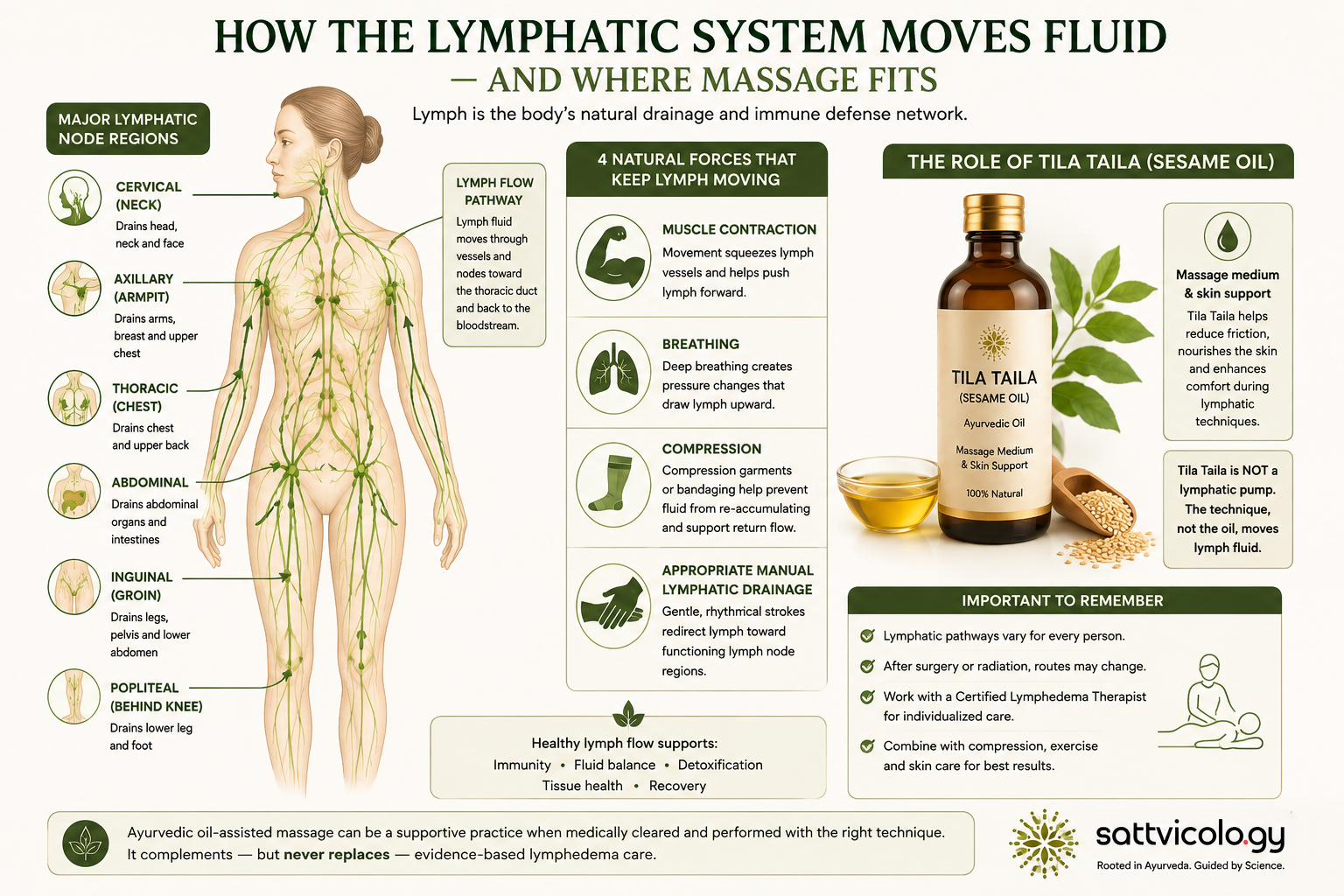
The lymphatic system is a network of lymph vessels, lymph nodes and lymphoid tissues that works alongside the cardiovascular and immune systems.
- Collects excess fluid and proteins from tissues and returns them toward circulation.
- Transports immune cells and supports immune surveillance.
- Helps absorb and transport dietary fats from the intestine.
When normal lymphatic drainage is interrupted, protein-rich fluid can accumulate in tissues and produce lymphedema. Unlike the cardiovascular system, the lymphatic system does not have a single central pump equivalent to the heart. Movement depends partly on skeletal muscle activity, breathing, pressure changes, intact lymph vessels and functioning lymph nodes.
Why Lymphatic Drainage Matters After Cancer Treatment
Cancer and cancer therapy can alter lymphatic function in several ways. Lymph nodes may be removed during surgery, radiation can create fibrosis and tissue changes, and scars can alter normal anatomical drainage pathways.
Cancer-related lymphedema can occur after treatment involving lymphatic structures in breast, prostate, uterine, bladder, pelvic, head-and-neck and other cancers. It may appear shortly after treatment—or months or years later.
Early symptoms may include heaviness, fullness, tightness, subtle swelling, jewelry or clothing feeling tighter and reduced range of motion. As lymphedema progresses, tissue may become firmer and skin changes can develop. Chronic lymphedema can also increase vulnerability to infections such as cellulitis.
New swelling after cancer treatment deserves medical attention rather than being assumed to be ordinary water retention.
The Best Ayurvedic Oil for Lymphatic-Support Massage: Tila Taila
If an Ayurvedic massage medium is medically appropriate, plain, high-quality sesame oil—Tila Taila—is the most defensible starting point.
Sesame oil is one of Ayurveda’s principal classical Abhyanga oils. Modern clinical research has also evaluated topical sesame oil as a massage or skin-contact medium in several settings, including oncology-related symptom and skin-care studies.
Those studies do not prove that sesame oil itself increases lymph flow. They support its use as a topical medium and reinforce the need to separate the effects of the oil from the effects of touch, movement and the broader treatment protocol.
Does Sesame Oil Actually Move Lymph?
There is currently no high-quality clinical evidence showing that sesame oil itself increases lymphatic pumping or clears cancer-related lymphedema.
The mechanisms supported by modern medicine are gentle tissue movement, compression, exercise and redirection of lymph through viable pathways. Sesame oil can serve as a lubricating massage medium and may contribute to skin comfort.
If swelling decreases after an oil-assisted lymphatic treatment, the physiologic credit should primarily go to the appropriate drainage technique and broader lymphedema program, rather than to the oil itself.
What Does Clinical Research Say About Manual Lymphatic Drainage?
Manual lymphatic drainage is a specialized gentle technique that redirects fluid from congested tissues toward regions with functioning lymphatic pathways.
MLD is commonly used within complete decongestive therapy, which may also include compression, exercise, skin care and bandaging.
Research is more complex than many wellness websites suggest. Systematic reviews of breast-cancer-related arm lymphedema show that evidence for MLD alone is mixed, and adding MLD to other standard interventions does not consistently produce substantial additional limb-volume reduction in every patient group.
Lymphatic rehabilitation works best as a system, not as a single miracle technique.
Complete Decongestive Therapy: The Medical Standard Ayurveda Should Complement
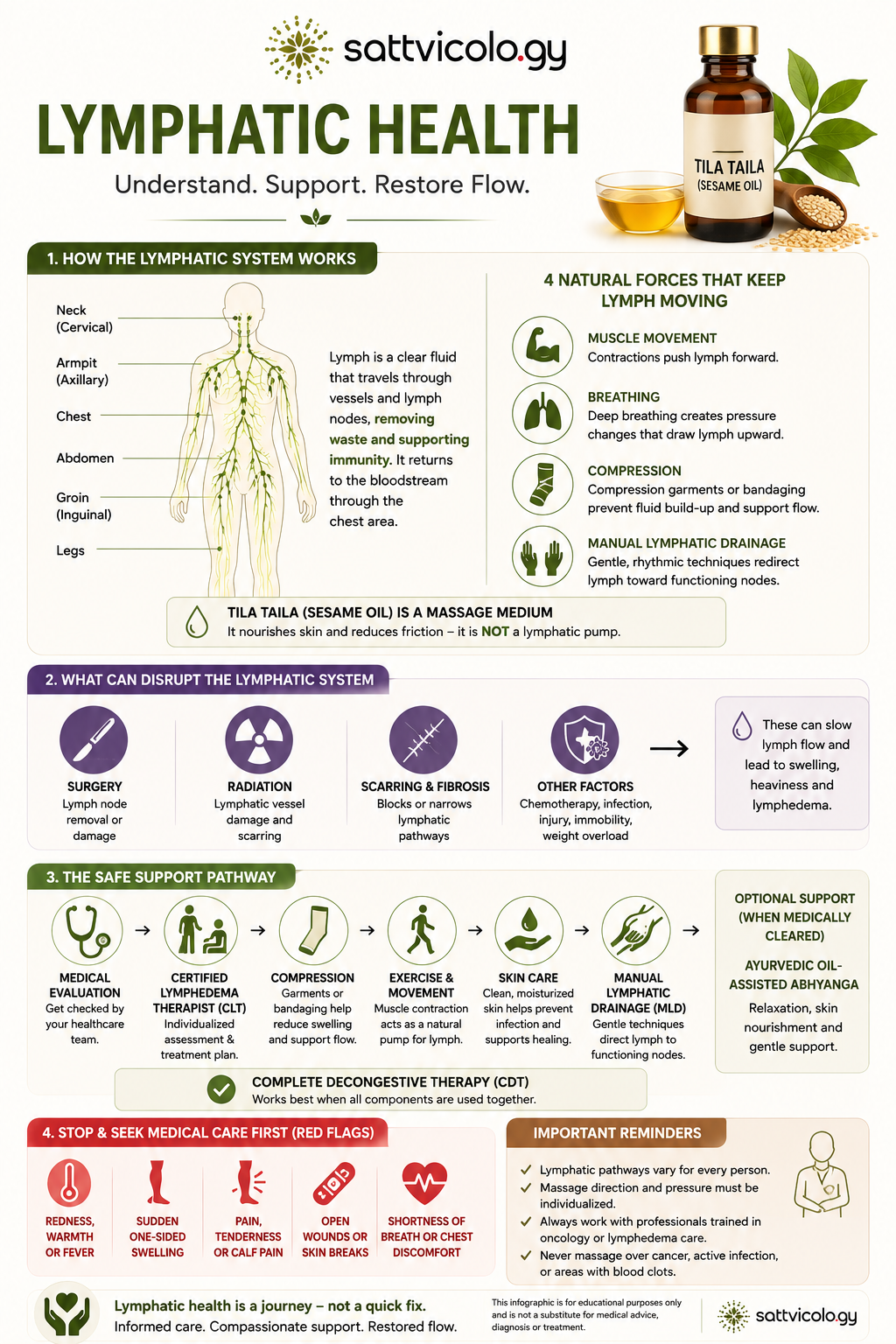
For established lymphedema, the strongest clinical framework is usually Complete Decongestive Therapy (CDT).
Compression: Properly fitted garments or bandages help limit fluid accumulation and support movement of fluid through tissues.
Exercise: Muscle contraction functions as a natural mechanical pump and can support fluid movement.
Skin care: Protecting the skin reduces cracking, injury and infection risk.
Manual lymphatic drainage: Selected patients may benefit from specialized gentle manual techniques that redirect fluid toward functioning drainage pathways.
An oil-assisted relaxation or Abhyanga component can be added around—not instead of—evidence-based lymphatic rehabilitation when medically appropriate.
Ayurveda’s View: Rasa Dhatu and Rasavaha Srotas
Ayurveda does not describe a “lymphatic system” in the exact anatomical terminology used by modern medicine. Contemporary Ayurvedic interpretation often draws functional parallels between aspects of lymph and Rasa Dhatu, as well as Rasavaha Srotas.
These concepts are not biomedical equivalents of lymphatic vessels and lymph nodes. They are traditional physiological frameworks.
Abhyanga has historically been used as part of Dinacharya, or daily Ayurvedic routine, and classical practice generally uses gentle, rhythmic oil application rather than forceful deep-tissue work.
Exploratory research combining Abhyanga-style massage with MLD in healthy volunteers is interesting, but it should not be treated as evidence for cancer-related lymphedema.
A Conservative Ayurvedic Oil Blend for Medically Cleared Lymphatic Massage
Option 1 — Classical simplicity: 100% untoasted, cold-pressed sesame oil. This is the closest fit to classical Tila Taila Abhyanga.
Option 2 — Sensitive or very dry skin: 50% sesame oil + 50% virgin coconut oil. The coconut component is included for additional skin-conditioning properties—not because it “drains lymph.”
For people with cancer-related lymphedema, maintaining intact, moisturized skin is clinically important because breaks in the skin can increase infection risk.
Patch-test first and obtain professional guidance when skin has been affected by surgery, radiation, chemotherapy, infection, dermatitis or other medical treatment.
Why I Would Avoid a Complex Herbal Oil Blend During Active Cancer Treatment
It is easy to assume that adding more herbs makes an Ayurvedic oil more therapeutic. In oncology, simpler can be safer.
- fragile or irradiated skin
- radiation dermatitis
- neuropathy or altered sensation
- thrombocytopenia
- infection risk
- surgical wounds
- medication interactions
- lymphatic pathways altered by surgery or radiation
For this reason, I would not automatically add strong essential oils, warming herbs or complex medicated Ayurvedic oils to cancer-related lymphatic massage. The first priority is correct lymphatic technique and medical safety.
Is Lymphatic Drainage the Same as “Detoxing”?
Not exactly. The lymphatic system participates in fluid balance, immune surveillance and transport of cellular material.
The phrase “detoxing the lymph” is often used online in ways that imply massage or oil can pull generalized toxins from the body. There is not good clinical evidence for that claim.
A more accurate description is: manual lymphatic techniques may help move accumulated interstitial lymph fluid through functioning lymphatic pathways in selected patients.
Cancer Treatment and Lymphedema: Why Direction Matters
This may be the most important safety concept in the article. In ordinary massage, strokes may simply travel toward the heart. Cancer-related lymphatic drainage is different.
If lymph nodes have been removed or irradiated, the normal pathway may no longer be the pathway the therapist should use.
A Certified Lymphedema Therapist may redirect lymph toward alternative functioning lymph-node territories depending on exactly which structures remain intact.
This is why a generic internet diagram showing everyone massaging in the same direction can be inappropriate for a cancer survivor.
When You Should NOT Perform Lymphatic Massage at Home
Do not begin lymphatic massage merely because a limb suddenly looks swollen. New swelling can have several possible causes and requires evaluation.
- sudden one-sided swelling
- redness, warmth or fever
- suspected cellulitis
- unexplained calf pain
- suspected blood clot
- shortness of breath
- active wound or infection
- severe heart disease
- major kidney disease
- rapidly worsening swelling
Cancer patients can also have an increased risk of venous thromboembolism. Suspected clot symptoms require medical assessment rather than massage.
Can People With Active Cancer Receive Lymphatic Drainage?
Sometimes—but this is a medical decision, not a blanket wellness recommendation.
Modern oncology rehabilitation does not support the old generalized claim that gentle massage automatically “spreads cancer.” Appropriately modified massage and rehabilitation are used for selected patients.
Treatment must account for tumor location, metastases, bone involvement, thrombosis risk, blood counts, radiation fields, surgical restrictions, infection, cardiovascular status, wounds, ports and the exact lymphatic pathways affected.
Anyone with active cancer should obtain explicit clearance from the oncology team before beginning lymphatic drainage massage.
Can Abhyanga Prevent Lymphedema After Cancer Treatment?
There is currently no strong clinical evidence showing that sesame-oil Abhyanga prevents cancer-related lymphedema.
Risk reduction is better supported by monitoring for early symptoms, maintaining skin integrity, maintaining an appropriate body weight, gradually returning to exercise, avoiding injury and infection, following rehabilitation guidance and using appropriately fitted compression when prescribed.
Abhyanga may be incorporated for relaxation and skin care if medically appropriate, but it should not be promoted as preventive treatment for lymphatic injury.
The Importance of Skin Care in Lymphedema
Chronic lymphatic swelling can make the skin more vulnerable. Dryness and cracking create potential entry points for bacteria, and infection can worsen lymphatic swelling.
A well-tolerated oil may improve surface lubrication and dryness. However, many lymphedema clinicians recommend moisturizers specifically formulated for compromised skin, and a person wearing compression garments may need guidance about when an oil can be applied without interfering with the garment.
A Safe Integrative Framework
Rather than describing sesame oil as a “lymph detox oil,” the most medically responsible Sattvicology framework is:
Medical diagnosis → Certified Lymphedema Therapist → individualized drainage route → compression/exercise/skin care → optional Ayurvedic oil-assisted Abhyanga when medically cleared.
That reflects both Ayurveda and modern lymphatic medicine without asking one tradition to pretend it can replace the other.
The Sattvic Perspective: Flow Requires More Than Oil
Ayurveda repeatedly returns to the idea of Srotas—pathways through which nourishment, waste, movement and communication occur. Modern lymphology gives us an anatomical version of the same fundamental truth: healthy tissue depends on movement.
But when a lymphatic pathway has been surgically removed, irradiated, scarred or obstructed, no amount of oil can simply command that pathway to reopen.
The intelligent role of Ayurveda is therefore not to promise a miracle. It is to support the person with gentle touch, skin nourishment, movement, breathing, rest and appropriately chosen oil.
The goal is not to force fluid through damaged territory. It is to learn how the remaining lymphatic system can move fluid safely and efficiently.
Clinical Evidence Summary
Best-supported treatment for established lymphedema: Complete decongestive therapy incorporating compression, exercise, skin care and selected manual techniques.
Manual lymphatic drainage: Clinically used for selected patients, although systematic reviews show mixed results when evaluating its additional effect on limb volume beyond other CDT components.
Sesame oil specifically for lymphatic drainage: Not clinically established.
Sesame oil as a topical massage medium: Studied in several clinical settings, including oncology-related symptom and skin-care contexts, but these do not establish a direct lymph-draining effect.
Cancer-related lymphedema: Requires individualized assessment because surgery and radiation can permanently alter normal lymphatic drainage routes.
Key Safety Takeaways
- No Ayurvedic oil is clinically proven to drain a damaged lymphatic system by itself.
- Cancer-related lymphedema should be evaluated and managed with oncology-informed rehabilitation.
- Massage direction can change after lymph-node removal or radiation.
- Do not massage sudden unexplained swelling, suspected infection or suspected blood clot.
- Keep topical formulas simple during active cancer treatment unless the oncology team approves otherwise.
- Use Abhyanga as supportive care—not as a replacement for compression, exercise, skin care, MLD or medical treatment.
For cancer-related swelling, the safest starting point is referral to a Certified Lymphedema Therapist or oncology rehabilitation specialist who can determine which pathways remain functional and teach an individualized drainage technique.
Frequently Asked Questions About Ayurvedic Oil & Lymphatic Drainage
There is no Ayurvedic oil clinically proven to drain lymph on its own. If oil-assisted massage has been medically approved, plain Tila Taila, or sesame oil, is a reasonable classical Ayurvedic massage medium. The actual lymph-moving intervention is the appropriate technique, exercise, compression and broader lymphedema-care program—not the oil itself.
There is currently no strong evidence that sesame oil directly increases lymphatic drainage. Sesame oil may provide lubrication and skin conditioning during massage, but lymph movement depends on functioning lymphatic pathways, muscular activity, breathing, compression and appropriately performed manual techniques.
Manual lymphatic drainage is a specialized, gentle technique designed to redirect accumulated lymph fluid toward functioning lymphatic territories. It is frequently used as one component of complete decongestive therapy for lymphedema.
Cancer-related lymphedema may occur after lymph nodes or vessels are removed or damaged by surgery, radiation or the disease itself. The result can be reduced capacity to transport lymph fluid away from affected tissues.
Cancer treatment can contribute to lymphedema risk through multiple mechanisms, although surgery and radiation involving lymphatic structures are particularly important risk factors. Some systemic treatments may also contribute to swelling in selected patients.
It may help selected patients when used appropriately, particularly as part of complete decongestive therapy. Evidence for MLD alone is mixed, so it should generally be viewed as one component of a broader rehabilitation strategy rather than a standalone cure.
Modern oncology centers do not consider gentle medically appropriate massage automatically capable of spreading cancer. However, treatment must be modified according to tumor location, bone involvement, blood counts, wounds, thrombosis risk and other clinical factors.
It depends on the patient’s current condition. Chemotherapy may affect platelet counts, infection risk, sensation and skin integrity, so massage should be cleared by the oncology team. Strong pressure and complex botanical oils may be inappropriate for some patients.
Only after receiving individualized instruction. Cancer surgery may alter normal lymphatic routes, so a Certified Lymphedema Therapist may teach you to redirect fluid toward a different functioning lymph-node region rather than following a generic massage pattern.
Complete Decongestive Therapy is a comprehensive approach to lymphedema care that commonly includes compression, exercise, skin care, bandaging and manual lymphatic techniques.
Lymphedema increases vulnerability to skin problems and infections. Keeping the skin clean, moisturized and protected from cuts and burns helps reduce infection risk and is considered a core part of lymphedema management.
No. Redness, warmth, tenderness or fever may indicate cellulitis or another infection. Sudden swelling can also have other serious causes. Contact your healthcare team before massaging the area.
Suspected venous thromboembolism requires medical evaluation and clearance. Symptoms such as sudden swelling, calf pain, warmth, discoloration or shortness of breath should be treated as medical red flags—not an indication for massage.
Adequate hydration supports normal physiology, but drinking large amounts of water does not cure lymphedema. Lymphedema reflects impaired fluid transport, so treatment focuses on compression, movement, skin care and individualized rehabilitation.
The medically established purpose of lymphatic drainage is to help mobilize accumulated lymph fluid through functioning pathways. Claims that oils or massage broadly “remove toxins” from the entire body go beyond what clinical evidence currently supports.
There is no universally recommended oncology lymphatic oil. When the medical team has approved topical massage, a simple unscented oil such as sesame oil—or sometimes a sesame/coconut blend for dry skin—avoids unnecessary botanical complexity. The massage route and pressure are more important than the oil.
Explore Your Ayurvedic Constitution
Ayurvedic oil selection is traditionally individualized according to constitution, current imbalance, skin condition, season and therapeutic goals. For lymphatic concerns—especially after cancer treatment—Ayurvedic personalization should be layered after medical clearance and lymphatic assessment, not used in place of them.
Important Medical Disclaimer
Lymphedema is a medical condition, not simply fluid retention.
This article is educational and is not intended to diagnose, treat, cure or prevent cancer, lymphedema or any other disease. Ayurvedic oils and Abhyanga should never replace oncology care, compression therapy, rehabilitation, medical evaluation or treatment prescribed by a healthcare professional.
Anyone with active cancer, previous lymph-node removal, radiation treatment, established lymphedema, unexplained swelling, suspected infection, blood clots, heart disease, kidney disease, open wounds or recent surgery should obtain medical clearance before beginning lymphatic drainage massage or Ayurvedic oil massage.
For cancer-related swelling, the safest starting point is referral to a Certified Lymphedema Therapist or oncology rehabilitation specialist.