
Part 2: Ayurvedic and Yogic Practices to Support Living Well with Chronic Pain
Important Medical Note: The practices discussed below are intended to complement—not replace—medical care. Individuals experiencing severe pain, worsening neurological symptoms, unexplained weight loss, fever, bowel or bladder dysfunction, recent trauma, or sudden weakness should seek immediate medical evaluation. Always consult your physician, physical therapist, or qualified healthcare provider before beginning a new exercise or yoga program.
Healing Begins with the Daily Choices We Make
One of the greatest differences between modern medicine and Ayurveda is that Ayurveda does not ask only:
“What treatment do you need?”
It also asks:
“How do you live every day?”
According to Ayurveda, healing is rarely the result of a single herb, yoga posture, or dietary change. Instead, it develops through hundreds of small daily choices that gradually restore balance to the body and mind.
This philosophy is reflected in Dinacharya, the Ayurvedic daily routine, which emphasizes consistency rather than perfection.
For people living with chronic pain, creating predictable routines can also help calm the nervous system—a concept increasingly recognized in pain neuroscience.
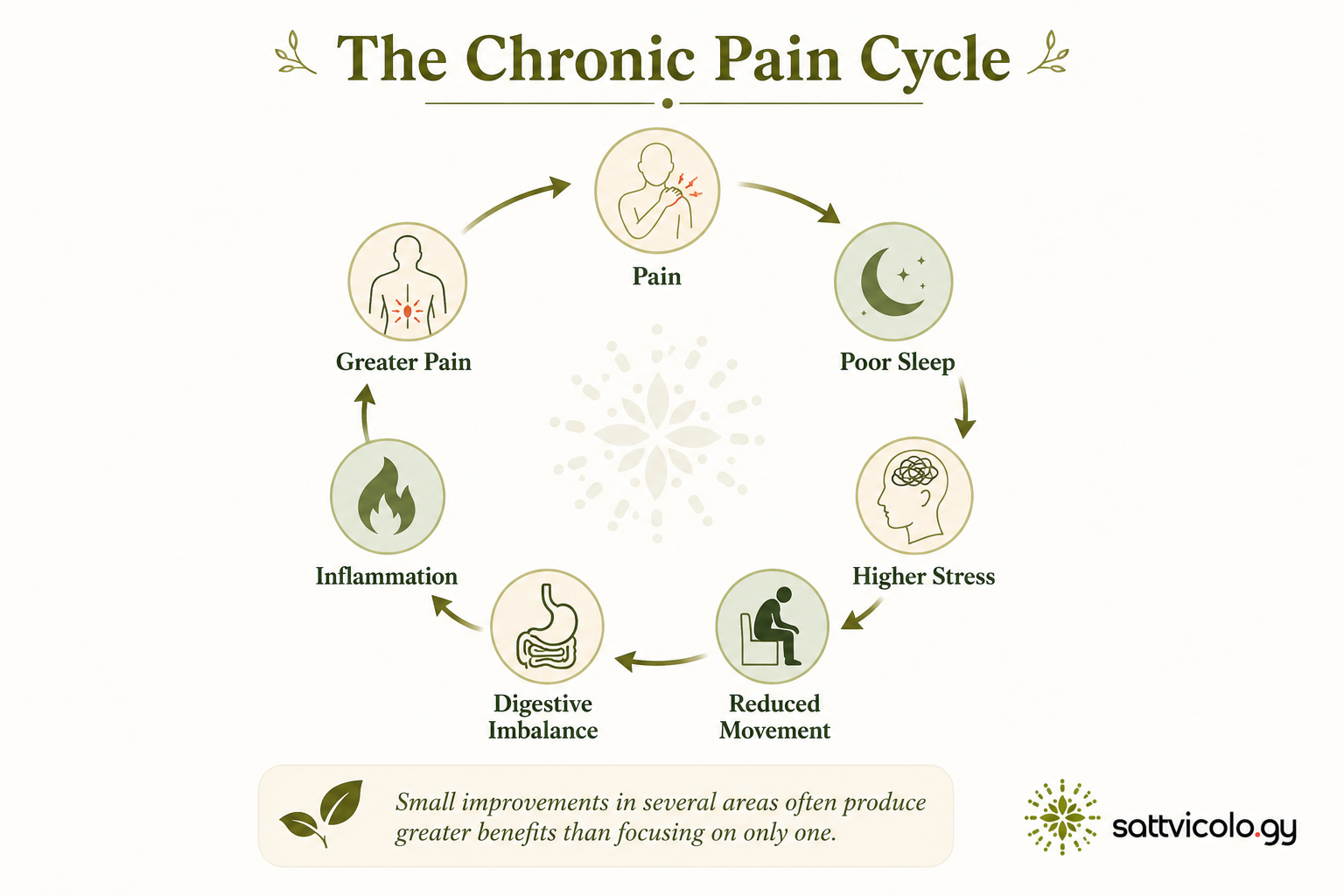
The Stress–Pain–Inflammation Cycle
Pain affects far more than muscles and joints.
Persistent pain often contributes to:
- Poor sleep
- Increased stress hormones
- Reduced physical activity
- Digestive disturbances
- Social isolation
- Anxiety
- Depression
- Increased muscle guarding
- Fatigue
These changes may increase pain sensitivity, creating a cycle that becomes increasingly difficult to interrupt.
Ayurveda recognizes a similar pattern.
When digestion weakens, sleep suffers, Vata increases, and the mind becomes unsettled. The body’s natural healing capacity may become compromised.
Breaking this cycle requires addressing multiple aspects of health simultaneously.
Dinacharya: Creating Stability in an Unstable Body
One of Ayurveda’s central teachings is that regularity calms Vata.
People living with chronic pain often experience unpredictable symptoms.
Creating gentle structure throughout the day can help reduce physical and mental overwhelm.
A Sample Daily Routine
Morning
- Wake at approximately the same time each day.
- Drink warm water.
- Practice five minutes of quiet breathing.
- Perform gentle joint mobility exercises.
- Eat a warm nourishing breakfast.
Midday
- Eat your largest meal when digestion is strongest.
- Walk for 10–20 minutes if medically appropriate.
- Avoid eating while distracted.
Evening
- Eat dinner earlier in the evening.
- Reduce screen exposure before bed.
- Practice restorative stretching or Yoga Nidra.
- Sleep at a consistent time.
Regular routines help regulate both circadian rhythms and the autonomic nervous system.
Yoga: Moving with Compassion Instead of Force
One of the greatest misconceptions about yoga is that it requires flexibility.
It does not.
Classical yoga is not a performance.
It is a practice of awareness.
For people living with chronic pain, yoga is not about touching the toes.
It is about learning how to move safely, breathe efficiently, reduce fear of movement, and gradually restore confidence.
Research has shown that appropriately adapted yoga may help improve pain, function, mood, flexibility, and quality of life for certain chronic pain conditions.
Every practice should be individualized.
Principles of Yoga for Chronic Pain
Instead of asking: “How deep can I stretch?”
Ask:
- Can I breathe comfortably?
- Can I move without forcing?
- Can I stay relaxed?
- Can I notice tension before it becomes pain?
Yoga encourages curiosity rather than competition.
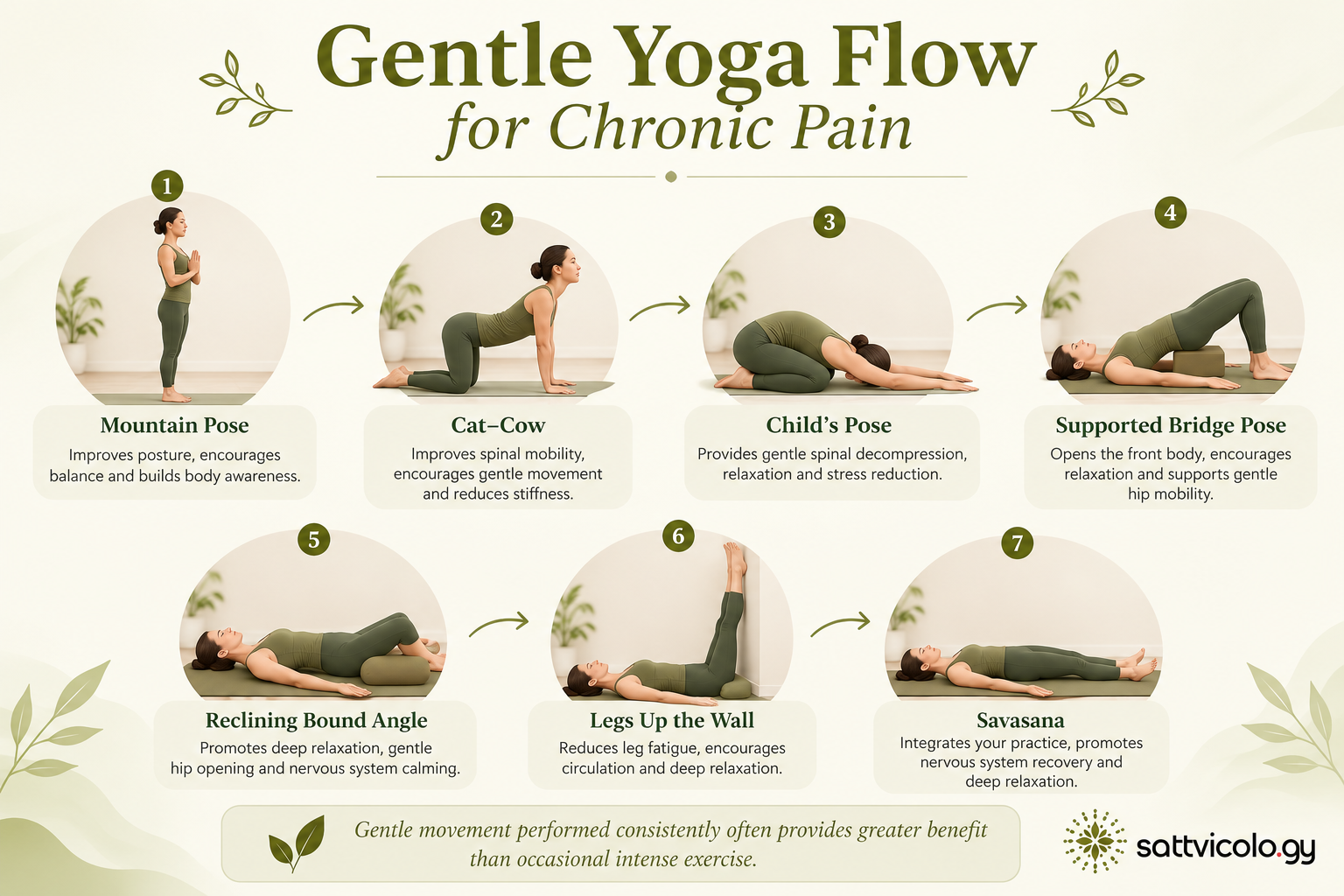
Gentle Yoga Sequence
Practice only with approval from your healthcare professional.
1. Mountain Pose (Tadasana)
- Improves posture
- Encourages balance
- Builds body awareness
- Supports alignment
Hold for 5–10 slow breaths.
2. Cat–Cow (Marjaryasana–Bitilasana)
- Improves spinal mobility
- Encourages gentle movement
- Reduces stiffness
Repeat 8–10 times slowly.
3. Child's Pose (Balasana)
- Gentle spinal decompression
- Relaxation
- Stress reduction
Modify with pillows as needed.
4. Supported Bridge Pose
Benefits:
- Opens the front body
- Encourages relaxation
- Supports gentle hip mobility
Use a yoga block or bolster.
5. Reclining Bound Angle Pose (Supta Baddha Konasana)
- Deep relaxation
- Gentle hip opening
- Nervous system calming
Support knees with pillows.
6. Legs Up the Wall (Viparita Karani)
- Relaxation
- Reduces leg fatigue
- Encourages circulation
Remain 5–10 minutes.
7. Savasana
- Integrates practice
- Promotes nervous system recovery
- Encourages deep relaxation
Stay 10–15 minutes.
Pranayama: Calming the Nervous System Through Breath
Breathing changes when we experience pain.
Many people begin taking short, shallow breaths without realizing it.
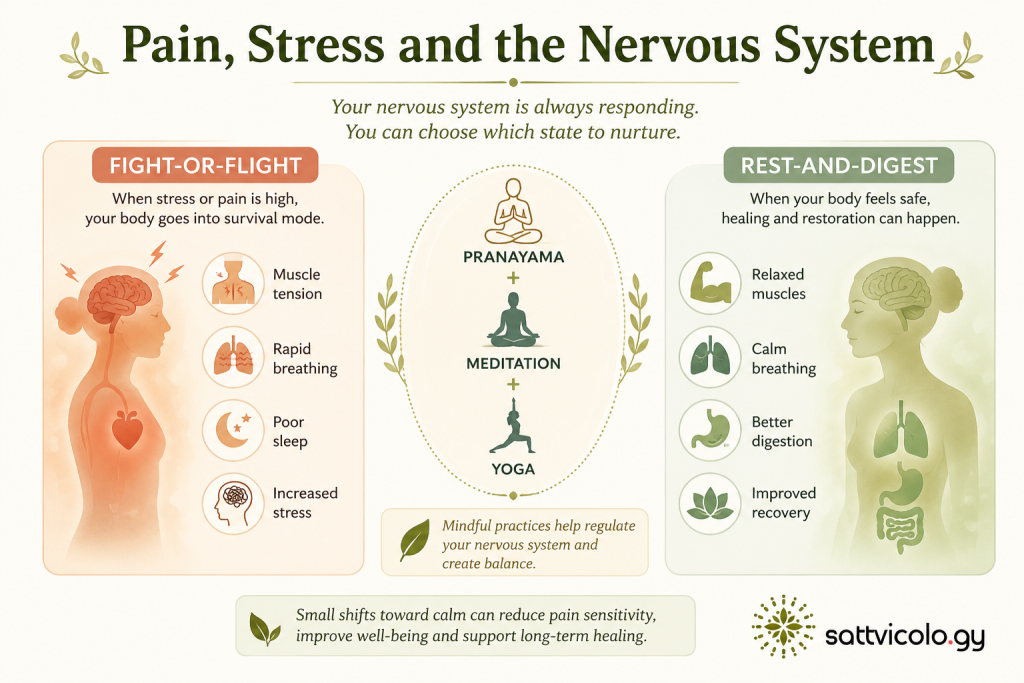
This increases muscle tension and activates the sympathetic (“fight-or-flight”) nervous system.
Pranayama helps restore calmer breathing patterns.
Diaphragmatic Breathing
- Place one hand on your abdomen.
- Inhale slowly through the nose.
- Allow the belly to expand.
- Exhale gently.
Practice 5 minutes daily.
Nadi Shodhana (Alternate Nostril Breathing)
- Promotes mental calm
- Encourages balance
- Reduces stress
Avoid forcing the breath.
Bhramari (Humming Bee Breath)
Benefits:
- Relaxation
- Reduced mental agitation
- Improved focus
The gentle humming vibration may help reduce perceived stress.
Avoid vigorous breathing practices such as Kapalabhati or Bhastrika during pain flares unless recommended by an experienced yoga therapist.
Meditation Changes Our Relationship with Pain
Meditation does not pretend pain disappears.
Instead, it helps us respond differently.
Studies suggest mindfulness meditation may reduce pain catastrophizing, improve emotional regulation, and increase resilience.
Ayurveda similarly recognizes that mental balance influences physical wellbeing.
Simple Five-Minute Meditation
Sit comfortably.
Close your eyes.
Notice:
- Your breath
- Areas of tension
- Thoughts
- Emotions
Without judging them.
Simply observe.
This practice builds awareness without resistance.
Yoga Nidra: Deep Rest for the Nervous System
Many individuals with chronic pain experience poor-quality sleep.
Yoga Nidra—sometimes called yogic sleep—is a guided relaxation practice that helps quiet mental activity while allowing the body to enter deep states of rest.
Research has shown Yoga Nidra may improve:
- Sleep quality
- Stress
- Anxiety
- Emotional wellbeing
For many individuals living with persistent pain, deep relaxation can become part of their overall self-care routine.
Sattvic Nutrition for Chronic Pain
There is no single “pain diet.”
However, both Ayurveda and modern nutrition emphasize eating whole, minimally processed foods.
From an Ayurvedic perspective, meals should support Agni, reduce the accumulation of Ama, and nourish healthy tissues.
General principles include:
- Warm freshly prepared meals
- Seasonal vegetables
- Whole grains
- Mung dal
- Healthy fats
- Fresh herbs
- Moderate spices
- Adequate hydration
Rather than extreme restriction, Ayurveda emphasizes digestibility and balance.
Foods That May Support Overall Wellness
Consider incorporating:
- Turmeric
- Ginger
- Cooked leafy greens
- Sweet potatoes
- Quinoa
- Mung beans
- Berries
- Walnuts
- Pumpkin seeds
- Sesame seeds
- Olive oil
- Organic ghee (if appropriate)
- Fresh cilantro
- Coriander
- Cumin
- Fennel
These foods contribute fiber, vitamins, minerals, healthy fats, antioxidants, and phytonutrients that support overall health.
Foods That May Aggravate Some Individuals
Every person is different.
Some individuals may benefit from reducing:
- Highly processed foods
- Excess added sugars
- Excess alcohol
- Deep-fried foods
- Ultra-processed snacks
- Excessive caffeine
- Highly refined carbohydrates
Rather than labeling foods “good” or “bad,” Ayurveda encourages observing how foods affect digestion, energy, sleep, and overall wellbeing.
Ayurvedic Herbs Commonly Used in Pain Support
Important: Herbs should be selected by a qualified Ayurvedic practitioner or healthcare professional, particularly if you take prescription medications.
Turmeric (Curcuma longa)
Traditionally used to support healthy inflammatory responses and digestion.
Shallaki (Boswellia serrata)
Traditionally used to support joint comfort and mobility.
Guduchi (Tinospora cordifolia)
Often used to support immune health and overall vitality.
Ashwagandha (Withania somnifera)
Traditionally used as an adaptogen that supports resilience to stress and promotes restful sleep.
Ginger (Zingiber officinale)
Supports digestion and healthy circulation.
Triphala
Supports healthy digestion and elimination.
Safety Reminder: Natural does not always mean risk-free. Herbs can interact with prescription medications, including blood thinners, diabetes medications, immunosuppressants, and other therapies. Always consult your healthcare provider before beginning herbal supplements.
Abhyanga: Ayurvedic Self-Massage
Ayurveda recommends Abhyanga, or warm oil self-massage, particularly for calming aggravated Vata.
Warm sesame oil is traditionally used for Vata constitutions, while coconut oil may be preferred in warmer climates or for individuals with stronger Pitta characteristics.
Benefits may include:
- Relaxation
- Improved body awareness
- Softer skin
- Reduced muscle tension
- Mindful self-care
People with acute injuries, infections, open wounds, or certain medical conditions should seek professional guidance before practicing oil massage.
Healing Is Not Linear
Living with chronic pain often involves good days and difficult days.
Ayurveda reminds us that healing is rarely a straight line.
Some days the goal is increased mobility.
Other days the goal is simply maintaining hope, breathing well, and caring for yourself with compassion.
Yoga teaches a similar lesson:
Meet yourself where you are today—not where you wish you were yesterday.
This mindset can transform the experience of living with chronic pain by replacing frustration with patience and self-awareness.
Continue Your Wellness Journey
Understanding your mental and emotional tendencies can be just as important as understanding your physical constitution.
Take the free Sattvicology Gunas Assessment to discover whether Sattva, Rajas, or Tamas may be influencing your lifestyle habits, stress response, and overall well-being. Your results can help guide personalized Ayurvedic and yogic practices alongside your healthcare team’s recommendations.