
Three Charaka Principles Modern Science Is Finally Validating
Gut health. Mind-body medicine. Personalized care. Charaka’s clinical principles are finding new relevance in modern science, preventive healthcare, and whole-person nursing practice.
Ancient Clinical Wisdom, Modern Scientific Language
For many nurses, physicians, and evidence-minded healthcare professionals, Ayurveda has often been filed away as “ancient,” “alternative,” or “unproven.” But dismissal is not the same as scientific evaluation.
Long before microbiome sequencing, inflammatory biomarkers, functional MRI, pharmacogenomics, or precision medicine, the Charaka Samhita described a clinical worldview that treated the human being as an integrated biological, psychological, behavioral, digestive, environmental, and constitutional system.
This article does not claim Ayurveda should replace emergency medicine, antibiotics, insulin, surgery, oncology, or evidence-based pharmacology. Instead, it argues that several Charaka principles are increasingly aligned with modern scientific directions: whole-person healthcare, prevention, digestion, stress biology, and individualized care.
Who Was Charaka?
The Charaka Samhita is one of the foundational texts of Ayurveda. Traditionally, it is associated with the teachings of Atreya, composed by Agnivesha, redacted by Charaka, and later completed or revised by Dridhabala.
The text is not simply a list of herbs. It is a complete medical framework covering physiology, digestion, diagnosis, pathology, psychology, prevention, ethics, diet, seasonal living, therapeutics, and individualized care.
Translation: That science which explains beneficial and harmful life, happy and unhappy life, what is wholesome and unwholesome for life, and the measure of life is called Ayurveda.
Charaka Samhita, Sutra Sthana 1.41
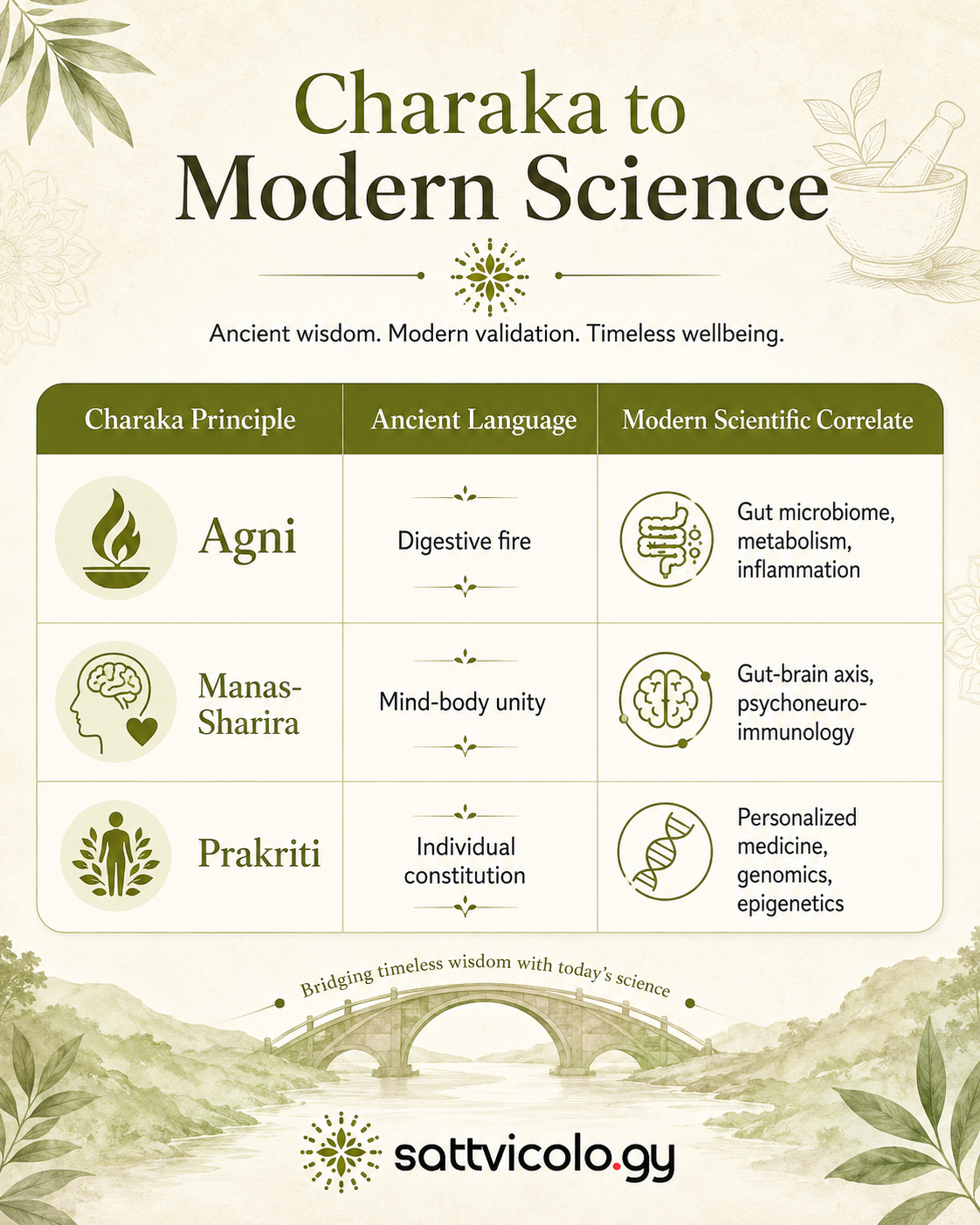
Charaka to Modern Science
| Charaka Principle | Ancient Language | Modern Scientific Correlate |
|---|---|---|
| Agni | Digestive fire / metabolic transformation | Gut microbiome, metabolism, inflammation, nutrient assimilation |
| Manas-Sharira | Mind-body unity | Gut-brain axis, stress biology, psychoneuroimmunology |
| Prakriti | Individual constitution | Personalized medicine, genomics, phenotype-based care |
Principle 1: Digestion Is the Root of Health
Charaka’s Principle: Agni Determines Health, Strength, and Disease
One of Charaka’s central ideas is Agni, often translated as digestive fire, metabolic intelligence, or transformative capacity. In Ayurveda, Agni is not just stomach acid. It represents the body’s ability to digest food, absorb nutrients, transform them into tissues, eliminate waste, and maintain vitality.
When Agni is extinguished, life ends. When Agni is balanced, one lives long and free from disease. When Agni is disturbed, one becomes diseased. Therefore, Agni is said to be the root.
Charaka Samhita, Chikitsa Sthana 15.3
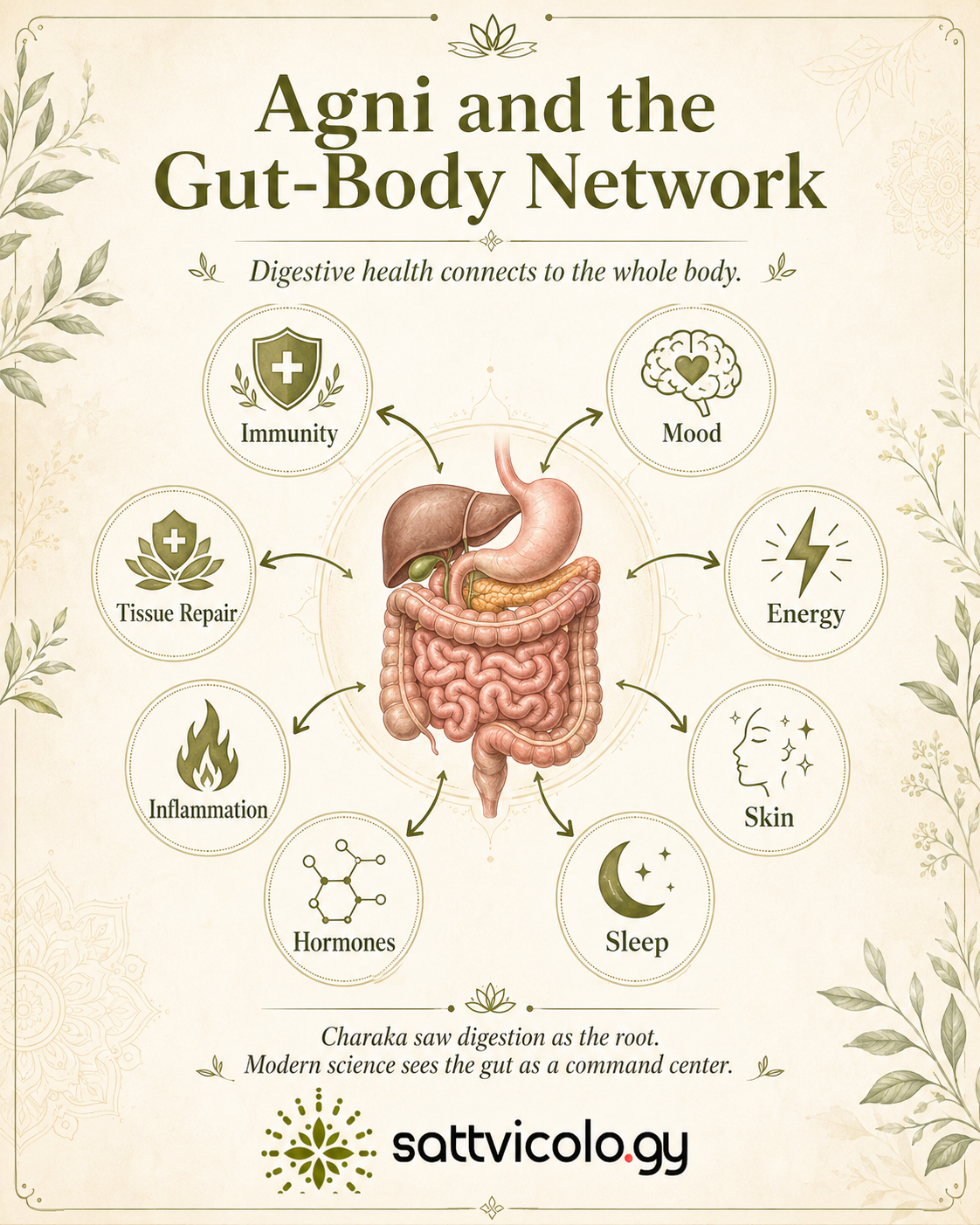
Modern medicine increasingly recognizes the gastrointestinal system as an immune organ, endocrine organ, microbial ecosystem, barrier system, metabolic interface, and neurological signaling hub.
| Modern Gut Health Area | Why It Matters Clinically |
|---|---|
| Microbiome balance | Supports immune regulation, metabolism, and inflammatory signaling |
| Gut barrier function | Helps regulate systemic inflammatory burden |
| Nutrient assimilation | Affects energy, tissue repair, recovery, mood, and resilience |
| Elimination patterns | Provides clues about comfort, toxicity burden, hydration, motility, and medication tolerance |
Principle 2: The Mind and Body Are Medically Inseparable
The Charaka Samhita does not treat the body and mind as separate compartments. It views the human being through Sharira — the body — and Manas — the mind — along with the senses, consciousness, behavior, and environment.
Stress changes appetite. Grief changes sleep. Anxiety changes bowel patterns. Trauma changes pain perception. Depression changes immunity and self-care. Chronic inflammation can affect mood. Gut dysbiosis can influence neurochemical signaling.
Modern research now describes this through the gut-brain axis, stress physiology, trauma-informed care, and psychoneuroimmunology. Charaka’s language was different, but the clinical insight was similar: the mind changes the body, and the body changes the mind.
| Nursing Observation | Charaka-Aligned Clinical Question |
|---|---|
| Pain spikes after fear or distress | How is the patient’s mental state affecting pain, breath, digestion, and recovery? |
| Appetite disappears during grief | How are mood, sleep, and digestion interacting? |
| GI symptoms worsen before procedures | How can reassurance, environment, and education reduce physiological stress? |
| Patient feels dismissed and becomes nonadherent | How does trust affect healing behavior and care-plan follow-through? |
Principle 3: Treatment Must Fit the Person, Not Just the Disease
One of Charaka’s most forward-looking principles is Prakriti, the individual constitution. In Ayurveda, Prakriti refers to a person’s baseline pattern of physical, physiological, psychological, digestive, metabolic, and behavioral tendencies.
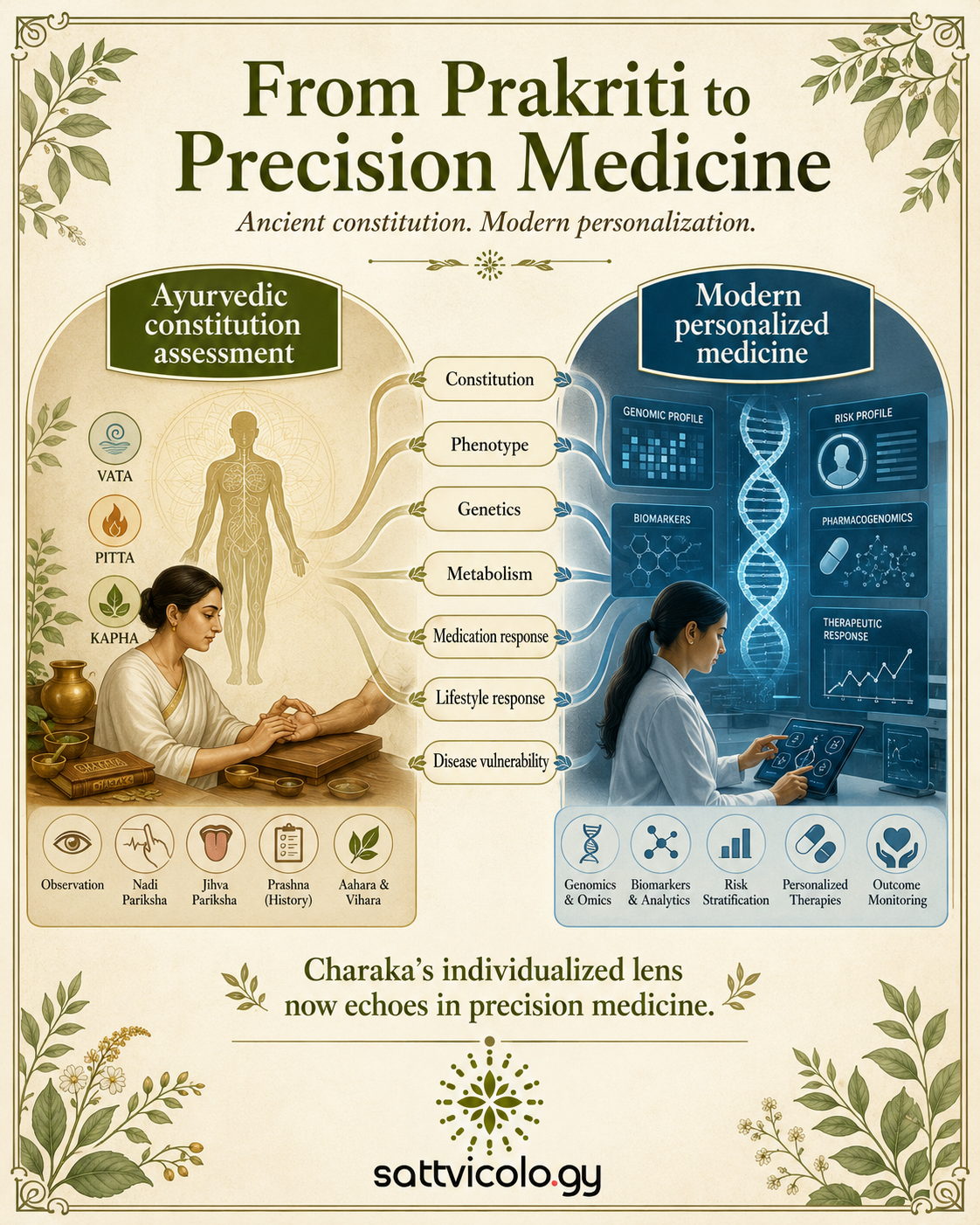
Charaka emphasized that the physician should evaluate the individual, not just the diagnosis. Assessment includes constitution, age, strength, digestion, mental state, tissue quality, environment, season, habits, disease stage, and tolerance.
In modern terms, this sounds close to personalized medicine, precision medicine, pharmacogenomics, systems biology, epigenetics, lifestyle medicine, and patient-centered care.
| Charaka-Informed Question | Modern Care Parallel |
|---|---|
| What is this patient’s baseline constitution and resilience? | Phenotype, frailty, comorbidity, social risk, and recovery capacity |
| What can this person digest and sustain? | Nutrition tolerance, adherence, health literacy, affordability, and behavioral fit |
| What worsens or improves this patient? | Triggers, seasonal patterns, medication response, environmental exposures |
| What treatment is appropriate for their strength? | Dose adjustment, risk stratification, personalized care planning |
Why Was Ayurveda Dismissed for So Long?
Ayurveda was dismissed in the West for several overlapping reasons: colonial bias, difficulty translating Ayurvedic diagnostic language into biomedical categories, reductionist research models, pharmaceutical incentives, inconsistent product quality, and legitimate evidence gaps in some commercial Ayurvedic claims.
The strongest position is not anti-pharma and not blindly pro-Ayurveda. Pharmaceuticals save lives, and safety concerns around herbs, contamination, interactions, and exaggerated claims are real. The better future is evidence-based integration: preserve what is useful, test what is uncertain, regulate what is risky, and reject unsafe claims.
| Reason | Balanced Interpretation |
|---|---|
| Colonial bias | Indian knowledge systems were often judged through Western categories rather than carefully translated and evaluated. |
| Reductionism | Modern medicine became powerful by isolating variables, while Ayurveda is systems-based and individualized. |
| Commercial incentives | Patentable molecules are easier to monetize than individualized diet, lifestyle, seasonal routines, and prevention. |
| Evidence and safety concerns | Some Ayurvedic products and claims require stronger research, regulation, and quality control. |
What This Does Not Mean
- Ayurveda should not replace emergency care, surgery, antibiotics, insulin, oncology, or medically necessary treatment.
- Ayurvedic herbs can interact with medications and are not automatically safe.
- Pregnant patients, children, older adults, and complex patients need qualified supervision.
- Claims must be tested, and integration must be safe, evidence-informed, and collaborative.
The real future is not Ayurveda versus modern medicine. The real future is responsible, evidence-based integration.
Build a More Personalized, Preventive, Patient-Centered Practice
The Saffron Solution helps healthcare practices combine intelligent automation, multilingual patient engagement, recall workflows, healthcare CRM, and virtual medical assistant support to deliver more consistent whole-person care.
FAQ
Agni as the foundation of digestion and systemic health, the inseparability of mind and body, and Prakriti-based individualized care.
No. Charaka did not discover microbes in the modern laboratory sense. His emphasis on digestion and systemic disease patterns aligns with modern findings about the gut microbiome and whole-body health.
Agni means digestive and metabolic fire. It refers to the body’s ability to digest, absorb, transform, and assimilate food and experiences.
Prakriti is an individual’s constitutional pattern in Ayurveda, including physical, physiological, psychological, digestive, metabolic, and behavioral tendencies.
No. Ayurveda should not replace emergency medicine, surgery, antibiotics, insulin, cancer care, or medically necessary treatment.
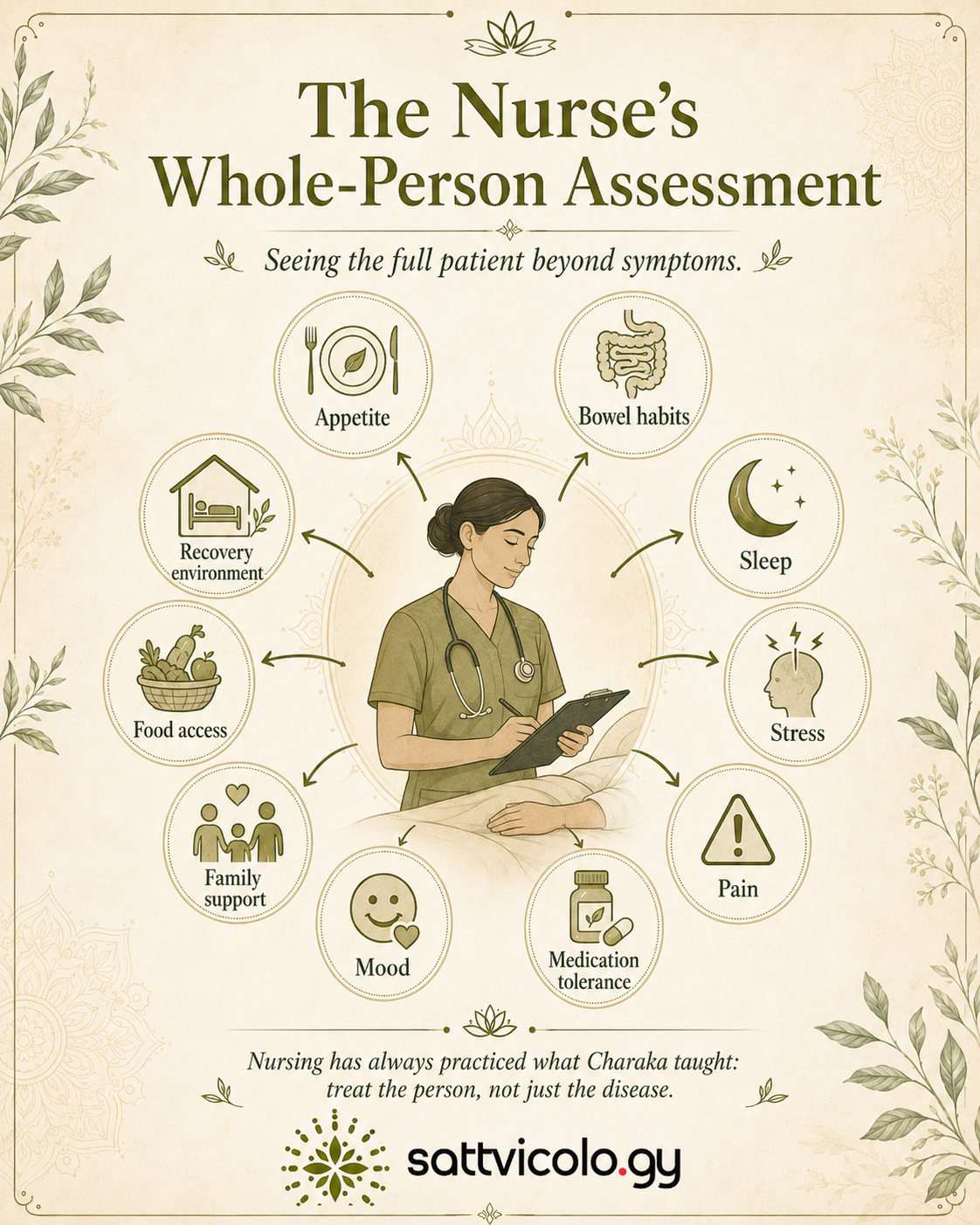
Nurses work closest to whole-person care and routinely observe appetite, bowel function, pain, sleep, mood, medication response, stress, adherence, and recovery environment.