
Part 3: Modern Research, Frequently Asked Questions, and Living Well with Chronic Fatigue
A whole-person guide to understanding fatigue, supporting recovery, and integrating evidence-informed care with Ayurvedic and yogic practices.
What Does Modern Science Tell Us About Chronic Fatigue?
Researchers now recognize that fatigue is not simply the result of inadequate sleep.
Persistent fatigue often reflects a complex interaction between multiple body systems, including:
- The nervous system
- The immune system
- The endocrine (hormonal) system
- The digestive system
- The cardiovascular system
- Mental and emotional health
- Physical conditioning
- Nutrition
Rather than having a single cause, fatigue frequently develops through the combined effects of stress, illness, poor sleep, inflammation, nutritional deficiencies, chronic disease, and lifestyle factors.
For this reason, comprehensive evaluation remains essential.
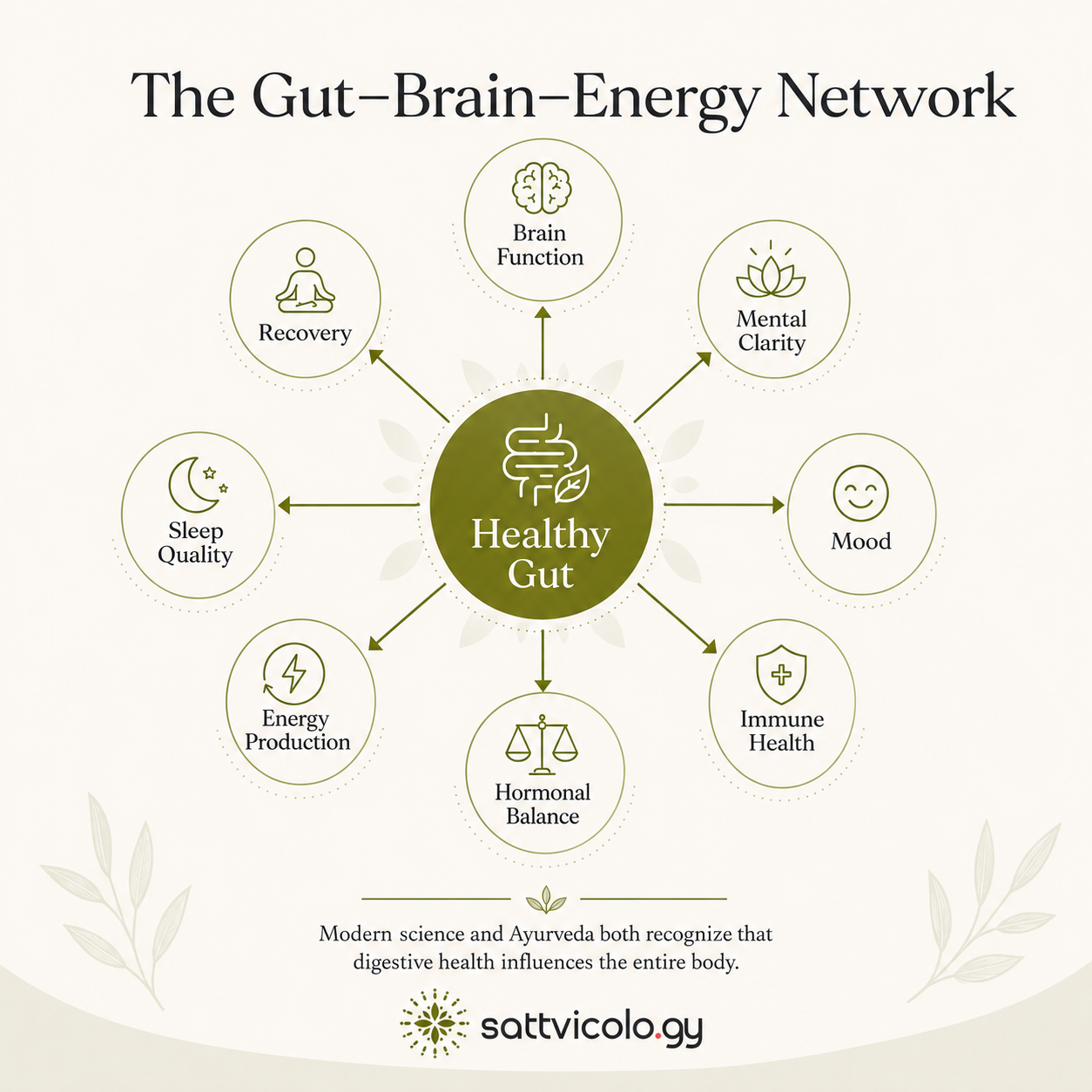
The Gut–Brain–Energy Connection
Modern research has transformed our understanding of the relationship between digestion and overall health.
Scientists continue to investigate how the gut-brain axis influences:
- Mood
- Cognitive performance
- Sleep
- Immune regulation
- Inflammation
- Energy metabolism
- Stress resilience
The trillions of microorganisms living within the digestive tract—the gut microbiome—produce metabolites that communicate with the brain, immune system, and endocrine system.
Although much remains to be learned, maintaining digestive health has become an increasingly important focus in modern medicine.
Ayurveda has emphasized this relationship for thousands of years through the concept of Agni, teaching that proper digestion and assimilation are foundational to vitality.
While the scientific models differ, both perspectives recognize digestion as central to whole-person wellness.
Stress, Cortisol, and Energy
When we encounter stress, the body activates the hypothalamic-pituitary-adrenal (HPA) axis, resulting in the release of stress hormones such as cortisol.
This response is adaptive in the short term.
However, chronic stress may contribute to:
- Sleep disruption
- Mental fatigue
- Reduced concentration
- Mood changes
- Muscle tension
- Emotional exhaustion
It is important to clarify that while the popular term “adrenal fatigue” is widely used online, it is not a recognized medical diagnosis. Individuals experiencing persistent fatigue should be evaluated for evidence-based medical conditions rather than assuming adrenal dysfunction.
Ayurveda approaches prolonged stress differently.
Rather than focusing on one gland, it considers the cumulative effects of aggravated Vata, depleted Ojas, disturbed sleep, weakened digestion, and chronic mental overexertion.
Although the frameworks differ, both systems emphasize the importance of recovery and resilience.
The Importance of Movement
When people are exhausted, avoiding physical activity may seem logical.
However, prolonged inactivity can contribute to:
- Loss of muscle strength
- Reduced cardiovascular fitness
- Increased stiffness
- Lower endurance
- Reduced confidence
The solution is not intense exercise.
Instead, healthcare professionals often recommend appropriately paced, individualized movement.
This may include:
- Walking
- Gentle yoga
- Swimming
- Stretching
- Tai Chi
- Light resistance exercises
For individuals with ME/CFS, exercise recommendations are more complex because post-exertional malaise is a defining feature of the condition. These individuals should work closely with clinicians experienced in ME/CFS and avoid generalized exercise advice.
Rest Is an Active Practice
Rest is not the same as inactivity.
Ayurveda distinguishes between restorative practices that replenish vitality and habits that promote stagnation.
Restorative practices include:
- Yoga Nidra
- Meditation
- Time in nature
- Gentle breathing exercises
- Reading
- Prayer
- Meaningful conversations
- Creative expression
These activities may help restore emotional and mental energy without excessive stimulation.
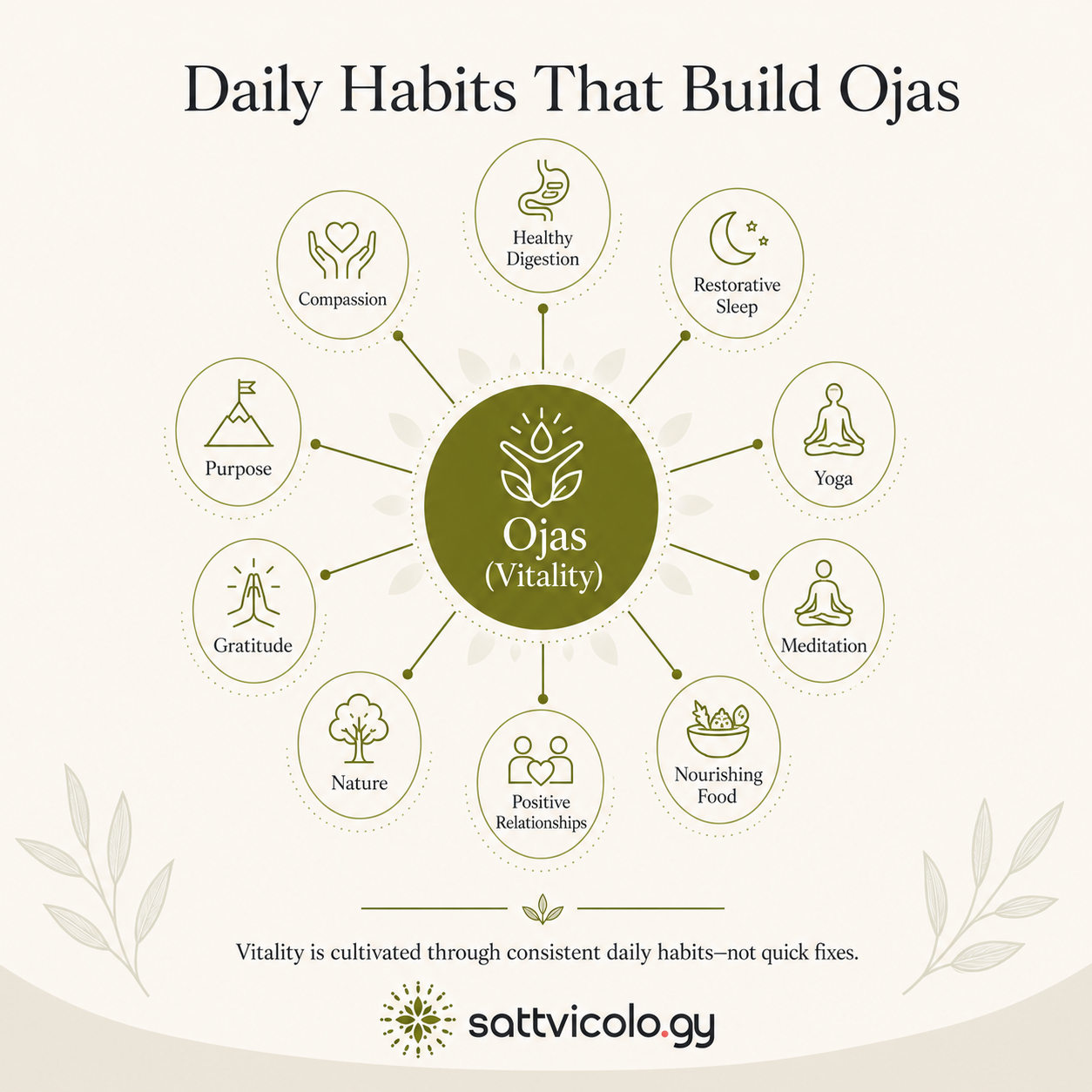
Cultivating Ojas Through Daily Living
Ayurveda teaches that Ojas is strengthened gradually.
There is no quick fix.
Daily habits that traditionally support Ojas include:
- Freshly prepared meals
- Consistent sleep
- Moderate physical activity
- Meditation
- Loving relationships
- Gratitude
- Time outdoors
- Self-compassion
- Purposeful work
- Balanced routines
Rather than chasing temporary stimulation, Ayurveda encourages building lasting vitality.
The Three Gunas and Fatigue
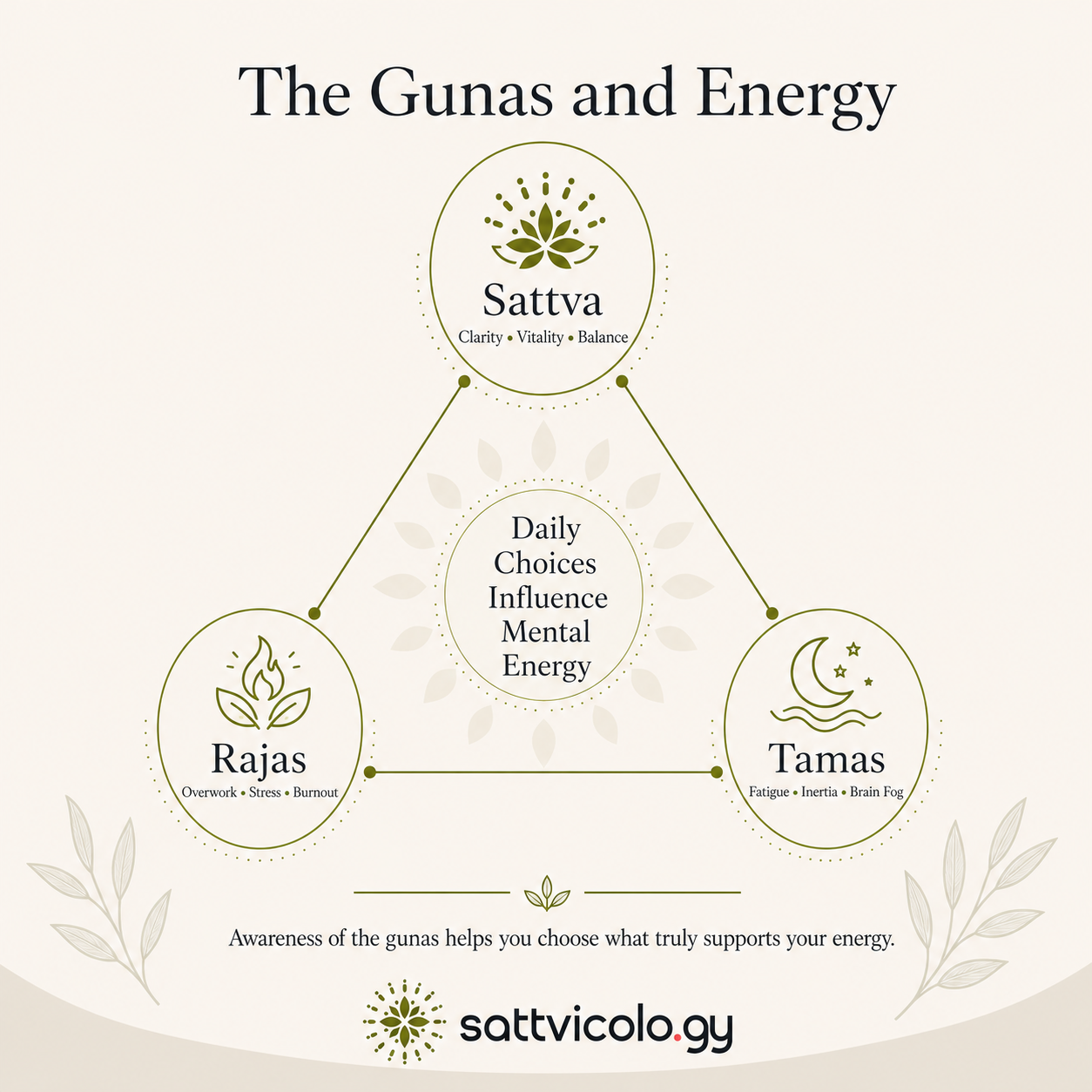
Ayurveda and Yoga teach that the mind is influenced by three qualities: Sattva, Rajas, and Tamas.
Sattva
Characteristics:
- Clarity
- Peace
- Joy
- Balance
- Wisdom
- Optimism
Practices that cultivate Sattva often include:
- Meditation
- Fresh whole foods
- Prayer
- Service
- Nature
- Yoga
- Gratitude
Rajas
Characteristics:
- Constant activity
- Restlessness
- Overthinking
- Perfectionism
- Busyness
Long periods of excessive Rajas may contribute to burnout.
Tamas
Characteristics:
- Heaviness
- Fatigue
- Withdrawal
- Low motivation
- Mental fog
Periods of Tamas are normal during illness or recovery.
The goal is not to eliminate Tamas, but to gradually restore balance by increasing Sattva through compassionate, sustainable lifestyle changes.
Frequently Asked Questions
Key Takeaways
Persistent fatigue deserves careful attention.
It is not simply a sign of laziness or lack of motivation.
It may reflect underlying medical conditions, chronic stress, poor sleep, nutritional deficiencies, emotional strain, or lifestyle imbalance.
Modern medicine provides essential evaluation and treatment.
Ayurveda contributes a whole-person perspective by emphasizing:
- Healthy digestion (Agni)
- Nourishing vitality (Ojas)
- Daily routines (Dinacharya)
- Mindful movement
- Restorative sleep
- Meditation
- Balanced nutrition
- Emotional wellbeing
Yoga complements these practices by encouraging gentle movement, breath awareness, stress reduction, and self-compassion.
The goal is not simply to “push through” exhaustion.
The goal is to rebuild health one day, one meal, one breath, and one mindful choice at a time.
Continue Your Journey Toward Greater Vitality
True energy is more than physical stamina. It also reflects emotional balance, mental clarity, resilience, and purpose.
Ayurveda teaches that your dominant Gunas—Sattva, Rajas, and Tamas—shape how you respond to stress, work, relationships, and recovery.
Discover Your Dominant Guna
Take the free Sattvicology Gunas Assessment to receive personalized recommendations for daily routines, nutrition, yoga, meditation, stress management, and lifestyle practices.
Medical Disclaimer
The information presented in this article is for educational purposes only and should not be interpreted as medical advice, diagnosis, or treatment.
Persistent fatigue can result from numerous medical conditions, including anemia, thyroid disorders, diabetes, sleep disorders, autoimmune diseases, infections, neurological disorders, depression, medication side effects, pregnancy, and cancer. Anyone experiencing unexplained or prolonged fatigue should seek evaluation by a qualified healthcare professional.
Ayurveda, yoga, meditation, nutrition, and lifestyle practices are intended to complement—not replace—conventional medical care. Individuals with Myalgic Encephalomyelitis/Chronic Fatigue Syndrome (ME/CFS) or other chronic illnesses should consult their healthcare team before beginning new exercise programs, herbal supplements, or significant dietary changes.
Herbal supplements may interact with prescription medications. Always discuss supplement use with your physician, pharmacist, or qualified healthcare professional.
Seek immediate medical attention if fatigue is accompanied by chest pain, shortness of breath, fainting, severe weakness, unexplained weight loss, persistent fever, confusion, or other concerning symptoms.