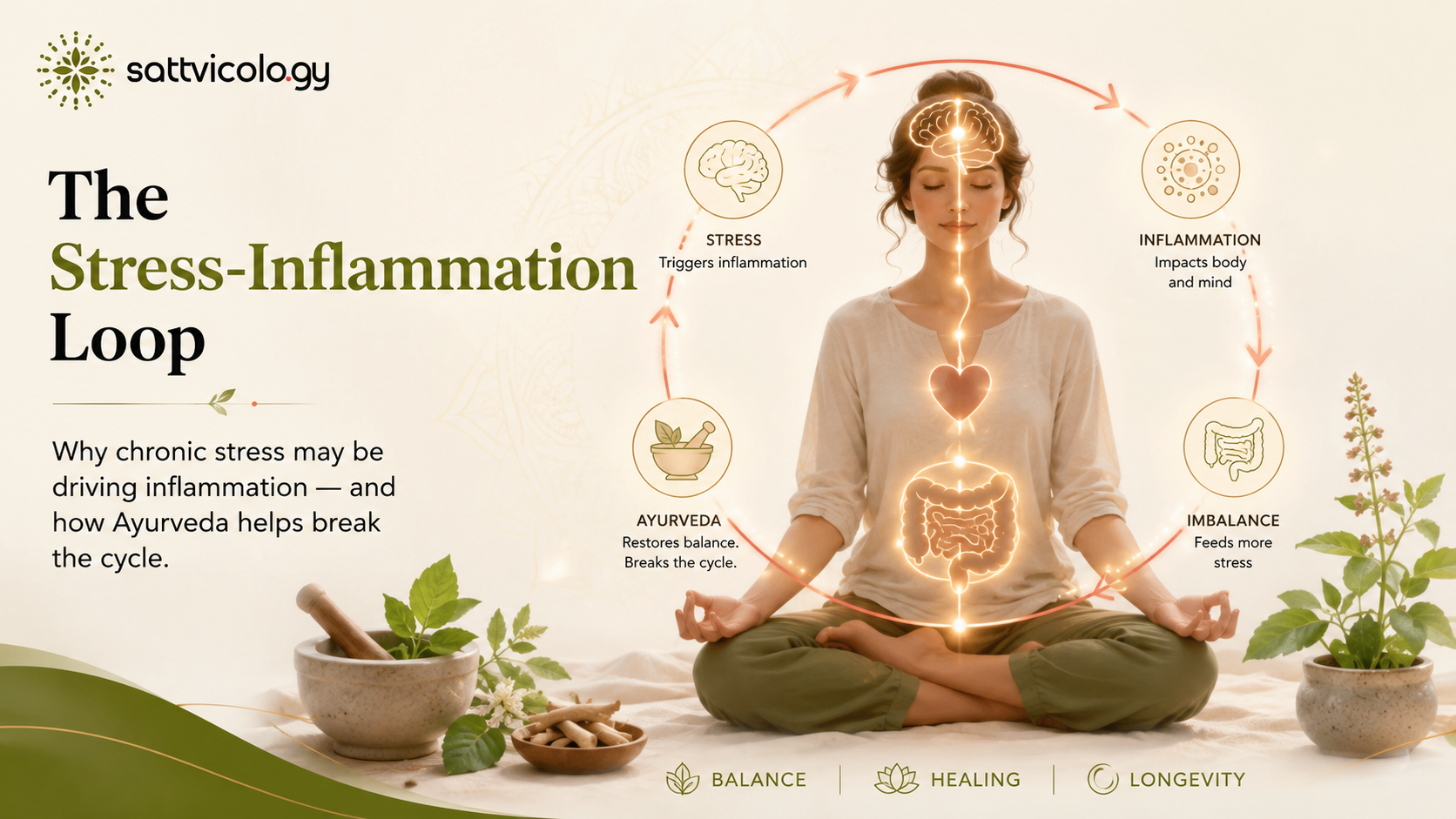
The Stress-Inflammation Loop Your Doctor May Not Be Treating — And What to Do About It
Chronic stress and inflammation can create a self-reinforcing loop that affects the gut, skin, joints, mood, metabolism, and immunity. Learn how Ayurveda and Sattvic living may help address the root cause.
By Sattvicology Healthcare Team • Medical Reviewer: A.P. Shrilata, BAMS •
Medical Disclaimer
This article is for educational purposes only and is not a substitute for professional medical advice, diagnosis, or treatment. Sattvicology’s platform is HIPAA-compliant, and our practitioners work to complement—not replace—conventional medical care. Always consult your physician or licensed healthcare provider before beginning any new health regimen, supplement, herbal protocol, diet, or exercise practice, especially if you are pregnant, nursing, taking medication, or managing a chronic condition.
Key Takeaways
- Chronic stress activates the hypothalamic-pituitary-adrenal axis, commonly called the HPA axis.
- Short-term cortisol release is protective, but long-term activation may disrupt immune, metabolic, digestive, cardiovascular, and neurological function.
- Chronic stress and inflammation can appear as gut discomfort, skin flares, fatigue, joint pain, brain fog, anxiety, sleep disruption, and metabolic imbalance.
- Ayurveda views chronic stress through Vata aggravation, disturbed Agni, accumulated Ama, and secondary Pitta-related inflammation.
- Sattvic nutrition, yoga, pranayama, meditation, sleep rhythm, and herbs such as Ashwagandha and Tulsi may support stress regulation when used appropriately.
When Your Symptoms Are Connected
You have been to the doctor. Maybe more than once.
Your inflammation markers may be elevated. Your cortisol may be high. Your digestion may feel unpredictable. Your skin may keep flaring. Your joints may ache. Your energy may feel depleted no matter how much you rest.
And yet, each appointment may focus on only one part of the problem.
What if these symptoms are not separate at all? What if they are different expressions of the same underlying cycle?
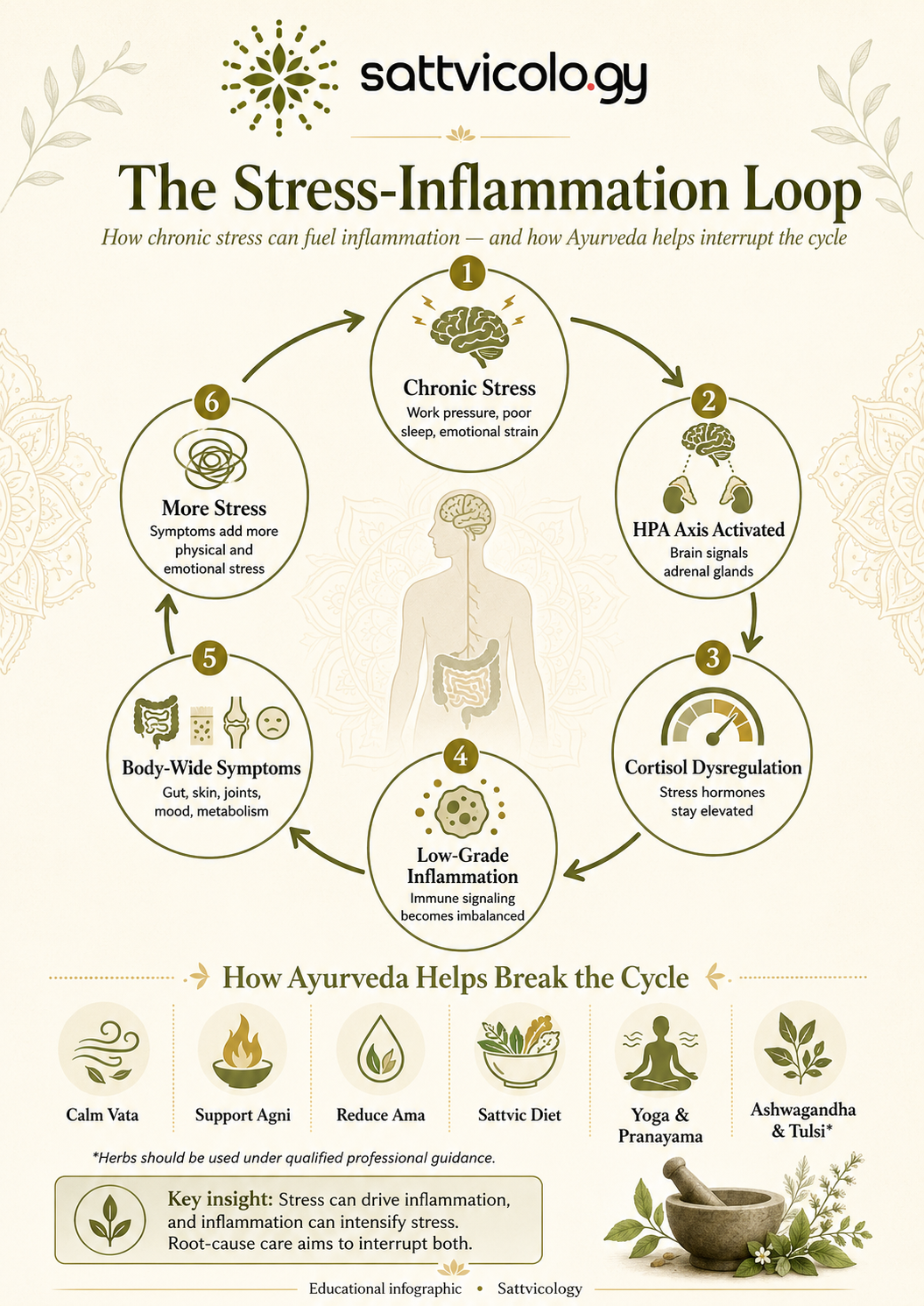
That cycle is the stress-inflammation loop — a self-reinforcing pattern in which chronic psychological, emotional, metabolic, or physical stress activates the body’s stress-response system, contributes to low-grade inflammation, and then allows that inflammation to further intensify stress signals in the nervous system.
How the Stress-Inflammation Loop Works
The HPA Axis: Your Body’s Stress Highway
The body’s stress response is regulated in part by the hypothalamic-pituitary-adrenal axis, also known as the HPA axis. When your brain detects a stressor, the hypothalamus signals the pituitary gland. The pituitary then signals the adrenal glands, which release cortisol and other stress-related hormones.
Cortisol is not bad. In the right amount, at the right time, it helps regulate blood sugar, blood pressure, energy availability, inflammation, immune activity, sleep-wake rhythm, alertness, and motivation.
From Cortisol to Inflammation
In the early stages of stress, cortisol can have anti-inflammatory effects. But long-term stress may make the body less responsive to cortisol’s regulatory signals. The result can be a paradox: the body is stressed, cortisol signaling is dysregulated, and inflammation may increase instead of resolving.
The Loop Closes
The stress-inflammation loop becomes self-reinforcing when inflammation begins feeding back into the nervous system. Inflammatory signals can influence the brain, mood, sleep, pain sensitivity, energy, and emotional regulation.
- Stress activates the HPA axis.
- Cortisol and stress hormones become dysregulated.
- Immune signaling shifts.
- Low-grade inflammation increases.
- Inflammation affects the gut, brain, skin, joints, metabolism, or immune system.
- The body feels more fatigued, anxious, inflamed, reactive, or unwell.
- Those symptoms create more stress.
- The loop continues.
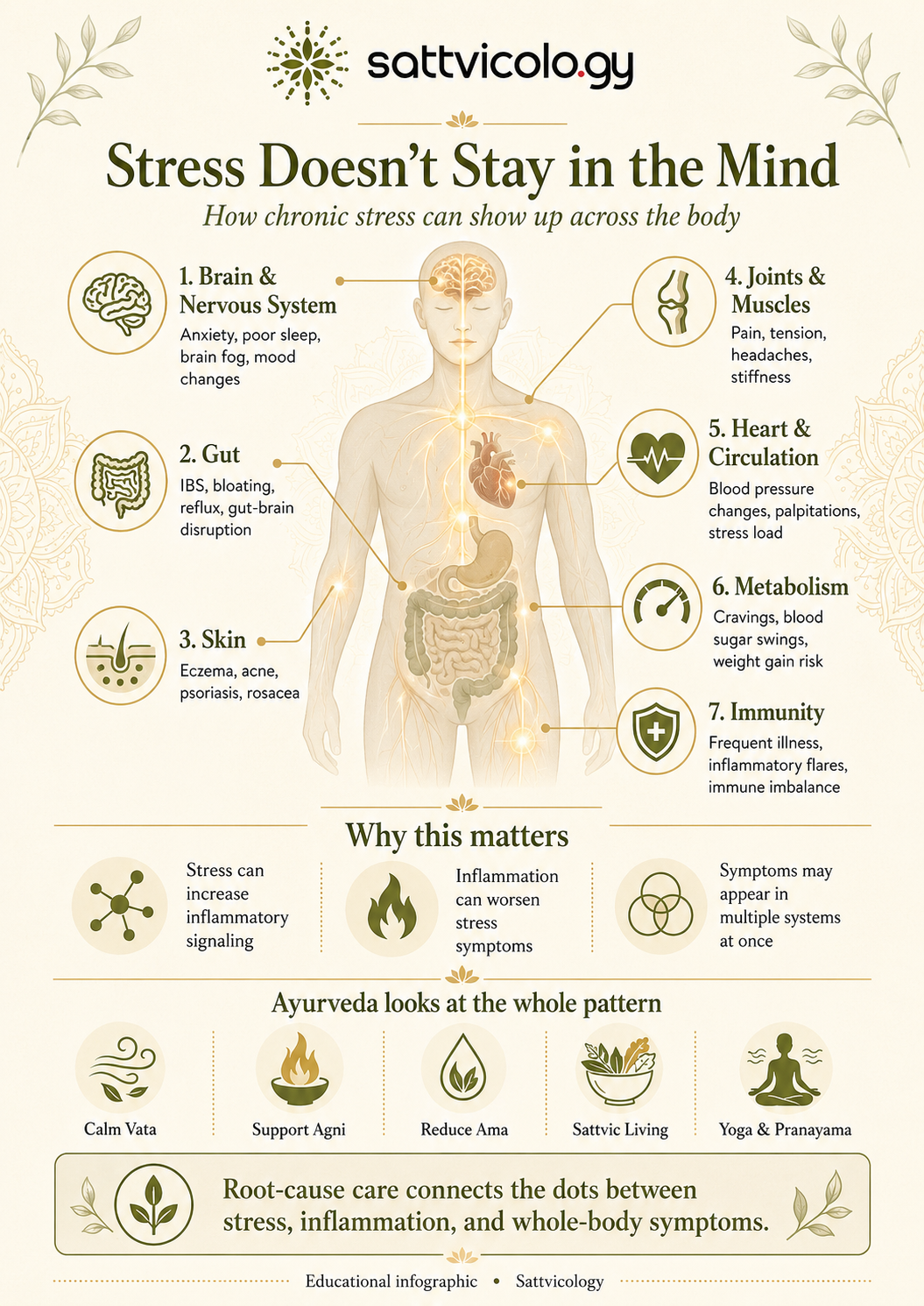
What Stress-Driven Inflammation Can Look Like
| Body System | Possible Stress-Inflammation Pattern | Common Conditions or Complaints |
|---|---|---|
| Gastrointestinal | Altered motility, gut-brain disruption, microbiome imbalance, permeability changes | IBS, reflux, bloating, irregular digestion, IBD flares |
| Skin | Barrier disruption, immune reactivity, heat, redness, irritation | Eczema, psoriasis, acne, rosacea, hives |
| Musculoskeletal | Muscle tension, pain sensitivity, inflammatory signaling | Neck pain, back pain, joint pain, fibromyalgia-like symptoms, tension headaches |
| Cardiovascular | Sympathetic activation, blood pressure changes, vascular inflammation | Hypertension, palpitations, chest tightness with stress |
| Metabolic | Blood sugar instability, cravings, cortisol-related fat storage, insulin resistance | Weight gain, energy crashes, metabolic syndrome risk |
| Immune | Immune suppression or immune overactivation | Frequent illness, autoimmune flares, slow recovery |
| Neurological | Neuroinflammation, poor sleep, mood changes, cognitive fatigue | Brain fog, anxiety, depression, poor focus, memory issues |
The key insight: Your doctor may be treating the body system where the symptom appears, while the root driver may be the chronic stress-inflammation loop beneath it.
Why Conventional Medicine Often Misses the Loop
Conventional medicine is essential. It saves lives and is highly effective for acute care, diagnostics, surgery, emergency treatment, infections, disease monitoring, and many evidence-based interventions.
But the standard healthcare model is not always designed for diffuse, multi-system, low-grade chronic patterns. Each specialist may be treating a real part of the picture, while the whole picture may still be missing.
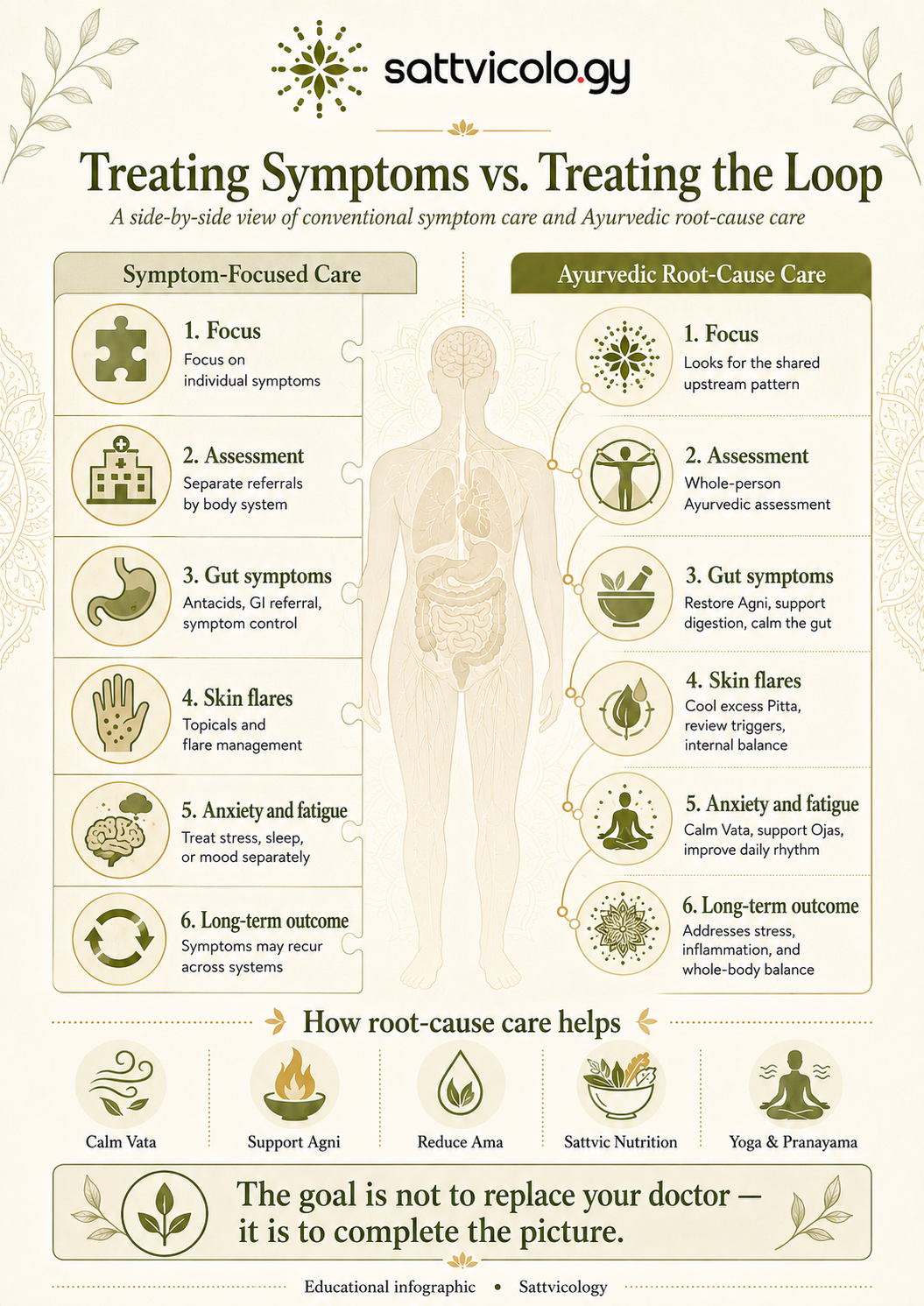
| Dimension | Symptom-Focused Care | Root-Cause Integrative Care |
|---|---|---|
| Main focus | Individual diagnosis or body system | Whole-person pattern |
| Treatment unit | Organ, symptom, or lab marker | Body, mind, diet, sleep, digestion, lifestyle, constitution |
| Time horizon | Relief and disease management | Regulation, resilience, and long-term balance |
| Role of stress | Often acknowledged | Directly assessed and treated |
| Lifestyle factors | Often secondary | Central therapeutic tools |
| Patient experience | Multiple specialists | Coordinated, personalized plan |
| Goal | Control symptoms | Address upstream drivers and reduce recurrence |
The most effective approach is not conventional medicine or Ayurveda. It is both: conventional medicine for diagnosis, safety, monitoring, and necessary treatment, plus a root-cause framework that helps address the terrain in which chronic symptoms develop.
What Ayurveda Understood About Stress and Inflammation
1. Agni: The Fire of Digestion and Metabolism
In Ayurveda, Agni is the digestive and metabolic fire that transforms food into nourishment and experience into clarity. When Agni is strong, the body digests well, energy is stable, the mind is clear, and tissues are nourished.
2. Ama: The Residue of Incomplete Processing
When Agni is weak or irregular, Ayurveda says the body produces Ama — a sticky, heavy residue of incomplete digestion and metabolism. From a modern perspective, Ama is not identical to inflammation, but it overlaps with concepts such as metabolic waste, impaired digestion, immune burden, gut dysbiosis, and low-grade systemic inflammation.
3. Vata and Pitta: The Stress-Inflammation Pattern
Chronic stress is often understood in Ayurveda as a disturbance of Vata dosha, the principle associated with movement, the nervous system, breath, circulation, communication, creativity, and mental activity. If Vata imbalance continues, it may disturb Pitta dosha, the principle associated with heat, metabolism, digestion, transformation, intensity, and inflammation.
In many modern patients, the pattern is not only stress. It is Vata-driven nervous system dysregulation followed by Pitta-driven inflammatory expression.
Evidence-Informed Ayurvedic Tools
Ashwagandha: Supporting Stress Resilience
Ashwagandha, also known as Withania somnifera, is one of Ayurveda’s most studied adaptogenic herbs. Clinical research suggests that certain standardized Ashwagandha extracts may help reduce perceived stress and support healthy cortisol regulation in adults experiencing stress. It is not appropriate for everyone and should be used with practitioner guidance.
Tulsi: Calming the Mind and Supporting Adaptation
Tulsi, also known as Holy Basil or Ocimum tenuiflorum, is traditionally used to support clarity, respiratory health, stress resilience, and sattvic mental balance. Clinical research on standardized Tulsi extracts suggests potential benefits for perceived stress, mood, and sleep quality in adults experiencing stress.
Yoga and Pranayama: Downregulating the Stress Response
Slow, steady movement and intentional breathing can help activate the parasympathetic nervous system. Helpful practices may include Nadi Shodhana, Bhramari, restorative yoga, Yoga Nidra, slow diaphragmatic breathing, and short daily meditation.
Sattvic Nutrition: Food That Calms the System
The Sattvic diet emphasizes fresh, whole, seasonal, nourishing, easy-to-digest foods that support clarity, steadiness, and vitality. From a modern perspective, this overlaps with anti-inflammatory nutrition principles: more whole plant foods, more fiber, improved microbiome support, fewer ultra-processed foods, and better blood sugar stability.
How Sattvicology Addresses Chronic Stress and Inflammation
At Sattvicology, clients explore root causes of chronic stress-driven imbalance through personalized Ayurvedic care, one-on-one yoga, Sattvic nutrition, and lifestyle guidance.
Our HIPAA-compliant telehealth platform connects clients in the United States with certified Ayurvedic healthcare professionals who understand both classical Ayurveda and the realities of modern chronic stress.
- Gunas self-assessment
- Dosha evaluation
- Agni and Ama assessment
- Personalized Sattvic nutrition protocols
- One-on-one yoga and pranayama sessions
- Meditation and mindfulness practices
- Daily routine guidance, known as Dinacharya
- Sleep rhythm support
- Herbal recommendations when appropriate
- Ongoing practitioner guidance and accountability
A Root-Cause Pathway to Breaking the Loop
- Calm the nervous system: breathwork, meditation, gentle yoga, warm meals, steady routines, and adequate sleep.
- Restore Agni: regular meals, warm cooked foods, appropriate spices, and reduced grazing.
- Reduce Ama: food changes, gentle cleansing practices, movement, hydration, and herbs based on constitution.
- Cool excess Pitta: cooling foods, Pitta-pacifying routines, reduced stimulants, and emotional decompression.
- Rebuild Ojas: rest, nourishment, loving relationships, meditation, appropriate herbs, and sustainable rhythm.
Your Body Is Not Failing You
Chronic stress is not just stress. It is a physiological state that can influence inflammation, digestion, hormones, mood, skin, pain, immunity, metabolism, and long-term vitality.
If you have been treating symptoms one by one without lasting resolution, your body may not be failing you. It may be responding coherently to an unresolved upstream imbalance.
The better question is: Is your care plan treating the root pattern that connects your symptoms?
Frequently Asked Questions
The stress-inflammation loop is a self-reinforcing cycle in which chronic stress activates the HPA axis, disrupts cortisol signaling, and contributes to low-grade inflammation. That inflammation can then affect the brain, gut, immune system, and nervous system, making the body more reactive to stress.
Yes. Chronic stress can affect digestion, immunity, cardiovascular function, sleep, reproductive health, mood, muscle tension, pain sensitivity, and inflammation. It may worsen symptoms such as IBS, reflux, eczema, psoriasis, acne, headaches, joint pain, fatigue, anxiety, and brain fog.
Cortisol helps regulate inflammation in the short term. But when stress is prolonged, cortisol signaling can become disrupted. The body may become less responsive to cortisol’s anti-inflammatory effects, allowing inflammatory pathways to remain active.
Ayurveda often views chronic stress as Vata aggravation, which disturbs the nervous system, sleep, digestion, and mental steadiness. Over time, disturbed Agni may create Ama, while secondary Pitta aggravation may contribute to heat, irritation, acidity, skin flares, and inflammatory symptoms.
Clinical studies suggest that certain standardized Ashwagandha extracts may help reduce perceived stress and support healthy cortisol regulation. However, Ashwagandha is not appropriate for everyone and should be used under professional guidance, especially if you take medication or have thyroid, autoimmune, liver, pregnancy-related, or chronic health concerns.
No. Sattvicology’s Ayurvedic care is designed to complement conventional medicine, not replace it. You should continue working with your physician for diagnosis, lab testing, prescriptions, monitoring, and urgent medical needs.
