Shuddha Guggul: 10 Potential Benefits of Ayurveda’s Powerful Resin for Metabolism, Joints & Cardiovascular Health
A.P. Shrilata,
BAMS, PGDND, YIC, Certified Ayurvedic Provider.
Sattvicology Healthcare Team
Shuddha Guggul is a purified Ayurvedic preparation derived from the oleo-gum resin of Commiphora wightii. Explore its traditional uses alongside modern clinical research on cholesterol, joints, inflammation, acne, metabolism, thyroid-related claims, safety and drug interactions.
What Is Guggul?
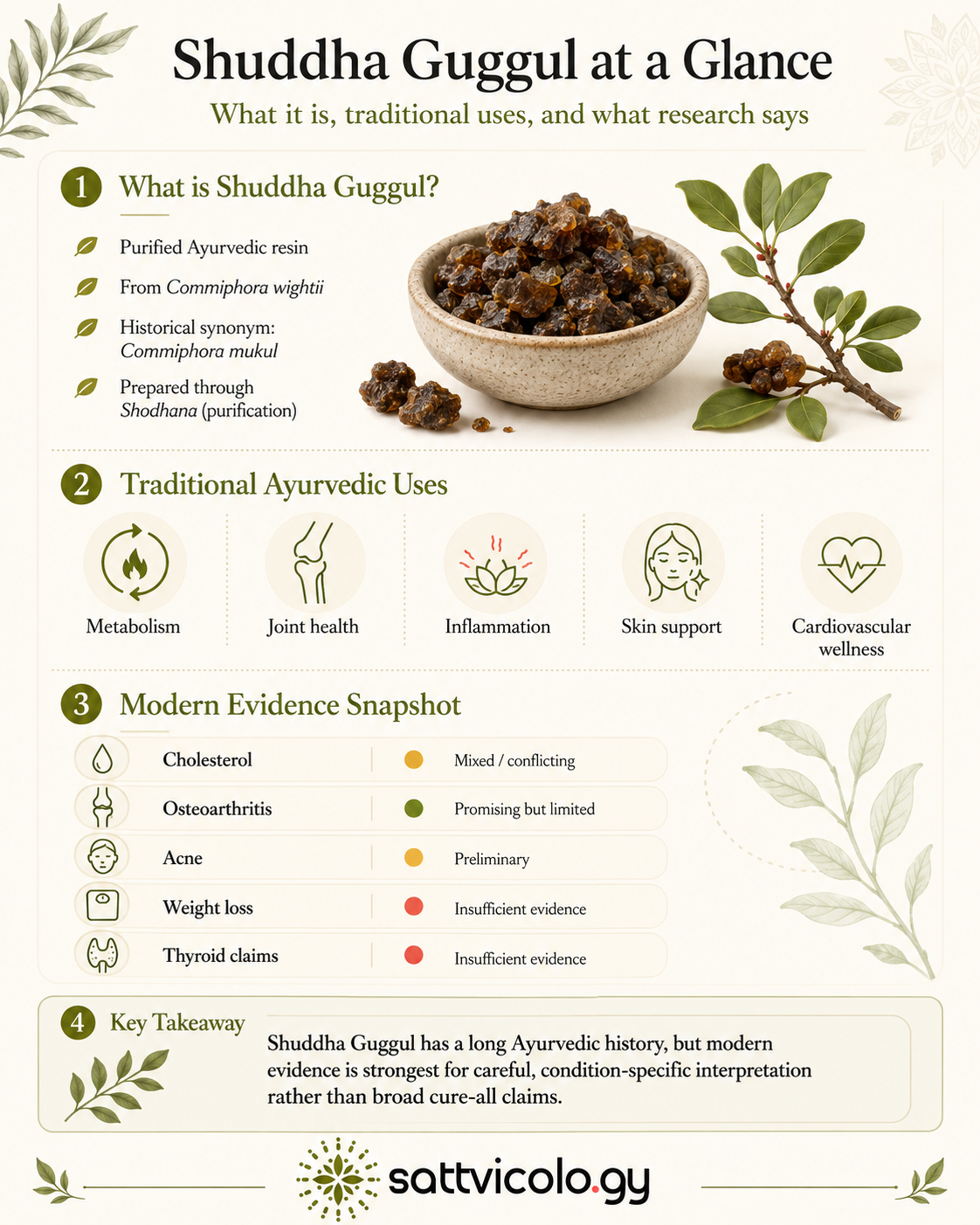
Shuddha Guggul, commonly called Guggul or Guggulu, is a purified Ayurvedic preparation derived from the aromatic oleo-gum resin of Commiphora wightii, historically also called Commiphora mukul.
Guggul has occupied an important place in Ayurvedic medicine for centuries, particularly in formulations traditionally associated with metabolic balance, Meda or adipose-tissue metabolism, joint health, inflammation, circulation, skin health, thyroid-related traditional applications and cardiovascular wellness.
Modern researchers have been particularly interested in compounds called guggulsterones, especially E-guggulsterone and Z-guggulsterone. These steroid-like phytochemicals interact with several molecular pathways involved in bile acids, lipid metabolism, inflammatory signaling and drug metabolism.
However, Guggul is also a perfect example of why traditional use and modern clinical evidence must be considered separately.
Some older Indian studies reported meaningful cholesterol reductions. Later randomized controlled trials in Western populations found little benefit—and in one major JAMA trial LDL cholesterol actually increased.
The modern clinical evidence does not support describing Guggul as a proven natural replacement for statins or other cholesterol-lowering medications.
Quick Answer: What Is Shuddha Guggul Good For?
Shuddha Guggul is purified Guggul resin traditionally used in Ayurveda for metabolic imbalance, joint disorders, inflammation, excess adiposity, certain skin conditions and cardiovascular wellness.
Human studies have investigated Guggul or guggul-containing preparations for:
- High cholesterol
- Triglycerides
- Osteoarthritis
- Joint pain and stiffness
- Acne
- Obesity and metabolic disorders
- Thyroid-related conditions
The strongest modern conclusion is that clinical results vary considerably according to the preparation and condition being studied. Evidence for lowering LDL cholesterol is particularly inconsistent.
What Is Guggul?
Botanical name: Commiphora wightii
Common botanical synonym: Commiphora mukul
Common names: Guggul, Guggulu, Indian bdellium, Mukul myrrh
Family: Burseraceae
Guggul is not technically a leaf or root. It is an oleo-gum resin obtained from the bark of the Commiphora wightii tree.
The raw resin contains numerous compounds, including E-guggulsterone, Z-guggulsterone, terpenoids, steroids, lignans, flavonoids, essential-oil components and resinous compounds.
Guggulsterones have attracted the most scientific attention because of their interaction with receptors involved in lipid and bile-acid metabolism.
What Does “Shuddha Guggul” Mean?
Shuddha Guggul means Guggul that has undergone an Ayurvedic Shodhana, or purification/processing procedure.
Shodhana is a traditional pharmaceutical process intended to modify a raw substance before therapeutic use. Ayurvedic Shodhana should not be confused with the modern chemistry definition of simply isolating a chemically pure molecule.
Traditional Guggul processing can employ different media or procedures depending on the formulation. Research examining differently processed Guggul has demonstrated that Shodhana methods can alter biological characteristics of the material, although much of this evidence remains experimental rather than clinical.
Raw Guggul ≠ Shuddha Guggul ≠ standardized guggulipid extract. These should not automatically be treated as interchangeable.
Why Is Guggul So Important in Ayurveda?
Guggul is unusual because it frequently acts as both a therapeutic ingredient itself and a base or carrier in traditional compound formulations.
Many classical Ayurvedic formulations contain the word Guggulu, including:
- Yogaraj Guggulu
- Mahayogaraj Guggulu
- Kaishore Guggulu
- Kanchanar Guggulu
- Triphala Guggulu
- Punarnavadi Guggulu
- Gokshuradi Guggulu
- Lakshadi Guggulu
These are not simply different names for plain Guggul. Each contains additional herbs and therefore has a different composition and traditional purpose. Clinical research on Kanchanar Guggulu, for example, cannot automatically be attributed to Guggul alone.
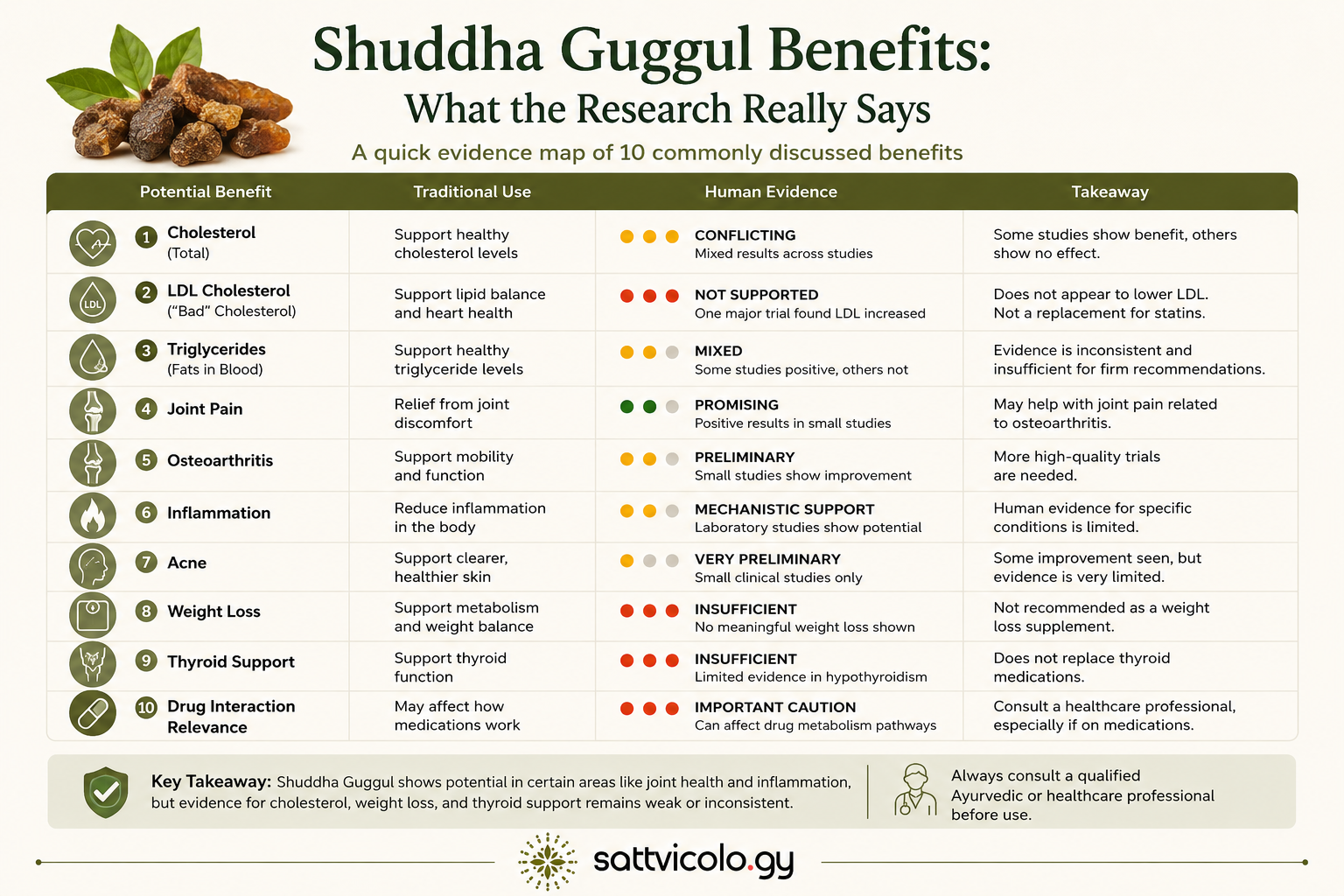
1. Does Guggul Lower Cholesterol?
This is the most famous—and most controversial—Guggul claim.
Some older Indian clinical studies reported significant reductions in cholesterol and triglycerides.
A randomized double-blind study involving 61 people with hypercholesterolemia reported that guggulipid combined with dietary therapy reduced total cholesterol by approximately 11.7%, LDL cholesterol by approximately 12.5%, and triglycerides by approximately 12% compared with placebo.
Earlier multicenter Indian research also reported reductions in total cholesterol and triglycerides among many participants receiving guggulipid.
Evidence level: Conflicting.
2. A Major U.S. Trial Found Guggul Increased LDL Cholesterol
One of the most important studies of Guggul was published in JAMA.
The randomized, double-blind, placebo-controlled study enrolled 103 adults with hypercholesterolemia. Participants received standard-dose guggulipid, high-dose guggulipid or placebo for eight weeks.
Instead of lowering LDL cholesterol, LDL increased by approximately 4% in the standard-dose group and 5% in the high-dose group, while LDL decreased by approximately 5% in the placebo group.
Compared with placebo, this produced a net unfavorable LDL difference of approximately 9%–10%. Several Guggul-treated participants also developed hypersensitivity skin rashes.
Evidence level: High-quality evidence demonstrating no LDL benefit for that standardized product and population.
This is why Sattvicolo.gy should not publish statements such as: “Guggul is clinically proven to lower bad cholesterol.”
3. More Recent Research Still Shows Inconsistent Cholesterol Effects
A Norwegian randomized placebo-controlled trial studied 43 adults with moderately elevated cholesterol.
After 12 weeks, total cholesterol decreased, HDL also decreased, LDL did not improve significantly and triglycerides did not improve significantly. Several people taking Guggul reported gastrointestinal discomfort, possible thyroid-related symptoms or rash.
Another randomized double-blind trial involving 90 people with hypercholesterolemia tested Guggulu together with Triphala. After three months, the combination did not improve total or LDL cholesterol more than placebo. Two participants receiving the herbal combination developed hypersensitivity rash.
Evidence level: Mixed to negative for cholesterol lowering.
4. Guggul May Have Potential for Joint Pain and Osteoarthritis
Guggul has a long traditional association with musculoskeletal disorders.
A small clinical study investigated Commiphora mukul in 30 people with knee osteoarthritis. Participants received a concentrated Guggul preparation for two months.
Researchers reported improvements in WOMAC scores, pain, stiffness, walking measurements and physical function. No side effects were reported in that small trial.
However, the study used a quasi-experimental outcomes design rather than a rigorous placebo-controlled randomized trial.
Evidence level: Promising but preliminary.
5. Guggul May Influence Inflammatory Pathways
Modern research has extensively investigated guggulsterones in connection with inflammation.
Experimental studies suggest interactions with pathways involving:
- NF-κB
- Cytokine signaling
- Macrophage activity
- Nuclear receptors
- Oxidative pathways
These mechanisms help explain why Guggul has attracted interest for arthritis, metabolic disorders, cardiovascular disease and chronic inflammatory conditions.
However, much of this evidence comes from cells and animal models rather than large human clinical trials.
Evidence level: Strong mechanistic interest; limited condition-specific human evidence.
6. Guggul Has Been Studied for Acne
One small randomized clinical trial from 1994 compared oral guggulipid with tetracycline in 20 people with nodulocystic acne.
Participants received either tetracycline or guggulipid equivalent to 25 mg guggulsterone twice daily for three months.
Inflammatory lesions decreased by approximately 65.2% with tetracycline and 68% with guggulipid, with no statistically significant difference between groups. Researchers also observed that participants with oily skin appeared to respond particularly well to guggulipid.
Evidence level: Very preliminary.
This was a tiny study conducted decades ago. Guggul should not be described as a proven substitute for contemporary acne treatment.
7. Does Guggul Help With Weight Loss?
Guggul has traditionally been associated with Medoroga, a broad Ayurvedic concept involving excessive or dysregulated adipose tissue and metabolism.
This traditional connection has made Guggul popular in modern “fat-burning” supplements. But the clinical evidence does not justify calling Guggul a proven weight-loss supplement.
For example, a randomized trial testing Guggulu plus Triphala in hypercholesterolemia found no advantage over placebo for BMI or waist circumference.
Some Ayurvedic multi-herb formulations containing Guggul have shown promising metabolic results, but these formulas also contain other active ingredients and cannot establish the independent effect of Guggul.
Evidence level: Insufficient for stand-alone weight-loss claims.
8. Guggul and Thyroid Function: An Area Requiring Caution
Guggul is often marketed online as a “thyroid booster.” That claim deserves considerable caution.
Some Ayurvedic formulas containing Guggul—particularly Kanchanar Guggulu—are traditionally used in thyroid-related contexts. However, research on these combination formulations cannot be attributed to purified Guggul alone.
One small Ayurvedic study involved only 15 people receiving Triphaladya Guggulu plus Punarnavadi decoction for hypothyroidism. Although subjective symptoms improved, objective thyroid parameters were not statistically significantly improved.
Evidence level: Insufficient for treating hypothyroidism.
Do not describe Guggul as a replacement for levothyroxine.
9. Guggulsterones Interact With Bile-Acid and Cholesterol-Signaling Pathways
One of the most scientifically interesting aspects of Guggul is its interaction with nuclear receptors.
Guggulsterones have been investigated in relation to:
- Farnesoid X receptor — FXR
- Pregnane X receptor — PXR
- Bile-acid metabolism
- CYP enzymes
- Cholesterol signaling
These mechanisms initially helped fuel the hypothesis that Guggul could lower cholesterol. But mechanistic plausibility did not translate consistently into clinical cholesterol lowering.
A compound can have an interesting molecular mechanism without producing a useful clinical outcome in humans.
Evidence level: Strong mechanistic evidence; inconsistent clinical translation.
10. Guggul May Influence Drug Metabolism
This is one of the most important—and often overlooked—features of Guggul.
Laboratory research using human hepatocytes found that guggulsterone can activate the pregnane X receptor and induce expression of CYP3A enzymes.
Another study examining Mahayogaraj Guggulu and guggulsterones concluded that the preparation had potential for interactions with medications metabolized through CYP3A4. Other experimental research suggests that guggulsterones may also interact with drug transporters such as P-glycoprotein.
Evidence level: Meaningful mechanistic interaction potential.
This is why Guggul should not be casually combined with multiple prescription medicines.
Shuddha Guggul Through an Ayurvedic Lens
In Ayurveda, Guggul is not simply viewed as: “A cholesterol supplement.”
Its traditional applications are much broader. An Ayurvedic practitioner may evaluate:
- Prakriti
- Vikriti
- Vata
- Pitta
- Kapha
- Agni
- Ama
- Meda
- Joint function
- Digestion
- Elimination
- Body composition
- Appetite
- Inflammatory patterns
- Current medications
- Strength
- Age
- Lifestyle
Guggul is frequently incorporated into compound formulations, with accompanying herbs changing the therapeutic emphasis. This is one reason modern research on isolated guggulsterones cannot perfectly replicate classical Ayurvedic Guggulu therapy.
Shuddha Guggul vs. Raw Guggul
Raw Guggul
Raw resin obtained from the tree may contain bark particles, environmental contaminants, variable resin fractions and other naturally occurring material.
Shuddha Guggul
Shuddha Guggul has undergone an Ayurvedic processing procedure known as Shodhana. The purpose is traditionally to make the resin more suitable for therapeutic formulation.
Research confirms that differently processed Guggul samples can display different biological properties.
Standardized Guggulipid
Modern supplements may instead contain an extract standardized according to E-guggulsterone, Z-guggulsterone or total guggulsterones. These preparations are not necessarily equivalent to classical Shuddha Guggul.
Is Guggul the Same as Boswellia?
No. This is a common source of confusion because both are aromatic resins and both belong to the Burseraceae family.
Guggul: Commiphora wightii
Boswellia / Shallaki: Boswellia serrata
Boswellia contains boswellic acids. Guggul contains guggulsterones.
Their pharmacology and clinical research differ considerably. They should not be treated as interchangeable supplements.
Guggul vs. Arjuna: Which Is Better for Heart Health?
These herbs have very different evidence profiles.
Arjuna — Terminalia arjuna
Clinical research has focused on stable angina, heart function, heart failure adjunctive therapy and cardiac remodeling.
Guggul — Commiphora wightii
Research has focused much more heavily on cholesterol metabolism, lipids and metabolic signaling.
Importantly, modern Guggul cholesterol trials have produced conflicting or negative results. Therefore, neither herb should be described simply as “better for the heart.” They have different traditional uses and clinical evidence.
Can Guggul Replace a Statin?
No.
Statins have extensive evidence demonstrating reductions in cardiovascular events for appropriately selected patients. Guggul does not.
Furthermore, the JAMA randomized trial found that the standardized Guggul preparation tested actually increased LDL cholesterol relative to placebo.
Anyone considering replacing atorvastatin, rosuvastatin, simvastatin, pravastatin or other lipid-lowering therapy with Guggul should first discuss the decision with their treating healthcare professional.
Does Guggul Clean the Arteries?
There is no high-quality clinical evidence demonstrating that Guggul:
- Removes arterial plaque
- Unblocks coronary arteries
- Reverses atherosclerosis
- Prevents heart attacks
- Prevents strokes
Changes in cholesterol biomarkers are not equivalent to demonstrating plaque regression or fewer cardiovascular events.
Can Guggul Help With Arthritis?
Possibly.
Guggul has strong traditional associations with musculoskeletal conditions and substantial preclinical anti-inflammatory research. A small human study involving knee osteoarthritis reported improvements in pain, stiffness and function.
However, high-quality large randomized placebo-controlled trials of purified Guggul alone remain limited.
Evidence level: Promising but preliminary.
Can Guggul Help Rheumatoid Arthritis?
Guggulsterones have been studied extensively for inflammatory signaling relevant to rheumatoid arthritis. Contemporary research describes potential molecular mechanisms involving inflammatory pathways.
But clinical evidence is not sufficient to recommend Guggul as a substitute for methotrexate, biologic therapy, JAK inhibitors or other disease-modifying antirheumatic drugs.
Untreated rheumatoid arthritis can cause permanent joint damage and systemic complications.
Can Guggul Help Acne?
A very small randomized trial from 1994 found guggulipid performed similarly to tetracycline in people with nodulocystic acne during that trial.
The study is interesting, but much too small and old to establish Guggul as standard acne treatment. Modern acne therapy has evolved considerably since that research was performed.
Is Shuddha Guggul Safe?
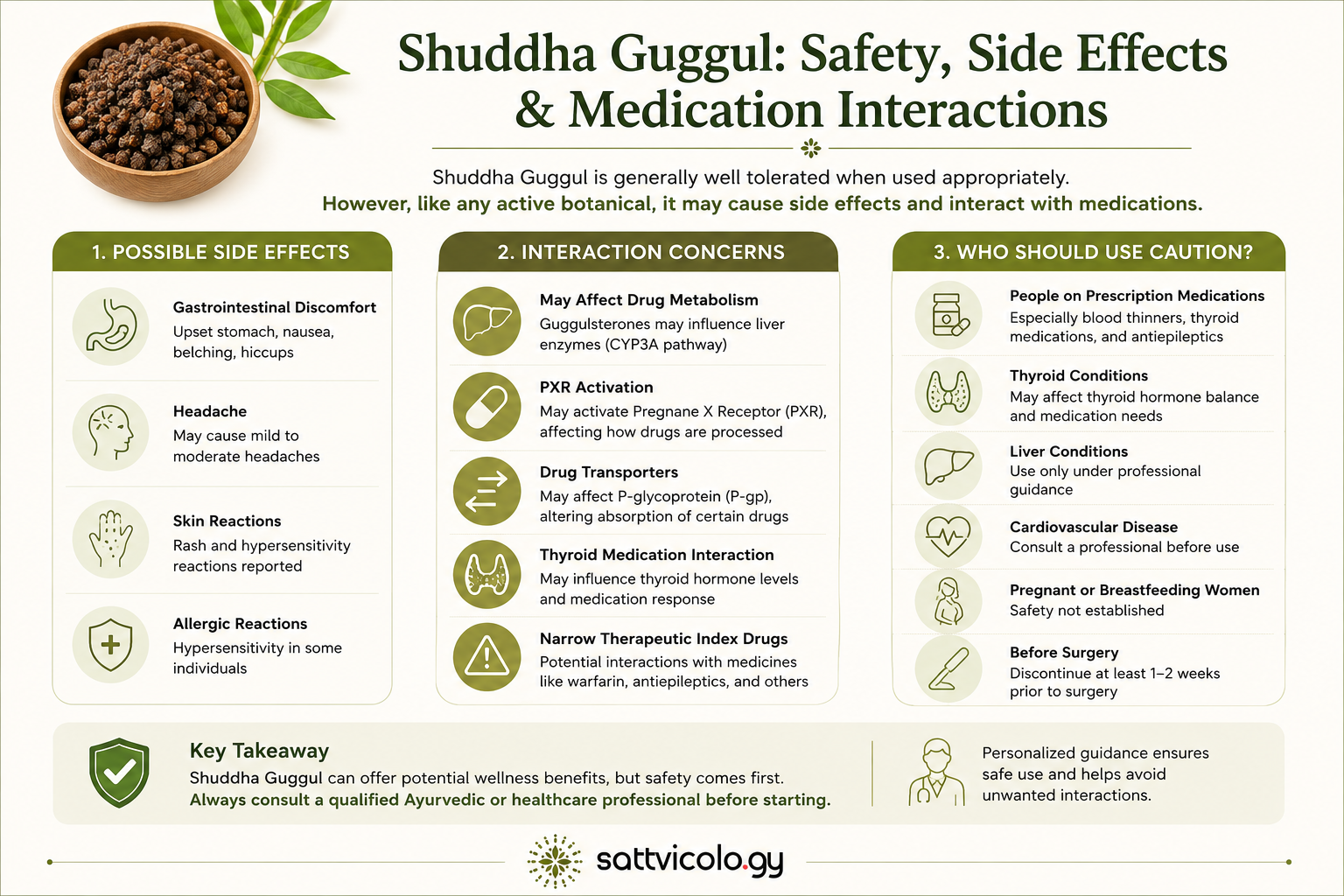
Guggul can cause adverse effects.
Reported effects in human trials include:
- Gastrointestinal discomfort
- Headache
- Hiccups or belching
- Skin rash
- Hypersensitivity reactions
In the JAMA trial, six people taking guggulipid developed hypersensitivity rash, compared with none receiving placebo.
The Norwegian trial also reported gastrointestinal symptoms, possible thyroid-related problems and rash more frequently among Guggul users.
Long-term safety is less well characterized than short-term use.
Guggul and Liver Safety
Reports of liver injury involving Ayurvedic products containing Guggul exist.
One published case described drug-induced liver injury in a patient taking Kanchanar Guggulu and another Ayurvedic formulation. Because these were multi-ingredient products, the case cannot prove that Guggul alone caused the injury.
Another case report involved severe liver injury after use of a multi-ingredient “fat burner” containing guggul tree extract together with other compounds. Again, this does not isolate Guggul as the sole cause.
Guggul-containing products are not automatically free from liver-related risk simply because they are herbal.
People with existing liver disease should use concentrated Guggul products only under appropriate professional guidance.
Who Should Talk to a Healthcare Professional Before Taking Guggul?
Professional guidance is especially important if you:
- Take prescription medications
- Take cholesterol medications
- Take anticoagulant or antiplatelet medicines
- Have thyroid disease
- Take thyroid medication
- Have liver disease
- Have cardiovascular disease
- Have diabetes
- Take hormonal medications
- Are preparing for surgery
- Are pregnant
- Are breastfeeding
- Have a history of severe allergic reactions
- Take medications metabolized through CYP3A4
Because Guggul may affect drug-metabolizing pathways, people taking multiple medications should be especially cautious.
How Much Shuddha Guggul Should You Take?
There is no universal evidence-based dose appropriate for everyone. Clinical studies have used very different products.
JAMA Cholesterol Trial
Participants received a standardized guggulipid containing 2.5% guggulsterones, at either 1,000 mg or 2,000 mg three times daily.
Osteoarthritis Study
A concentrated Commiphora mukul extract was administered at 500 mg three times daily with food.
Acne Study
Participants received a preparation equivalent to 25 mg guggulsterone twice daily.
These are clinical research protocols—not personal dosing recommendations. Traditional Shuddha Guggul, concentrated extract and standardized guggulipid cannot be assumed to have equivalent dosing.
What Is the Best Time to Take Guggul?
There is no scientifically established universal best time.
Ayurvedic recommendations may vary depending on formulation, digestive capacity, health goal, other herbs, meal timing, Anupana, constitution and medications.
Many clinical studies administered Guggul with meals or in divided doses, but this does not establish a single optimal schedule for everyone.
Can You Take Guggul Every Day?
Daily use has been studied for periods ranging from several weeks to several months.
However, evidence supporting lifelong daily supplementation is lacking.
This is particularly important because Guggul may cause hypersensitivity reactions, produce gastrointestinal effects, affect drug-metabolism pathways and potentially interact with prescription medicines.
Long-term use should therefore be individualized rather than automatic.
What Does Modern Science Actually Say About Guggul?
Evidence is mixed for cholesterol and LDL
Older Indian studies reported significant improvements. Later controlled trials found little benefit, and a major U.S. randomized trial found LDL increased relative to placebo.
Overall evidence: inconsistent.
Evidence is preliminary for knee osteoarthritis
A small clinical study reported improvements in pain, stiffness and physical function.
Evidence is preliminary for acne
A small older trial produced interesting results but is insufficient for modern treatment recommendations.
Inflammatory disorders
Strong laboratory interest exists, but high-quality clinical evidence remains limited.
Obesity and weight management
Evidence for Guggul alone is insufficient.
Thyroid disorders
Clinical evidence is insufficient to establish Guggul as treatment for hypothyroidism.
Evidence Is Insufficient for Claiming Guggul:
- Cures high cholesterol
- Replaces statins
- Prevents heart attacks
- Cleans blocked arteries
- Reverses atherosclerosis
- Cures obesity
- Burns fat rapidly
- Treats hypothyroidism
- Replaces levothyroxine
- Cures rheumatoid arthritis
- Treats cancer
- Cures acne
- “Detoxifies” the liver
- Permanently accelerates metabolism
Frequently Asked Questions About Shuddha Guggul
Shuddha Guggul is purified or processed oleo-gum resin derived from Commiphora wightii, also historically called Commiphora mukul. In Ayurveda, the purification process is known as Shodhana.
Ayurvedic traditions have used Guggul and Guggul-containing formulas in relation to metabolic disorders, excess adiposity, joint conditions, inflammation, skin problems, cardiovascular wellness and other individualized conditions.
Clinical evidence is conflicting. Some older studies reported cholesterol reductions, while later randomized placebo-controlled trials found no meaningful LDL benefit. One major U.S. trial found LDL actually increased relative to placebo.
Some older studies found decreases in triglycerides, but later controlled trials failed to consistently reproduce these results. The evidence is therefore insufficient to use Guggul as a replacement for established triglyceride-lowering strategies.
No. Clinical evidence does not establish Guggul as an equivalent alternative to statins, and one randomized study found an unfavorable effect on LDL cholesterol.
A small human study reported improvements in knee-osteoarthritis pain, stiffness and physical function. Larger placebo-controlled trials are needed.
Laboratory research suggests that guggulsterones influence several inflammatory pathways. Human evidence for specific inflammatory diseases remains much more limited.
There is insufficient clinical evidence that Guggul alone produces meaningful weight loss. A randomized study of Guggulu combined with Triphala did not improve BMI or waist circumference more than placebo.
Guggul-containing Ayurvedic formulations have been studied in hypothyroidism, but the evidence is small and does not establish Guggul as an alternative to levothyroxine.
No. Kanchanar Guggulu is a compound Ayurvedic formulation containing Guggul plus additional herbs. Shuddha Guggul refers to processed Guggul itself.
Guggulsterones are steroid-like phytochemicals found in Guggul resin. The E and Z forms have been researched for interactions with receptors involved in bile-acid, lipid, inflammatory and drug-metabolism pathways.
Potentially. Experimental research indicates guggulsterones can affect the pregnane X receptor, CYP3A pathways and drug transporters, creating potential herb-drug interactions.
Reported effects include gastrointestinal discomfort, headache, belching, hiccups, rash and hypersensitivity reactions.
Yes. Hypersensitivity rashes have been documented in randomized clinical trials.
No. Shuddha Guggul has undergone Ayurvedic processing or Shodhana. Raw resin has not.
No. Guggul is generally derived from Commiphora wightii, while Boswellia or Shallaki is derived from Boswellia serrata. They contain different major active compounds and have different clinical evidence.
The Sattvicolo.gy Perspective
Guggul is a particularly important herb for understanding what responsible modern Ayurveda should look like.
Traditional Ayurveda has valued Guggul for centuries. Modern biochemical research has found fascinating effects involving:
Guggulsterones → FXR → PXR → bile acids → lipid metabolism → inflammation → drug metabolism
Yet human cholesterol trials have produced conflicting results.
That does not mean Ayurveda should be dismissed. It means that traditional formulation, purification, patient selection, dose, accompanying herbs, diet, individual constitution and modern extract standardization may all matter.
It also means that responsible Ayurvedic education should never ignore clinical evidence simply because that evidence challenges a popular herbal claim.
At Sattvicolo.gy, an Ayurvedic consultation may consider why Guggul is being considered, Prakriti, Vikriti, Agni, Ama, Meda, body composition, joint symptoms, cholesterol profile, thyroid health, liver function, prescription medications, cardiovascular risk, diet, physical activity and other Ayurvedic formulations.
Is Shuddha Guggul appropriate for this particular person, in this particular formulation, at this particular stage of their health?
Research References
- Szapary PO, Wolfe ML, Bloedon LT, et al. Guggulipid for the treatment of hypercholesterolemia: a randomized controlled trial. JAMA. 2003;290(6):765-772.
- Singh RB, Niaz MA, Ghosh S. Hypolipidemic and antioxidant effects of Commiphora mukul as an adjunct to dietary therapy in patients with hypercholesterolemia. Cardiovascular Drugs and Therapy. 1994;8(4):659-664.
- Nohr LA, Rasmussen LB, Straand J. Resin from the mukul myrrh tree, guggul, can it be used for treating hypercholesterolemia? A randomized, controlled study. Complementary Therapies in Medicine. 2009;17(1):16-22.
- Donato F, Raffetti E, Toninelli G, et al. Guggulu and Triphala for the Treatment of Hypercholesterolaemia: A Placebo-Controlled, Double-Blind, Randomised Trial. Complementary Medicine Research.
- Singh BB, Mishra LC, Vinjamury SP, et al. The effectiveness of Commiphora mukul for osteoarthritis of the knee: an outcomes study. Alternative Therapies in Health and Medicine. 2003;9(3):74-79.
- Thappa DM, Dogra J. Nodulocystic acne: oral gugulipid versus tetracycline. Journal of Dermatology. 1994;21(10):729-731.
- Yang L, et al. Commiphora mukul: Historical records, application rules, phytochemistry, pharmacology, clinical research, and adverse reaction.
- Deng R. Therapeutic effects of guggul and its constituent guggulsterone: cardiovascular benefits.
- Brobst DE, Ding X, Creech KL, et al. Guggulsterone activates multiple nuclear receptors and induces CYP3A gene expression through the pregnane X receptor. Journal of Pharmacology and Experimental Therapeutics. 2004.
- National Center for Complementary and Integrative Health. Ayurvedic Medicine: In Depth.
Medical Disclaimer
The information provided by Sattvicolo.gy is for educational and informational purposes only. It is not intended to diagnose, treat, cure or prevent any disease or to substitute for professional medical advice, diagnosis, laboratory monitoring or treatment.
Shuddha Guggul and Guggul extracts contain biologically active compounds and may produce side effects or interact with prescription medications.
Do not use Guggul as a replacement for prescribed statins, other lipid-lowering medicines, thyroid hormone, diabetes medications, arthritis medications or cardiovascular medications.
If you are pregnant, breastfeeding, preparing for surgery, living with liver disease, thyroid disease, cardiovascular disease or taking multiple prescription medications, consult an appropriately qualified healthcare professional before using Guggul.
Seek appropriate medical care for new or worsening symptoms rather than attempting to self-treat chronic disease with supplements.