What Is Triphala? 11 Potential Benefits of Ayurveda’s Three-Fruit Formula
Siddharth Bhairava,
BAMS, Certified Ayurvedic Provider.
Sattvicology Healthcare Team
Triphala is a classical Ayurvedic three-fruit formulation made from Amalaki, Bibhitaki and Haritaki. Explore its traditional uses alongside current human research on digestion, metabolic health, oral health, the gut microbiome and safety.
What Is Triphala?
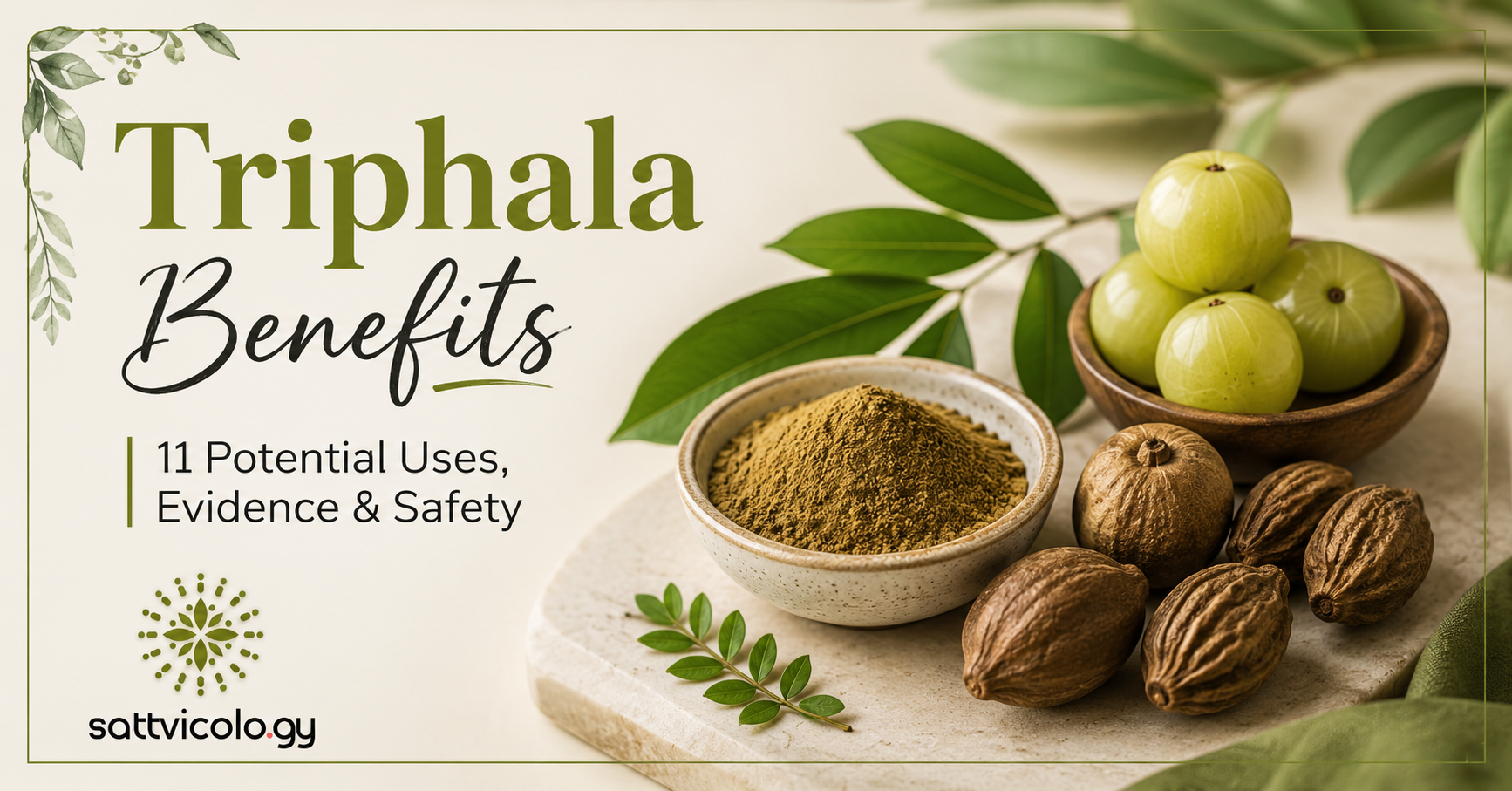
Triphala is one of the most recognized herbal formulations in Ayurveda. Its name comes from Sanskrit: tri, meaning “three,” and phala, meaning “fruit.” Rather than being a single herb, Triphala is traditionally prepared from three dried fruits:
- Amalaki (Amla) — Phyllanthus emblica / Emblica officinalis
- Bibhitaki — Terminalia bellirica / Terminalia bellerica
- Haritaki — Terminalia chebula
Together, these fruits form a classical Ayurvedic formulation traditionally associated with digestion, elimination, rejuvenation and maintaining physiological balance.
Modern research has begun examining Triphala for areas including metabolic health, body weight and waist circumference, oral health, gut microbiota, oxidative stress and immune biomarkers. However, the strength of evidence differs considerably by condition, and larger high-quality clinical trials are still needed.
Quick answer: Triphala is an Ayurvedic herbal formula made from Amalaki, Bibhitaki and Haritaki. Ayurveda traditionally uses it to support digestion, elimination and overall balance. Human research suggests potential benefits for certain metabolic markers and oral health, while evidence for many other commonly promoted uses remains preliminary.
The Three Fruits in Triphala
1. Amalaki — Indian Gooseberry
Botanical name: Phyllanthus emblica
Common names: Amalaki, Amla, Indian gooseberry
Amalaki is a widely used botanical in Ayurveda and represents one-third of classical Triphala formulations. It contains numerous naturally occurring phytochemicals and is frequently discussed in scientific literature in relation to antioxidant and metabolic activity. From the Ayurvedic perspective, Amalaki is also traditionally associated with rasayana, or rejuvenative care.
2. Bibhitaki
Botanical name: Terminalia bellirica
Older scientific synonym: Terminalia bellerica
Bibhitaki is another fruit of the Terminalia genus and forms the second component of Triphala. Traditional Ayurvedic literature associates Bibhitaki with digestive, eliminative and balancing applications.
3. Haritaki
Botanical name: Terminalia chebula
Haritaki is one of the best-known fruits in traditional Ayurvedic herbalism. It has historically been incorporated into formulas involving digestion, elimination and rejuvenation.
Together, Haritaki + Bibhitaki + Amalaki create the formulation known as Triphala.

1. Triphala May Support Digestive Regularity
Digestive health is probably the use most closely associated with Triphala in Ayurveda. Triphala is traditionally used to support bowel regularity and healthy elimination.
Human evidence specifically isolating Triphala for chronic constipation remains limited. One small open-label study of 34 people with functional constipation evaluated a proprietary formulation containing Triphala extract together with psyllium husk and senna, rather than Triphala alone. Participants experienced improvements in bowel frequency, stool form, straining and several constipation-related symptoms over 14 days.
Because the formulation included multiple active ingredients and had no placebo-controlled Triphala-only arm, the study cannot establish that Triphala itself caused the improvement.
Evidence level: Preliminary.
Persistent constipation, blood in the stool, unexplained weight loss, significant abdominal pain or a major change in bowel habits should be medically evaluated rather than managed only with herbal products.
2. Triphala May Influence the Gut Microbiome
One emerging area of Triphala research involves the intestinal microbiome.
A randomized, double-blind, placebo-controlled pilot study involving 31 healthy participants examined Triphala, Manjistha or placebo supplementation over four weeks. Researchers found that herbal supplementation altered fecal microbial communities, although responses varied considerably between individuals and researchers did not identify one universal Triphala microbiome response.
The study observed trends involving bacterial groups including Akkermansia muciniphila, but its small size means the findings should be considered exploratory rather than definitive.
Evidence level: Early but interesting.
3. Triphala and Blood Sugar
Triphala has also been investigated for metabolic health.
A systematic review examining randomized controlled trials included 12 studies involving 749 participants. The review reported that Triphala lowered fasting blood glucose in some studies involving people with diabetes, although this effect was not observed in people without diabetes.
The researchers concluded that Triphala may improve certain glucose, lipid and anthropometric measures under some conditions but emphasized that larger, better-designed randomized trials are necessary.
A separate Phase I study involving 20 healthy adults administered 2,500 mg/day of an aqueous Triphala extract for four weeks. Investigators reported no serious adverse effects and observed reductions in blood glucose at selected measurement points, although the study was small, uncontrolled and designed primarily to examine safety.
Evidence level: Promising but insufficient for treating diabetes.
People taking insulin, metformin, sulfonylureas, GLP-1 medications or other glucose-lowering therapies should discuss herbal supplements with an appropriate healthcare professional. Triphala should not replace prescribed diabetes treatment.
4. Triphala May Support Healthy Cholesterol and Lipid Levels
The same systematic review found statistically significant reductions in total cholesterol, LDL cholesterol and triglycerides in several of the included Triphala clinical trials.
The Phase I safety study in healthy volunteers also reported an increase in HDL cholesterol following supplementation, although its small sample size and lack of a placebo group limit what can be concluded.
Evidence level: Promising.
Triphala should not be considered a replacement for statins or other cardiovascular medications prescribed by a physician.
5. Triphala May Support Healthy Body Weight and Waist Circumference
Five randomized controlled trials included in a 2021 systematic review reported statistically significant decreases in measures such as body weight, body mass index and waist circumference among participants with obesity who received Triphala.
However, the studies were relatively short, with the longest lasting approximately three months. Long-term efficacy and safety therefore remain uncertain.
Evidence level: Moderate-to-preliminary.
Triphala should not be viewed as a stand-alone weight-loss supplement. Sustainable weight management remains closely connected to diet, sleep, physical activity, metabolic health, medications, hormones and other individual factors.
6. Triphala Has Particularly Interesting Research in Oral Health
One of the better researched applications of Triphala involves Triphala mouthwash.
A systematic review and meta-analysis evaluated seven randomized controlled trials comparing Triphala mouthwash with chlorhexidine mouthwash for plaque-induced gingivitis. The researchers concluded that Triphala mouthwash appeared effective in reducing clinical measures of plaque and gingival inflammation and showed clinical efficacy comparable with chlorhexidine in the included studies.
However, the trials showed substantial statistical heterogeneity, so results should still be interpreted cautiously.
Individual randomized trials have also reported reductions in plaque, gingival inflammation, oral-hygiene scores and microbial counts in participants using Triphala mouthwash.
Evidence level: Among the stronger clinical areas for Triphala.
Triphala mouthwash does not replace brushing, flossing, professional dental cleanings, periodontal therapy or treatment prescribed by a dentist.
7. Triphala Contains Polyphenols With Antioxidant Activity
Laboratory and preclinical research has extensively investigated antioxidant compounds in Triphala. Human research is more limited.
A 2025 preliminary randomized, double-blind, placebo-controlled study examined Triphala supplementation in 74 people with post-COVID conditions. Several oxidative-stress and inflammatory biomarkers improved within the Triphala group. Importantly, researchers found no statistically significant differences between the Triphala and placebo groups for the primary outcomes.
That makes it inappropriate to conclude that Triphala has been clinically proven to treat post-COVID inflammation.
Evidence level: Biological plausibility with limited clinical confirmation.
8. Triphala and Immune Function
A small Phase I human study evaluated Triphala in healthy volunteers and observed increases in certain immune cell populations, including cytotoxic T lymphocytes and natural killer cells.
The study was primarily exploratory and does not demonstrate that Triphala prevents infections or treats immune disorders.
Evidence level: Preliminary.
A more accurate description is that preliminary human research suggests Triphala may influence certain immune biomarkers, but its clinical significance has not yet been established.
9. Triphala May Have Prebiotic-Like Effects
Some researchers describe Triphala as a polyphenol-rich potential prebiotic because intestinal microorganisms may metabolize components of the formulation.
Human microbiome research supports the possibility that Triphala can influence microbial composition, but the response appears highly individualized.
This makes Triphala an interesting area for future research involving the relationship between Ayurveda → digestion → microbiota → metabolic health. Research has not yet established that Triphala can reliably correct “gut dysbiosis” in individual patients.
10. Triphala May Support Metabolic Health More Broadly
When glucose, lipids, body weight, waist circumference, diet, gut microbiota and inflammatory signaling are considered together, researchers are increasingly investigating Triphala as a potential metabolic-health formulation rather than simply a herbal laxative.
A systematic review of randomized trials provides some support for this direction while simultaneously emphasizing the need for larger and more rigorous trials.
More recent scientific reviews continue exploring interactions among Triphala constituents, metabolism and the gut microbiome, but much of the mechanistic evidence remains preclinical rather than established therapeutic evidence in humans.
11. Triphala Is Traditionally Considered a Rasayana
Within Ayurveda, Triphala is frequently discussed within the concept of rasayana.
Rasayana is broader than the modern Western concept of taking an antioxidant supplement. It traditionally relates to maintaining vitality, resilience, nourishment, healthy aging and physiological balance.
Scientific reviews describe Triphala Rasayana as an important traditional Ayurvedic formulation while documenting experimental research across gastrointestinal, metabolic, antimicrobial, antioxidant and other areas. Much of that evidence remains laboratory or animal based, so traditional uses should not automatically be presented as proven clinical effects.

Triphala Through an Ayurvedic Lens
Ayurveda does not traditionally begin with: “Which supplement treats this symptom?”
Instead, an Ayurvedic practitioner may consider patterns involving:
- Agni — digestive capacity
- Mala — elimination
- Dosha patterns
- Diet and appetite
- Sleep and stress
- Daily routine
- Season and age
- Constitution and current imbalance
- Other herbs or medicines being used
That is why two people experiencing the same Western medical symptom may not necessarily receive identical Ayurvedic recommendations.
At Sattvicolo.gy, Ayurvedic care should ideally focus on the whole individual rather than treating Triphala—or any herbal formulation—as a universal remedy.
Triphala vs. Amla: Are They the Same?
No. Amla or Amalaki is only one of the three fruits contained in Triphala.
Triphala contains: Amalaki + Bibhitaki + Haritaki.
Therefore: Amla ≠ Triphala.
A person taking Amla alone is consuming a different herbal preparation from someone taking Triphala.
Is Triphala a Laxative?
Triphala has traditionally been associated with elimination and is frequently described as having mild laxative properties.
However, describing Triphala solely as a laxative oversimplifies its traditional role.
Clinical evidence for Triphala alone as a treatment for chronic constipation remains limited. One clinical constipation study that included Triphala also contained psyllium and senna, making it impossible to determine Triphala’s independent effect.
When Should You Take Triphala?
There is no scientifically established universal Triphala dosage or ideal time of administration that applies to every person.
Clinical studies have used substantially different extracts, formulations, concentrations, dosages and treatment durations.
For example, one human safety study administered 2,500 mg/day of aqueous Triphala extract for four weeks, while another microbiome pilot used 2,000 mg/day. These study protocols should not automatically be interpreted as individualized dosing recommendations.
An Ayurvedic practitioner may recommend a preparation and schedule based on the individual rather than simply copying a dosage from a clinical trial.
Is It Safe to Take Triphala Every Day?
Short-term human studies have generally reported good tolerability.
A Phase I study administering 2,500 mg/day to 20 healthy adults for four weeks reported no serious adverse effects.
A systematic review involving 12 randomized studies also reported no serious adverse events attributed to Triphala during treatment, although some participants experienced effects including loose stools, constipation, altered taste, nausea, tiredness or dermatologic symptoms.
These findings do not establish the safety of lifelong daily use. Long-term, large-scale safety data remain limited.
Who Should Talk to a Healthcare Professional Before Taking Triphala?
Consider professional guidance before using Triphala if you:
- Are pregnant or breastfeeding
- Take prescription medications
- Take medicines that lower blood glucose
- Have chronic gastrointestinal disease
- Have persistent diarrhea
- Have liver or kidney disease
- Are preparing for surgery
- Are treating a child
- Have unexplained digestive symptoms
- Are receiving treatment for a chronic medical condition
Some Ayurvedic products have been found to contain potentially harmful levels of metals such as lead, mercury or arsenic. Product quality and appropriate sourcing therefore matter significantly.
How to Choose a Triphala Product
Look beyond marketing terms such as “natural” or “ancient.” Ideally, choose a manufacturer that provides:
- Clearly identified botanical ingredients
- Batch or lot information
- Third-party testing
- Heavy-metal testing
- Microbial contamination testing
- Transparent manufacturing standards
- Clear dosage information
- No undisclosed proprietary ingredients
Because herbal supplement quality can vary, sourcing is part of safe Ayurvedic care.
What Does Modern Science Say About Triphala?
The most accurate summary today is:
Evidence is promising for:
- Plaque and gingival inflammation when Triphala is used as a mouthwash
- Certain lipid markers
- Certain blood-glucose outcomes in populations with diabetes
- Short-term body weight, BMI and waist-circumference outcomes in some populations
Evidence is emerging for:
- Gut microbiome modulation
- Immune biomarkers
- Oxidative-stress pathways
Evidence remains limited for:
- Triphala alone as a treatment for chronic constipation
- Long-term daily preventive use
- Treatment of cancer
- Treatment of inflammatory bowel disease
- Prevention of infections
- “Detoxification”
- Reversal of chronic disease
Laboratory findings should not be interpreted as proof that Triphala treats these conditions in humans.

The Sattvicolo.gy Perspective
Ayurveda’s potential does not come from finding one supplement for every symptom.
Its traditional strength lies in asking a different question: Why is this imbalance appearing in this particular person?
Triphala may be appropriate for some individuals and inappropriate for others.
A comprehensive Ayurvedic consultation may consider digestion, elimination, appetite, sleep, stress, lifestyle, constitution, current symptoms, diet, medications and broader health history before recommending herbs or lifestyle changes.
If you are considering Triphala for persistent digestive, metabolic or other health concerns, an individualized consultation with a qualified Ayurvedic practitioner can help determine whether it is appropriate for you.
Research References
- Phimarn W, Sungthong B, Itabe H. Effects of Triphala on Lipid and Glucose Profiles and Anthropometric Parameters: A Systematic Review. Journal of Evidence-Based Integrative Medicine. 2021.
- AlJameel AH, Almalki SA. Effect of triphala mouthrinse on plaque and gingival inflammation: A systematic review and meta-analysis of randomized controlled trials. International Journal of Dental Hygiene. 2020.
- Peterson CT, et al. Modulatory Effects of Triphala and Manjistha Dietary Supplementation on Human Gut Microbiota: A Double-Blind, Randomized, Placebo-Controlled Pilot Study. Journal of Alternative and Complementary Medicine. 2020.
- Phetkate P, et al. Study of the safety of oral Triphala aqueous extract on healthy volunteers. Journal of Integrative Medicine. 2020.
- Triphala, a New Herbal Mouthwash for the Treatment of Gingivitis: A Randomized Controlled Clinical Trial.
- Peterson CT, Denniston K, Chopra D. Therapeutic Uses of Triphala in Ayurvedic Medicine. Journal of Alternative and Complementary Medicine. 2017.
- National Center for Complementary and Integrative Health. Ayurvedic Medicine: In Depth.
Frequently Asked Questions About Triphala
Triphala is a traditional Ayurvedic formulation made from three fruits: Amalaki (Phyllanthus emblica), Bibhitaki (Terminalia bellirica) and Haritaki (Terminalia chebula). Ayurveda traditionally uses the combination for digestive, eliminative and rejuvenative purposes.
Clinical research suggests possible benefits involving certain blood lipid measures, glucose regulation, body weight and waist circumference, and oral health. Research involving the gut microbiome and immune or inflammatory biomarkers is promising but still preliminary.
Triphala has a strong traditional association with bowel regularity, but high-quality human research examining Triphala alone for chronic constipation is limited. A small clinical study found improvements using a formulation containing Triphala together with psyllium and senna, so the effects cannot be attributed to Triphala alone.
Possibly. A small randomized placebo-controlled human study found that Triphala supplementation altered fecal microbial communities, but responses differed substantially among participants. More research is needed before Triphala can be recommended as a proven microbiome therapy.
Some randomized trials have reported reductions in fasting blood glucose among people with diabetes. A systematic review concluded that Triphala may improve glucose measurements under certain circumstances but stated that larger high-quality trials are needed. Triphala should not replace diabetes medication.
Several randomized studies included in a systematic review reported improvements in LDL cholesterol, total cholesterol or triglycerides. The evidence is promising but not sufficient to replace established cardiovascular treatment.
Some short-term randomized studies have reported reductions in body weight, BMI and waist circumference among participants with obesity. Studies have generally been short, however, and Triphala should not be considered an independent weight-loss treatment.
Triphala mouthwash has some of the better human clinical evidence associated with the formulation. A systematic review of seven randomized trials found improvements in plaque and gingival inflammation and reported efficacy comparable with chlorhexidine in the studies analyzed. It should still be used only as an adjunct to normal dental care.
Short-term clinical studies generally report good tolerability, but long-term safety evidence is limited. Some study participants have reported gastrointestinal or other minor effects. Quality control is also important because contamination with heavy metals has been documented in some Ayurvedic products generally.
Daily use appears in Ayurvedic practice, but modern research has not established the safety or ideal dosage of lifelong supplementation for everyone. Individual health conditions and medications should be considered before long-term use.
The three fruits are Amalaki (Phyllanthus emblica), Bibhitaki (Terminalia bellirica) and Haritaki (Terminalia chebula).
No. Amla, also called Amalaki, is one ingredient in Triphala. Triphala contains Amalaki together with Bibhitaki and Haritaki.
“Detox” is not a clearly defined clinical outcome in most Triphala research. Ayurveda traditionally associates Triphala with digestion and elimination, but claims that it scientifically removes toxins from the body have not been established in rigorous human clinical trials.
Explore Ayurveda With Individualized Guidance
Triphala is traditionally selected according to the individual, not simply by symptom name. Understanding your constitution, digestion, current imbalance, medications and health goals can help you explore Ayurveda more thoughtfully.
Medical Disclaimer
The information provided on Sattvicolo.gy is intended for educational and informational purposes only and is not a substitute for medical advice, diagnosis or treatment from a licensed healthcare professional. Ayurvedic herbs and supplements, including Triphala, may cause side effects or interact with prescription medicines, over-the-counter medicines, supplements or existing medical conditions.
Do not discontinue or alter prescribed medication based on information on this page. If you are pregnant, breastfeeding, preparing for surgery, taking medication, living with a chronic medical condition or experiencing persistent or unexplained symptoms, consult an appropriately qualified healthcare professional before using Triphala or other herbal products.
If symptoms are severe, sudden, worsening or potentially life-threatening, seek appropriate medical care.